The global need for nutritious and sustainable food has led to the development of new technologies in food processing, and the production of artificial rice has become a major factor in this change. To overcome the issues of food shortage and health, these high-tech systems are combining science, productivity, and nourishment in a very new way. In this piece, we will talk about the technology behind artificial rice production, how these systems are changing the way rice is produced to make high-quality, nutrient-rich rice. Whether you are interested in how these lines work, their effect on global food markets, or the nutritional advantages they provide, this detailed review will give you important information about the hopeful future of artificial rice.
Understanding Artificial Rice

Artificial rice is a man-made food product that mimics the texture, look, and nutritional value of natural rice and, moreover, has additional health benefits. The common method of its production involves mixing rice flour with nutrients like vitamins, minerals, and proteins, after which the mixture is subjected to extrusion technology to form grains that look like rice. This technique not only improves the nutrition value but also enables the addition of nutrients meant for specific dietary purposes like fighting malnutrition in at-risk groups. Artificial rice is not only a potential solution to global food shortages but also a sustainable and versatile alternative to the use of traditional rice.
What is Artificial Rice?
Artificial rice is a new and improved food product which is made by merging broken rice flour and nutrients like vitamins, minerals, and proteins. Its making is through the application of high-end extrusion technology, wherein the mixture is being processed into small pieces forming the grains that closely look like the natural rice. Artificial rice aims to fill the gaps in the world’s nutrition and it can very successfully treat malnutrition and also support food sustainability in areas where the population does not have the privilege of getting a diverse diet. The latest search statistics show artificial rice talking point has increased mainly due to its capability to meet the food demand and additionally, its scope for being fortified, thus it proposing an ecologically friendly solution in the regions where there is food scarcity. Artificial rice is, in fact, not just a replacement, but rather an indication of food technology having come a long way and this leading to a healthier future.
Benefits of Nutritional Rice
Nutritional rice is now recognized with its health benefits as a global solution to health and food problems. Nutritional rice, which has been fortified with vitamins and minerals, mainly helps the prevention of micronutrient deficiencies in the case of vulnerable groups. The interest in search shows that it is seen as an inexpensive and large-scale solution to the problem of food insecurity that is getting worse due to the increasing population and climate change. Moreover, fortified rice is a very important factor for better health outcomes by raising immunity, developing cognitive skills and overall good health, particularly in places where the diet is not very varied. Its use guarantees not only a balanced nutrition but also a sustainable food production practice, which is in line with the global efforts to fight malnutrition and improve food security.
Types of Artificial Rice
Artificial rice exists in various forms, all having a specific dietary, sustainability, or economic purpose. Some major types of artificial rice with their peculiar applications are mentioned below:
1. Fortified Rice
Fortified rice is a standard rice enriched with vital vitamins and minerals, including iron, zinc, and vitamin B12. It is often produced and distributed through programs that fight both hidden hunger and micronutrient lack in the susceptible populations. The embellishment of rice takes place by either embedding the nutrients into rice kernels through extrusion or coating techniques besides adding them directly.
2. Synthetic Rice
Synthetic rice is a mixture of broken rice or other grains transformed into rice-shaped kernels. This type is not only eco-friendly but also an innovative way of reducing food waste. Such rice is generally fortified to improve its nutritional profile and thus it finds use in areas where security in food is not guaranteed.
3. Bioengineered Rice
Bioengineered or Gene-modified rice such as Golden Rice, is developed through biotechnological methods with the aim of resolving specific nutrients’ deficiencies. Golden Rice is specifically bred to have its’ beta-carotene content increased so as to provide a non-diverse food source area with Vitamin A deficiency.
4. Plant-Based Rice Alternatives
A rice alternative that is made of cauliflower, lentils, or other legumes imitates the texture and versatility of traditional rice was developed to meet the rising demands for gluten-free and plant-based diets. These rice alternatives, produced using different technique, have become more common among health-conscious people and those looking for low-carb food options.
All the types of artificial rice mentioned above are crucial in overcoming the malnutrition challenge that the world faces, and they also attract the attention of the sustainability sector and the stakeholders involved in the diet restrictions issue, hence making the food system healthier and more resilient.
The Science Behind Rice Production

Rice production consists of the blending of the proper agricultural practices and the use of technological advancements to improve the quality and yield. The first step is to pick the high-yielding and hardy rice varieties that are suitable for the local climate and soil conditions. Once that is done, the rice paddies are flooded to make them grow under the best conditions, as the water helps to control weeds and pests. The modern irrigation systems guarantee the efficient use of water, which is very important for sustainability.
The development in biotechnology is one of the advancements that have allowed genetically modified crops to stand pests, diseases and bad weather. Also, precision agriculture techniques, such as soil sensors and drones, allow monitoring of crop health and growth in real time, thus optimizing water, fertilizer, and pesticide requirements. These innovations are meant to make food security a reality and also to meet the increasing global demand for rice without harming environmental balance.
Raw Materials for Nutritional Rice
Nutritional rice production depends on vital raw materials which not only improve the quality of the product but also provide health benefits. The main raw material is top-notch paddy rice which is grown in the best conditions so that the maximum nutrients are kept in the rice. Farmers usually choose the rice varieties that are enriched with vitamins and minerals like iron, zinc, and vitamin A to solve the problem of nutrient deficiencies. Moreover, raw materials like organic fertilizers and biofortification agents are very important for improving the nutritional content during the growing phase. The latest milling techniques are also used to avoid the loss of essential nutrients during processing which is in line with the consumer’s demand for healthier and more sustainable food options.
The Role of Extrusion in Rice Production
Rice manufacturing has been transformed by extrusion technology, which not only enhanced the nutritional value but also gave new life to the rice products. The extrusion process, which involves high temperature and high pressure, gives the manufacturers a chance to introduce new nutrients like vitamins, minerals, and proteins right into the rice grains or rice-based products. Thus, they are able to meet the rapidly increasing demand of consumers for fortified food, especially in places where malnutrition is a concern and fortification is one of the measures taken. At the same time, the extrusion process opens the door to many new rice-based products, like instant rice and rice snacks, which attract the attention of people with fast-paced lifestyles and still offer nourishment.
The process of extrusion not only enables the production of diverse and fortified rice products but also ensures maximum digestibility by breaking down complex starch structures, thus making nutrients more accessible. The combination of production cycles being speedy and extrusion supporting higher output with less waste makes it a sustainable rice growing solution. Data from search activity shows a persistently growing interest in “fortified rice production” and “extrusion technology for food,” which implies a big focus from both consumers and the industry on these innovations.
Key Machinery in the Production Process
The process of producing fortified rice using extrusion technology is dependent on a number of high-tech machines, each of which is responsible for contributing to the process by different means: efficiency, quality, and scalability. The main equipment includes:
1. Mixing Equipment
This is the key component of blending the raw materials, and mixing them until they become one. The blends consist of rice flour, micronutrient premixes, and additional ingredients, if any. The use of precise mixers guarantees vitamin and mineral distribution, which is an aspect that needs fo fortification standards.
2. Extruders
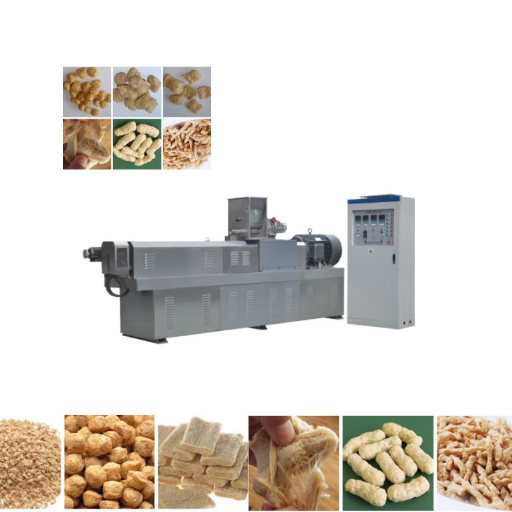
They are the production process’s heart; extrusion machines take the raw materials mixed and turn them into rice-like kernels. With their temperature and pressure-controlled systems, these machines not only mimic the natural rice but also improve the digestibility and retention of nutrients.
3. Dryers
The first step in the drying process is to remove the moisture from fortified kernels, which is done by dryers; this guarantees the kernels’ longer shelf life and structural integrity. Efficient drying also reduces waste during packaging and storage.
4. Polishing Machines
In this step, consumers are given a rice product with beautified and reconstituted rice that has a natural shine and smooth finish. This step is very important for the consumers’ attraction and acceptance in the market.
5. Packaging Solutions
Automated packaging machines are responsible for sealing rice fortified in the right way, thus maintaining its nutritional quality and preventing contamination. The advanced systems are capable of incorporating customized labeling that highlights fortification benefits; this is in line with both industry trends and consumer demand for transparency.
The data search engine shows that there is an increasing interest in phrases like “high-efficiency extruder machines” and “integrated solutions for rice fortification,” which is a sign that the industry is on its way to using comprehensive, advanced technology. It is this interest that highlights the importance of using these high-tech machines as a means of staying competitive and at the same time satisfying customers’ demands.
Artificial Rice Production Lines

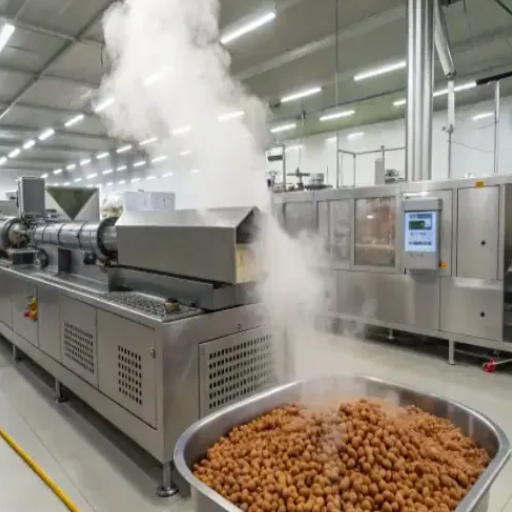
Artificial rice production lines are meant to copy the nutritional value and the look of natural rice, providing a sustainable solution for curing dietary problems. Key processes such as blending of the raw materials, extrusion, drying, and polishing are usually involved in these lines. Blending is combining rice flour with nutrients or additives to improve its nutritional quality. Extrusion technology forms the mixture into rice-like grains by applying high pressure and heat. Drying removes the excess moisture and leaves the product with the right amount for storage, while polishing makes the final product look and feel like a natural grain. These production lines are not only efficient but also customizable, so the manufacturers can create rice varieties enhanced with nutrients that perfectly match the needs of different markets.
Overview of Production Lines
Modern rice production lines make use of high-tech machines that ease the process of making rice without losing any of the quality or quantity. Automation and precision engineering are employed to make the rice analogs’ shaping, drying, and polishing processes uniform, thus minimizing human intervention. Moreover, they allow the companies to change their recipes quickly, which is the case for changing the tastes of consumers and dietary trends, such as the rising demand for fortified or gluten-free grains. Not only advanced extrusion equipment and moisture control technologies prolong the product’s shelf-life but also keep its sensory qualities appealing so that it can meet both industry and consumer standards without any delays. The combination of flexibility, scalability, and quality assurance puts these production lines at the top of the list in terms of market innovation.
Components of an Artificial Rice Processing Line
An artificial rice processing line consists of many interlinked parts which together provide the firm’s efficiency, scalability, and high-quality production. The following are the major components that made up the system:
1. Raw Material Mixer
One of the important processes in the production of artificial rice is mixing raw materials such as rice flour, starch and essential nutrients. They are mixed and blended thoroughly so that a uniform mixture is formed. This mixture is later processed to make artificial rice grains. The advanced mixers having precise control will help in maintaining the nutritional component of the product.
2. Screw Conveyor
The raw material after mixing is feed into the extruding unit through the screw conveyor for the next step. This part is very important to transmission. A screw conveyor makes it very easy to control the speed of the production line. It also eliminates the risks of contamination since raw materials are handled by manpower for a shorter period.
3. Twin-Screw Extruder
The extruder is the kernel of the artificial rice manufacturing line. It is responsible for the major part of the process, using high temperatures, pressures, and shear forces. In this way, the feed is processed by the extruder into finished products, by changing the feed characteristics and flow. Moreover, the extruder’s twin-screw technology allows the perfect control of the cooking method, thereby resulting in very precise and uniform heating.
4. Shaper and Cutter
The tough material is pressed into rice-like granules through the aid of special molds and cutters. Such items are really useful for the process of creation in the shape of rice as well as of any other form and size of a product that the market requests.
5. Drying System
Every freshly shaped type of rice is then transferred to the drying system with several layers at different levels of humidity. The precise controls for temperature and humidity at this stage are very important because the quality of the rice should not be compromised and the natural structure and nutritional properties of the product should be maintained. At the same time, the shelf-life of the product is prolonged.
6. Cooling Conveyor
An air-fed cooling conveyor brings the temperature of the dry grains to the ambient level, hence the grains are ready for wrapping. The process verifies the grains maintaining their intrinsicness all the time and that there will be no quality accompanying the handling after packaging.
7. Packaging Equipment
The packing of the synthetic rice is efficiently done by automatic packaging systems which are latest on the market. They are also capable of meeting both the retailer and consumer requirements by considering good sealing, applying labels, and weighing accurately.
The efficiency and quality of the production line is achieved through the operation of each one of these components that is assigned the role of contributing. The artificial rice processing lines are being developed to adopt the latest technologies in extrusion and automation in order to be able to meet the demands of the market that is becoming more and more extensive with the need for special, eco-friendly, and nutrient-enriched products.
Automation and Technology in Production Lines
The utilization of automation and high tech is a major contribution in enhancing the productivity of production lines by completely eliminating humans from the production process, and at the same time transforming the work of only a few workers into a more productive environment, at an even faster rate, to a consistent product quality. Production systems are now able to utilize real-time data monitoring, maintenance forecasting and workflow optimization by becoming capable of using and learning from digitized data captured by smart sensors, IoT integration and machine learning algorithms. Due to this reduction in operational and short run time the companies are enjoying the high throughput. Imagine the difference in speed with which an AI-based automated packaging system conducts sorting, labeling, and sealing the products with unmatched accuracy, cutting manual labor and related costs significantly. Moreover, the companies receiving automated data from the production line are in the position to gain actionable knowledge that will help them in getting a superior process, a higher productivity, and better for the market demands.
Fortified Rice Making Machines

Machines for manufacturing fortified rice are specifically built to create rice that has been enhanced with the needed vitamins and minerals to fight the lack of nutrition. The machines usually employ the method where the rice flour is blended with the nutrient premixes, the mixture is shaped into the rice-like grains during this stage and the drying is done to get the right texture and strength. Modern machines take the process as far as possible without human intervention, providing the required consistency and high production from the cost point of view. Hence, they have a significant role in the global fortified rice which is in high demand predominantly among the countries that are working towards food security and public health improvements.
Design and Functionality
Fortified rice machines are rigorously designed with a right mix of mechanical, electric elements, and pure innovation to meet the increasing demand for nutritious food. These machines have seamless integration of the most modern technology and most efficient workflow designs, resulting in the maintenance of consistency and quality on every batch. They come with excellent features like automatic temperature control, terdly eggornat ingredient dispensing systems, and very strict quality checks which are very essential for today’s production of food. Internet users’ searches show the tendency to move on to the direction of having the production of solid foundation being sustainable, and at the same time, with less energy usage solutions. A huge number of such machines are available in the market which also makes use of energy-saving which is one of the main priorities of the manufacturers to be in line with the Green policy thus, there are driving forces that are making it the only solution and highly desirable in the fortified rice production sector.
Comparison of Different Rice Making Machines
When evaluating different types of rice cooking machines, it is highly crucial to take into account the production capacity, energy efficiency, quality of the output, and cost-effectiveness. The most recent data on user searchesis becoming more and more users are seeking for rice cooking machines that are the perfect combination of sustainability and efficiency.
High Capacity Machinery:
These are the best choice for long-term production stores. Searching the data shows that there is an increasing demand for machines that can produce a large quantity of fortified rice as well as maintain the quality standard at the same time. These are usually equipped with the latest automation systems and robotics that require minimum human involvement and increase the overall efficiency.
Eco-Friendly Models:
The leading concern for the companies that are a focus group on eco-friendly machines, is the increasing energy savings features in products. Searching the web, it is noticeable that people are talking a lot about “energy-efficient fortified rice machines,” which is a trend that the industry is taking up to support its moves towards both sustainability and planned production without waiting for the next recession.
Cost-Efficient Solutions:
In a world of small manufacturers and startups, affordability for many is the deciding factor. The machines with the highest search rates are usually in the middle as they provide a good mix of features and a limited budget, thus making them ideal for businesses looking to expand without having to spend a lot of money.
Versatility and Customization:
Machines capable of processing different types of rice formulations–such as high-nutrition blends or enriched grains–are also in demand. Specific search terms like “best customizable rice extruders” indicate that manufacturers consider adaptability as the most important point to meet different consumer needs.
Durability and Maintenance:
The additional factor causing considerable online search volume along with reliability and low maintenance is people looking for “long-lasting rice-making machines” which is a growing trend to keep up with. Thus, the requirement of the industry for equipment that can withstand all kinds of working conditions without the need for frequent repairs continues to increase.
Every machine class here corresponds to key purchase factors highlighting efficiency, applicability, and sustainability features, etc., Manufacturers can boost business operations by picking the correct rice-making machine that suits their production capacity and is trendy in the industry.
Supplier Insights and Market Trends
The prevalence of the need for a rice-making machine and unimaginable reasons like regional customs, the forthcoming of new technologies, and the newly set earth-friendly goals are the triggers compounding to the situation. It is interesting to notice that queries like “rice-making machines that are run by Automation” and “energy-saving rice processors” are among the most searched terms hence they stand as evidence for the move towards the more sophisticated and environmental friendly solutions.
Manufacturers, on the other hand, are getting contracted through the creation of machines which are not only more productive but are also very energy efficient hence answering the needs of both the owners and the buyers. The outstanding characteristics are the incorporation of an AI-based monitoring system for the purpose of efficiency enhancement and the provision of predictive maintenance in order to decrease the negative effects caused by downtime. Also, the big consumers of rice such as Asia-Pacific, and parts of Africa, are the areas where sales are highest, as the buyers have a preference for products that are both economical and durable.
Suppliers who adapt to these trends, leverage cutting-edge technology, and align their offerings with sustainability initiatives will be the winners in the stay fight for market share.
Reference Sources
- Foodmachinel: It discusses the importance of being able to produce nutritious rice in large quantities so that food security and nutritional requirements can be met and in places where rice is the primary food.
- Loyal Machine: It looks at rice production lines of the future, emphasizing the nutrient content that they will carry through the processing.
- Loyal Food Machine: It gives us market insights and user sectors for nutritional rice instant porridge making machines.
- Dayi Food Industry: It tells us about the working of artificial rice machines and how they produce many kinds of rice-based and puffed food.
- Mundi Riso: It speaks about the role of artificial intelligence in rice production, with a focus on the smart monitoring and automation aspects.
Frequently Asked Questions (FAQs)
What is a Nutritional Rice and Artificial Rice Production Line?
It is the name of a production system that is made to form nourished or in other words natural rice of high nutritional values, thus bridging the gap of food and diet needs.
What are the products that the manufacturer can supply?
Fortified rice, artificial rice, quick rice, and convenience food made of rice.
What are the core parts of a production line?
Rice-processing gadgets, extruders, dryers, and packers.
What are the pros of working with a production line?
The processs efficiency will be high, the quality of the results is uniform, and at the same time, one can make nutritional specific rice product.
What aspects should one take into account to select a production line?
Production rate, energy consumption, the extent of mechanization, and conformity with food safety rules.