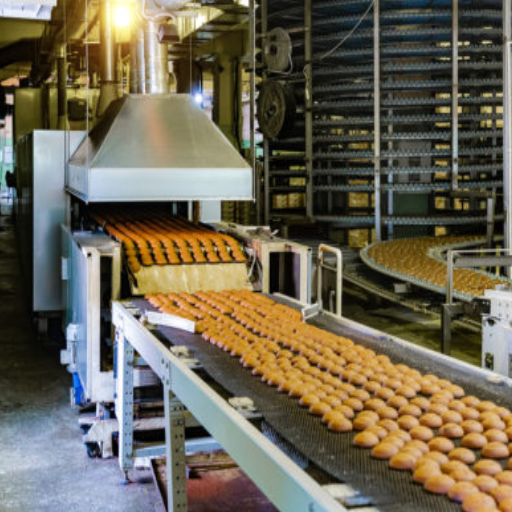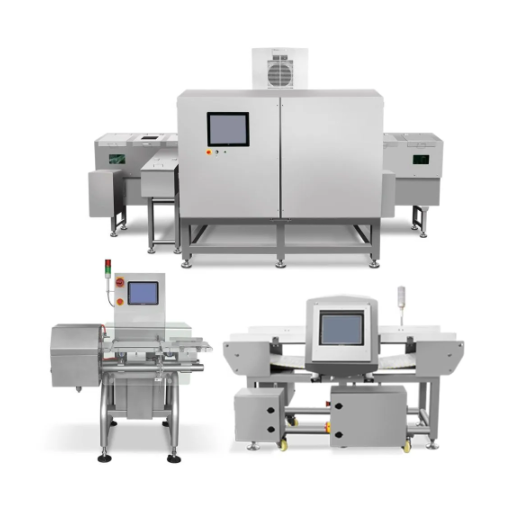
Pet food production machinery with CE certification is the machinery that complies with health, safety, and environmental standards in Europe. It carries the manufacturer’s declaration that the machine complies with the Machinery Directive and related regulations. Without this mark, industrial pet food machinery cannot be legally sold or operated in Europe.
Last March, a distributor in Hamburg received a twin-screw extruder from a Chinese supplier. The machine bore a CE sticker. But customs found problems. No Declaration of Conformity. No technical file. No evidence of EN 1672-2 compliance.
The shipment sat in port for six weeks. Storage fees climbed past €8,000. The distributor nearly lost a contract with a major retail chain.
That is the gap between a CE sticker and real CE compliance. And in the pet food equipment market — projected to reach $6.4 billion globally in 2026 — that gap costs real money.
You already know CE matters. What you need is clarity on which standards apply to pet food machinery specifically, how to verify authentic certification, and what the 2027 Machinery Regulation means for your next equipment purchase. This guide delivers exactly that, from the perspective of a manufacturer who builds CE compliance into every extrusion system and turnkey production line we deliver.
Key Takeaways
- CE marking is mandatory machinery safety certification for EU market entry — not a food safety or quality guarantee.
- EN 1672-2:2020 is the critical hygiene standard for pet food equipment, requiring Ra ≤ 0.8 μm surface finishes and self-draining design.
- The 2027 Machinery Regulation introduces cybersecurity requirements for connected pet food lines with PLCs and remote diagnostics.
- Buyers should demand the Declaration of Conformity, technical file availability, and food-contact material certificates before accepting delivery.
- CE certification for standard pet food equipment typically costs €3,000–€8,000 via self-declaration; automated lines with Notified Body involvement run €15,000–€30,000+.
What Does CE Certified Mean for Pet Food Equipment?
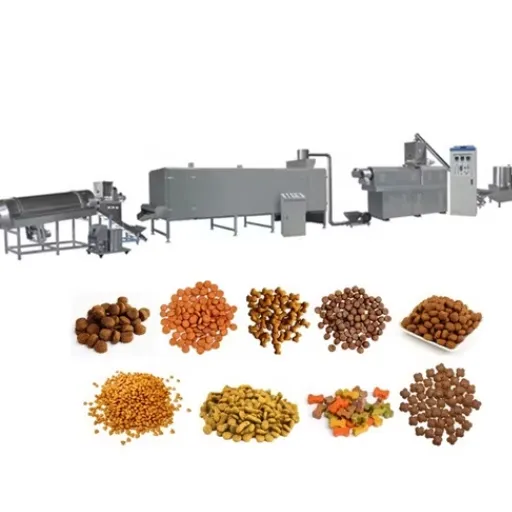
CE stands for “Conformité Européenne” — European Conformity. The manufacturer guarantees that his machinery complies with all EU directives concerning health, safety, and environment. For pet food equipment, this covers extruders, dryers, coaters, mixers, conveyors, and packaging lines.
Most buyers miss a critical distinction. Machinery safety is about CE, not about food safety. A CE-marked extruder meets electrical safety, mechanical guarding, and hygienic design standards. But it does not guarantee the kibble is nutritionally sound or pathogen-free.
That responsibility belongs to EU Regulation 183/2005, HACCP principles, and FEDIAF guidelines.
Why does this matter? Importers and distributors share legal liability for non-compliant equipment. Customs can seize machinery without valid CE marking. Insurance underwriters may deny claims. Facility audits under BRCGS or SQF standards increasingly expect CE-marked production lines.
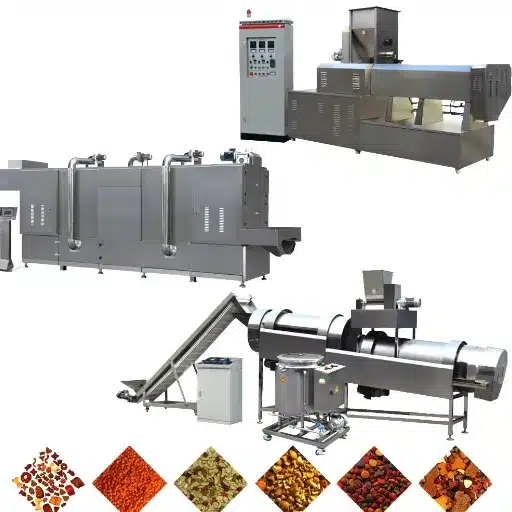
Want to see how CE compliance integrates into a complete pet food production system? Explore our CE-certified pet food production lines — designed from the ground up for EU market entry.
Which EU Directives and Regulations Apply to Pet Food Equipment?
Pet food machinery entering the EU must comply with multiple overlapping directives. CE marking is safety for machinery as well as entry into the market; it is not for food safety.
Machinery Directive 2006/42/EC
This is the basis. Essential Health and Safety Requirements (EHSRs) are established for all machinery brought into use in the EU market. For pet food equipment specifically, the Directive demands:
- Risk assessment per EN ISO 12100 covering mechanical hazards (rotating extruder screws at 200–500 rpm), thermal hazards (barrel heaters reaching 120–160°C), and ergonomic hazards
- Guarding and safety interlocks on all access points
- Emergency stop circuits with specified response times
- Clear marking and traceability on the nameplate
The Directive applies to the entire machine assembly, not just individual components. A CE-marked motor or PLC does not automatically make the final extruder compliant. The manufacturer must assess the complete unit.
The 2027 Shift: Machinery Regulation (EU) 2023/1230
On January 20, 2027, the Machinery Directive becomes the Machinery Regulation. This is not a minor update. Key changes for pet food equipment include:
- Cybersecurity requirements for connected extruders with PLCs, remote diagnostics, and SCADA integration
- Stricter traceability obligations throughout the supply chain
- Expanded Notified Body scope for high-risk categories, which may include AI-enabled quality control systems
- Fines up to 10% of global turnover for non-compliance
If you are evaluating a pet food line today with integrated automation, ask your supplier about their readiness for this transition. The Regulation is directly applicable law — no transposition into national legislation required.
Supporting Directives
| Directive | Applies To | Key Requirements for Pet Food Equipment |
|---|---|---|
| EMC Directive 2014/30/EU | Electronic components | PLCs, VFDs, and sensors must neither emit nor be vulnerable to electromagnetic interference |
| Low Voltage Directive 2014/35/EU | Electrical equipment (50–1000V AC) | Motor insulation, control panel safety, grounding systems |
| Food Contact Materials (EC) 1935/2004 | Materials touching pet food | Non-toxic, corrosion-resistant, no harmful substance migration |
| RoHS Directive 2011/65/EU | Electrical/e electronic equipment | Restricts hazardous substances in wiring, circuit boards, and components |
EU Feed Hygiene Regulation 183/2005
This is not a CE directive. But it intersects with equipment design in critical ways. The Regulation requires HACCP principles at pet food facilities. Equipment must support cleanability. Material safety matters. Cross-contamination prevention is essential.
EN 1672-2:2020 bridges this gap. It translates feed hygiene requirements into concrete machinery design specifications.
Key EN Standards for Pet Food Equipment CE Compliance
CE marking relies on harmonized European standards. For pet food machinery, three categories matter: foundational safety standards, food-processing-specific standards, and component-level applications.
Foundational Safety Standards
EN ISO 12100 governs risk assessment. Every manufacturer must identify hazards first. These include mechanical, electrical, thermal, noise, and ergonomic risks.
Protective measures follow a clear hierarchy. Design out the hazard first. Add guards second. Use warning systems third. Train operators last.
EN 60204-1 covers electrical safety. It specifies control panel IP ratings. IP54 is the typical minimum for food processing. Higher ratings protect against moisture in facilities with wet cleaning.
The standard also governs emergency stop circuits. Cable management falls under this standard too.
EN ISO 14159 establishes hygienic design requirements for machinery. It works alongside EN 1672-2 to ensure equipment can be cleaned effectively between production runs.
Food Processing Specific Standards
EN 1672-1:2021 sets safety requirements for food processing machinery. EN 1672-2:2020 — the standard most relevant to pet food equipment — specifies hygiene and cleanability requirements. This includes:
- Surface roughness limits (Ra ≤ 0.8 μm on food-contact surfaces)
- Minimum radii for internal corners (3 mm)
- Elimination of crevices, dead spaces, and horizontal ledges where product can accumulate
- External placement of fasteners and bearings relative to product zones
- Self-draining design to prevent moisture retention
EN 12852 applies to food processing machines and blenders. EN 415 series governs packaging machinery safety and hygiene.
How Standards Apply to Pet Food Equipment Components
Extrusion systems must satisfy EN 1672-2 hygiene requirements. The barrel, screw, and die assembly need smooth, cleanable surfaces. These systems also need mechanical safety for rotating screws. Thermal safety for heated barrels is equally critical.
Drying systems face temperature control challenges. Fire prevention matters especially for gas-fired units. Exhaust emissions must also meet safety standards.
Coating systems must clean easily between flavor changes. EN 1672-2 applies here too. Vacuum coaters need additional vacuum system safety measures.
Hygienic Design for Pet Food Equipment: The CE Connection
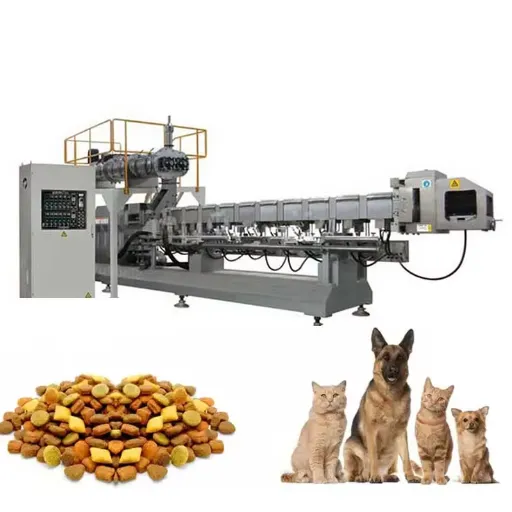
Pet food recipes are demanding. High protein content traps residue. Elevated fat levels create buildup. Varied moisture lets microbes colonize. Cross-contamination threatens every batch.
EN 1672-2:2020 exists for this exact reason. Machinery safety is incomplete without hygiene design.
Materials of Construction
SUS 304 stainless steel is the baseline for standard dry kibble equipment. It resists corrosion, withstands standard cleaning chemicals, and meets food-contact material requirements under EC 1935/2004.
SUS 316L stainless steel handles aggressive conditions. Its molybdenum content resists corrosion better. Use it for high-moisture recipes or high-protein formulations. Acidic environments need it too. Facilities using aggressive CIP chemicals should also specify 316L.
The “L” means low carbon. This prevents weld decay during fabrication.
Food-contact plastics and elastomers — gaskets, seals, conveyor belts — require migration testing per EU 10/2011. Not all rubber is equal. EPDM and FDA-grade silicone dominate in pet food applications for their chemical resistance and temperature stability.
Surface and Geometry Requirements
Surface finish matters more than most buyers realize. A rough surface at Ra 3.2 μm traps protein residue. A smooth Ra 0.8 μm surface releases it. Over time, trapped residue becomes a biofilm risk.
Internal corners need minimum 3 mm radii. Sharp angles are cleaning dead zones. Horizontal ledges let product settle. This violates the self-draining principle. Fasteners inside product zones create threads. Material lodges there.
The test is simple: If you cannot visually confirm a surface is clean within 30 seconds of inspection, the design fails EN 1672-2.
Cleanability and Recipe Changeover
Modern pet food manufacturers run multiple recipes on shared lines. Chicken-based kibble at 8:00 AM. Grain-free fish formula at 2:00 PM. The equipment must support rapid, validated cleaning between runs.
CIP (Clean-in-Place) compatibility for closed extrusion and coating systems eliminates disassembly. Quick-release components — clamps instead of threaded fasteners — speed manual inspection. Documented cleaning protocols specify approved chemicals, contact times, and verification methods.
When Elena, a production manager at a Portuguese co-manufacturer, upgraded her coating drum to a CIP-compatible design with quick-release access panels, her recipe changeover time dropped from 4 hours to 90 minutes. Annual uptime improved by 18%. The upgrade paid for itself in nine months.
The CE Compliance Process for Pet Food Equipment: A Manufacturer’s View
Buyers rarely see what happens before the CE mark appears. Understanding the process builds trust and helps you evaluate supplier claims.
Step 1: Risk Assessment
We begin with EN ISO 12100. For a typical twin-screw pet food extruder, the risk assessment identifies:
- Mechanical hazards: pinch points at the feeder, rotating screws, cutter blades
- Thermal hazards: barrel heaters, steam injection in preconditioners, hot product discharge
- Electrical hazards: high-voltage control panels, motor connections
- Noise hazards: gearbox operation typically at 75–85 dB
- Hygiene hazards: cross-contamination between recipes, biofilm formation in dead spaces
Each hazard gets a risk rating. Protective measures follow the hierarchy: eliminate through design first, guard second, warn third.
Step 2: Design and Testing
Harmonized standards inform the design phase. Barrel segments use SUS 304 or 316L depending on the application. Electrical panels meet IP54 or IP65 ratings. Guarding incorporates safety interlocks that stop the extruder when opened.
Testing includes EMC verification, electrical safety testing per EN 60204-1, and cleanability validation. For food-contact materials, migration testing confirms compliance with EC 1935/2004.
Step 3: Technical Documentation
The technical file contains design drawings, electrical schematics, the risk assessment report, test reports, bill of materials, and user manuals. EU law requires manufacturers to retain this documentation for 10 years after the product is placed on the market.
This matters to you because: if a supplier cannot produce a technical file on request, the CE marking is questionable.
Step 4: Declaration of Conformity and CE Marking
The EU Declaration of Conformity formally states that the equipment complies with all applicable directives. It lists the specific directives and standards applied. The CE mark goes on the nameplate with the manufacturer name, address, machine designation, serial number, and year of construction.
When a Notified Body Is Required
Standard pet food equipment usually qualifies for self-declaration. The machinery manufacturer performs the conformity assessment. No third party is required.
A Notified Body becomes mandatory for high-risk configurations. From 2027, AI-enabled equipment with autonomous decision-making may also require third-party assessment.
How Buyers Can Verify CE Certification on Pet Food Equipment
The market has a counterfeit problem. Not every CE mark is legitimate. Here is how to protect your investment.
Documentation to Demand
Before accepting delivery, request:
- Declaration of Conformity listing the correct directives (Machinery Directive 2006/42/EC, plus EMC and LVD where applicable) and harmonized standards (including EN 1672-2:2020 for pet food equipment)
- Technical file availability confirmation — the manufacturer must retain this for 10 years
- Food Contact Declaration of Compliance for all materials touching product
- Material certificates for food-contact surfaces (304/316L mill certs)
- User manual in your language — EU law requires instructions in the destination country’s language
Red Flags: Spotting Fake or Incomplete CE Claims
- CE mark with no accompanying Declaration of Conformity
- Declaration referencing incorrect or outdated directives
- Missing food-contact material documentation
- User manual only in the supplier’s local language
- Certificate registration numbers that cannot be verified with accredited labs (SGS, TÜV, Intertek, Bureau Veritas)
- Vague CE claims like “CE approved” or “CE standard” — the correct terminology is “CE marked” or “CE certified”
Ready to source pet food equipment with confidence? Contact our team for transparent CE documentation, material certificates, and full technical file support on every machine we deliver.
Cost Reality
For standard pet food processing equipment, CE self-declaration typically costs €3,000–€8,000. This covers risk assessment, technical file compilation, testing, and documentation.
Automated production lines requiring Notified Body involvement run €15,000–€30,000+ depending on complexity.
Be wary of suppliers who quote a 15–20% “CE premium” on standard equipment. For self-declarable machinery, the cost is modest and should not inflate the machine price disproportionately.
CE vs. Other Global Certifications for Pet Food Equipment
CE is not the only certification pet food manufacturers encounter. Understanding how certifications interact prevents costly confusion.
CE (European Union)
- Mandatory for EU/EEA market access
- Covers machinery safety, electrical safety, EMC, and material safety
- Equipment-level certification
FDA / FSMA (United States)
- Food facility registration and Current Good Manufacturing Practices (cGMPs)
- Focuses on sanitary design of the production process
- Does not replace CE for EU markets
- Many exporters configure equipment for both CE and FDA alignment
FEDIAF Guidelines (Europe)
- Nutritional guidelines for pet food products
- Safety guide for pet food manufacturing
- Complements CE by addressing product safety, not machinery safety
ISO 22000 / FSSC 22000 (Global)
- Food safety management systems at the facility level
- Often required by global retailers and brand owners
- Not equipment-level certification, but equipment design must support it
How Shandong Loyal Addresses Multi-Market Needs
Our equipment uses CE requirements as the foundation. We offer FDA and FEDIAF configurations where needed. Stainless steel construction satisfies multiple frameworks. Hygienic design per EN 1672-2 does the same. One production line can support multi-market compliance. Documentation packages cover every target market.
Preparing for the 2027 Machinery Regulation: Pet Food Equipment
The Machinery Regulation (EU) 2023/1230 takes effect January 20, 2027. Here is what pet food equipment buyers and manufacturers should do now.
Key Changes Affecting Pet Food Lines
- Cybersecurity for connected equipment: PLCs with remote access, SCADA systems, and IoT-enabled sensors must meet new security standards
- Stricter traceability: Enhanced documentation requirements for component sourcing and assembly
- Expanded high-risk categories: AI-enabled sorting and quality control systems may require Notified Body assessment
- Direct applicability: The Regulation applies immediately across all EU member states without national transposition
Action Items for Buyers
- Review current technical files for gaps in cybersecurity documentation
- Assess connected equipment for remote access vulnerabilities
- Verify supplier readiness for the Regulation transition
- Confirm EU Authorised Representative arrangements for non-EU manufacturers
- Audit lines with AI-enabled quality control for potential high-risk reclassification
Action Items for Manufacturers
- Update risk assessment procedures to include cybersecurity threats
- Review software update and patch management processes for embedded systems
- Evaluate supply chain traceability documentation
- Train engineering and documentation teams on new requirements
- Engage Notified Bodies early for any products potentially falling under expanded high-risk categories
Conclusion
CE certification for pet food equipment is not a sticker. It is a legal framework. It protects workers. It ensures market access. It supports hygienic production.
The mark means something specific. Risks have been evaluated by the manufacturer. They applied harmonized standards. They compiled technical documentation. They took legal responsibility.
For pet food, EN 1672-2:2020 is the critical hygiene bridge. It connects machinery safety with feed hygiene requirements. The 2027 Machinery Regulation adds cybersecurity. Supplier readiness is now a procurement priority.
The lowest-risk strategy is clear. Partner with manufacturers who build CE compliance into design from day one. Avoid suppliers who treat it as an afterthought.
At Shandong Loyal Industrial, we bring over 10 years of expertise. We design CE-certified pet food extrusion systems, drying equipment, and turnkey production lines. Our documentation is transparent. Our hygienic design follows EN 1672-2:2020. Our team supports you from consultation through commissioning.
Get in touch today to discuss your pet food production goals and CE compliance requirements. We will walk you through the standards, the documentation, and the equipment specifications that get you into Europe without border delays.