The right food machinery certifications for your business depend almost entirely on where you plan to sell. They also depend on who will audit your facility.
FDA compliance governs food-contact safety in the United States. CE marking is mandatory for placing machinery on the European Union market. EHEDG certification is a voluntary but widely respected standard for hygienic design and cleanability, especially in Europe and premium global accounts.
That distinction sounds simple. Yet, every month, we speak with buyers who receive a machine stamped “CE” and assume it is also FDA-ready. It is not.
Each mark answers a different question. Mixing them up can delay shipments, trigger rejections at customs, or force expensive retrofits after installation.
In this guide, we will break down FDA, CE, and EHEDG in plain language. You will learn what each food machinery certification actually covers, how they compare, and how to choose the right combination for your market. We will also show how these requirements apply to real production lines, from snack extrusion to pasta and pet food, so you can specify equipment with confidence.
Key Takeaways
- FDA regulates food-contact material safety and sanitation support in the United States; it does not issue a single “FDA certificate” for most machinery.
- CE marking is mandatory for EU market access and covers machinery safety, hygiene-related harmonized standards, and conformity assessment.
- EHEDG is a voluntary hygienic-design certification prized by European retailers and scored in BRC/SQF audits.
- For the United States, prioritize FDA + NSF/ANSI 51 or 3-A; for the EU, prioritize CE marking + EHEDG-ready design.
- A global exporter typically needs a stacked food machinery certifications package: FDA-ready materials, CE marking, and EHEDG hygienic design.
What Is FDA Compliance for Food Machinery?
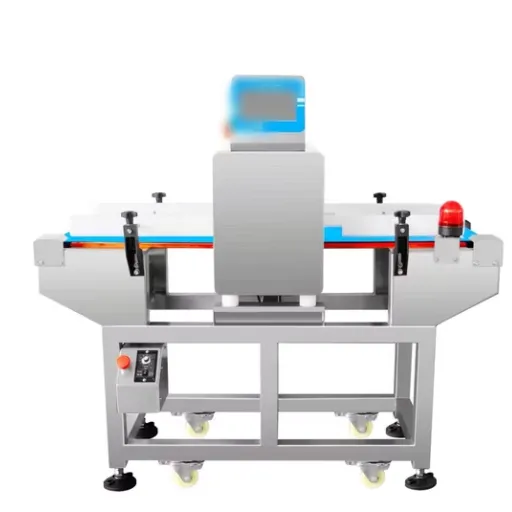
The U.S. Food and Drug Administration (FDA) does not certify FDA food contact machinery the way a third-party body certifies electrical safety. It does not issue machinery certificates. Instead, it regulates the materials that touch food and the conditions under which food is produced.
For equipment manufacturers seeking food machinery certifications, the most relevant rules live in 21 CFR Parts 170–199. These sections list food contact materials approved for food-contact use, specify migration limits, and set current Good Manufacturing Practice (CGMP) expectations. If a surface touches your product, it must be safe, non-toxic, corrosion-resistant, and cleanable enough to prevent contamination.
What FDA Actually Requires
FDA-compliant food machinery must meet several practical design criteria:
- Food-contact surfaces must be smooth, non-porous, and corrosion-resistant.
- Materials must not transfer harmful substances into the product under normal use.
- Equipment must be designed for repeated cleaning and sanitizing without degradation.
- There must be no product traps, crevices, or harborage points where bacteria can grow.
- Lubricants and hazardous substances must be prevented from contacting food.
The FDA also expects facilities to maintain documentation. Under the Food Safety Modernization Act (FSMA), food facilities must implement risk-based preventive controls. Equipment design therefore becomes part of the food safety plan. A buyer should receive material declarations, migration test reports, and evidence that the machine supports sanitation verification.
The Self-Declaration Reality
Here is where confusion often starts. Most food machinery does not carry an official “FDA certificate.” Compliance is typically self-declared by the manufacturer, supported by testing and documentation. That makes supplier due diligence critical. A low-cost machine with a generic “FDA compliant” sticker but no material reports can create serious audit risk.
When Marcus, a procurement manager at a mid-sized snack company in Chicago, sourced a new extrusion line in 2024, he assumed the “FDA compliant” label on the brochure meant the machine had passed an FDA inspection. It had not.
During his first customer audit, the auditor asked for migration test data on the barrel coating. The supplier could not provide it. Marcus spent six weeks and nearly $18,000 on additional testing and documentation before production could resume.
The lesson: FDA compliance is about documented material safety and cleanable design, not a certificate on the door.
What Is CE Marking for Food Machinery?
CE marking food machinery is the European Union’s mandatory conformity requirement. If you want to place machinery on the EU market, CE marking is not optional. No CE mark means no EU access. It is governed primarily by the Machinery Directive 2006/42/EC, supported by other directives for electrical safety, electromagnetic compatibility, and food-contact materials.
For buyers evaluating food machinery certifications, CE marking answers two questions. First, is the machine safe to use? Second, does it meet the hygiene and material requirements expected for food production?
Key Standards Behind CE Marking for Food Equipment
Several harmonized standards are commonly applied:
- EN 1672-2, Basic hygiene and safety requirements for food processing machinery.
- EN ISO 14159, Hygiene requirements for the design of machinery.
- EC 1935/2004, Framework regulation for materials intended to contact food.
Conformity assessment, technical files, and a Declaration of Conformity are made by the producer. Then, the CE label is affixed to the machine. The CE mark is then affixed to the machine. The process is more structured than a simple self-declaration, but it still relies heavily on the manufacturer’s own testing and documentation.
What CE Marking Does Not Guarantee
When evaluating food machinery certifications, remember that CE marking confirms EU safety and health requirements. It does not automatically mean the machine is optimized for hygienic cleanability. It does not mean the machine is FDA-compliant for the United States. And it does not replace market-specific requirements in other regions.
When you see CE marking on a snack extruder or pasta line, treat it as the baseline for EU access. If you are selling into premium European accounts, you will often need more.
What Is EHEDG Certification?
EHEDG certified equipment meets the standards of the European Hygienic Engineering & Design Group. It is not a government regulator. Its guidelines fill the gap. Founded in 1989, EHEDG is a consortium of equipment manufacturers, food companies, and research institutes that publishes guidelines for hygienic equipment design. Its standards have become a de facto requirement for many European food manufacturers and retailers.
Among food machinery certifications, EHEDG focuses on one thing above all: can the equipment be cleaned to a safe, microbe-free level? That question matters enormously for producers of ready-to-eat foods, dairy, beverages, and any product where contamination can trigger recalls.
How EHEDG Certification Works
EHEDG offers two things that matter to buyers:
- Guideline documents covering hygienic design principles, welding, seals, valves, pumps, and more.
- Equipment certification through third-party testing that validates cleanability, often using CIP (Clean-in-Place) or SIP (Sterilize-in-Place) protocols.
Key guideline documents include Doc 8 (hygienic design principles), Doc 13 (welding), and Doc 44 (seals). Certification testing can involve challenging equipment with soil and microorganisms, then measuring how well the cleaning process removes them.
Where EHEDG Adds the Most Value
EHEDG is especially valuable when:
- You are exporting to EU retailers or co-manufacturers.
- Your customers run BRC, IFS, or SQF audits.
- You produce ready-to-eat, high-moisture, or allergen-sensitive foods.
- You need to demonstrate CIP/SIP performance to a skeptical buyer.
Elena, a sales director at a bakery ingredient company in Poland, learned this the hard way. Her firm supplied crumb coatings to a major EU retailer.
When the retailer upgraded its supplier approval process, it began scoring equipment against EHEDG guidelines. Elena’s existing supplier had CE-marked machines but no EHEDG documentation. The retailer gave her 90 days to switch suppliers or lose the contract. She moved to an EHEDG-certified line and kept the account, but the transition cost her three months of margin.
That story illustrates why EHEDG is voluntary on paper but often mandatory in practice.
FDA vs CE vs EHEDG Food Machinery Certifications: Side-by-Side Comparison
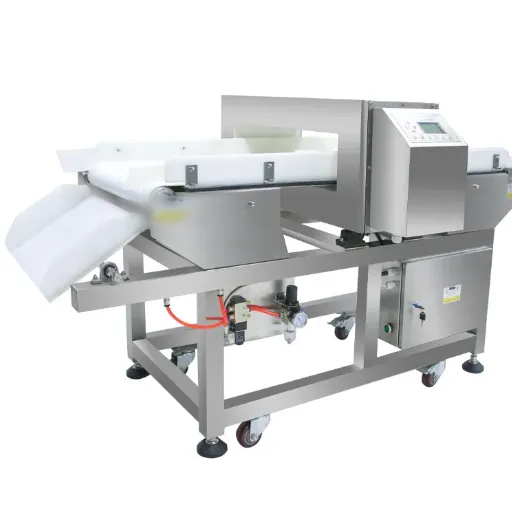
The table below summarizes how the three food machinery certifications differ at a glance.
| Factor | FDA | CE Marking | EHEDG |
|---|---|---|---|
| Region | United States | European Union | Global, origin is Europe |
| Legal status | Regulatory requirement | Mandatory for EU market access | Voluntary, but market-driven |
| Primary focus | Food-contact material safety | Machinery safety + EU conformity | Hygienic design + cleanability |
| Verification | Self-declared with documentation | Manufacturer conformity assessment | Third-party testing/certification |
| Key references | 21 CFR 170–199, FSMA | Machinery Directive 2006/42/EC, EN 1672-2, EC 1935/2004 | EHEDG Doc 8, Doc 13, Doc 44 |
| Food machinery standards | FDA 21 CFR + FSMA preventive controls | EN 1672-2, EN ISO 14159, EC 1935/2004 | EHEDG hygienic design guidelines |
| Typical cost | Documentation + testing | Moderate conformity cost | Higher due to third-party testing |
| Best for | U.S. market entry | EU market entry | Premium EU/global hygienic applications |
Use this table as a quick reference when evaluating a supplier’s certification package. If a salesperson hands you a single certificate and claims it covers “everything,” you now have the framework to ask the right follow-up questions.
Which Food Machinery Certifications Do You Actually Need?
The right food machinery certifications for your business depend on your market, your customer base, and your product risk profile. Here is how to think about it.
Selling or Operating in the United States
For the U.S. market, focus on FDA compliance. Verify that all food-contact materials are listed in 21 CFR or authorized through a Food Contact Notification (FCN), Threshold of Regulation exemption, or GRAS determination. Ask for declarations of compliance and migration test reports.
If you process dairy, liquid foods, or high-risk ready-to-eat products, consider adding 3-A Sanitary Standards or NSF/ANSI 51 certification. These are voluntary but widely expected by U.S. buyers and auditors.
Selling or Operating in the European Union
For the EU, CE marking is mandatory. No exceptions. Make sure the machine has a valid Declaration of Conformity and technical file. Beyond that, EHEDG-ready design is strongly recommended if you are selling to major food manufacturers or retailers.
Exporting to Multiple Markets
If you export globally, plan for a stacked food processing equipment compliance approach:
- FDA-ready materials and documentation for the United States.
- CE marking for the European Union.
- EHEDG hygienic design for premium EU accounts and global retailers.
- 3-A or NSF/ANSI 51 for dairy and liquid applications in North America.
This stack raises upfront cost, but it prevents the far larger cost of retrofitting, rejected shipments, or lost customers.
Emerging Markets
In many emerging markets, food machinery certifications such as CE marking alone are often accepted as evidence of quality and safety. However, if your end customer is a multinational brand or a facility supplying multinationals, they may still demand FDA or EHEDG alignment. Always confirm the buyer’s specific approval checklist before finalizing specifications.
Want to see how certification-ready machinery fits your market? Explore our food production lines and tell us where you plan to sell. We will recommend the right compliance package.
How Food Machinery Certifications Apply to Different Equipment Types
Food machinery certifications are not abstract labels. They show up in specific places on your production line. Below are practical applications for the equipment categories Shandong Loyal manufactures.
Extrusion Systems for Snacks, Pet Food, and Protein Bars
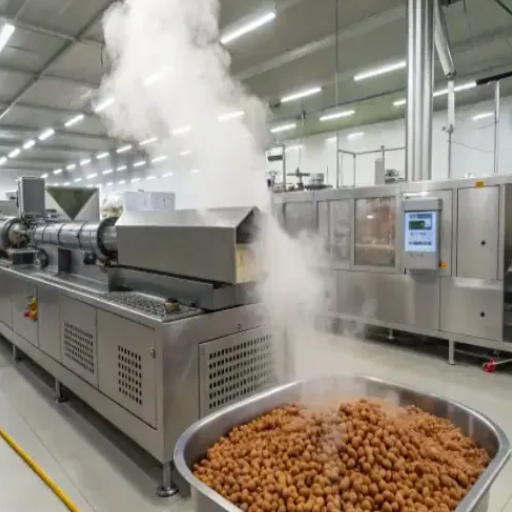
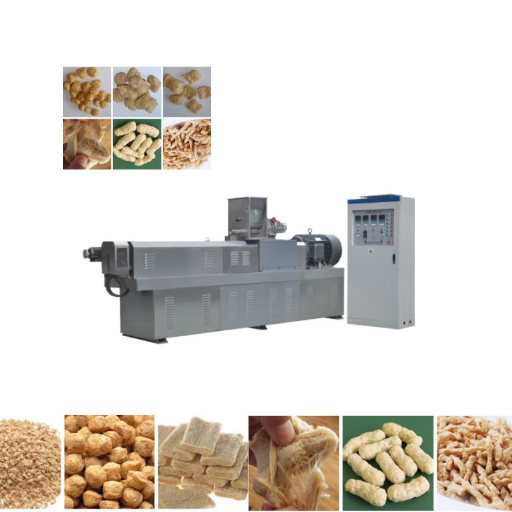
Extruders have food-contact surfaces throughout the barrel, screws, dies, and cutting systems. For FDA compliance, the barrel lining and screw coatings must be listed food-contact materials. For CE marking, the machine must meet EU machinery safety and hygiene standards. For EHEDG, the design must avoid dead zones where dough or paste can stagnate, and it must tolerate CIP/SIP cleaning.
If you produce snack food machinery for export, ask your supplier for material certificates on the barrel and die assemblies. Surface finish matters too. A rougher surface traps more residue. Typical hygienic targets range from Ra ≤ 0.8 µm for general food contact down to Ra ≤ 0.4 µm for high-hygiene applications.
Pasta and Macaroni Production Lines
Food machinery certifications for pasta equipment focus on dough-contact materials and cleanable drying sections. Pasta lines include mixers, extruders, drying cabinets, and cooling conveyors. The dough-contact zones need food-safe materials and cleanable design. Drying sections add another challenge: humidity control and condensation can create microbiological risk if not designed properly.
For EU pasta exporters, CE marking is essential, and EHEDG-aligned design helps when supplying premium brands. For U.S. exporters, FDA-compliant materials and FSMA-aligned sanitation controls are the priority. See our pasta production line options for configurable hygiene levels.
Fried Snack Lines
Fried lines involve oil handling, filtration, and temperature control. Oil is a food-contact substance, so all wetted parts must meet FDA or EC 1935/2004 requirements. The fryer must also be cleanable to prevent oil degradation and off-flavors. Food machinery certifications show up here in the choice of materials and surface finish.
CE marking covers general machinery safety, but EHEDG principles become important if the line produces ready-to-eat products for hygiene-conscious retailers. Sloped surfaces, self-draining designs, and tool-free disassembly are all design features that support both FDA and EHEDG expectations for snack production equipment.
Bread Crumb and Protein Bar Lines
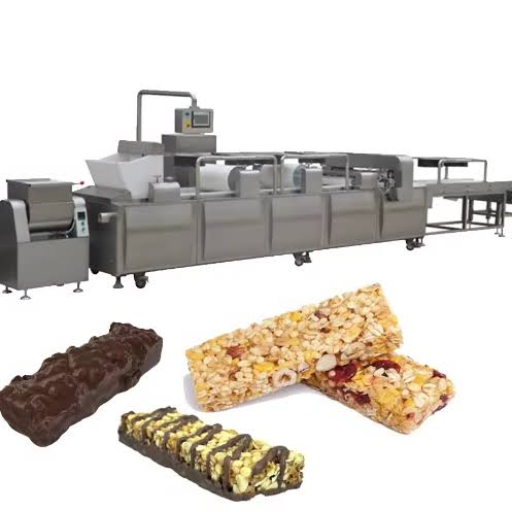
Powder handling in bread crumb production line systems creates dust and allergen control challenges. The surfaces should be flat and easily cleanabl. For protein bar production lines, material contact points include mixers, forming rollers, cutters, and cooling conveyors. All of them must use food-grade materials and be designed for sanitation.
FDA compliance focuses on material safety. CE marking covers machinery safety. EHEDG adds value when the equipment is shared across allergen and non-allergen products because cleanability becomes a food-safety control alongside HACCP protocols.
Pet Food Equipment
Pet food is often regulated as animal feed rather than human food, but many buyers still expect human-food-grade hygiene. Extruded pet food lines benefit from the same material and cleanability standards as snack extrusion. If you serve premium or export markets, FDA-aligned materials and EHEDG hygienic design can be strong selling points.
Our pet food safety standards page explains how we approach hygiene and compliance for pet food production.
Common Food Machinery Certifications Pitfalls When Buying from Overseas
International sourcing can reduce cost, but it also introduces food machinery certifications compliance risk. Here are the most common mistakes we see.
Assuming CE Equals FDA-Ready
CE marking addresses EU requirements. It does not automatically satisfy FDA food-contact material rules. A machine can be legally sold in Europe and still fail a U.S. customer audit. Always ask for separate FDA material documentation.
Missing Food-Contact Material Reports
A certificate that says “stainless steel 304” is not enough. Food machinery certifications require a declaration of compliance showing that the specific grade, coatings, seals, and lubricants are approved for food contact under your intended use conditions.
Ignoring Surface Finish and Weld Quality
EHEDG auditors pay close attention to surface finish, weld quality, radii, and drainage. Poor welds or sharp corners create cleaning nightmares. If you expect EHEDG certification, specify surface finish targets and weld inspection criteria in your purchase order.
Confusing Electrical Safety Marks with Food-Safety Certifications
CE, UL, and ETL marks relate to electrical and machinery safety. They are important, but they do not prove food-contact compliance. Do not let a supplier use an electrical safety mark as evidence of FDA or EHEDG suitability.
Failing to Plan for Documentation
Customs, auditors, and customers will ask for paperwork. Request a complete documentation package at the quotation stage, including declarations of conformity, material certificates, test reports, and hygiene design rationales. Waiting until after delivery is expensive.
Certification Tiers: Match Your Food Machinery Certifications to Your Market
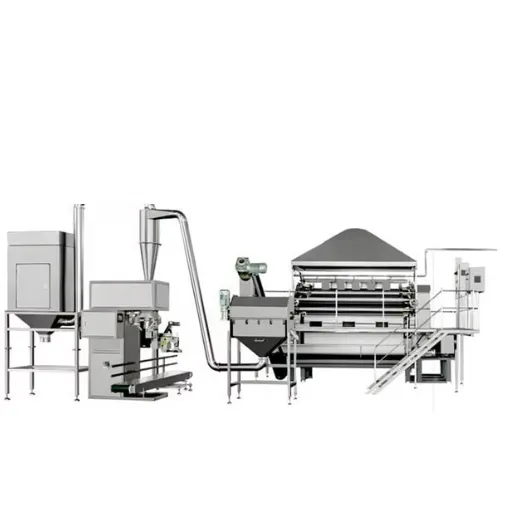
Not every producer needs the highest tier of food machinery certifications. The right level depends on your product, customer, and geography. Here is a practical framework.
Tier 1: Domestic or Price-Sensitive Markets
- Materials: Food-grade 304 stainless steel, basic surface finish.
- Documentation: Supplier material certificates, basic hygiene design.
- Best for: Local markets with limited third-party audit pressure.
Tier 2: United States Focus
- Materials: FDA-listed food-contact surfaces, corrosion-resistant 304 or 316 stainless steel.
- Certifications: FDA-ready documentation; NSF/ANSI 51 or 3-A for dairy/liquid.
- Best for: U.S. food manufacturers and co-packers.
Tier 3: European Union Focus
- Materials: EC 1935/2004 compliant, 316 stainless steel for aggressive environments.
- Certifications: CE marking + EHEDG-ready hygienic design.
- Best for: EU exporters and suppliers to major retailers.
Tier 4: Global Exporter
- Materials: 316L stainless steel, electropolished surfaces, Ra ≤ 0.4 µm where needed.
- Food machinery certifications: FDA + CE + EHEDG + 3-A or NSF/ANSI 51 as required.
- Best for: Multi-market exporters and premium co-manufacturers.
The team at Acme Snacks, a fictional but representative example based on clients we have supported, started with Tier 2 for the U.S. market. When a European retailer approached them in 2025, they upgraded to Tier 4 by specifying 316L contact surfaces and EHEDG-aligned welding.
The upfront cost increased by roughly 12%, but the contract was worth 40 times that amount over three years.
How Shandong Loyal Builds Certification-Ready Food Machinery
At Shandong Loyal Industrial Co., Ltd., we have spent over a decade designing food production lines for clients in more than 50 countries. We understand that food machinery certifications are not a sticker. They are a design philosophy.
Our standard approach includes:
- CE certification as baseline for machinery safety and EU conformity.
- Food-grade stainless steel construction, with 304 and 316/316L options.
- Food machinery certifications configured for your target markets, including FDA, CE, EHEDG, and 3-A as needed.
- Customizable surface finishes and weld specifications to match your audit requirements.
- Hygienic design features such as self-draining surfaces, smooth radii, and tool-free disassembly.
- Documentation packages for export, including material certificates and compliance declarations.
- Tailored configurations for snack, pasta, pet food, protein bar, and bread crumb applications.
We do not believe in one-size-fits-all machinery. Tell us your target market and product goals, and we will configure the right certification-ready solution. Whether you need CE marking for Europe, FDA-ready materials for the United States, or EHEDG hygienic design for global retailers, we build the line to match.
Ready to specify your next production line? Contact us for a compliance consultation and receive a detailed proposal tailored to your market.
Conclusion
Food machinery certifications are not interchangeable. FDA governs food-contact safety in the United States. CE marking unlocks the European market. EHEDG signals hygienic excellence to the world’s most demanding buyers. Understanding the difference protects your investment, speeds up customer approvals, and opens new markets.
Before you sign a purchase order, clarify three things about your food machinery certifications: where you will sell, who will audit your facility, and what documentation your customers expect. Then match your machine specification to those answers. The right certification stack is not an expense. It is insurance against delays, rejections, and lost revenue.
If you are planning a new line or upgrading an existing one, start the compliance conversation early. Start now. The best time to specify FDA-ready materials, CE marking, or EHEDG hygienic design is before the machine is built. Get it right from the start, and your equipment will serve you in every market you want to reach.
Frequently Asked Questions
Does FDA issue food machinery certifications?
No. The FDA generally does not issue certificates for food machinery itself. Instead, it regulates the food-contact materials and sanitation design through 21 CFR and FSMA. Compliance is usually self-declared by the manufacturer with supporting documentation.
Is CE marking mandatory for food machinery?
Yes, CE marking is mandatory for machinery placed on the European Union market. It demonstrates conformity with EU safety, health, and environmental requirements, including hygiene-related standards for food equipment.
What is the difference between CE marking and EHEDG?
CE marking is a legal requirement for EU market access and covers broad machinery safety. EHEDG is a voluntary certification focused specifically on hygienic design and cleanability. A machine can have CE marking without EHEDG certification.
Do I need EHEDG certification in the United States?
EHEDG is not required by U.S. law. However, some U.S. facilities serving international brands or pursuing premium hygiene standards may specify EHEDG-aligned design.
Which stainless steel grade is best for hygienic food machinery?
304 stainless steel is suitable for many food applications and common food machinery certifications. 316 or 316L is preferred for high-moisture, acidic, salty, or aggressive cleaning environments because it offers superior corrosion resistance.
Can one machine meet all food machinery standards including FDA, CE, and EHEDG?
Yes. A well-designed machine can use FDA-compliant materials, carry CE marking for the EU, and meet EHEDG hygienic design criteria. This is common for global exporters.