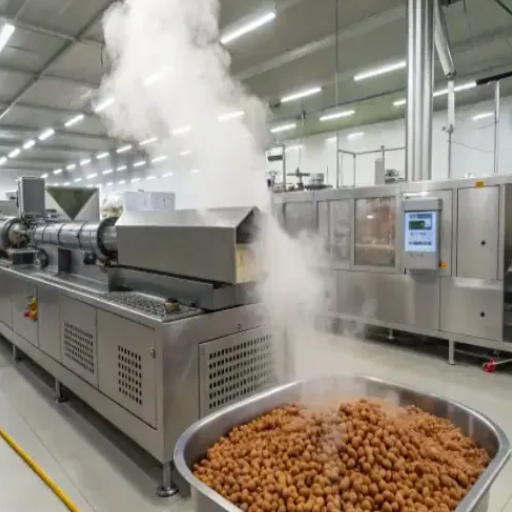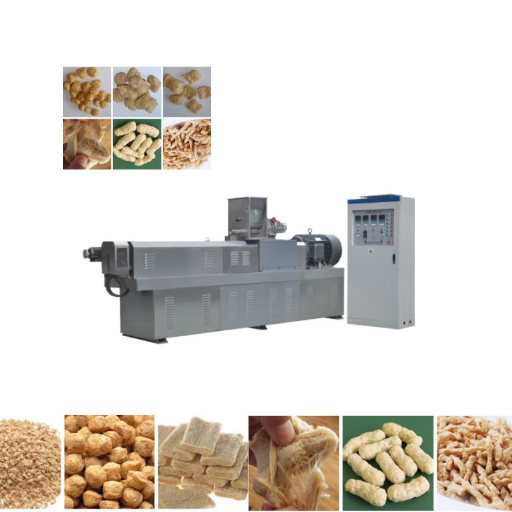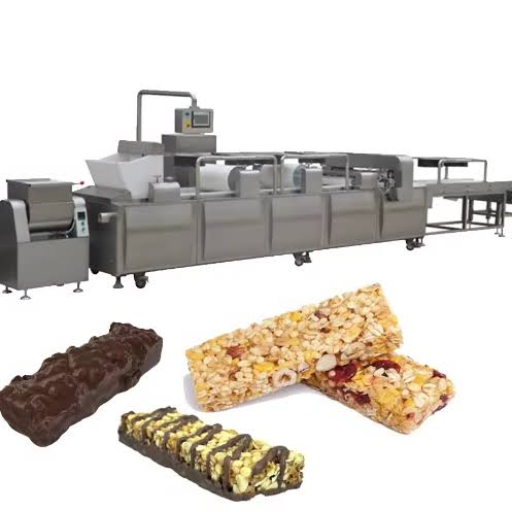
The modified starch manufacturing process turns native starch from corn, cassava, potato, or wheat into a functional ingredient that thickens, stabilizes, binds, and textures countless food products. At industrial scale, this process follows seven core steps: raw-starch selection, slurry preparation, modification, neutralization and washing, drying, milling and sieving, and packaging.
Yet that simple flow hides a critical decision every buyer faces. Choosing the wrong equipment or modification method can waste capacity, create inconsistent viscosity, and force expensive rework. Maria, a production manager at a mid-sized sauce plant in São Paulo, learned this the hard way.
Her team bought a generic extrusion line to produce pregelatinized starch, only to discover it could not hold the shear resistance her retorted tomato sauce needed. After six months of off-spec batches, she replaced the line with a customized system designed around cross-linking requirements. Output consistency jumped, and rework dropped by nearly 40%.
This guide explains the full modified starch manufacturing process, also called the modified starch production process, the equipment that makes it repeatable, and how to select a modified starch production line that matches your end product. Whether you make sauces, snacks, bakery fillings, or dairy desserts, you will learn how to move from raw starch to a finished ingredient with confidence.
Key Takeaways
- Modified starch manufacturing follows seven steps: selection, slurry prep, modification, neutralization/washing, drying, milling/sieving, and packaging.
- Three modification methods dominate the industry: physical (extrusion, drum drying), chemical (esterification, cross-linking), and enzymatic (alpha-amylase hydrolysis).
- A typical industrial modified starch production line includes a mixer, twin-screw extruder, dryer, grinder, and packaging system, with capacities from 100 kg/h to over 1,500 kg/h.
- Buyers often fail by mismatching capacity, ignoring raw-material variability, or treating quality control as an afterthought.
- Partnering with an experienced machinery supplier reduces risk by aligning process science with equipment engineering from day one.
What Is Modified Starch and Why Is It Modified?
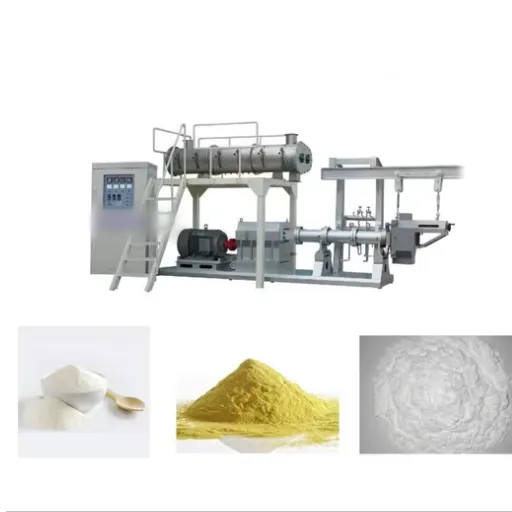
Modified starch is native starch that has been physically, chemically, or enzymatically treated to improve its performance in specific applications. Native starch from corn, cassava, potato, or wheat has limits.
It breaks down under heat, acid, or shear. It can retrograde, which makes sauces weep and fillings gritty. It usually needs hot water to thicken, so it cannot work in instant foods.
Modification solves these problems by altering the starch granule structure or molecule size. The result is an ingredient with controlled viscosity, improved stability, better freeze-thaw behavior, or cold-water solubility.
Key Functional Improvements
Food manufacturers modify starch to achieve one or more of these benefits:
- Thickening and viscosity control: Stable viscosity across heating, cooling, and storage.
- Heat and shear resistance: Holds texture under high-temperature processing and pumping.
- Acid stability: Maintains viscosity in acidic sauces and dressings.
- Freeze-thaw stability: Prevents syneresis in frozen bakery fillings and ready meals.
- Cold-water solubility: Enables instant soups, gravies, and snack premixes.
- Binding and moisture retention: Improves texture in processed meat and meat alternatives.
Common End Products
Modified starch appears in everyday products across nearly every aisle of the grocery store:
- Sauces, soups, gravies, and salad dressings
- Bakery fillings, glazes, and batters
- Dairy desserts, ice cream, and yogurt
- Extruded snacks, cereals, and crackers
- Processed meat, surimi, and plant-based alternatives
- Instant noodles and ready-to-eat meals
According to Future Market Insights, the global modified starch market is projected to reach approximately USD 14.2 billion by 2036, growing at a 3.8% CAGR. Food and beverages remain the largest end-use segment, which is why getting the manufacturing process right matters more than ever.
Modified Starch Manufacturing Process Step by Step
The industrial modified starch manufacturing process follows a clear sequence. Each step must be controlled to protect the functional properties created in the modification stage.
Step 1: Raw Starch Selection and Preparation
Manufacturers start with native starch from a chosen source. Corn starch is the most common because of its availability and low cost. Cassava and tapioca starches are popular in Southeast Asia and Latin America for their clean flavor and clarity. Potato starch offers high viscosity, while wheat starch suits specific bakery and noodle applications.
Modified corn starch manufacturing dominates in North America and China because corn starch is abundant and low cost. Modified tapioca starch production is common in Southeast Asia and Latin America, where cassava is a native crop. The choice of raw material affects the final texture, clarity, and label claims of the modified starch.
Before processing, the starch is screened to remove foreign material and checked for moisture, protein content, and microbial load. Inconsistent raw material is a leading cause of batch-to-batch variation. A good line begins with disciplined incoming-material control.
Step 2: Slurry Mixing and Conditioning
Native starch is mixed with water to form a slurry, typically at 30–40% solids. Additives such as pH buffers, catalysts, or reagents may be added at this stage, depending on the modification method. Temperature and pH are adjusted to prepare the starch for the reaction or cooking step.
In physical modification lines, the slurry feeds directly into an extruder or onto a drum dryer. In chemical modification, the slurry becomes the reaction medium where esterification, etherification, or cross-linking occurs.
Step 3: Modification
This is the heart of the process. The chosen treatment changes the starch structure. Each method needs precise control of temperature, pH, time, and reagent levels.
Physical modification uses heat, pressure, moisture, and shear. Extrusion cooking at 140–220 °C gelatinizes starch in seconds. Drum drying creates pregelatinized flakes. Heat-moisture treatment and annealing change granule structure without destroying it.
Chemical modification suspends starch in a slurry and reacts it with approved reagents. Common reactions include esterification with acetic anhydride, etherification with propylene oxide, oxidation with sodium hypochlorite, and cross-linking with sodium trimetaphosphate or epichlorohydrin.
Enzymatic modification uses enzymes such as α-amylase, β-amylase, or glucoamylase. These enzymes partially break starch chains into smaller molecules. The result is maltodextrins, glucose syrups, or thin-boiling starches.
Step 4: Neutralization, Washing, and Filtration
Chemical modification usually requires neutralization with acid or alkali after the reaction. The starch is then washed to remove salts, unreacted reagents, and by-products. Centrifuges, hydrocyclones, or vacuum filters separate the starch slurry from the wash water.
Physical modification lines skip neutralization but still need cooling or tempering before drying. Enzymatic processes require enzyme inactivation by heating before downstream processing.
Step 5: Drying and Cooling
The modified starch is dewatered and dried to a target moisture content, usually 10–14%. Spray dryers, flash dryers, belt dryers, and rotary dryers are all used, depending on the product form. Rapid, uniform drying preserves the functional properties created during modification.
Cooling is equally important. Hot starch that is packed too quickly can cake, degrade, or support microbial growth.
Step 6: Milling, Grinding, and Sieving
Dried starch is milled to the required particle size. Fineness affects dissolution rate, texture, and appearance. Common specifications range from 60 mesh for coarse applications to 120 mesh or finer for instant products.
Sieving removes oversize particles and ensures consistency. Dust collection systems protect both product quality and worker safety.
Step 7: Packaging and Storage
The finished modified starch is packed in bags, bulk containers, or silos. Packaging must protect against moisture pickup and contamination. Storage conditions are controlled to prevent caking, oxidation, and pest infestation.
A well-designed modified starch production line integrates these seven steps into a continuous, automated workflow. When each stage is matched to the target product, the result is consistent ingredient performance batch after batch.
Three Main Starch Modification Methods
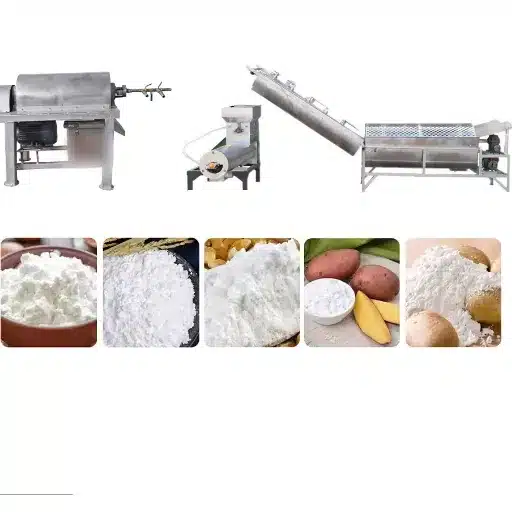
Understanding the three modification methods helps buyers choose the right process and equipment. Each method produces different functional properties and requires different machinery.
Physical Modification
Physical modification changes starch structure without adding chemicals. It is favored for clean-label products because the ingredient can still be labeled simply as “starch” in many markets.
- Pregelatinization: Starch is cooked and dried so it dissolves in cold water. Used in instant soups, sauces, and bakery mixes. Pregelatinized starch production is the most common physical modification for food applications.
- Extrusion cooking: High temperature, pressure, and shear in a twin-screw extruder gelatinize starch in seconds. Ideal for snack binders and pregelatinized starch.
- Drum drying: Starch slurry is dried on heated drums, creating pregelatinized flakes.
- Heat-moisture treatment and annealing: Change granule crystallinity to improve stability and digestion resistance.
Physical modification lines are generally simpler and faster to operate than chemical lines. They also avoid wastewater treatment costs associated with chemical reagents.
Chemical Modification
Chemical modification introduces new functional groups or cross-links between starch molecules. It creates starches that withstand harsh processing conditions.
- Esterification: Acetylated starch has better freeze-thaw stability and lower gelatinization temperature.
- Etherification: Hydroxypropylated starch improves clarity, cold-storage stability, and resistance to syneresis.
- Cross-linking: Creates bonds between starch chains, making the starch stable under heat, acid, and shear.
- Oxidation: Reduces viscosity and improves adhesion; common in paper and textile applications.
Chemical lines require reactors, dosing systems, neutralization tanks, washing equipment, and wastewater handling. Regulatory compliance is stricter because residual reagents must be controlled.
Enzymatic Modification
Enzymatic modification uses biological catalysts to break starch chains into smaller molecules. It is highly specific and can produce tailored molecular-weight distributions.
- α-amylase: Produces maltodextrins and thin-boiling starches.
- β-amylase and glucoamylase: Produce glucose syrups and high-DE products.
- Debranching enzymes: Create resistant starch or cyclodextrins.
Enzymatic processes run at lower temperatures and avoid harsh chemicals. They are common in syrup production and specialty ingredient manufacturing.
How to Choose the Right Method
The best method depends on the end product:
| If your product needs… | Consider this method |
|---|---|
| Cold-water solubility for instant foods | Physical: pregelatinization |
| Clean-label ingredient declaration | Physical: heat-moisture treatment or extrusion |
| Heat, acid, and shear resistance | Chemical: cross-linking |
| Freeze-thaw stability | Chemical: esterification or etherification |
| Controlled molecular weight for syrups | Enzymatic: α-amylase hydrolysis |
Elena’s bakery in Warsaw faced this exact choice. She needed a starch for frozen fruit fillings that would not weep after thawing. Native starch failed after two freeze-thaw cycles. A hydroxypropylated, cross-linked starch solved the problem, and her filled pastries now maintain texture through distribution and retail display.
Modified Starch Production Line Equipment: What Modified Starch Equipment You Need
A complete modified starch production line is more than a collection of machines. It is an integrated system. Each unit operation affects the next. The right configuration depends on the modification method, raw material, capacity, and product specification.
Core Equipment
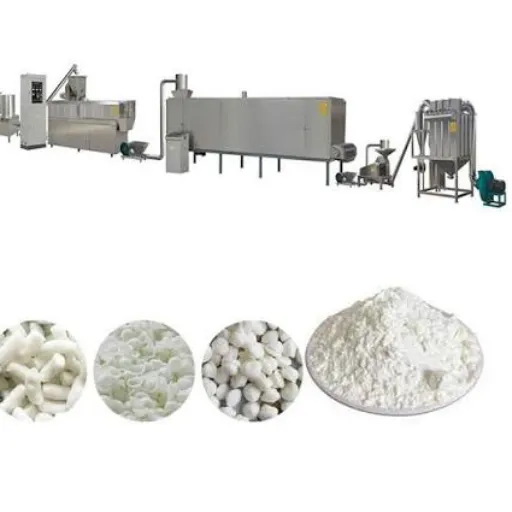
Most physical modification lines include these core units:
- Mixer: Blends native starch with water and additives. Batch or continuous designs are available.
- Screw conveyor: Transfers the conditioned slurry or dough to the extruder.
- Twin-screw extruder: Applies controlled heat, pressure, and shear. This is the workhorse for pregelatinized and physically modified starch.
- Air conveyor or cooling conveyor: Cools and transports the extrudate to the dryer.
- Dryer: A multi-layer mesh-belt dryer or oven reduces moisture evenly.
- Grinder or pulverizer: Reduces dried material to the required particle size.
- Screener: Removes oversize particles and ensures uniform particle distribution.
- Packaging machine: Fills bags or bulk containers automatically.
Auxiliary Systems
Reliable operation also depends on supporting equipment:
- Dust collection: Captures fine starch particles during grinding and conveying.
- PLC/HMI control system: Monitors temperature, screw speed, feed rate, and dryer parameters.
- Cooling system: Prevents heat buildup in the extruder and product.
- Water treatment: Ensures process water meets food-grade standards.
- Wastewater handling: Required for chemical modification lines.
Capacity Ranges
Industrial modified starch production lines scale from pilot plants to full commercial systems:
| Model class | Capacity | Installed power | Typical length |
|---|---|---|---|
| Pilot / small | 100–150 kg/h | 74–77 kW | 17–19 m |
| Medium | 200–300 kg/h | 92–108 kW | 20–21 m |
| Large | 400–500 kg/h | 108–150 kW | 28–30 m |
| Industrial | 800–1,500 kg/h | 180–240 kW | 35–45 m |
These figures vary by raw material, product density, and modification method. Always size a line for both current demand and projected growth. Replacing an undersized line is far more expensive than planning for capacity upfront.
Materials of Construction
Food-grade modified starch lines use 304 or 316 stainless steel for product-contact surfaces. Screws and barrels in the extruder are made from wear-resistant alloy steel because starch slurries are abrasive. Motors, gearboxes, and electrical panels should carry CE or equivalent certification for the target market.
Want to see how a complete line fits your product? Explore our modified starch production line solutions, designed for corn, cassava, potato, and wheat starch applications.
Quality Control and Food Safety in Modified Starch Manufacturing
Quality control is not a final inspection step. It must be built into every stage of the modified starch manufacturing process. Without it, even the best equipment will fail. Consistent results depend on monitoring parameters from raw material to final package.
Critical Quality Parameters
Manufacturers monitor these parameters throughout production:
- Moisture content: Usually 10–14%; too high leads to microbial risk, too low creates dust and handling issues.
- Viscosity: Measured with a Rapid Visco Analyser (RVA) to confirm the starch performs as expected in the end application.
- Particle size: Affects dissolution, texture, and appearance.
- Degree of substitution (DS): For chemically modified starches, confirms the reaction reached the target level.
- Microbial load: Total plate count, yeasts, molds, and coliforms must meet food-grade limits.
- pH and ash content: Indicate washing efficiency and residual salts.
Testing Instruments
Common lab instruments in a modified starch facility include:
- Rapid Visco Analyser (RVA): Measures pasting properties and viscosity profile.
- Differential Scanning Calorimetry (DSC): Evaluates gelatinization and transition temperatures.
- Moisture analyzer: Provides fast moisture readings for process control.
- Sieve shakers: Verify particle-size distribution.
- Spectrophotometers: Measure whiteness and color consistency.
Regulatory Compliance
Food-grade modified starch must meet national and international standards. Key references include:
- HACCP for food safety management
- FDA 21 CFR for food additives in the United States
- EU food-contact and additive regulations
- CE certification for machinery sold in Europe
The FAO/JECFA monograph on modified starches provides internationally recognized specifications and analytical methods. Buyers should confirm that any production line can be built to meet the regulations of their target markets.
Applications of Modified Starch in Food Production: Modified Starch Applications by Sector
Modified starch is one of the most versatile ingredients in the food industry. Its value comes from solving specific processing challenges in each product category. These modified starch applications fit naturally into broader food production lines for sauces, snacks, bakery, dairy, and meat products.
Sauces, Dressings, and Soups
Cross-linked and stabilized starches provide thickening and stability under retort, UHT, and hot-fill conditions. They prevent separation and maintain a smooth mouthfeel in ketchup, mayonnaise, canned soups, and cooking sauces.
Bakery and Confectionery
Modified starch controls moisture, improves texture, and stabilizes fillings. Acetylated and hydroxypropylated starches are common in fruit pie fillings, custards, glazes, and cake batters. They help products survive freeze-thaw cycles without weeping or cracking.
Dairy and Frozen Desserts
In ice cream, yogurt, and dairy desserts, modified starch acts as a stabilizer and fat replacer. It prevents ice crystal growth, improves creaminess, and replaces fat in reduced-calorie formulations.
Snack Foods and Extruded Products
Pregelatinized starch binds ingredients, improves expansion, and creates uniform texture in extruded snacks, crackers, and cereals. It is often produced on the same type of snack food machinery used for puffed and baked snacks.
Processed Meat and Meat Alternatives
Modified starch binds water and fat, improves sliceability, and replaces phosphates in some clean-label meat products. In plant-based alternatives, it helps create a juicy, meat-like texture.
Chen, the owner of a snack startup in Jakarta, saw this directly. His first extruded chip line used native tapioca starch. The chips expanded unevenly and broke easily during packaging.
After switching to a pregelatinized modified starch produced on a dedicated line, expansion became uniform and breakage fell by more than half. The change also let him reduce seasoning oil because the starch carried flavor more effectively.
How to Select the Right Modified Starch Production Line
Choosing a modified starch production line is both a technical and a business decision. The right supplier acts as a partner. A vendor simply sells machines. A partner helps you match process science to product goals.
Define Your Target Product and Modification Method
Start with the end application. A line for pregelatinized snack starch requires different screw profiles, dryer temperatures, and grinding specs than a line for chemically cross-linked sauce starch. Be specific about viscosity targets, particle size, and regulatory requirements.
Match Capacity to Current and Future Demand
Calculate needed hourly output based on annual volume, operating hours, and yield. Remember that dryers, grinders, and packaging equipment must be balanced with the extruder or reactor capacity. A common mistake is oversizing the extruder while undersizing the dryer.
Evaluate Energy Consumption and Footprint
Power consumption ranges from roughly 50 kW for small lines to over 150 kW for industrial systems. Factor in steam, water, compressed air, and cooling needs. Floor space can exceed 45 meters for large lines, so factory layout matters.
Check Customization and After-Sales Support
Every raw material behaves differently. A supplier with extrusion expertise can customize screw geometry, barrel temperature zones, and die designs for your specific starch. After-sales support should include installation, training, spare parts, and remote troubleshooting.
Ready to design a line around your product? Tell us your target product and capacity, and our engineering team will propose a turnkey food production line tailored to your goals.
Common Mistakes to Avoid When Setting Up a Modified Starch Line
Even experienced food manufacturers make these mistakes when entering modified starch production.
Undersizing or Oversizing Capacity
A line that runs below 40% of its rated capacity wastes energy and produces inconsistent product. A line that runs above 90% continuously has no buffer for maintenance or demand spikes. Aim for 60–80% utilization at forecasted volume.
Ignoring Raw-Material Variability
Corn starch from different origins gelatinizes at different temperatures. Cassava starch has lower amylose content than potato starch. These differences affect extrusion settings and final viscosity. Your line must be adjustable for the raw materials you will actually use.
Neglecting Cleaning and Changeover Procedures
Starch lines require thorough cleaning between recipes, especially when switching from native to modified starch or from one chemical modification to another. Design the line with clean-in-place (CIP) access, removable screws, and smooth product-contact surfaces.
Overlooking Local Regulatory Requirements
A line built for one country may not meet the electrical, safety, or food-contact standards of another. Confirm CE, UL, or other required certifications before purchase.
Treating Quality Control as Optional
Skipping in-line moisture and viscosity checks leads to out-of-spec batches that are expensive to scrap. Invest in at least basic lab instrumentation from day one.
Frequently Asked Questions
What is the modified starch manufacturing process?
The modified starch manufacturing process treats native starch with physical, chemical, or enzymatic methods to change its functional properties. At industrial scale, it includes raw-starch selection, slurry preparation, modification, neutralization and washing, drying, milling and sieving, and packaging.
How do you make modified starch at industrial scale?
You make modified starch at scale by mixing native starch with water, applying a modification treatment in a reactor or extruder, washing or cooling the product, drying it to target moisture, and milling it to the required particle size. The exact equipment depends on the modification method and end product.
What machines are used in modified starch production?
Common modified starch equipment includes a mixer, twin-screw extruder or reactor, cooling or conveying system, dryer, grinder or pulverizer, screener, packaging machine, and PLC control system. Chemical lines also need reactors, dosing systems, and washing equipment.
What is the difference between native starch and modified starch?
Native starch is the raw starch extracted from plants. Modified starch has been treated to improve viscosity, stability, solubility, or texture. These changes let modified starch perform better under heat, acid, freezing, or mechanical shear.
Is modified starch safe for food production?
Yes, food-grade modified starch is safe when produced under HACCP, FDA 21 CFR, or EU food-additive regulations. Only approved reagents and processes are used, and residual chemicals are controlled through washing and testing.
Conclusion
The modified starch manufacturing process combines process science with reliable equipment. It turns native starch into a high-performance ingredient. Success comes from matching the modification method to the end product, sizing the line for real demand, and building quality control into every step.
The opportunity is significant for food manufacturers, snack producers, and ingredient processors. The global modified starch market continues to grow. Clean-label demand, convenience foods, and plant-based innovation are driving this growth. Companies that master the manufacturing process can capture a share of that growth while improving their own product quality.
The key takeaways are simple. Choose the right modification method. Size the line for growth. Control critical process parameters. Partner with a supplier who understands both the science and the engineering.
Partner with Shandong Loyal Industrial Co., Ltd. to get it right from the start. With over 10 years of experience in food processing machinery, we design CE-certified, customizable modified starch production line systems that deliver consistent, high-quality output. From consultation to delivery, we keep you informed every step of the way. Contact us today for a tailored quote and take the next step toward efficient modified starch production.