Knowing how to choose a soy protein production line starts with one decision: whether you need a low-moisture line that makes dry textured vegetable protein (TVP) or a high-moisture line that makes juicy, whole-cut meat analogues (HMMA). That single choice determines your extruder, your die, your dryer, your capital cost, and your target market. Once you settle it, you match your raw material to the extruder, size capacity for current demand plus three to five years of growth, verify food-grade construction and CE certification, and vet suppliers on engineering experience and after-sales support.
A plant-based startup in Europe learned the hard way why that first decision matters. The founders ordered a low-moisture TVP line expecting to produce tender plant-based steaks. When the first samples came off the extruder dry and porous, they discovered that whole-cut texture requires a high-moisture cooling die their machine did not have. Re-tooling meant a second extruder, six months of delay, and a budget that nearly doubled. Stories like this are common because choosing a soy protein production line involves far more than comparing prices on a marketplace listing.
If you are planning to enter the plant-based protein market or upgrade an existing plant, this guide will walk you through the decision step by step. You will learn how to choose between TVP and HMMA, match raw materials to equipment, size capacity, evaluate specifications and certifications, calculate total cost of ownership, and select a supplier you can rely on. By the end, you will have a practical framework for making a confident investment.
Key Takeaways
- Decide TVP or HMMA first. Low-moisture TVP (20-35% moisture) makes dry, shelf-stable chunks; high-moisture HMMA (50-80%) makes fibrous whole-cut analogues and costs more to build.
- A co-rotating twin-screw extruder is the industry standard, holding roughly 58% of the high-moisture extrusion market.
- Budget 16,500−16,500−150,000+ for most extrusion lines, and up to $1.2 million or more for large industrial or high-moisture systems.
- Match raw material to texture goals: defatted soy flour (~50% protein), soy protein concentrate (~70%), or soy protein isolate (~90%).
- Vet suppliers on trial production with your own recipe, layout design, spare parts, and certifications like CE, ISO 9001, and SGS.
What a Soy Protein Production Line Actually Does

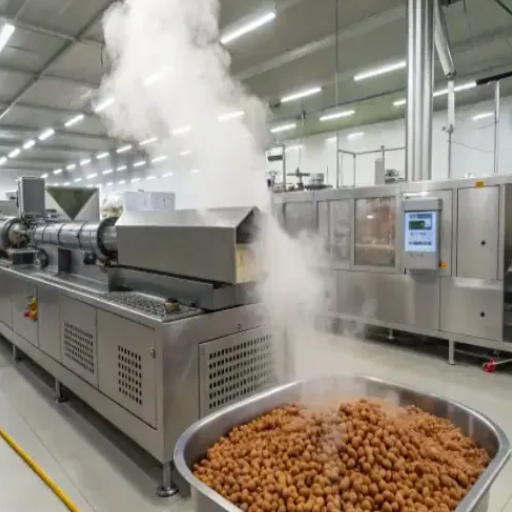
A soy protein production line transforms defatted soybean meal or concentrated soy protein into a textured, meat-like food ingredient. The core technology is extrusion. Raw material is mixed with water, fed into a twin-screw extruder, and cooked under heat, pressure, and mechanical shear. As the protein melts and reorganizes, it forms a fibrous structure that mimics the chew of real meat.
The process is continuous and highly controllable. By adjusting moisture, temperature, screw speed, and die design, you can produce everything from dry granules that extend ground meat to tender strips that anchor a premium vegan steak. That flexibility is exactly why extrusion dominates the category, and why the same base technology serves both budget extenders and high-end meat analogues.
Global demand strongly supports the investment. The textured soy protein market is valued at roughly USD 6.37 billion in 2026 and is projected to reach USD 10.66 billion by 2034, growing at a 6.64% compound annual rate according to Fortune Business Insights. Within the broader textured vegetable protein category, the soy segment is growing even faster, at about 7.4% per year, per MarketsandMarkets. For a deeper look at the underlying processing science, the FAO maintains a useful reference on soybean processing technology.
How to Choose a Soy Protein Production Line in 7 Steps
The decision process breaks down into seven practical steps. Working through them in order helps you avoid the most common and expensive mistakes.
Step 1: Decide Between TVP and High-Moisture Meat Analogue
This is the fork that shapes everything else. The two product types look similar on a spec sheet but require different equipment and serve different markets.
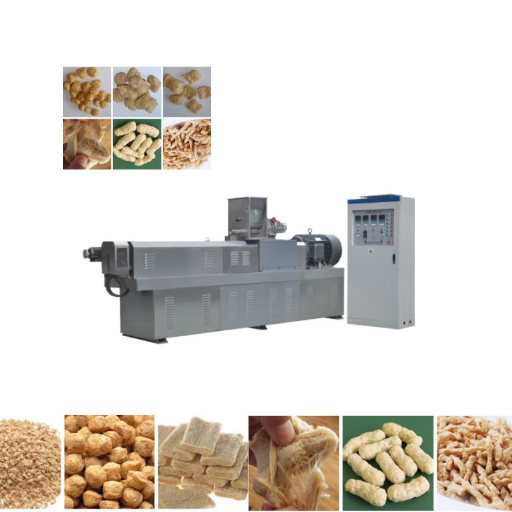
Low-moisture TVP runs at 20-35% moisture. It exits the extruder through a simple die with rotating knives, then passes through a multi-pass dryer that brings final moisture below 10%. The result is a dry, porous, shelf-stable product with a water activity around 0.43. It rehydrates in minutes and works as a meat extender, a canned-food ingredient, or a cost reducer in sausages and nuggets.
High-moisture meat analogue runs at 50-80% moisture. It uses a long cooling die that aligns protein fibers into muscle-like layers. The result is a juicy, fibrous whole cut sold fresh or frozen. It commands premium prices but requires tighter process control and a larger capital budget.
| Factor | Low-Moisture TVP | High-Moisture Meat Analogue |
|---|---|---|
| Moisture during extrusion | 20-35% | 50-80% |
| Die type | Simple die + rotating knives | Long cooling die |
| Final product | Dry, porous, shelf-stable | Juicy, fibrous whole cut |
| Final moisture | Below 10% | High (sold fresh/frozen) |
| Capital cost | Lower | Higher |
| Best for | Extenders, canned food, cost reduction | Premium retail plant-based cuts |
If your customers are food manufacturers looking to cut cost or boost protein, TVP is the practical starting point. If you are targeting retail plant-based brands that want realistic whole cuts, plan for HMMA from day one.
Not sure which product fits your market? Talk to our engineering team for a free product-and-line configuration review.
Step 2: Match Your Raw Material to the Extruder
Your protein source drives texture, nutrition, and cost. The three most common inputs behave very differently in the extruder.
- Defatted soy flour (about 50% protein, PDI 60-70): The most economical option. It produces standard TVP with good texture for extenders and canned applications.
- Soy protein concentrate, or SPC (about 70% protein): Delivers a stronger, more elastic texture. A solid middle ground for quality-focused producers.
- Soy protein isolate, or SPI (about 90% protein): Produces the strongest, most elastic, most meat-like textures. It costs more but anchors premium products.
- Blends with wheat gluten or pea protein: Broaden texture and nutrition, but demand an extruder with wider raw-material tolerance.
This is where a twin-screw extruder earns its place. Co-rotating twin-screw designs handle particles up to about 8 mesh, compared with roughly 100 mesh for single-screw machines. They also offer independent temperature zones, adjustable screw elements for shear and mixing, and vacuum venting to strip off-flavors. That tolerance lets you switch between flour, concentrate, isolate, and blends on the same core machine.
When Priya, a food-ingredients entrepreneur in India, planned her first line, she assumed she needed isolate for everything. After trial runs, she found that a concentrate-and-gluten blend met her texture target at a fraction of the raw-material cost. Defining the recipe before finalizing the equipment saved her roughly 18% on ingredient spend in year one.
Step 3: Size Capacity for Today and Tomorrow
Capacity is measured in kilograms per hour. Choosing the right size balances current demand, growth plans, and capital efficiency.
| Scale | Capacity | Installed Power | Typical Investment |
|---|---|---|---|
| Pilot / small | 100-150 kg/h | 70-95 kW | 16,500−16,500−40,000 |
| Small commercial | 200-350 kg/h | 90-140 kW | 22,000−22,000−60,000 |
| Medium | 400-600 kg/h | 120-210 kW | 60,000−60,000−150,000 |
| Large | 800-1,000+ kg/h | 135-300 kW | 150,000−150,000−1,200,000+ |
| Modular plant | 30-1,000 tons/day | Parallel extrusion trains | Turnkey, six figures+ |
Oversizing is a common and expensive mistake. A line running at 30% utilization wastes energy, wears unevenly, and delays payback. Undersizing caps growth and forces a second purchase too soon. The smartest approach for most producers is a modular line that adds extruders, dryers, or packaging units as demand grows, rather than a single oversized installation.
A food processor in Nigeria initially requested a 1,000 kg/h system for their first textured soy line. After reviewing their signed first-year contracts, they chose a 400 kg/h line with a modular dryer instead. It reached full utilization in 14 months, and they added a second extrusion module without replacing the core infrastructure.
Step 4: Evaluate Core Equipment Specifications
A complete soy protein production line typically includes the following components:
- Powder mixer to blend soy meal or concentrate with water
- Screw conveyor or feeding system
- Co-rotating twin-screw extruder (the core texturizing unit)
- Cooling die or rotary cutter
- Air conveyor
- Multi-layer belt dryer or oven
- Optional flavoring or seasoning drum
- Cooling conveyor
- Automatic packing machine
- PLC/HMI control system
When comparing quotes, look past the headline price and ask for specifics:
- Screw and barrel material: 38CrMoAl nitrided alloy steel for long wear life
- Screw configuration: modular building-block segments you can reconfigure per recipe
- Temperature control: independent zones with visible, accurate readouts
- Lubrication: a forced lubrication system to extend transmission life
- Cleaning: self-cleaning capability so the extruder can be flushed without full disassembly
- Speed control: frequency inverters on feeding, main drive, and cutting for stable output
- Dryer energy consumption: drying is usually the largest energy user on the line
For a deeper equipment walkthrough, see our complete soy protein meat production equipment and process guide.
Step 5: Verify Food-Grade Materials and Certifications

Soy protein is a food ingredient, so construction quality and certification are non-negotiable. Insist on the following, in writing:
- Food-contact surfaces: SUS304 or SUS316 stainless steel throughout
- Export certification: CE marking, plus ISO 9001 and SGS or BV inspection
- Food-safety compliance: HACCP, FDA 21 CFR, FSSC 22000, or EU 1935/2004 as your market requires
- Dietary markets: kosher and halal options, and non-GMO or organic sourcing where relevant
- Allergen control: documented cleaning and changeover procedures, since soy is a major allergen
Certification is also a signal of supplier maturity. A manufacturer that routinely builds CE-compliant, food-grade lines is far more likely to support you through export, installation, and audit than a broker reselling generic equipment.
Step 6: Calculate Total Cost of Ownership, Not Just Price
The sticker price is only part of the investment. A realistic cost model includes:
- Equipment cost: extruder, dryer, die, packaging, controls, and auxiliaries
- Shipping and customs: significant for international purchases
- Installation and commissioning: typically one to four weeks
- Training: operator and maintenance training for your team
- Spare parts: screws, barrels, dies, bearings, belts, and heaters
- Energy: extrusion and drying dominate utility cost
- Labor: automated PLC lines need two to three operators per shift; semi-automatic lines need four to six
- Maintenance: budget 3-5% of equipment cost annually
Most well-run extrusion lines pay back in 18 to 36 months when capacity utilization and product margin are healthy. As a reference point, textured soy protein can cost less than half the price of lean meat as an extender, which is why margin-rich hybrid products often pay back fastest.
Want a realistic cost model for your project? Request a detailed quote and we will prepare a line proposal matched to your capacity and budget.
Step 7: Vet the Supplier on Engineering and Support
Equipment quality matters, but supplier support often matters more over the life of the line. A reliable partner should offer:
- Trial production with your own raw material and recipe before you commit
- 2D/3D factory layout design optimized for your floor space
- Installation, commissioning, and operator training
- Remote diagnostic support and fast technical response
- Local or regional spare parts inventory with reasonable lead times
- Customization for voltage, frequency, raw material, and local regulations
Ask for references in your region or application. A supplier with more than a decade of twin-screw extrusion experience and installations across dozens of countries will understand the practical realities of running a soy protein line far better than a reseller.
At Shandong Loyal Industrial Co., Ltd., we support clients from initial consultation through layout design, manufacturing, installation, and ongoing technical service. Our turnkey food production lines are engineered for reliability and built to meet international standards.
Common Mistakes to Avoid When Buying a Soy Protein Line

Learning from other buyers’ mistakes can save months and significant capital. The most frequent errors are:
- Choosing TVP when you need HMMA (or the reverse): The single most costly mistake, because it means the wrong die and often a second extruder.
- Buying on price alone: The cheapest line usually lacks automation, spare parts support, and recipe expertise. Low purchase price can hide high operating cost.
- Oversizing capacity: A large line running below capacity wastes energy and delays ROI.
- Skipping trial production: Always request sample runs with your actual raw material before finalizing the order.
- Ignoring raw-material cost: Isolate versus flour can change your ingredient economics dramatically.
- Neglecting certifications: Export markets require CE, ISO, and food-grade materials. Verify everything in writing.
Frequently Asked Questions About Choosing a Soy Protein Production Line
What is the difference between a TVP line and a high-moisture meat analogue line?
A TVP line runs at low moisture (20-35%) and produces dry, shelf-stable textured protein through a simple die and a multi-pass dryer. A high-moisture meat analogue line runs at 50-80% moisture and uses a long cooling die to create juicy, fibrous whole cuts. HMMA lines cost more and demand tighter process control.
How much does a soy protein production line cost?
Most extrusion-based lines range from about 16,500forsmallpilotsystemsto16,500forsmallpilotsystemsto150,000 or more for industrial lines. Large or high-moisture systems can exceed $1.2 million. Final cost depends on capacity, automation, material grade, and scope of supply.
What equipment is included in a soy protein production line?
A typical line includes a powder mixer, screw conveyor, twin-screw extruder, cooling die or cutter, air conveyor, multi-layer dryer, optional seasoning drum, cooling conveyor, packing machine, and PLC control system.
Why is a twin-screw extruder better than a single-screw for soy protein?
Co-rotating twin-screw extruders tolerate a wider range of raw materials, offer independent temperature zones and adjustable screw elements, provide high torque for dense formulations, and allow vacuum venting to remove off-flavors. They produce more consistent, elastic textures, which is why they hold the majority of the high-moisture extrusion market.
What raw material should I use for textured soy protein?
Defatted soy flour (about 50% protein) is the most economical choice for standard TVP. Soy protein concentrate (about 70%) gives a stronger texture, and soy protein isolate (about 90%) produces the most meat-like result. Many producers blend soy with wheat gluten or pea protein to hit specific texture and nutrition targets.
Conclusion: Choose Your Soy Protein Line with Confidence
Choosing a soy protein production line is a technical and commercial decision that rewards careful planning. Start with the most important fork, TVP versus high-moisture meat analogue, because it defines your die, your dryer, and your market. Then match your raw material to your texture and budget goals, size capacity with room to grow, verify food-grade construction and certifications, and calculate total cost of ownership rather than focusing on purchase price alone.
The buyers who get the best results treat the line as a complete production system, not a standalone machine. They plan upstream raw-material handling, downstream drying and packaging, and long-term maintenance from day one. They also work with suppliers who understand recipe development and can tune the extrusion process to a specific protein source.
If you are ready to move forward, begin with a clear product brief and a shortlist of suppliers who can demonstrate real experience in soy protein extrusion. Ask for references, request trial runs with your own recipe, and compare total cost of ownership across at least three proposals. Knowing how to choose a soy protein production line with the right product, capacity, and partner turns a complex purchase into a reliable, profitable asset for years to come.
Get expert help choosing your soy protein production line. Contact Shandong Loyal Industrial Co., Ltd. for a free consultation, factory layout proposal, and detailed quotation.