The safest way to import machinery from China is to verify your supplier, confirm certifications like CE or FDA, classify your equipment under the correct HS code, and arrange pre-shipment inspection before final payment. Most mistakes happen when buyers chase the lowest quote and skip these four steps.
When Marcus, a snack producer in Germany, found a Chinese extrusion line priced 35% below European alternatives, he thought he had secured a bargain. Three months later, the machine arrived without proper CE documentation, the control panel was wired for 220V only, and replacement dies were incompatible with his existing tooling. The “savings” turned into a €12,000 customs delay and six weeks of lost production.
His story is not unusual. China is one of the world’s largest machinery exporters, and the global food processing equipment market is projected to reach $59–66 billion by 2026, growing roughly 4–6% annually according to Grand View Research. For food manufacturers, sourcing from China opens access to specialized equipment, customization, and competitive pricing. But the process also involves supplier verification, customs rules, shipping logistics, and after-sales support.
In this guide, you will learn how to import food processing machinery from China without the common headaches. We will cover supplier sourcing, factory audits, certifications, HS codes, shipping, inspections, and what to negotiate before you sign a contract.
Key Takeaways
- Always verify that a supplier is a real factory or a credible trading company before paying a deposit.
- Confirm CE, FDA, ISO 9001, or other market-specific certifications before shipment, not after.
- Classify your machinery under the correct HS code (commonly Chapter 84, especially 8438 for food processing equipment) to avoid customs delays.
- Use 30% deposit / 70% after pre-shipment inspection payment terms, and never pay 100% upfront.
- Plan for installation, training, and spare parts before the machine leaves the factory.
Why Food Manufacturers Import Machinery from China

China’s machinery industry offers scale that is hard to match. The country exports an estimated $10–16 billion worth of food and agri-processing machinery annually, with forecast growth of 5–7% per year. That scale creates three advantages for food manufacturers.
Cost competitiveness. Labor, component, and factory overhead costs are often lower than in Europe or North America. A turnkey food production line from a Chinese manufacturer can cost 20–40% less than an equivalent European line, depending on specifications.
Industrial clustering. Specific regions specialize in specific equipment. Jinan and Zhengzhou are known for grain, snack, and meat processing machinery. Guangzhou and Shanghai dominate fruit, vegetable, beverage, and bakery equipment. This clustering means you can find suppliers with deep experience in your exact product category.
Customization and OEM capabilities. Chinese manufacturers are often willing to adapt voltage, language, machine dimensions, molds, and recipes to your market. For startups and growing brands, this flexibility matters.
Of course, lower upfront cost does not guarantee lower total cost. The real value appears when you combine competitive pricing with proper verification, clear contracts, and reliable after-sales support.
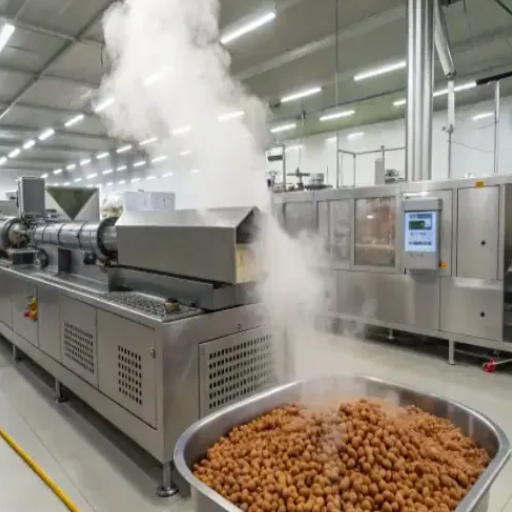
Want to see what a complete production line looks like in practice? Explore our turnkey food production lines to compare configurations for snacks, pasta, protein bars, and bread crumbs.
What Food Machinery Can You Import from China?
The range of equipment available from Chinese manufacturers is broad. For food manufacturers, the most common categories include:
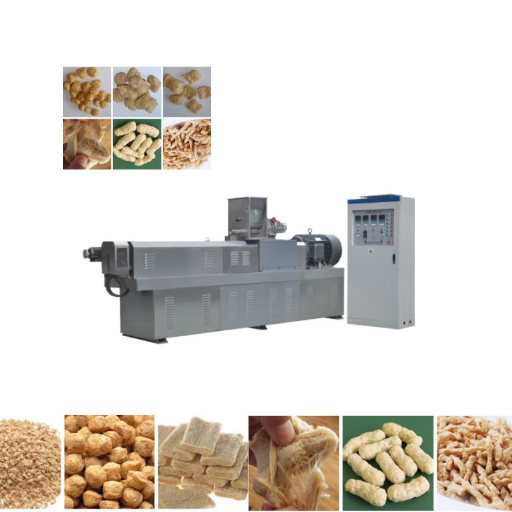
- Snack production lines: extruders, fryers, seasoning drums, and packaging systems for corn puffs, chips, and other snack products.
- Pasta and macaroni lines: mixers, extruders with interchangeable dies, drying systems, and cutters. Learn more about pasta production line options.
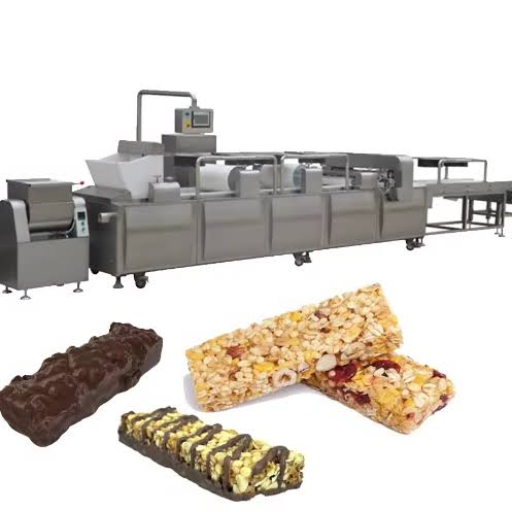
- Protein and cereal bar lines: mixing, forming, cooling, cutting, and flow-wrapping systems. See our protein bar production line.
- Bread crumb lines: grinding, drying, and sifting equipment for Panko and standard bread crumbs. Explore bread crumb production equipment.
- Packaging and auxiliary equipment: filling machines, vacuum packers, labeling systems, conveyors, and metal detectors.
You can import a single machine or a complete turnkey line. Complete lines reduce integration risk because the supplier designs every stage to work together. Single machines give you more control but require you to manage compatibility between vendors.
How to Find Reliable Machinery Manufacturers in China
Finding a machinery manufacturer in China is easy. Finding the right machinery manufacturer in China takes work. Start with these channels.
B2B platforms. Alibaba, Made-in-China, and Global Sources list thousands of machinery suppliers. Look for verified status, factory audit reports, trade assurance or escrow support, and buyer reviews. Avoid suppliers whose prices are dramatically below market average.
Trade shows. Events like the Canton Fair, FOODTEC China, and Propak China let you meet manufacturers in person, watch machines run, and compare quality directly.
Industry referrals. Ask other food manufacturers in your network. A referral from someone who has already imported similar equipment is often the most reliable lead.
Factory-direct contact. Many established manufacturers have their own websites and export teams. Contacting them directly can reduce platform fees and improve communication.
When Maria, a pasta producer in Brazil, needed a new macaroni line, she started on Alibaba but shortlisted only suppliers who could provide video factory tours and three international references. Two suppliers dropped out immediately. The one she chose had clear documentation, a recent third-party audit, and a reference in Argentina with a similar production scale. That upfront filtering saved her from a supplier who looked cheaper but had no real export experience.
Supplier Verification: Confirm You Are Buying from a Real Factory
Supplier verification is the step most importers underestimate. A 2026 survey of sourcing professionals consistently ranks inadequate supplier verification as the top cause of import disputes.
Check the Business License
Ask for the supplier’s business license and cross-check it on China’s National Enterprise Credit Information Publicity System at gsxt.gov.cn. Confirm that the company is active, the business scope includes manufacturing or trading the machinery you want, and the registered address matches the factory address.
Conduct a Factory Audit
A factory audit is the most reliable way to confirm capabilities. Options include:
- In-person visit: Best for large orders and long-term partnerships.
- Third-party audit: SGS, TÜV Rheinland, QIMA, or Bureau Veritas can inspect the factory for 300–300–1,500 depending on scope.
- Local sourcing agent: Useful for smaller orders if you cannot travel.
During the audit, verify production capacity, quality control procedures, actual machines in production, workforce conditions, and whether the supplier really makes the equipment or simply resells it.
Request References
Ask for 2–3 international buyers who have purchased similar equipment. Contact them directly. Ask about delivery times, machine quality, warranty claims, spare parts availability, and communication.
Watch for Red Flags
- Prices far below market average
- Refusal to provide a business license or factory video
- Pressure to pay 100% upfront
- Payment to a personal account or a different company name
- Inconsistent addresses or business names across documents
- Vague answers about certifications or production capacity
Certifications and Standards for Food Machinery

Certifications prove that machinery meets the safety, hygiene, and electrical standards of your market. The most common requirements include:
CE Marking
CE marking is mandatory for machinery sold in the European Economic Area. For food machinery, and for any CE certification machinery China suppliers provide, key directives include:
- Machinery Directive 2006/42/EC, general safety requirements
- Low Voltage Directive 2014/35/EU, electrical safety
- EMC Directive 2014/30/EU, electromagnetic compatibility
Relevant EN standards for food equipment include EN ISO 12100 for risk assessment, EN 60204-1 for electrical safety, and product-specific standards like EN 1678 for vegetable cutting machines or EN 1974 for slicers.
Always verify CE certificates with the issuing body. Some suppliers present fake or outdated certificates. HQTS provides a useful overview of CE, UKCA, and ISO standards for machinery imports.
FDA and USDA
For the United States, food contact surfaces must meet FDA requirements. Equipment for meat and poultry processing may also need USDA or 3-A Sanitary Standards compliance.
ISO 9001 and Food Safety Standards
ISO 9001 indicates a quality management system. For food production, ISO 22000 or HACCP certification shows the supplier understands food safety principles.
Market-Specific Certifications
- EAC for Russia and the Eurasian Customs Union
- SASO for Saudi Arabia
- Halal certification for Muslim-majority markets
- BIS for certain equipment imported into India
Request a full certification package before shipment, including the Declaration of Conformity, test reports, technical file, and Notified Body certificate where required.
Customs, HS Codes, and Duties
Correct China customs HS code machinery classification is critical. The wrong code can trigger customs delays, fines, or incorrect duty rates.
Common HS Codes for Food Machinery
Most food processing machinery falls under HS Chapter 84. Common codes include:
| Machinery Category | Common HS Code |
|---|---|
| Bakery and pasta machinery | 8438.10 |
| Meat and poultry processing machinery | 8438.50 |
| Fruit, vegetable, and nut processing machinery | 8438.60 |
| Other food processing machinery | 8438.80 |
| Packaging machinery | 8422 series |
Always confirm the exact code with a licensed customs broker in your country. e-to-china.com publishes tariff references for specific HS codes, but your broker should validate the final classification.
Typical Duty and Tax Rates
China’s export duties are generally low, but your country’s import duties and VAT apply. Sino-Shipping notes that machinery imports into China typically face 5–15% duty plus 13% VAT, though your destination country will have its own schedule.
In the United States, base duty rates on Chinese machinery are often 0–6%, but Section 301 tariffs can add 7.5–25% for Chinese-origin goods. In the European Union, MFN duty rates vary by HS code, and a valid Certificate of Origin may reduce rates under a free trade agreement.
Documents You Will Need
- Commercial invoice
- Packing list
- Bill of lading or airway bill
- Certificate of origin
- CE certificate and Declaration of Conformity (or market equivalent)
- Import license or permit (if applicable)
- Pre-shipment inspection certificate (for used machinery)
Shipping and Incoterms: How to Import Machinery from China
Choosing the right method for shipping machinery from China protects both cost and risk. Bansar’s machinery import guide summarizes the main options well.
Shipping Methods
- Full Container Load (FCL): Best for complete production lines or multiple machines. A 20-foot or 40-foot container is typically used.
- Less than Container Load (LCL): Suitable for smaller machines that do not fill a container. Risk of damage is higher because cargo is consolidated.
- Out of Gauge (OOG) / Flat Rack: For oversized equipment that does not fit a standard container.
- Air Freight: Expensive but useful for urgent spare parts or small machines.
Common Incoterms
- EXW (Ex Works): You handle everything from the factory gate. Lowest supplier price, highest buyer responsibility.
- FOB (Free on Board): Supplier delivers to port and loads the ship. You pay ocean freight, insurance, and destination charges.
- CIF (Cost, Insurance, Freight): Supplier pays to ship to your port. You handle unloading and customs clearance.
- DDP (Delivered Duty Paid): Supplier handles shipping, customs, and delivery to your door. Most convenient but usually most expensive.
For first-time buyers, FOB or CIF is often the best balance of cost and control. DDP reduces risk but requires a supplier with strong logistics experience in your country.
Quality Inspection and Factory Acceptance Testing
Never rely on photos alone. A pre-shipment inspection confirms that the machine matches your specifications before the final payment.
Pre-Shipment Inspection Checklist
- Confirm model, capacity, dimensions, and electrical specifications
- Check materials, especially food-contact surfaces (304 or 316L stainless steel)
- Test operation with sample raw materials where possible
- Verify safety guards, emergency stops, and labeling
- Photograph the machine, packaging, and container loading
Factory Acceptance Test (FAT)
A FAT is a formal test run at the supplier’s factory. It proves the machine performs to contract specifications. For complex lines, an FAT is essential. Document the results and attach them to the shipping paperwork.
Installation and Operational Qualification
After arrival, plan for Installation Qualification (IQ) and Operational Qualification (OQ). IQ confirms the machine is installed correctly. OQ confirms it operates within specified parameters. These steps are especially important for regulated markets like the EU and North America.
When Chen, a protein bar manufacturer in Canada, imported his first forming and cutting line, he skipped the pre-shipment inspection to save 800.Themachinearrivedwithacrackedformingroller.Thesupplierarguedthedamagehappenedduringshipping,andthefreightinsurerrefusedtheclaimbecausetherewerenopre−loadingphotos.Therepaircost800.Themachinearrivedwithacrackedformingroller.Thesupplierarguedthedamagehappenedduringshipping,andthefreightinsurerrefusedtheclaimbecausetherewerenopre−loadingphotos.Therepaircost4,200 and delayed his launch by three weeks. A $800 inspection would have prevented it.
Installation, Training, and After-Sales Support
The transaction does not end when the machine arrives. Plan for what happens next.
Installation Support
Ask whether the supplier provides on-site installation. If yes, confirm:
- Who pays for the technician’s flights, visa, accommodation, and daily allowance?
- How many technicians are included and for how many days?
- What is included in the installation scope?
Some manufacturers also offer remote video guidance for simpler machines.
Operator Training
Training should cover operation, cleaning, maintenance, troubleshooting, and recipe adjustment. Ask whether training is included in the price and how many of your staff can attend.
Spare Parts and Warranty
Negotiate a spare parts package before shipment. Common wear parts include belts, bearings, seals, dies, molds, and cutting blades. Confirm:
- Warranty length (typically 12 months)
- What the warranty covers
- How to order spare parts after warranty expires
- Whether electrical components use internationally available brands
Need help planning a complete production line? Contact our team for a consultation on snack food machinery, pasta lines, or other food processing solutions.
Common Mistakes to Avoid

Learning from others’ errors is cheaper than making your own. Here are the most common mistakes when importing machinery from China.
Chasing the Lowest Price
The cheapest quote often hides weak materials, missing certifications, or no after-sales support. Compare total landed cost, not just the machine price.
Paying 100% Upfront
Standard terms are 30% deposit and 70% after pre-shipment inspection. Never pay the full amount before the machine is verified.
Ignoring Electrical Specifications
Voltage, frequency, and control language must match your facility. A 220V/50Hz machine will not run properly on 480V/60Hz without costly modifications.
Skipping Documentation Review
Request certificates, manuals, electrical drawings, and spare parts lists before shipment. Missing documents can delay customs clearance for weeks.
Underestimating Shipping Time
Ocean freight from China to Europe or North America typically takes 25–50 days door-to-door. Add customs clearance, inland transport, and installation scheduling. Plan your production calendar accordingly.
Frequently Asked Questions
How do I import machinery from China?
Import machinery from China by defining your specifications, finding verified suppliers, requesting quotations, conducting a factory audit, confirming certifications, classifying the HS code, arranging pre-shipment inspection, and managing shipping and customs clearance.
What certifications do I need for food machinery from China?
For the EU, CE marking under the Machinery Directive is required. For the US, FDA compliance is needed for food contact surfaces, and USDA or 3-A standards may apply to meat and poultry equipment. ISO 9001 and HACCP/ISO 22000 add further credibility.
What is the HS code for food processing machinery?
Most food processing machinery falls under HS Chapter 84. Common codes include 8438.10 for bakery and pasta machinery, 8438.50 for meat and poultry processing, 8438.60 for fruit and vegetable processing, and 8438.80 for other food processing machinery.
How much does it cost to import machinery from China?
Total cost includes the machine price, shipping, insurance, customs duties, VAT, inspection, inland transport, installation, and spare parts. Ocean freight for a full container can add several thousand dollars, and duties vary by destination country and HS code.
Is it safe to pay a Chinese supplier by wire transfer?
Wire transfer is common, but never pay 100% upfront. Use 30% deposit and 70% after pre-shipment inspection. For large orders, consider a Letter of Credit. Always confirm the bank account name matches the business license.
Conclusion
Learning how to import machinery from China can give food manufacturers access to advanced equipment, competitive pricing, and flexible customization. But success depends on preparation. Verify your supplier, confirm certifications, classify the correct HS code, arrange pre-shipment inspection, and plan for installation and spare parts before you import machinery from China.
At Shandong Loyal Industrial Co., Ltd., we have spent over a decade helping food manufacturers around the world source reliable, CE-certified production lines. Whether you need a snack extrusion system, a pasta production line, or a protein bar production line, our team can guide you from consultation to startup.
Ready to start your project? Contact us today for a detailed quotation and production plan tailored to your goals.