CE marking food machinery is the process by which a manufacturer declares that its equipment meets all applicable EU health, safety, and environmental requirements. Those requirements include the Machinery Directive, electrical and EMC rules, and food-contact material regulations. It’s mandatory for most powered food processing equipment sold in the EU/EEA. But the mark itself is only the final step of a much larger compliance system.
When Elena, a snack producer in Poland, ordered a new corn puff extrusion line last year, the supplier proudly pointed to a CE sticker on the control panel. What arrived at the port, however, was a different story: no EU Declaration of Conformity, no food-contact material statement, and a user manual written only in the supplier’s local language. Customs held the shipment for 11 days, and Elena’s launch budget absorbed unexpected storage fees. Her experience is more common than it should be, and it illustrates why buyers need to look past the label.
In this guide, you will learn what CE marking really means for food machinery. You will discover which directives and standards apply, how the process works from a buyer’s perspective, and what documentation to demand before shipment. We will also explain how to prepare for the 2027 Machinery Regulation and share cost and timeline benchmarks for real production-line categories.
Key Takeaways
- CE marking is mandatory for most powered food machinery placed on the EU/EEA market, but it’s a self-declaration system, not a single certificate.
- Compliance spans the Machinery Directive (or the 2023/1230 Regulation from January 2027), EMC, Low Voltage, and food-contact material rules.
- Buyers should request the EU Declaration of Conformity, technical file summary, food-contact Declaration of Compliance, local-language manual, and accredited test reports.
- Typical costs range from €3,000 for basic snack machines to €35,000+ for AI-enabled or Notified Body projects.
- From January 2027, the new Machinery Regulation adds cybersecurity, stricter documentation, and higher penalties.
What Is CE Marking Food Machinery and Why Does It Matter?

CE marking stands for Conformité Européenne. It is the manufacturer’s statement that a product satisfies the essential health, safety, and environmental requirements of all relevant EU legislation. For food machinery, the mark means the machine is legally allowed to be placed on the EU/EEA market.
Importantly, CE marking is not a quality seal and it’s not issued by the EU. In most cases, the manufacturer carries out the conformity assessment. It prepares the technical documentation, issues the EU Declaration of Conformity, and affixes the mark. A third-party certifier is required only for high-risk categories.
For food processing equipment, the mark covers three layers of risk:
- Mechanical and electrical safety — guards, emergency stops, control reliability, and electrical insulation.
- Electromagnetic compatibility — the machine must neither emit excessive electrical interference nor fail when exposed to it.
- Food safety and hygiene — food-contact surfaces, materials, and cleanability must comply with EU food-contact rules.
If any of these layers is missing, the CE claim is incomplete. That’s why Elena’s sticker alone was not enough.
Which EU Directives and Regulations Apply to Food Machinery?
CE marking food machinery is rarely a single-directive exercise. CE marking food processing equipment and other powered machines often require several pieces of EU legislation at the same time. The Machinery Directive is the starting point for most equipment.
| Directive / Regulation | What it covers | Typical food-machinery relevance |
|---|---|---|
| Machinery Directive 2006/42/EC | General machinery safety | Essential health and safety requirements, risk assessment, guarding, controls |
| Machinery Regulation (EU) 2023/1230 | Replaces the Directive from 20 January 2027 | Directly applicable across the EU; adds cybersecurity and stricter documentation |
| EMC Directive 2014/30/EU | Electromagnetic compatibility | Emissions and immunity testing for electrically powered machines |
| Low Voltage Directive 2014/35/EU | Electrical safety | Equipment operating between 50–1,000 V AC or 75–1,500 V DC |
| Food Contact Materials Regulation (EC) 1935/2004 | Materials touching food | Safe, inert, and cleanable food-contact surfaces |
| Pressure Equipment Directive 2014/68/EU | Pressurized equipment | Autoclaves, sterilizers, pressurized kettles, and heat exchangers |
| ATEX Directive 2014/34/EU | Explosive atmospheres | Equipment used in dust or gas explosive zones, such as some drying or milling areas |
For a deeper regulatory breakdown, see our complete CE certified food machinery guide. It covers each directive in detail and explains how the 2027 transition affects your documentation. Understanding the CE marking Machinery Directive food machinery framework also helps buyers know when a Notified Body is required.
CE Marking Food Machinery Standards That Make Compliance Possible
Manufacturers demonstrate compliance by following the CE marking food machinery standards that apply to their equipment. When a machine is designed and tested against these harmonized EN standards, it gains a presumption of conformity.
The most important standards for food machinery include:
- EN ISO 12100 — safety of machinery; general principles for design and risk assessment.
- EN 60204-1 — electrical equipment of machines.
- EN ISO 14159 — hygienic requirements for the design of machinery.
- EN 1672-1:2021 — food processing machinery safety requirements.
- EN 1672-2:2021 — hygiene requirements for food processing machinery.
- Product-specific C-type standards, such as EN 453 for dough mixers, EN 1974 for slicing machines, and the EN 415 series for packaging machines.
Following these standards is how manufacturers prove compliance and gain the presumption of conformity.
Hygienic design deserves special attention. Food-contact surfaces must be smooth, non-porous, corrosion-resistant, and cleanable. Stainless steel 304 is common; 316 is used for harsher cleaning regimes. Surface roughness is often kept below 0.8 µm. Corners are radiused, and crevices that can trap product or bacteria are eliminated. For more on materials, read our guide to food-grade machinery materials.
The CE Marking Food Machinery Process from Quotation to Delivery
From a buyer’s point of view, the CE marking process can be distilled into seven practical checkpoints.
- Confirm the applicable directives and standards.
Ask the supplier to list every EU directive and EN standard the machine is designed to meet. - Confirm a risk assessment has been performed.
The supplier should have a documented risk assessment per EN ISO 12100 covering mechanical, electrical, thermal, noise, and hygiene hazards. - Review design and testing evidence.
This includes electrical schematics, EMC test reports, mechanical validation, and food-contact material certificates. - Verify the technical file exists.
The technical file must be kept for 10 years after the product is placed on the EU market. You may not receive the full file, but the supplier should confirm it exists and provide a summary. - Check the EU Declaration of Conformity.
The DoC is a legally binding document listing the product, applicable directives, and harmonized standards. It must accompany the machine for customs clearance. - Inspect the CE mark on the nameplate.
The mark must be at least 5 mm high, visible, legible, and indelible. It should appear alongside traceability information such as the manufacturer’s address and serial number. - Determine whether a Notified Body was required.
Most standard food machinery can be self-certified. A Notified Body is required for Annex IV high-risk machinery, pressure equipment, or — from January 2027 — AI-enabled and connected machinery.
When Marco, a pasta producer in Italy, sourced a new macaroni line, he asked his supplier for the risk assessment, the DoC, and the food-contact material statement before signing the purchase order. The shipment cleared customs in one day, and a third-party audit two months later found every document in order.
What CE Marking Costs and How Long It Takes
CE certification food machinery costs and timelines vary with machine complexity, risk level, and whether a Notified Body is involved. Buyers budgeting for CE marking food machinery should remember that these figures cover compliance work, not factory upgrades. The table below gives realistic ranges based on current market practice.
| Equipment type | Conformity route | Estimated cost (EUR) | Typical timeline | Notified Body |
|---|---|---|---|---|
| Basic snack machines | Self-declaration | €3,000–€8,000 | 3–4 months | No |
| Standard food processing equipment | Self-declaration + testing | €8,000–€15,000 | 4–6 months | No |
| Automated production lines | Notified Body for some modules | €15,000–€25,000+ | 6–8 months | Often yes |
| AI-enabled / connected machinery (2027+) | Notified Body mandatory | €20,000–€35,000+ | 8–12 months | Yes |
These cost ranges include design review, risk assessment, testing, technical documentation, and the DoC. However, they don’t include any factory upgrades needed to meet hygiene or electrical requirements.
If you are planning a complete line, remember that an integrated system may need to be assessed as a whole. A turnkey food production line from one supplier can simplify this because the responsibility for system-wide compliance sits in one place.
Buyer Verification Checklist: Spotting Fake or Incomplete CE Claims

Not every CE mark meets all food machinery CE mark requirements. Use this checklist before you accept delivery. It will help you confirm that your CE marking food machinery documentation is complete and auditable.
Documentation to request
- EU Declaration of Conformity listing the correct directives and standards
- Technical file summary or confirmation that the full file is retained
- Food-contact material Declaration of Compliance per Regulation (EC) 1935/2004
- User and maintenance manuals in the language of the operating country
- Accredited test reports from recognized labs such as SGS, TÜV, Intertek, or Bureau Veritas
Red flags
- A CE mark with no Declaration of Conformity
- References to outdated directives after January 2027
- Missing food-contact material documentation
- Vague phrases like “CE standard compliant” or “CE approved”
- A manual only in the supplier’s local language
- A Notified Body number that doesn’t appear in the NANDO database
If you are importing from outside the EU, it’s also wise to confirm that the manufacturer has an EU Authorised Representative for regulatory correspondence. Our guide to importing machinery from China covers the paperwork side in more detail.
The 2027 Machinery Regulation: What Buyers Must Ask Now
On 20 January 2027, the rules governing CE marking food machinery will shift: the Machinery Directive 2006/42/EC will be replaced by Regulation (EU) 2023/1230. The new rules apply directly in every EU member state and introduce several changes that food machinery buyers can’t ignore.
Key changes include:
- Stricter documentation and digital technical files.
- Mandatory cybersecurity for connected or IoT-enabled machinery.
- Expanded high-risk categories, including more AI-controlled and autonomous systems.
- Higher penalties, in some cases up to a percentage of global turnover.
Sophie, a procurement manager for a health-food brand, has already added four questions to her supplier RFQ: Is the machine designed for the 2023/1230 Regulation? Has a cybersecurity risk assessment been completed? Who is the EU Authorised Representative? And will the technical file be available in English and the destination language?
If your equipment will ship in late 2026 or beyond, ask the same questions now. As a result, you’ll avoid the expensive retrofits that often follow a late discovery of missing compliance.
CE Marking vs. FDA and UKCA: How They Differ for Food Machinery
CE marking is not the only compliance framework food machinery buyers encounter. If you sell into multiple markets, it helps to know how CE compares with the two other names that appear most often in procurement discussions: FDA and UKCA. When buyers compare CE marking food machinery with FDA or UKCA requirements, the biggest difference is the self-declaration model.
CE marking applies to the EU/EEA market. It is a manufacturer self-declaration for most food machinery, backed by a technical file and an EU Declaration of Conformity. The focus is on machinery safety, electrical safety, electromagnetic compatibility, and food-contact hygiene.
FDA rules apply in the United States. The FDA doesn’t issue a CE-style mark for food processing equipment. Instead, it expects equipment to be sanitary and suitable for its intended use under Good Manufacturing Practices. Buyers often request 304 or 316 stainless steel, smooth welds, and cleanable designs, but they don’t receive a CE-equivalent certificate from the FDA.
UKCA marking applies in Great Britain after Brexit. It covers many of the same requirements as CE marking, but it uses a different conformity mark and, for some products, a UK-recognized standards route. If you plan to place machinery in England, Scotland, or Wales, check whether UKCA or CE is accepted for your product category and timeline.
The key takeaway is that CE marking doesn’t automatically satisfy FDA or UKCA requirements. However, a well-designed CE-compliant line already covers most of the hygiene and safety groundwork that FDA and UKCA reviewers look for. At Shandong Loyal Industrial, we configure production lines so buyers can adapt documentation for CE, FDA, and UKCA markets without rebuilding the machine.
How Shandong Loyal Industrial Builds CE Compliance into Every Line

CE marking food machinery is not a last-minute sticker. At Shandong Loyal Industrial, compliance is designed into the line from the first drawing. We have delivered CE-certified production lines to food manufacturers in over 50 countries for more than a decade. That experience means we understand the documentation buyers need to clear customs and pass audits.
Our range includes:
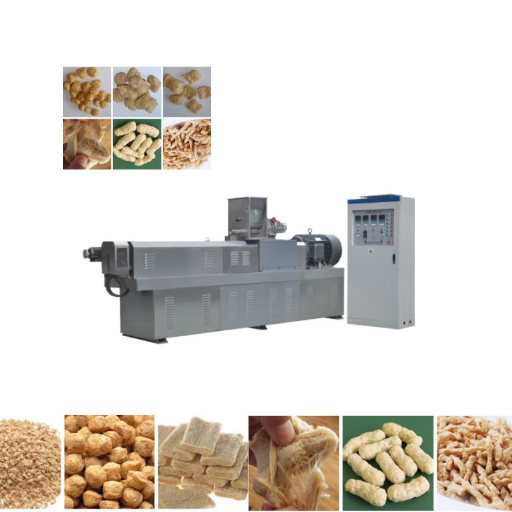
- Snack food machinery for extruded, fried, and pellet snacks
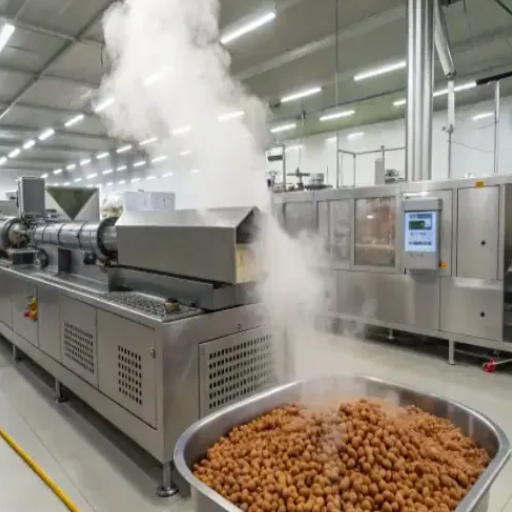
- Corn puff snacks production line
- Pasta and macaroni production line
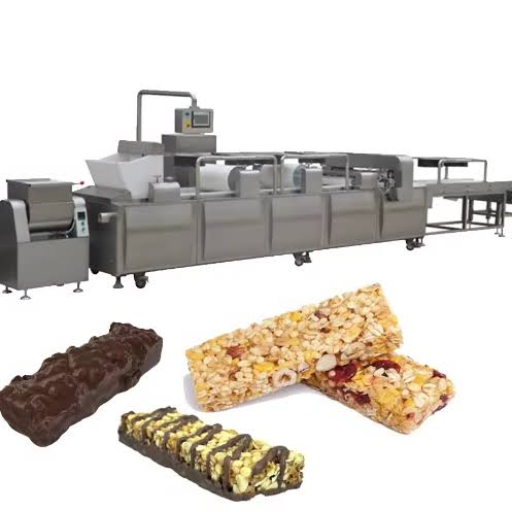
- Protein bar production line
- Bread crumbs production line
- Fried snack production line with thermal safety and energy-efficient design
Every line can be customized for raw materials, capacity, layout, and target market. We provide risk assessments, technical documentation support, food-contact material statements, and user manuals in the languages our clients need.
Ready to source a CE-compliant production line? Contact Shandong Loyal Industrial for a detailed quotation, documentation package, and factory layout proposal.
Frequently Asked Questions About CE Marking Food Machinery
What is CE marking food machinery?
It’s the manufacturer’s declaration that food processing equipment meets all applicable EU health, safety, and environmental requirements before it is placed on the EU/EEA market.
Is CE certification food machinery mandatory?
Yes. Most powered food machinery sold in the EU/EEA must be CE marked. Without a valid CE claim and supporting documentation, shipments can be held at customs.
What are the main food machinery CE mark requirements?
Buyers should receive an EU Declaration of Conformity, a technical file summary, a food-contact material Declaration of Compliance, user manuals in the local language, and accredited test reports.
How long does the CE marking food machinery process take?
For basic snack machines, 3–4 months. For standard food processing equipment, 4–6 months. For automated lines or AI-enabled machinery after 2027, it can take 8–12 months.
Do I need a Notified Body for CE marking food processing equipment?
Not usually. Most standard food machinery can be self-certified. A Notified Body is required for high-risk Annex IV machinery, pressure equipment, or AI-enabled and connected machinery from 2027 onward.
Conclusion
CE marking food machinery is a system, not a sticker. Therefore, buyers who understand the full process can avoid customs delays, failed audits, and expensive retrofits. Don’t wait for a shipment hold to learn it the hard way.
Start by confirming which directives and EN standards apply to your equipment. Request the right documentation before shipment. If your machine will be placed on the EU market after January 2027, make sure it is designed for the new Machinery Regulation from day one.
Get started today. Contact Shandong Loyal Industrial for a CE-compliant snack, pasta, protein bar, or bread crumb production line tailored to your market.