Modified starch is used to thicken, stabilize, bind, gel, emulsify, and texture products across many industries. You’ll find it in food, pharmaceuticals, paper, oil drilling, textiles, construction, pet food, and biodegradable packaging. By treating native starch from corn, cassava, potato, or wheat with physical, chemical, or enzymatic processes, manufacturers create functional ingredients that survive heat, acid, shear, and freezing conditions raw starch can’t handle. These modified starch applications now support a global market valued in the tens of billions of dollars.
Yet many product teams still struggle to match the right modification to their process. A sauce breaks during retort, a snack loses its crunch, or a tablet crumbles in packaging. These problems often trace back to starch that hasn’t been modified for the job. In this guide, we map the major modified starch applications by industry. We also explain which starch type fits each function, and show where in-house production starts to make sense.
Whether you buy modified starch from a supplier or produce it yourself, the decision starts with the end product. Mapping these modified starch uses to your process is the first step. Let’s walk through the applications, the numbers, and the equipment that turns native starch into a reliable performance ingredient.
Key Takeaways
- Modified starch serves as a functional ingredient in at least nine major industries, with food and beverage representing the largest share of demand.
- The right starch type depends on process conditions such as heat, acid, shear, freezing, and shelf-life requirements.
- Common food-grade modifications include cross-linked, pregelatinized, acetylated, and oxidized starches, each with specific E-numbers and use cases.
- Industrial buyers increasingly produce modified starch in-house when volumes exceed 300–500 kg/h and recipe flexibility matters.
- Twin-screw extrusion is the core technology for physical modification, producing pregelatinized and extruded starches without added chemicals.
What Is Modified Starch and Why Modify It?
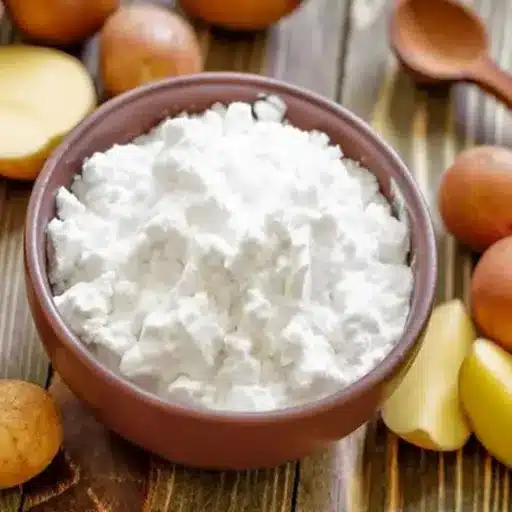
Native starch is a carbohydrate stored in plant granules. It thickens liquids when heated, but it also breaks down under strong acid, high shear, repeated freeze-thaw cycles, and prolonged heating. Modified starch is native starch that has been physically, chemically, or enzymatically treated to change one or more of these behaviors.
The goal is not to make starch unnatural. It’s to give it a predictable performance profile.
For example, a cross-linked starch keeps a sauce thick after canning, while a pregelatinized starch thickens instantly in cold water. An oxidized starch forms a clear, flexible film for paper coating. A cationic starch binds strongly to pulp fibers during paper-making.
Common Functional Roles
In most applications, modified starch plays one or more of these roles:
- Thickener, increases viscosity without gelling
- Gelling agent, forms a firm gel when cooled
- Stabilizer, maintains texture during storage and temperature swings
- Emulsifier, keeps oil and water phases mixed
- Binder, holds particles together in pellets, tablets, or coatings
- Fat replacer, delivers creamy mouthfeel with reduced fat
- Moisture retainer, keeps baked goods and meats juicy
- Film-former, creates protective coatings on paper or biodegradable films
- Encapsulant, traps flavors, oils, or active ingredients
Native vs. Modified Starch
| Property | Native Starch | Modified Starch |
|---|---|---|
| Heat stability | Low to moderate | High, depending on modification |
| Acid stability | Poor | Good with cross-linked types |
| Freeze-thaw stability | Prone to syneresis | Improved with stabilized starches |
| Cold-water solubility | Low | High with pregelatinized starches |
| Shear resistance | Poor | Good with cross-linked starches |
| Process tolerance | Limited | Tailored to specific conditions |
Want to see how physical modification works on a production line? Explore our modified starch production line guide for the full process flow.
Modified Starch Applications by Industry: Quick Reference
The table below summarizes the most common modified starch applications by industry, function, and starch type.
| Industry | Main Functions | Example Products | Common Starch Types |
|---|---|---|---|
| Food & Beverage | Thickening, gelling, stabilizing, texturizing | Sauces, soups, dairy, bakery, snacks | Cross-linked, pregelatinized, acetylated, oxidized |
| Pharmaceuticals | Binder, disintegrant, excipient | Tablets, capsules, injectables | Pregelatinized, sodium starch glycolate |
| Paper & Packaging | Surface sizing, coating binder, strength additive | Printing paper, packaging board | Cationic starch, oxidized starch |
| Oil & Gas Drilling | Fluid-loss control, viscosity, filtration control | Water-based drilling mud | Pregelatinized, cross-linked, carboxymethyl starch |
| Textiles | Warp sizing, finishing, print-paste thickener | Yarn, fabric finishing | Oxidized starch, cationic starch |
| Construction & Adhesives | Binder, thickener, water retention | Tile adhesives, putty powder, gypsum boards | Pregelatinized, oxidized starch |
| Pet Food & Animal Feed | Binder, texture, expansion control | Extruded kibble, treats, aquatic feed | Pregelatinized, modified corn/tapioca starch |
| Cosmetics & Personal Care | Binder, absorbent, texture modifier | Powders, creams, lotions | Pregelatinized, modified corn starch |
| Biodegradable Packaging | Film-forming, thermoplastic base | Compostable films, molded trays | Thermoplastic starch, chemically modified starch |
Modified Starch Applications in Food and Beverage
Food and beverage is the largest end-use segment for modified starch. Modified starch in food industry applications accounts for the largest share of global demand. This growth is driven by convenience foods, clean-label trends, and the need for stable textures across processing and distribution.
Sauces, Soups, and Gravies
Cross-linked starches are the workhorse here. They resist the acid in tomato sauce, the shear of high-speed pumping, and the heat of retort or hot-fill processing. Common choices include distarch phosphate (E1412), acetylated distarch phosphate (E1414), and hydroxypropyl distarch phosphate (E1442).
Li Wei runs a sauce plant in Shandong. Last year his bolognese-style pasta sauce kept thinning after hot-fill bottling. The team traced the problem to native corn starch that broke down under heat and acid. After switching to a cross-linked waxy maize starch, viscosity held steady through the filling line, and customer complaints about runny sauce dropped by nearly 40%. For manufacturers running both sauce and noodle lines, our pasta production line shares the same extrusion precision.
Dairy and Desserts
In yogurt, ice cream, puddings, and custards, modified starch controls syneresis, prevents ice-crystal growth, and creates a smooth, creamy mouthfeel. Modified waxy maize and tapioca starches are popular because they produce clear, non-gritty textures.
Bakery and Confectionery
Oxidized and pregelatinized starches improve moisture retention, soften crumb, and delay staling in bread and cakes. In confectionery, they control sugar crystallization and provide chewiness in gummies and jellies. For gluten-free baked goods, modified tapioca starch can help replace the structure normally provided by wheat gluten.
Processed Meats and Seafood
Modified potato and tapioca starches bind water and fat. This improves yield, sliceability, and juiciness in sausages, deli meats, and reformed seafood. They also help products survive freeze-thaw cycles without becoming rubbery.
Snack Foods and Breakfast Cereals
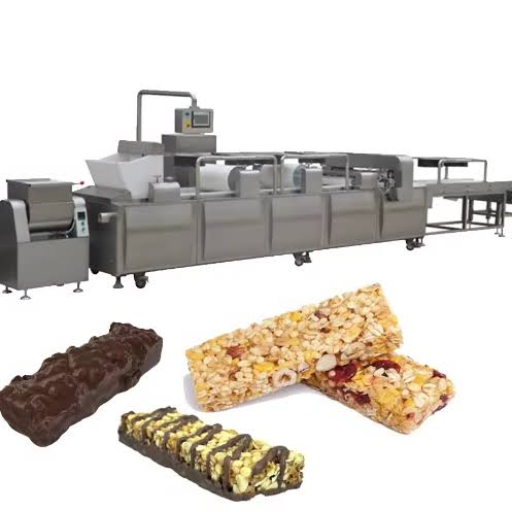
Pregelatinized and acid-modified starches control expansion, crispness, and texture in extruded snacks and cereals. The starch gelatinizes during extrusion, then sets as the product exits the die and cools. This is where extrusion expertise matters most.
If your product line includes extruded snacks, our snack food machinery and corn puff snack production line can help you control expansion and texture consistently. For pellet-based snack intermediates, see our 2D/3D snack pellet machinery.
Instant and Convenience Foods
Pregelatinized starch thickens in cold or warm water, making it ideal for instant soups, noodles, and ready meals. Freeze-thaw-stable starches keep frozen dinners smooth after reheating.
Industrial and Non-Food Applications
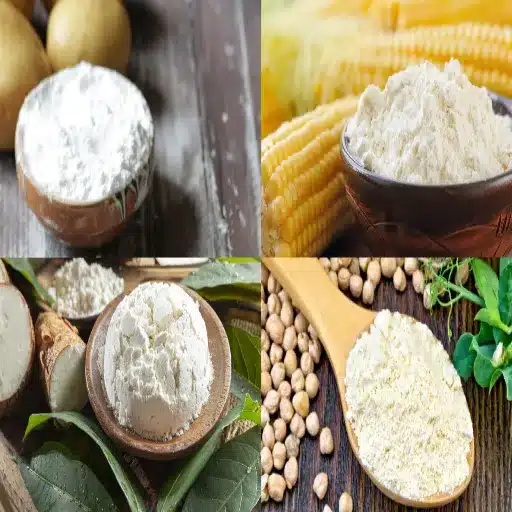
Modified starch is far more than a food ingredient. Industrial applications rely on its film-forming, binding, and viscosity-control properties.
Paper and Packaging
Cationic starch applications dominate wet-end and surface treatment. It binds to negatively charged pulp fibers, improving sheet strength, retention, and printability. Oxidized starches serve as coating binders, holding pigments to paperboard.
Maria manages a paper mill near São Paulo. Her team added cationic starch to the wet end of their packaging board machine. Retention improved, filler usage dropped, and the board’s burst strength rose enough to let them reduce basis weight without sacrificing performance. The change paid for itself in under six months.
Oil and Gas Drilling
Pregelatinized and cross-linked starches control fluid loss and viscosity in water-based drilling muds. They form a filter cake on the borehole wall, reducing the amount of drilling fluid that escapes into the formation. Temperature-stable grades are essential for deep wells.
Textiles
Oxidized starch provides film-forming and yarn protection in warp sizing. It helps fibers withstand the abrasion of high-speed weaving. Modified starches also act as print-paste thickeners, controlling dye placement and fabric hand.
Construction and Adhesives
Pregelatinized starch improves workability, open time, and adhesion in tile adhesives, putty powders, and gypsum boards. Oxidized starches are used in corrugated board adhesives and wood glues. In foundry applications, modified starch acts as a binder for casting molds and briquettes.
Need equipment that matches your starch application? Contact our team for a tailored line layout and quote.
Specialized Applications
Beyond mainstream food and industrial uses, modified starch appears in several specialized markets.
Pharmaceuticals
Pregelatinized starch is a common tablet binder and diluent because it flows well and compresses evenly. Sodium starch glycolate is a widely used disintegrant, helping tablets break up quickly after ingestion. Cross-linked and substituted starches can also modulate drug release rates.
Pet Food and Animal Feed
In extruded pet food, starch gelatinization supports kibble expansion, binding, and durability. Pregelatinized corn or tapioca starch can improve process tolerance and shape retention. In aquatic feed, modified starches act as pellet binders and improve water stability.
A startup in Bangkok launched a grain-free pet food brand in 2024. Their first kibble runs were fragile and produced too much fines. By adding pregelatinized tapioca starch and adjusting extruder screw speed, they increased pellet durability from 82% to 94% and cut packaging dust by half. The change let them move from pilot batches to a 500 kg/h commercial line.
Cosmetics and Personal Care
Modified corn starch works as a binder, oil absorbent, and texture modifier in powders, dry shampoos, creams, and lotions. It offers a natural alternative to synthetic polymers for brands targeting clean-label personal care.
Biodegradable Packaging and Sustainability
Thermoplastic starch (TPS) and chemically modified starches form the base of compostable films, molded trays, and packaging peanuts. As plastic-reduction regulations spread, demand for starch-based biodegradable materials is growing faster than many conventional applications.
How to Choose the Right Modified Starch for Your Application
Selecting the right modified starch comes down to matching functional needs with process realities. Use this framework:
- Define the function, Do you need thickening, gelling, binding, stabilizing, film-forming, or encapsulation?
- Map process conditions, Will the product see high heat, low pH, high shear, freezing, or long shelf life?
- Check regulatory and label requirements, Which E-numbers or clean-label claims are acceptable in your target market?
- Consider raw material source, Corn, cassava, potato, and wheat starches each bring different gel clarity, texture, and cost profiles.
- Evaluate scale and cost, At low volumes, buying pre-modified starch is usually simpler. At higher volumes, in-house production may reduce cost and improve recipe control.
For food-grade lines, our food production lines cover mixing, extrusion, drying, and packaging in one integrated system.
Producing Modified Starch In-House: When It Makes Sense

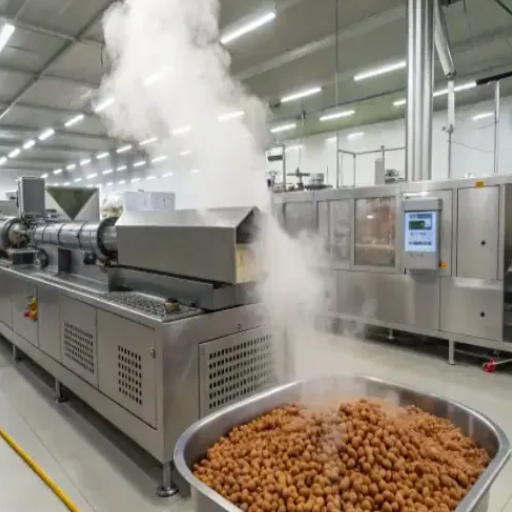
Manufacturers often start by purchasing modified starch from ingredient suppliers. As volumes grow, producing it in-house becomes attractive. A typical extrusion-based line includes mixing, screw conveying, twin-screw extrusion, drying, milling, and packaging.
In-house production makes sense when:
- Your monthly requirement exceeds 300–500 kg/h of finished modified starch.
- You need multiple starch types or custom functionality for different product lines.
- You want to control raw-material sourcing and reduce supply-chain risk.
- You are targeting clean-label claims based on physical modification rather than chemical additives.
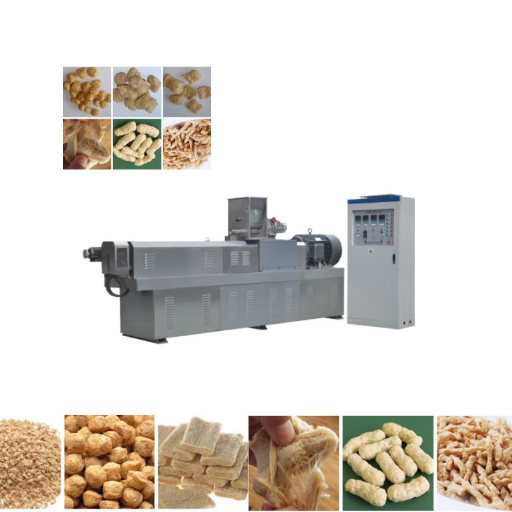
Twin-screw extrusion is the core technology for physical modification. Pregelatinized starch applications include instant foods, extruded snacks, oil drilling fluids, and animal feed. The process applies controlled heat, pressure, and shear to gelatinize starch, producing pregelatinized or otherwise physically modified starches without the need for chemical reagents. Learn more about our pre-gel starch production line if your application depends on cold-water solubility.
Frequently Asked Questions
What is modified starch used for?
Modified starch is used to thicken, stabilize, bind, gel, emulsify, and texture products in many industries. These include food, pharmaceuticals, paper, oil drilling, textiles, construction, pet food, and biodegradable packaging.
What industries use modified starch?
The largest users are food and beverage, paper and packaging, pharmaceuticals, oil and gas drilling, textiles, construction, pet food, cosmetics, and biodegradable packaging.
Is modified starch safe in food?
Yes, food-grade modified starches are regulated by authorities such as the FDA and EU. They must be produced using approved reagents and comply with residue limits. E-numbers for modified starches range from E1400 to E1452.
What is the difference between modified starch and pregelatinized starch?
Pregelatinized starch is one type of physically modified starch that swells and thickens in cold water. Modified starch is a broader category that also includes chemically and enzymatically treated starches.
Which modified starch is best for sauces?
Cross-linked starches such as distarch phosphate (E1412), acetylated distarch phosphate (E1414), and hydroxypropyl distarch phosphate (E1442) are commonly used for heat-, acid-, and shear-stable sauces.
Can modified starch be produced in-house?
Yes. Twin-screw extrusion lines can produce pregelatinized and physically modified starches at scales from 100 kg/h to over 1,000 kg/h, depending on equipment configuration.
Conclusion
Modified starch applications now span nearly every manufacturing sector that cares about texture, stability, binding, or film-forming. In food, the right starch keeps sauces thick, dairy smooth, snacks crisp, and baked goods fresh. In industry, it strengthens paper, stabilizes drilling muds, sizes textiles, and binds construction materials. In pharma and pet food, it controls tablet disintegration and kibble durability.
The key takeaway is simple: choose the starch for the process, not just the product. Heat, acid, shear, freezing, and shelf-life conditions all determine which modification delivers reliable results. When demand reaches scale, producing modified starch in-house with a twin-screw extrusion line can improve both cost control and recipe flexibility.
At Shandong Loyal Industrial, we design CE-certified production lines that turn native starch into consistent, application-ready modified starch. From 100 kg/h pilot systems to 1,000+ kg/h commercial lines, we tailor each configuration to your raw material, product, and capacity goals.
Ready to produce modified starch in-house? Get a custom quote for a modified starch production line and let our engineering team match the equipment to your application.