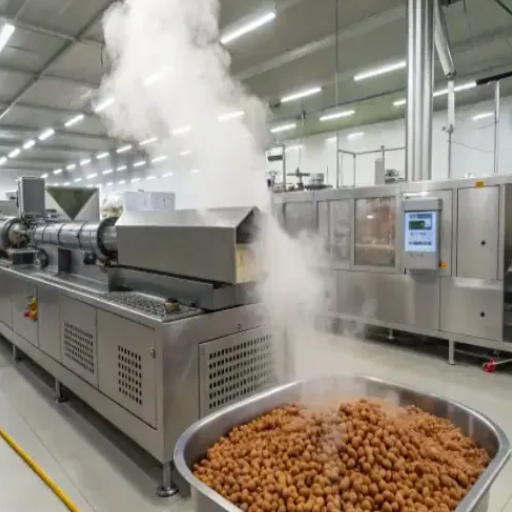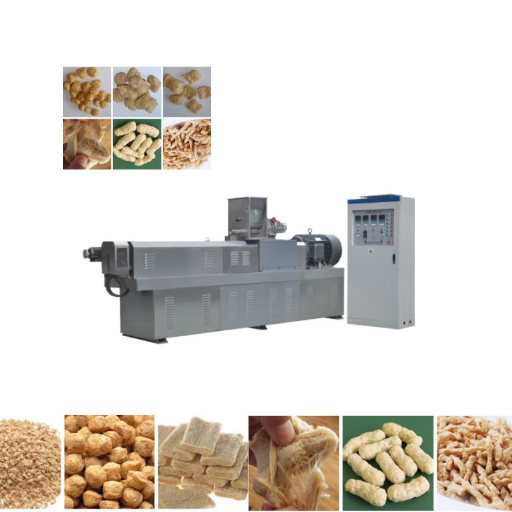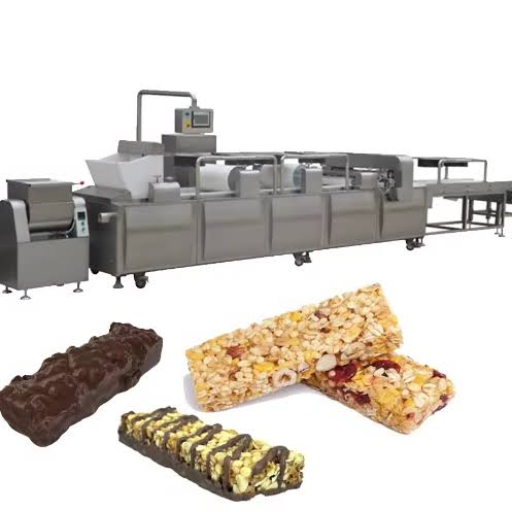
Food extrusion technology is a continuous, high-temperature short-time process that turns raw ingredients like flour, grain, and protein into cooked, shaped foods in under a minute. It powers everything from puffed snacks and breakfast cereal to pasta, protein bars, and pet food.
For a first-time machinery buyer, though, that one-sentence answer rarely feels like enough. You still need to know which type of extruder fits your product, what a complete line actually costs, and whether the equipment you choose today can grow with you tomorrow. This guide answers all three.
Here’s what you’ll learn. First, exactly how food extrusion technology works, step by step. Second, the single-versus-twin-screw decision that shapes every buying choice you’ll make.
Third, how to map the technology to a production line that matches your product and your budget. By the end, you’ll know which questions to ask before you request a single quote.
Key Takeaways
- Food extrusion is a high-temperature, short-time (HTST) process that cooks, mixes, and shapes food continuously, often in less than a minute.
- Single-screw extruders cost less and suit simple, direct-expanded snacks; twin-screw extruders cost 1.5 to 2.5 times more but handle complex shapes, high moisture, and filled products.
- Extrusion can cut production costs by 15% to 70% compared with conventional processes.
- The technology feeds every major Shandong Loyal line: snacks, pasta, protein bars, corn puffs, and 2D/3D pellets.
- Choosing the right line comes down to three questions: what product, what volume, and what flexibility.
What Is Food Extrusion Technology?

Food extrusion technology is a continuous processing method in which raw ingredients are forced through a shaped opening, called a die, under controlled heat and pressure to cook, mix, and form them into finished or semi-finished food products.
In practice, one extruder replaces several separate machines. A single unit acts as mixer, cooker, pump, and former all at once. That’s why extrusion is so central to modern food manufacturing, and why it has become the backbone of snack, cereal, pasta, and pet food production worldwide.
A Brief History
Extrusion is not a new idea. It was first applied to dry pasta and breakfast cereal pellets in the 1930s. By the 1950s, manufacturers had adopted it for pet food. Since then, continuous extrusion processing has expanded steadily, and today it is the default method for texturizing, mixing, forming, and cooking a huge range of foods.
How the Food Extrusion Process Works
The magic of extrusion comes from combining mechanical energy with thermal energy in a tightly controlled way. Understanding that combination is what separates a reliable line from a constant source of production headaches.
The HTST Principle
Extrusion is called a high-temperature short-time, or HTST, process. The raw material is cooked at high temperature, but only for a matter of seconds. This matters for two reasons.
First, HTST preserves nutrients. Because cooking is brief, heat-sensitive vitamins and amino acids survive far better than they do in longer conventional cooking. Second, HTST is efficient. Less time in the machine means lower energy use and higher throughput.
From Raw Material to Finished Product
Every extruder follows the same basic flow. Dry ingredients, usually flour or grain grits, enter through a feed hopper. Many systems add a preconditioner, where steam, water, and flavors are blended into the dry mix before it reaches the barrel.
Inside the barrel, one or two rotating screws convey the material forward. As it moves, the screws generate friction, which heats and shears the mixture. This is where starch gelatinizes and protein denatures, turning loose flour into a uniform, melted dough.
At the end of the barrel sits the die. The dough is forced through its opening under pressure. As it exits, the sudden pressure drop causes moisture to flash off as steam, and the product puffs up and takes on its final shape. A rotating knife at the die face cuts it to length.
The 4 Types of Food Extrusion
Food extrusion is not a single process. It breaks down into four main categories:
- Cold extrusion – the dough is mixed and shaped without direct heating. It’s used mainly for pasta and dough products.
- Hot extrusion – heat and pressure cook the material as it is shaped, producing textured food and feed.
- Steam-induced expansion – water flashes to steam at the die exit, creating highly expanded products like puffed snacks and breakfast cereal.
- Co-extrusion – expansion is combined with filling injection to create dual-texture products with a crisp shell and a soft center.
This four-way split is why a single “extruder” can mean very different machines. A pasta line and a puffed snack line both use extrusion, but they use it in completely different ways.
Want to see the process in action? This short walkthrough shows extrusion technology working end to end.
Single-Screw vs. Twin-Screw Extruders
The biggest decision most buyers face is between a single-screw and a twin-screw extruder. They look similar on paper. In practice, they suit very different products. Equipment maker Baker Perkins calls this the crucial decision for any snack producer.
| Feature | Single-Screw | Twin-Screw |
|---|---|---|
| Cost | Lower baseline | 1.5-2.5x higher |
| Mixing | Poor (laminar flow) | Strong (self-wiping, co-rotating) |
| Moisture range | About 10-35% | About 5-50% or more |
| Raw materials | Granular, free-flowing | Wide range of consistencies |
| Output | 100-500 kg/hr | 100-1,500 kg/hr |
| Flexibility | Narrow | Large |
| Self-cleaning | No | Yes |
When Single-Screw Makes Sense
A single-screw extruder is the right call when you need a simple, affordable machine for direct-expanded snacks made from basic formulations. Think corn puffs and simple crisp snacks produced in smaller volumes.
The trade-off is flexibility. Single-screw machines struggle with fine powders, high-moisture mixes, and complex shapes. If your product line is likely to stay simple and your volume modest, this is where the value is.
When Twin-Screw Wins
A twin-screw extruder does everything a single-screw can do, and far more. It handles high-moisture ingredients, fine starches, and fiber-rich mixes that would clog a single-screw machine. It creates filled, co-extruded products and complex shapes a single-screw simply cannot form.
That’s why growing companies tend to switch to twin-screw as their product range diversifies. The higher upfront cost buys flexibility, higher throughput, and lower running costs per unit.
Which Is Right for Your Product?
Here is a simple way to frame the decision. Ask yourself three questions.
- What is the product? Simple puffed snacks favor single-screw. Filled snacks, pellets, and high-protein products favor twin-screw.
- What is the volume? Under roughly 500 kg/hr, single-screw may be enough. Above that, twin-screw is the workhorse.
- How much will the recipe change? If you expect to launch new products, twin-screw protects that future.
Consider Marcus, a snack entrepreneur in Lagos. He launched with a single-screw extruder producing corn puffs at 200 kg/hr. It was the right choice, cheap to run and easy to maintain.
Eighteen months later, his biggest customer asked for a center-filled snack. His single-screw machine could not do it, and the new contract pushed him to upgrade to twin-screw anyway. Starting with flexibility would have cost more upfront, but it would have saved him a mid-growth rebuild.
Not sure which fits your product? Tell us what you want to make, and we will recommend the right extruder for your recipe and volume. Explore our snack food machinery to see the range.
Applications of Food Extrusion Technology

Extrusion produces hundreds of food products. Four categories matter most for manufacturers, and each maps directly to a Shandong Loyal production line.
Snacks
Snack production is the most famous use of extrusion. The process starts with starch-based ingredients like cornmeal, rice flour, or potato flour. Under heat and shear, the starch gelatinizes, then expands at the die to form puffs, chips, crackers, and pellets.
The global extruded snack market was valued at around $50 billion in 2016 and has kept growing, driven by urbanization and rising demand in emerging markets, according to the Institute of Food Technologists. That demand is exactly where corn puff snack production lines and 2D/3D snack pellet lines earn their keep. Products like Doritos-style tortilla chips and Kurkure-style puffs all begin with this same extrusion step before frying or baking.
Pasta and Macaroni
Pasta uses cold extrusion, not heat. A stiff dough of semolina and water is pushed through shaped dies to form macaroni, spaghetti, and dozens of other shapes. Because no steam expansion occurs, the pasta keeps its dense, uniform structure.
A pasta and macaroni production line pairs this extrusion with drying and cooling stages. The result is a turnkey system that produces consistent shapes at scale. A pasta extruder machine is one of the most forgiving entry points into food manufacturing, which is why so many small factories start there.
Protein Bars and Health Foods
Extrusion also feeds the fast-growing health food category. Twin-screw extruders blend protein, grains, and binders into uniform bars and textured proteins. Because HTST cooking preserves nutrients, extruded protein retains more of its value than it would under longer cooking.
For brands making protein bars or plant-based products, twin-screw extrusion is the standard. It delivers the consistent texture and density that health food buyers expect, batch after batch.
Pet Food and Texturized Vegetable Protein
Pet food adopted extrusion in the 1950s, and it remains the standard for dry and semi-moist kibble. The same technology now produces texturized vegetable protein, or TVP, the fibrous base of many plant-based meat alternatives. High-moisture extrusion is a growing specialty here, and it demands the control only twin-screw machines provide.
Benefits and Limitations of Extrusion
Every technology has trade-offs. Extrusion is no exception, but its benefits explain why it dominates modern food production.
Benefits
- Lower cost. Extrusion cooking can save between 15% and 70% compared with conventional processes, mainly through fewer machines, less labor, and lower energy use, per extrusion cooking research.
- Versatility. One system can produce a wide variety of shapes, textures, and flavors.
- Energy efficiency. Cooking at low moisture means less energy spent on drying.
- Better nutrition. HTST cooking improves digestibility by gelatinizing starch and denaturing protein, and it reduces anti-nutrients like phytates and tannins.
- Food safety. High temperatures and pressures reduce microbial contamination.
Limitations
- Process control is critical. Temperature, moisture, and screw speed all shape the final product. Small changes create noticeable differences.
- Single-screw constraints. Simple machines offer poor mixing and limited ingredient range.
- Wear. High shear and abrasive ingredients gradually wear screws and barrels, so maintenance matters.
Rosa, a pasta producer in Naples, learned the process-control lesson the hard way. She pushed her extruder’s temperature a few degrees higher to speed up drying.
The pasta looked fine but cooked unevenly, and a restaurant customer returned two pallets. The fix was simple, return to the recommended profile, but it cost her a week of production and a valued account. Extrusion rewards operators who respect its parameters.
Choosing a Food Extrusion Production Line

Understanding the technology is only half the job. Buying it well is the other half. Here is what separates a good investment from a costly mistake.
What to Look For in a Turnkey Line
- Customization. Your recipe, capacity, and floor space are unique. A line should be designed around them, not the other way around.
- Certification. CE certification signals the equipment meets international standards, which matters for export and for buyer confidence.
- Support. The best vendors stay involved from consultation through installation and beyond.
- Full integration. A true turnkey line covers mixing, extrusion, shaping, drying or frying, and packaging in one coordinated system.
Why Customization Matters
Off-the-shelf equipment rarely fits a real factory. A line configured for your product, volume, and layout runs faster, wastes less, and is easier to maintain. That is the philosophy behind Shandong Loyal’s turnkey food production lines.
We bring more than 10 years of engineering experience and serve clients in over 50 countries. Every system is CE-certified, and we design around your product rather than asking you to adapt it to our machines. From a single extruder to a complete fried snack production line, the goal is the same: consistent quality, from the first batch to the ten-thousandth.
Conclusion
Food extrusion technology is the quiet engine behind most of the snacks, pasta, and protein foods you see on store shelves. It cooks, mixes, and shapes food continuously, efficiently, and at a cost conventional methods struggle to match.
The key to buying it well is to match the technology to your product. Simple, direct-expanded snacks may only need a single-screw extruder. Filled snacks, high-moisture products, and plant-based proteins call for twin-screw. Either way, the line should be designed around your recipe, your volume, and your growth plans.
Ready to design your extrusion line? Tell us your product and capacity, and our engineers will recommend the right configuration, customized to your needs and built to CE standards. Contact us for a quote today.
Frequently Asked Questions
What is food extrusion technology?
It is a continuous process that forces raw ingredients through a shaped die under controlled heat and pressure to cook, mix, and form them into finished foods like snacks, pasta, and cereal.
What is the difference between single-screw and twin-screw extruders?
Single-screw extruders are simpler and cheaper, suited to basic direct-expanded snacks. Twin-screw extruders cost more but offer better mixing, wider moisture range, and the ability to make filled or complex products.
What foods are made by extrusion?
Extrusion produces puffed snacks, breakfast cereals, pasta, protein bars, texturized vegetable protein, pet food, and more.
How fast is the extrusion process?
Most extrusion cooking is a high-temperature short-time process that completes in under a minute.
How do I choose the right extrusion production line?
Start with three questions: what product you are making, what volume you need, and how much recipe flexibility you require. Then choose a line configured for those answers.