Industry 4.0 in food manufacturing means connecting the machines on your line so they measure themselves, report in real time, and flag problems before they become waste. It’s the data layer sitting on top of automation, not a replacement for it.
Here is the part most guides skip. That data layer can only report what your equipment is built to measure. If the extruder has no pressure sensor and no data port, no dashboard will ever tell you why yesterday’s batch drifted.
So the decision that matters most is not which software you buy. It’s what you specify when you buy the machine.
This guide covers what Industry 4.0 actually looks like on a food line, what it has delivered in documented cases, and what blocks most mid-sized plants. It also covers how to write a purchase specification that leaves the door open.
It’s written by an equipment manufacturer that doesn’t sell MES, SCADA, or cloud platforms. We have no reason to tell you software is the answer.
Key Takeaways
- Industry 4.0 in food manufacturing is a data layer on top of automation: sensors, connectivity, and analysis. Without instrumented machines, it delivers nothing.
- Most mid-sized food plants sit at level 2 of four maturity levels: automated machines, disconnected data.
- A documented SME bakery retrofit raised throughput 5% and made defects traceable to cause. That is a realistic scale of gain, not a vendor headline.
- The barriers that sink projects are washdown-rated hardware, data silos between machine vendors, and skills. All three are cheaper to solve at purchase than after installation.
- Start with the purchase specification, not the software: open protocols, defined sensor points, and data export rights agreed before you sign.
Want to see what a data-ready line specification looks like in practice? Ask our engineering team to review your current spec before your next equipment purchase.
What Is Industry 4.0 in Food Manufacturing?
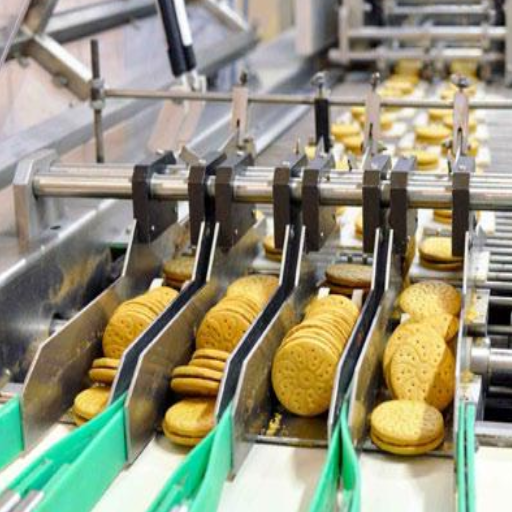
Industry 4.0 in food manufacturing is the application of connected sensors, industrial networks, and data analytics to food production. Equipment reports its own condition and output instead of relying on manual records. It connects machines to each other and to management systems, and it turns process data into decisions.
That definition is deliberately narrower than the general manufacturing version. In automotive or electronics, Industry 4.0 often means lights-out production. In food, the constraints are different: hygienic design, washdown chemistry, short shelf life, and recipe variability. A plant can be a fully connected smart factory and still run entirely on people.
The Four Levels, and Where Most Plants Actually Sit
The useful way to think about maturity is not by technology but by what the plant can see.
| Level | What it means | Data capability | Typical plant |
|---|---|---|---|
| 1. Manual | Machines run, people record | Paper or spreadsheet, after the shift | Small or traditional plants |
| 2. Automated | PLC-controlled machines, islands of control | Machine-level data exists but stays on the machine | Most mid-sized food plants |
| 3. Connected | Line-level data collected and visible | Operators see live OEE, downtime reasons, trends | Larger plants, newer lines |
| 4. Closed loop | Systems adjust the process | Data feeds back into settings automatically | Rare, mostly packaging and inspection |
The honest assessment for most mid-sized snack, pasta, pet food, or bakery operations is level 2. The machines are automated. The data is trapped. An operator knows the extruder ran badly last night, but nobody can say which parameter moved first.
That gap is the real starting point. The companion question, how much automation hardware you have, is covered in our guide to the four levels of food processing automation. This article is about the data layer above it.
Why Food Manufacturing Lags, and What Changed
Industry 4.0 food manufacturing adoption has trailed automotive and electronics on digital adoption for years, and the reasons were structural rather than lazy.
Margins are thin, so capital goes to capacity before it goes to instrumentation. Product runs are short and recipes change often, which makes generic manufacturing software a poor fit. Washdown destroys ordinary electronics. And until recently, a plant could compete on price and consistency without ever needing live data.
Digital transformation in food manufacturing is no longer optional, and three pressures now push in the same direction.
Labour. Skilled operators and maintenance technicians are harder to hire, and the shortage is projected to worsen. The UK food industry body IGD reports that roughly two-thirds of the UK workforce is expected to be underskilled by 2030. Automation raises demand for engineering and digital roles that are already in short supply. A line that diagnoses itself needs fewer people to interpret it.
Energy and waste. Every kilogram of scrap and every unnecessary drying minute is now a visible cost. Real-time process data is the cheapest way to find both, and it strengthens food safety records at the same time.
Traceability. Regulatory pressure has moved from paper records to structured data. The US FDA’s FSMA 204 traceability rule originally required compliance by 20 January 2026. The agency has proposed a 30-month extension to 20 July 2028, and Congress has directed it not to enforce before that date. That extension is proposed, not finalised, so treat the date as moving.
One correction to the common narrative: the lag is uneven. Packaging and inspection are already heavily instrumented. The gap is upstream, in processing, which is why Industry 4.0 food processing looks so different from Industry 4.0 packaging.
The Six Technologies That Matter on a Food Line
Most lists of Industry 4.0 technologies run to fifteen items. On a food line, six do the work.
Food Production Line Monitoring with IoT Sensors
Sensors measure what the machine cannot tell you by itself: vibration on a bearing, temperature in a dryer zone, motor current on an extruder screw. Food production line monitoring watches those signals for change and warns before failure. The same data feeds predictive maintenance: you replace a bearing because it is trending, not because it is Tuesday.
This is the foundation layer. Everything else depends on it, and it is the layer food plants most often skip.
PLC, SCADA, and MES: What Each One Does
These three are constantly confused, and the confusion costs money.
A PLC is the controller on the machine. It runs the sequence.
A SCADA system collects data from PLCs across the plant and gives operators a live view. An MES sits above SCADA and manages production: orders, recipes, batch records, and quality results. Our PLC, SCADA, and DCS control systems guide covers the hardware side in detail.
You need a PLC to run a line. You need SCADA to see it. You only need MES when you have multiple lines and orders to schedule.
Computer Vision and AI Quality Inspection
Cameras plus machine learning models trained on your product can catch colour drift, shape defects, and foreign material that manual inspection misses at line speed. The technology works; the cost of false rejects is what decides the business case. Inspection is one place where food is genuinely ahead of other sectors.
Digital Twins and Line Simulation
A digital twin is a model of the line that runs on data. In practice, most food plants use it for design and commissioning rather than live control: testing a layout change or a new recipe before committing capital. Useful, but rarely the first project.
Robotics and Cobots
Robots handle pick-and-place, palletizing, and repetitive loading. In food, the limiting factor is rarely the arm and almost always the end effector and the washdown rating. If you’re evaluating this, our guide to robots in food processing covers where they pay back and where they don’t.
Traceability Systems
Traceability links batch data to raw material lots and finished goods. A recall can then be scoped to a specific run instead of a month of production.
The most cited example is Walmart’s 2018 IBM Food Trust pilot. It cut the time to trace a package of sliced mangoes back to the farm from about six days to 2.2 seconds. Treat that number carefully. It measures retrieval time for one product in one pilot, not recall resolution time.
Not sure which of these six your line is actually ready for? Send us your current line layout and we’ll tell you honestly what’s worth doing first.
What Industry 4.0 Delivers, Measured
Vendor case studies are targets and projections. Independent evidence is thinner. Here is what Industry 4.0 food manufacturing has actually produced in documented cases, labelled by how much weight it deserves.
| Outcome | How it happens | Realistic range | Evidence quality |
|---|---|---|---|
| Throughput | Bottleneck visibility, faster intervention | 3 to 8% | Documented SME case, plus one vendor target |
| OEE | Downtime reason capture, live loss tracking | 3 to 5 points | One documented project, one target |
| Maintenance cost | Condition monitoring replaces scheduled replacement | 10 to 30% | Consultant-reported, unaudited |
| Defect traceability | Process data linked to batch | Cause identification, not a percentage | Documented SME case |
| Trace retrieval | Structured batch records | Hours to seconds | Single 2018 pilot, narrow scope |
The Clearest Small-Plant Example
Campden BRI worked with a traditional Hungarian SME bakery that replaced its bread line’s mechanical controls with networked sensors and monitoring software. The system logged readings every few seconds and sent managers an analysis of the previous day’s production.
The results, as reported by Campden BRI, were modest and concrete. Bread weight and quality became more consistent. Energy savings were identified. Throughput rose 5%, and defects could be traced back to their cause.
No new ovens. No enterprise software. Sensors plus analysis.
That’s the scale to plan around. Five percent on a line that already runs well is a real return, but it isn’t a transformation.
The OEE Case, With Its Caveat
A Florida grower cooperative documented in Food Engineering reached 78.2% OEE against a projected 75.3%, which the author valued at about 1millioninaddedmargin,plus1millioninaddedmargin,plus1.6 million in first-year maintenance savings against a 0.5millionprojection.Acheesemanufacturerinthesamearticlegenerated0.5millionprojection.Acheesemanufacturerinthesamearticlegenerated1.4 million in downtime-improvement projects from better loss reporting.
These are consulting project results published by the consultant who ran them, with no independent audit. Use them as illustrations of mechanism, not as benchmarks you should expect to match.
The Target, Not the Result
Bühler’s case study of Kägi, a Swiss wafer maker, is useful for one concrete number: the plant connected 25 to 30 data points per machine across the whole line, including equipment from other vendors. That gives you a sense of scale for what a modern line generates.
The OEE gain in that project, 5 to 8%, is described as an aim. It is a target, not a measured outcome. Read it as such.
The Barriers Nobody Budgets For
The Food Control review of food processing 4.0 identifies the constraints on Industry 4.0 food manufacturing clearly: data sharing and standardization, high initial and maintenance costs, and gaps in sensor portability and robot end effectors. Those are accurate, and they are not the ones that usually kill a project.
Legacy Assets
Most food plants run a mix of machines bought over fifteen years from five different vendors. Each has its own controller, its own data format, and often no way to export anything. Retrofitting legacy assets for Industry 4.0 food manufacturing is possible and usually cheaper than replacement, but it has to be scoped honestly. A machine with no spare I/O and a sealed controller may not be retrofittable at all.
Washdown and Hygienic Design
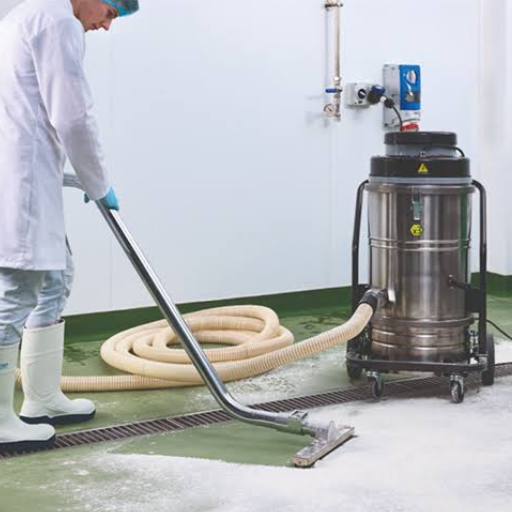
This is the constraint general manufacturing doesn’t have, and it is where most off-the-shelf Industry 4.0 hardware fails in a food plant. Sensors must survive caustic washdown, high-pressure cleaning, and temperature cycling. Enclosures need the right IP rating and the right materials. Cable routing has to avoid creating harbourage points.
If you get this wrong, you buy sensors that fail in eighteen months and conclude that condition monitoring doesn’t work. The EHEDG hygienic design standards are the reference to spec against.
Data Silos Between Vendors
Each machine vendor would prefer you use their dashboard. The result is five dashboards and no line-level view. The fix is contractual rather than technical: require open protocols and data export at purchase.
Skills
This is the most consistently under-budgeted item. A plant can buy sensors and dashboards and still fail, because nobody on staff can interpret the output or maintain the system. Food Engineering reports that most companies are staffed to run operations, not to transform them, and cites McKinsey’s finding that 70% of complex, large-scale change programs don’t reach their stated goals.
The practical implication: budget for training in the same line item as the hardware, or the hardware will sit unused.
How to Spec an Industry 4.0 Food Manufacturing Line
This is the section that matters most, because it’s the one decision that is cheap now and expensive later.
Most plants approach Industry 4.0 food manufacturing backwards. They buy a line, run it for eight years, then try to add data collection. By then the controller is sealed, the sensors are missing, and the vendor has moved on. Specifying data readiness at purchase costs a small fraction of retrofitting it.
The Specification Checklist
Put these on the purchase specification, not in a side conversation.
- Open protocols. Require OPC UA, Modbus TCP, or EtherNet/IP. Refuse proprietary-only data access.
- Defined sensor points. List the measurements you want: motor current, die pressure, zone temperatures, belt speed, airflow, humidity. Get them agreed in writing.
- Data export rights. You own your process data, and you can export it in a usable format without paying a licence fee.
- Remote access with a defined method. For support and diagnostics, with security requirements stated. Cybersecurity is part of the specification, not an afterthought.
- Hygienic sensor housings. IP rating and material specified to your washdown regime, not to a catalogue default.
- Spare I/O and network capacity. Room to add sensors later without replacing the controller.
- Documentation. Tag lists, network diagrams, and PLC program access on delivery.
If a supplier resists any of these, that’s information worth having before you sign.
Retrofit or New Line?
Retrofit when the mechanical condition is sound and the controller has open access. Replace when the machine is near end of life, the controller is sealed, or the hygienic design no longer meets your standards. The economics usually favour retrofit for machines under ten years old and replacement beyond that, but the deciding factor is access, not age.
For a data-ready line built from the start, see our turnkey food production lines. For the budget side of the same decision, our breakdown of what food automation costs covers the numbers.
How to Start: A 90-Day Plan for a Mid-Sized Plant
The most common Industry 4.0 food manufacturing failure is buying software before measuring anything. This sequence avoids it.
Weeks 1 and 2: Measure something real. Pick one line and one shift. Record output, downtime, and scrap by hand. It’s unglamorous and it gives you a baseline that no vendor can argue with.
Weeks 3 to 6: Fix what the data exposes. Almost every manual baseline reveals a process problem: a changeover that takes three hours instead of one, a recurring jam at the same transfer point. Fix it before instrumenting it. Otherwise you buy sensors to measure a problem you could have removed.
Weeks 7 to 10: Instrument the bottleneck. Add condition monitoring or process sensors to the constraint, not to the whole line. One well-instrumented bottleneck teaches you more about yield and downtime than ten partially monitored machines.
Weeks 11 to 13: Decide on the software layer with evidence. Now you know what data you have, what it shows, and what you still cannot see. That’s the moment to choose between a SCADA upgrade and a full MES, and you will choose better than you would have in week one.
What to defer deliberately: digital twins, AI quality models, and plant-wide dashboards. They are worth doing once you have clean data and someone who can read it.
Frequently Asked Questions
What is Industry 4.0 in food manufacturing?
It is the use of connected sensors, industrial networks, and data analytics to make food production equipment report its own condition and output. It sits on top of automation, turning machine data into live visibility and faster decisions rather than replacing the machines themselves.
What makes a food plant a smart factory?
Automation makes a machine perform a task without an operator. Industry 4.0 makes the machine report what it did, how well, and what went wrong. A smart factory in food manufacturing connects those reports across the line. You can have full automation with no Industry 4.0, which describes most food plants today.
Can old food machinery be retrofitted with sensors?
Often, yes. Retrofitting works when the machine is mechanically sound and the controller allows data access. It fails when the controller is sealed or there is no spare I/O. Assess access before committing to a retrofit budget.
How much does it cost to digitalize a food plant?
It varies too widely for a single figure, and any guide quoting one is guessing. Scope matters more than price: instrumenting one bottleneck is a small project, while a plant-wide MES with integration is a major capital item. Start with the bottleneck.
Do small food manufacturers need Industry 4.0?
Not all of it, and not all at once. A plant under roughly 2,000 kg per hour rarely justifies a full MES. Condition monitoring on the critical machine and honest manual measurement usually deliver more per dollar at that scale.
Why do sensors fail in food plants?
Washdown. Caustic chemicals, high-pressure cleaning, and temperature cycling destroy hardware designed for dry factory floors. Specify IP rating and housing material against your actual cleaning regime, and check hygienic design compliance.
What is OEE and why does it matter?
Overall Equipment Effectiveness multiplies availability, performance, and quality into one number. It matters because it separates the three ways a line loses output, so you can tell whether to fix breakdowns, speed, or scrap.
Conclusion
Industry 4.0 food manufacturing is not a software purchase. It’s a decision about what your machines can measure, and that decision gets made at the purchase order.
The plants that succeed start small: one line, one manual baseline, one instrumented bottleneck. They fix process problems before buying sensors. They specify open protocols and data export rights before signing, because retrofitting those later costs many times more. And they budget for training in the same breath as hardware, because a dashboard nobody can read is an expensive ornament.
The documented gains are real but modest: a 5% throughput improvement in an SME bakery, a few OEE points in a well-run project. Those compound over years. What does not compound is a seven-figure software platform layered onto machines that cannot feed it.
Start with what your line can already tell you. Then decide what it should be able to.
Ready to check whether your next line will be data-ready? Start with choosing a turnkey food production line manufacturer, then send us your specification. Our engineering team will review it for connectivity, sensor coverage, and hygienic design before you commit.