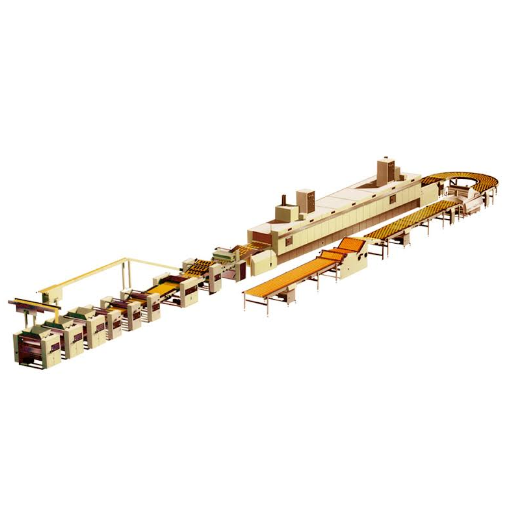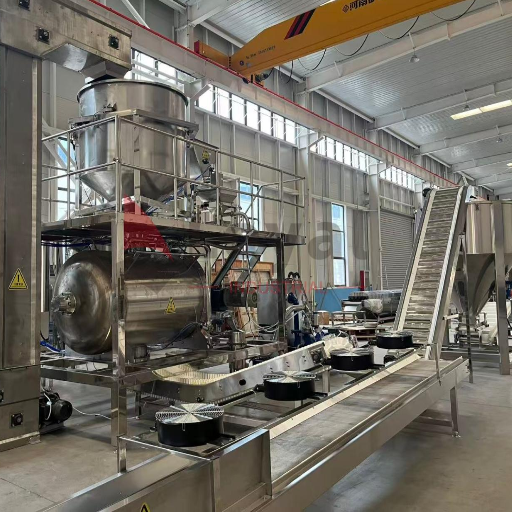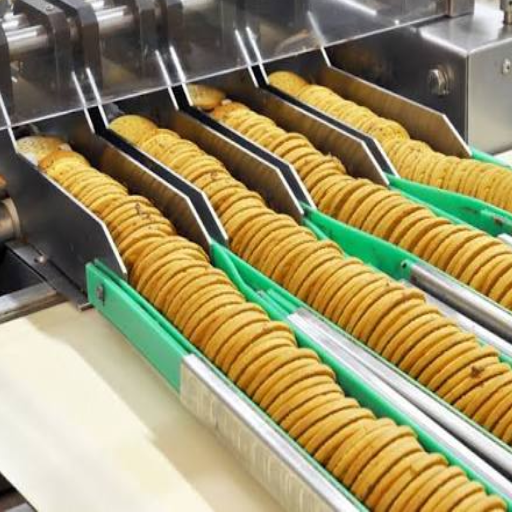
The biscuit manufacturing process is an eight-stage sequence: ingredient preparation, mixing, dough resting, forming, baking, cooling, finishing and packaging. The stages stay the same across products. The settings inside them do not.
Search for how biscuits are made and you will find five steps: mix, form, bake, cool, pack. That answer is not wrong, just incomplete. A hard sweet biscuit, a laminated cracker, a soft short dough and a wire-cut cookie move through the same factory in four different ways, and the differences start at the forming machine.
This guide covers the full biscuit production process, stage by stage. You will see the parameters that matter, the defects each stage causes, and how the path changes by product. If you’re specifying equipment rather than studying the process, our guide to how a biscuit production line is configured covers the buying side.
Key Takeaways
- Biscuit manufacturing has eight stages, but the process path changes with the product. Forming method and bake profile shape everything downstream.
- Dough temperature is a control parameter. Above roughly 25°C, fat softens, dough turns sticky and the moulder stops releasing cleanly.
- Cooling is a process step. Biscuits leave the oven near 100°C and should be below about 35°C before sealed packing, or they will crack in the pack days later.
- Typical tunnel baking runs 200-250°C for 5-20 minutes, with final moisture between 1% and 5%.
- Most defects trace back to one stage. A defect table is more useful on the factory floor than a list of good intentions.
The Biscuit Manufacturing Process at a Glance
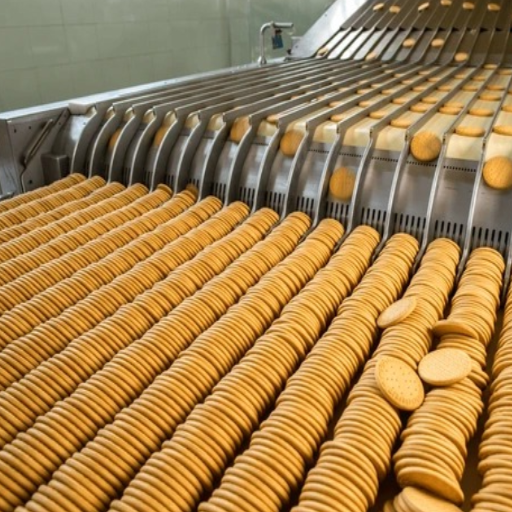
The biscuit manufacturing process is the controlled conversion of a flour-based dough into a low-moisture product through forming, baking and cooling. The goal is consistent shape, colour, texture and moisture, batch after batch.
The biscuit making process runs in eight stages:
- Ingredient preparation. Weighing and sieving flour, fat, sugar, leavening, water and minor ingredients.
- Mixing. Combining them into a dough with the right consistency and temperature.
- Resting. Letting the dough hydrate and relax before forming.
- Forming. Shaping by rotary moulding, sheeting and cutting, wire-cutting or depositing.
- Baking. Removing moisture and developing colour, texture and structure.
- Cooling. Reducing temperature and equalising moisture through the biscuit.
- Finishing. Cream filling, chocolate enrobing, oil spraying or seasoning.
- Packaging. Wrapping, sealing, metal detection and case packing.
| Stage | Main equipment | What it controls | Defect if wrong |
|---|---|---|---|
| Preparation | Sifters, weighers | Recipe accuracy | Weight and colour variation |
| Mixing | Horizontal mixer | Dough temperature, gluten | Sticky dough, poor spread |
| Resting | Resting conveyor | Hydration, relaxation | Shrinkage, distortion |
| Forming | Moulder, sheeter, cutter | Shape, weight, spread | Misshapen pieces |
| Baking | Tunnel oven | Colour, texture, moisture | Pale, dark or blistered |
| Cooling | Cooling conveyor | Moisture gradient | Checking, condensation |
| Finishing | Cream depositor, enrober | Filling weight, registration | Squeeze-out, misalignment |
| Packaging | Flow-wrapper, case packer | Seal integrity, count | Leaks, stale product |
Process flow: ingredient preparation → mixing → resting → forming → baking → cooling → finishing → packaging.
In biscuit processing, terminology varies by market. In the US, a “biscuit” is often a soft savoury quick bread, while the sweet product is a cookie. In the UK and much of the Commonwealth, “biscuit” covers the whole family. This article uses the UK industrial sense: a low-moisture baked product made from flour, fat and sugar.
Stage 1: Ingredient Preparation and Mixing
Mixing sets the dough’s temperature, hydration and gluten state. Those three properties follow the dough through every later stage.
Flour provides structure. Biscuit flours are weaker than bread flours, with protein around 8-11%, because strong gluten makes dough tough and causes shrinkage.
Fat shortens the texture and carries flavour. Sugar adds sweetness, colour and spread. Leavening agents, usually sodium bicarbonate with ammonium bicarbonate, create lift and influence browning.
Most biscuit lines mix in batches because recipes change and dough needs rest. Industrial horizontal mixers commonly handle 85-385 kg per batch, according to specifications published by Baker Perkins and Coperion. Continuous mixing suits long runs of one product, not a factory with several SKUs.
The dough temperature rule
Keep biscuit dough at or below about 25°C. Short dough often runs better at 18-22°C. Warm dough softens the fat, becomes sticky and releases poorly from the moulder. It also develops gluten faster, which leads to shrinkage and a tighter bite.
A plant manager we will call Daniel ran a soft biscuit line that produced good product every morning and oversized biscuits every afternoon. The oven was blamed first, then the moulder. The real cause was dough temperature climbing as the mixing room warmed up. Chilling the water and shortening the mix cycle fixed a problem that had survived three equipment audits.
Resting and conditioning
Resting lets flour hydrate, allows stresses to relax and gives the sheeter a uniform mass. Without it, dough can shrink after cutting and piece dimensions drift. Short doughs may need 10-30 minutes; fermented cracker doughs can rest for many hours.
For lines that run several dough types, mixing and resting decide changeover time. Industrial dough mixing and handling equipment is built around batch control and temperature management.
Stage 2: Four Forming Methods, Four Different Products
Forming fixes your product range. A rotary moulder can’t make a wire-cut cookie, and a wire-cut line can’t make a laminated cracker.
Rotary moulding presses dough into cavities on an engraved roll. A doctor blade removes excess, and a release roller transfers the pieces to the band. It suits short dough with high fat and sugar, gives excellent weight consistency and runs fast. Changing shape means changing the roll.
Sheeting and cutting is the path for hard sweet biscuits, digestives and crackers. A three-roll sheeter compresses the dough, gauge rolls reduce it, and a rotary cutter stamps out shapes. Trim is recovered.
Laminated products add a folding step, layering dough sheets with a dusting of flour or fat to create a flaky texture. Gauging is gradual because a sudden reduction damages the layers.
Wire-cut machines extrude dough through a die and slice it with a wire. The method handles soft, high-fat dough and is the only practical choice for chunky cookies with chocolate chips, nuts or dried fruit. The trade-off is spread control. Wire-cut pieces are deposited, not pressed, so the dough must be formulated and chilled to hold its shape.
Depositing places batter or soft dough directly onto the band. It is used for wafers and some soft biscuits. It gives high shape flexibility but less weight precision than rotary moulding.
| Method | Dough type | Typical products | Shape flexibility | Changeover |
|---|---|---|---|---|
| Rotary moulding | Short dough, high fat and sugar | Soft biscuits, sandwich bases | Low, needs a new roll | Slow |
| Sheeting and cutting | Hard or laminated dough | Hard sweet, digestive, crackers | Medium, needs a new cutter | Medium |
| Wire-cut | Soft, high-fat dough with inclusions | Cookies, chunky products | High | Fast |
| Depositing | Batter or soft dough | Wafers, some soft biscuits | High | Fast |
Equipment suppliers describe these stations in more detail. Reading Bakery Systems covers sheeting, gauging, moulding and cutting from the machine side.
Forming problems show up as spread, weight variation or shape distortion. A warm dough sticks to the moulder, a thick sheet bakes unevenly, and a worn die produces pieces outside tolerance. This is also where most dough waste is created, through trim, rejects and start-up loss.
Stage 3: Baking and What Each Zone Does
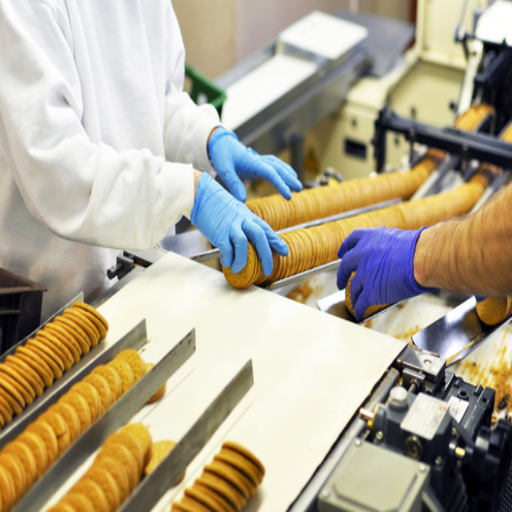
Baking turns shaped dough into a biscuit. It removes water, sets the structure, develops colour and creates texture. The oven is the largest energy consumer on the line, and its profile is the least forgiving thing to change later.
A tunnel oven is divided into zones along the band. Each zone has its own temperature setpoint and, on better ovens, its own airflow and damper control. A typical line has four to eight zones. Band width and oven length are sized together to give the required bake time at the required throughput.
Heat reaches the biscuit three ways. Radiation dominates in direct gas fired ovens. Convection matters in forced-air and hybrid designs. Conduction comes through the band.
- Direct gas fired (DGF). Combustion gases pass over the product. Efficient, but burners can create colour variation if not balanced.
- Indirect. A heat exchanger separates combustion gases from the baking atmosphere. Cleaner, but slower to respond.
- Hybrid. Combines radiant, convective and conduction heat for the widest operating window.
Most biscuit baking runs 200-250°C for 5-20 minutes, depending on product, band speed and zone configuration. Semisweet biscuits are often baked for about 5-6 minutes to a final moisture of 1-2%; richer products finish higher, up to roughly 5%. These ranges are consistent with Iain Davidson’s Biscuit, Cookie and Cracker Production and Manley’s standard technology reference.
The first zone is often cooler than the second. That gives the dough time to spread and set before the surface hardens. If the surface dries too quickly, it traps moisture inside, and the biscuit either blisters or develops a hard case around a soft centre.
| Zone | Main job | Typical setting | Defect if wrong |
|---|---|---|---|
| First zone | Spread, structure setting | Lower than middle zones | Tight biscuits, case hardening |
| Middle zones | Moisture removal, lift | Highest band of the profile | Soggy centre, collapse |
| Final zones | Colour, final moisture | Moderate, controlled airflow | Pale, dark or blistered |
The Science Channel segment above shows the sequence at production speed: mixing, forming, baking and cooling. Watch how much of the line is dedicated to handling the product gently between stages.
Stage 4: Cooling and Moisture Equilibration
In the biscuit manufacturing process, cooling isn’t a conveyor between the oven and the packing machine. It’s a process step that decides whether the biscuit survives the next thirty days.
Biscuits leave the oven at close to 100°C. They need to reach below roughly 35°C, or within about 5°C of the packing room, before entering a sealed pack. Pack them warm and trapped moisture condenses inside the film. The biscuit softens, the seal fogs, and shelf life drops by weeks.
Cooling usually takes 1.5-2.0 times the bake time, according to Davidson’s cooling and handling guidance. The first phase removes sensible heat on a wire-mesh conveyor. The second is slower and more important: moisture migrates from the centre to the drier surface, and the temperature gradient evens out.
That second phase is where checking is prevented. Checking means the hairline cracks that appear hours or days after packing, often across a biscuit that looked perfect at the end of the line.
The cause is a moisture or shrinkage gradient. The surface contracts before the core has equilibrated, and the stress shows up as a crack. Faster cooling, or packing too warm, makes it worse.
Sandwich products add another cooling step. Base cakes are usually cooled to around 28°C before cream depositing, and the assembled sandwich is cooled to about 20°C so the filling fat sets before wrapping. Skip that and the cream squeezes out in the pack.
Stage 5: Finishing and Packaging
Finishing is optional. When it exists, it adds cost, complexity and a second set of quality risks.
Cream sandwiching is the most common finishing step. A depositor places cream on one biscuit, a second biscuit is registered on top, and the sandwich passes through a cooling tunnel. The critical variables are cream weight, cream temperature and registration. Top-end equipment is quoted at up to 4,800 sandwiches per minute.
Chocolate enrobing, oil spraying and seasoning follow similar logic. Each layer must adhere, set and survive packing. An enrobed biscuit can bloom in transit if the chocolate is not tempered correctly.
Flow-wrap and pillow-pack formats are common for retail biscuits; slug packs suit stacked products. Nitrogen flushing displaces oxygen and extends shelf life, especially for high-fat products. Seal integrity matters most: a weak seal means a stale product.
Metal detection and checkweighing usually sit at the end of the line as control points. They’re part of the food safety system, and their records are evidence that the process is under control. Our guide to food safety equipment covers the wider set of controls.
How the Biscuit Manufacturing Process Changes by Biscuit Type
The eight stages stay the same. The process path does not.
| Product type | Dough | Forming | Typical bake | Finishing |
|---|---|---|---|---|
| Hard sweet (Marie, rich tea, digestive) | Hard, sheeted, sometimes laminated | Sheeting and rotary cutting | 200-250°C, 4-8 min | None or light oil spray |
| Cracker and soda | Fermented, laminated | Sheeting, lamination, cutting | 200-250°C, longer bake | Salt, oil spray |
| Soft and short dough | High fat and sugar | Rotary moulding or wire-cut | 180-230°C, shorter bake | None |
| Cookie | Soft, high fat, inclusions | Wire-cut | 180-220°C, 8-12 min | None |
| Cream sandwich | Base biscuit dough | Base forming, then sandwiching | Base bake only | Cream, second biscuit |
| Wafer | Batter | Depositing, wafer sheet baking | High temperature, short | Cream, cutting |
Hard sweet biscuits are the classic sheeted product: laminated or gauged dough, cut into shapes and baked to low moisture. The main risks are shape distortion from poor gauging and colour variation from an unbalanced oven. Our guide to hard sweet and cracker production lines covers the equipment.
Crackers and soda biscuits add fermentation and lamination. The dough develops flavour over a longer rest, and the layers create the flaky texture. Crackers bake longer and finish drier than sweet biscuits. The line looks similar, but the process is not interchangeable.
Soft and short dough biscuits use more fat and sugar and less water. They are usually rotary moulded, baked for a shorter time and packed without finishing. The challenge is keeping the dough cool enough to mould and the bake short enough to retain moisture without underbaking the centre. Our guide to soft and short dough biscuit lines goes deeper.
Cookies are the wire-cut branch. High fat, high sugar and inclusions make the dough soft, so spread control is the central problem. A cookie that spreads too far becomes thin and fragile; one that spreads too little stays domed. Cookie and wire-cut production is a separate discipline.
Cream sandwiches are a biscuit line plus a sandwiching module. The base can be hard sweet or soft, but finishing adds cream weight, registration and a second cooling step. Wafers are the outlier: they start from a batter, are deposited onto hot plates and baked into sheets before cream is applied and the block is cut.
A product development lead we will call Aisha once ran a soft short dough on a hard sweet line. The sheeter coped, but the cutter compressed the dough and the oven profile was too aggressive. The trial produced biscuits with a hard shell and a soft centre. The line was not faulty; the process path was wrong for the product. Planning a product change? Send us the specification and we’ll review the forming and baking requirements.
Quality Control in Biscuit Processing
Quality control in biscuit processing is mostly measurement discipline. These parameters predict whether a batch will pass, not just whether it looks acceptable at the end of the line.
| Parameter | Typical target | Where measured | Why it matters |
|---|---|---|---|
| Dough temperature | 25°C or below; 18-22°C for short dough | Mixer exit | Fat melting, stickiness |
| Dough moisture | 16-21%, depending on product | Mixer | Sheeting, spread |
| Sheet thickness | 2-5 mm for sheeted products | Gauge rolls | Piece weight, bake uniformity |
| Bake temperature | 180-280°C depending on zone | Each oven zone | Colour, texture, moisture |
| Bake time | 4-20 minutes | Oven | Final moisture, colour |
| Final moisture | 1-5%; 1-2% for semisweet | Oven exit | Shelf life, checking risk |
| Cooling exit temperature | Below about 35°C | Cooling conveyor end | Condensation, packing quality |
| Spread | Product specification | Online measurement | Weight, pack count |
Final moisture is the best single predictor of shelf life and checking. Cooling exit temperature is the best single predictor of whether the pack stays crisp. Hygiene design, allergen control and changeover cleaning determine whether the line can run multiple products safely. EHEDG hygienic design standards are a useful reference for the equipment side.
Troubleshooting: Common Defects, Causes and Fixes
Most defects in the biscuit manufacturing process have a small number of likely causes. This table is a starting point for diagnosis, not a guarantee. Confirm the cause on the line before changing the recipe.
| Defect | Stage | Likely cause | Fix |
|---|---|---|---|
| Excessive spread | Mixing, forming, baking | Dough too warm, too much sugar or water, weak flour | Chill dough, adjust formula, raise early-zone heat |
| Tight or domed biscuit | Mixing, forming | Dough too cold, over-mixed, too much fat | Temper dough, shorten mix, review fat level |
| Pale colour | Baking | Low sugar, low pH, insufficient top heat | Adjust formula, zone profile or band speed |
| Dark edges | Baking | Hot spots, uneven airflow, band too slow | Balance burners, adjust dampers, increase speed |
| Checking or hairline cracks | Cooling | Moisture gradient, fast cooling, packing too warm | Slow cooling, equilibrate, pack below 35°C |
| Soggy centre | Baking, cooling | Underbaked, packed hot, seal failure | Increase bake, cool before packing, test seals |
| Blisters | Baking | Steam entrapment, excess water, uneven sheet | Adjust dough water, improve sheeting |
| Weight variation | Forming | Sheet thickness variation, die wear | Control gauging, inspect dies |
| Cream squeeze-out | Finishing | Cream too warm or soft, poor registration | Control cream temperature, align depositor |
The pattern is consistent. Forming defects show up as shape and weight problems, baking defects as colour and texture problems, and cooling defects later, often after the product has left the factory. That delay is why cooling is easy to underestimate.
When a defect persists across shifts, the cause is often upstream. A pale biscuit may be an oven problem, or a scaling error in the mixer, or a flour delivery that changed specification. Diagnosing food equipment faults is as much about tracing the process as repairing the machine.
Scaling Up: From Pilot Batch to Industrial Line
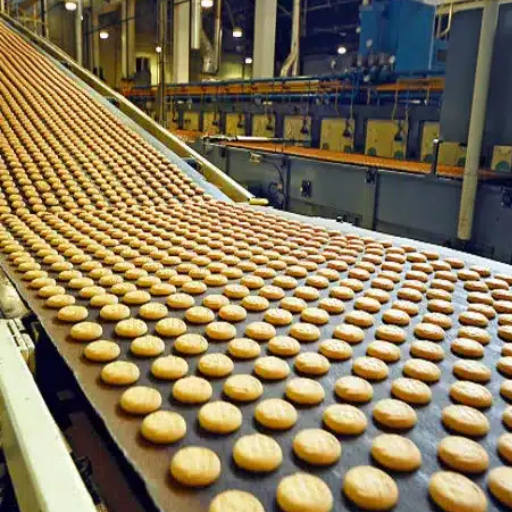
The process doesn’t change between a pilot bakery and an industrial line. The tolerances do. A pilot mixer might handle 20 kg; an industrial mixer handles hundreds of kilograms, and heat builds up unevenly.
Capacity is quoted in kilograms per hour, biscuits per minute, or tonnes per shift. Convert every quotation to the same basis and state the uptime assumption. If automation is planned later, specify the data and control points at purchase. Automated biscuit production is cheaper to design in than to retrofit.
Frequently Asked Questions
What are the steps in the biscuit manufacturing process?
The eight steps are ingredient preparation, mixing, resting, forming, baking, cooling, finishing and packaging. Finishing is optional and applies only to filled, coated or seasoned products. The first six are common to almost every line.
What is the ideal dough temperature for biscuits?
Most biscuit dough should stay at or below 25°C. Short dough often runs best at 18-22°C. Cooler dough is easier to mould, releases cleanly and develops less gluten. Warm dough becomes sticky and produces inconsistent piece weights.
How long are biscuits baked in a tunnel oven?
Typical tunnel baking runs 5-20 minutes at 200-250°C, depending on product and zone profile. Semisweet biscuits are often baked for about 5-6 minutes; richer products need a gentler, longer bake.
Why do biscuits crack after baking?
The cracks are usually caused by checking, a stress failure from moisture or temperature gradients during cooling. Packing biscuits while they are still warm makes it worse. Cool them below about 35°C and let moisture equalise before sealing the pack.
What moisture content should biscuits have before packing?
Most biscuits finish between 1% and 5% moisture. Semisweet biscuits are typically 1-2%. Higher moisture shortens shelf life and increases checking risk.
What is the difference between a biscuit and a cookie?
In the UK, “biscuit” is the broad term for a low-moisture baked product, including cookies and crackers. In the US, “biscuit” usually means a soft savoury quick bread, and the sweet product is a cookie. In production terms, cookies are often wire-cut and higher in fat.
What is the difference between rotary moulded and wire-cut biscuits?
Rotary moulding presses short dough into cavities on an engraved roll. It gives high volume and consistent weight but limited shape flexibility. Wire-cutting extrudes soft dough and slices it with a wire. It handles inclusions but gives less control over spread.
Conclusion
The biscuit manufacturing process is eight stages long, but the useful knowledge sits in the settings and the transitions between them. Dough temperature decides how the dough forms. The forming method decides what products the line can make.
The bake profile decides colour, texture and moisture. Cooling decides whether the biscuit survives the pack.
Three rules are worth carrying onto the factory floor: keep dough cool and measure it, treat cooling as a process step with its own targets, and diagnose defects by stage rather than by symptom.
If you’re planning a new line or changing an existing one, specify the process and equipment together. Send us your product specification, target capacity and site constraints, and our engineering team will review the forming, baking and cooling requirements with you. You can also start with our guide to biscuit production line configuration.