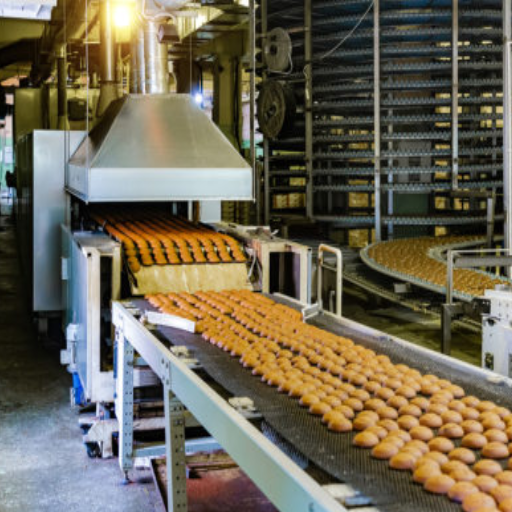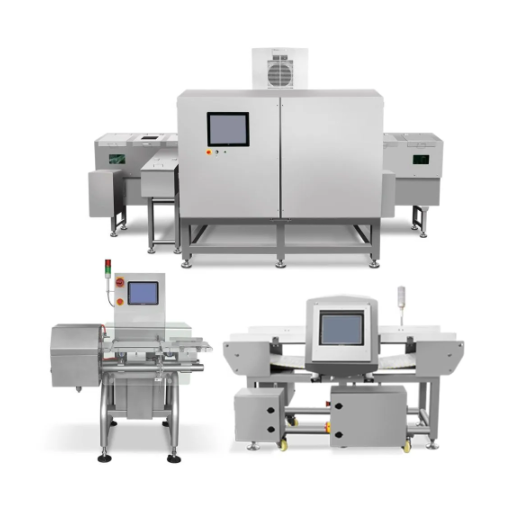
An extruded snack mass balance reconciles opening stock and incoming materials with finished snacks, other outputs and closing stock. Calculate water and dry matter separately so that drying, coating and material held in the line do not distort the comparison.
A feed total and a packed-product total tell only part of the story. Added water changes incoming mass; oil and seasoning add non-water material; fines, samples and rejects leave through other routes. The worksheet below gives each stream a place and leaves unexplained differences visible.
Key takeaways:
- Use one defined boundary and measurement interval, with net food mass excluding packaging.
- Convert every moisture result to the same basis before calculating water and dry matter.
- Count coating, rework and opening/closing stock without duplicating internal transfers.
- Treat water removal calculated by difference as an estimate, not an independent evaporation measurement.
- Report the masses, assumptions and residual alongside any yield percentage.
1. Define the run and material boundary
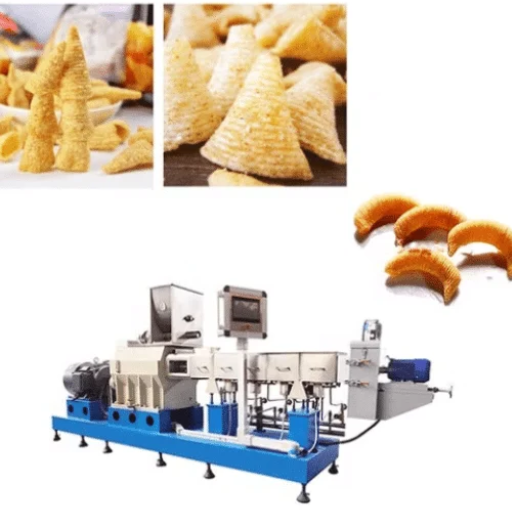
Draw the part of the line being measured. A useful starting boundary runs from ingredient entry through extrusion, drying and coating to final net food output. Mark added water, oil, seasoning, external rework and every material exit.
For background on the equipment sequence, see our food extrusion process guide. The wider food extrusion technology guide explains the process context; this worksheet focuses on the material record.
Match collection points and times
Record the run ID, recipe version, start/end times and collection points. Identify material already in hoppers, the dryer, the coater and transfer equipment at the start. Record the corresponding closing work in progress, or WIP, at the end.
Input and output collections need to represent the same accounting interval. Material entering near the end may still be inside the line when collection stops. Account for that stock rather than assuming that simultaneous scale readings represent the same material.
This boundary-and-accumulation approach follows the INFLIBNET material-balance chapter. Do not assume zero accumulation unless the run record supports it.
Define saleable output separately
Specify which product meets the agreed quality requirements, and record its net food mass. Separate startup scrap, rejects and samples. A mass balance does not establish food safety or authorize product release.
For a purchasing discussion, use the factory acceptance test checklist to agree how output and acceptance will be assessed. You can also send Loyal your proposed measurement boundary and ask which output basis a proposed line configuration uses.
2. Put every stream on the same moisture basis
Use kilograms throughout. For each material stream, let:
m= net food mass, kg.x= water fraction on a wet basis: water mass divided by total material mass.W= water mass, kg.D= dry matter, kg, meaning non-water mass under the stated measurement convention.
Then calculate:
W = m × x
D = m × (1 − x)
Enter 12% wet-basis moisture as x = 0.12. Dry matter includes oil: the term describes a water-free accounting basis, not whether a substance is physically solid.
Convert dry-basis moisture before using it
Dry-basis moisture uses dry matter as the denominator. If X = W / D, the conversions are:
x = X / (1 + X)
X = x / (1 − x)
Divide a dry-basis percentage by 100 before using the first formula. For example, an illustrative 25% dry-basis value gives X = 0.25 and x = 0.25 / 1.25 = 0.20, or 20% wet basis. The two percentages describe the same composition with different denominators.
Donald Mercer’s University of Guelph food-processing text, particularly sections 4.7 and 8.4, explains moisture bases and drying calculations. The formulas above separate water from non-water mass; they do not set operating moisture targets.
Record the measurement method
Attach each moisture result to a sample ID, collection time, location and method. Record sample handling, repeat results and relevant uncertainty. Ingredient, finished-snack and slurry results may need different method validation.
Loss on drying measures mass lost during a drying test and can include non-water volatile components. METTLER TOLEDO’s method explanation describes this limitation. Where it matters, establish how the method result relates to water content before treating the remainder as dry matter.
Water activity and moisture content are different quantities. Do not substitute a water-activity result for x, and do not select a universal drying temperature or test duration from this worksheet.
3. Copy the blank mass-balance worksheet
Copy these tables into your run record or spreadsheet. Blank cells are for measured or documented values; a missing result remains unknown, rather than becoming zero.
Record these details above the ledger:
| Run field | Entry |
|---|---|
| Run ID / recipe version | |
| Start / end time and time zone | |
| Boundary and collection points | |
| Saleable-product specification | |
| Scale IDs / verification records | |
| Moisture methods / sample references | |
| Stock-estimation method / uncertainty notes |
Use a separate row for every ingredient or stream that has a different moisture value.
| Stream | Role | Net kg | Water % wb | Water kg | Dry matter kg | Record ID |
|---|---|---|---|---|---|---|
| Opening WIP | Opening stock | |||||
| Ingredient, one row per material | Input | |||||
| Added water | Input | |||||
| Product-contact steam, defined boundary | Input | |||||
| Oil | Input | |||||
| Powder seasoning / wet slurry | Input | |||||
| External rework | Input | |||||
| Saleable finished snack | Output | |||||
| Fines / dust removed | Output | |||||
| Rejects / startup scrap removed | Output | |||||
| Samples removed | Output | |||||
| Other removed material | Output | |||||
| Closing WIP | Closing stock |
For each record ID, retain the gross and tare readings used to calculate net kg = gross kg − tare kg. Also record the stream location, sample ID/time, original moisture basis and whether each value is measured, estimated or calculated. Water and dry-matter masses are calculated from the recorded net mass and water fraction.
Keep coating streams separate
Powder, oil and slurry seasoning are distinct additions, as illustrated by TNA’s seasoning-system descriptions. Record their actual composition. A slurry is not all dry matter, and an oil stream should use its documented water content.
Coating dosed is not necessarily coating retained on the snack. Account for residue, collected losses and stock in the coating system. Without suitable measurements before and after coating, the overall ledger cannot isolate retained coating pickup.
Count boundary crossings once
Rework arriving from outside the boundary is an input. Recycle moving entirely inside it is a memo flow, not another external input each time it circulates. Material still held for reuse inside the boundary at the end belongs in closing WIP; do not also count it as an output.
For product-contact steam, define whether the boundary includes all injected steam and its venting, or starts at conditioned feed after venting. Boiler steam consumption is not a measure of water retained in food. If a transfer is unmeasured, identify the gap.
4. Reconcile dry matter before interpreting water removal
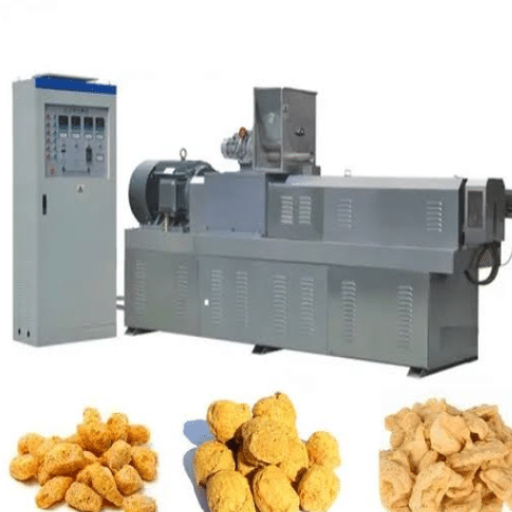
Calculate the signed dry-matter residual:
R_D = opening dry matter + all entering dry matter
      − closing dry matter − all outgoing dry matter
A positive R_D means more dry matter is recorded as available than accounted for in outputs and closing stock. A negative value means the reverse. Neither sign identifies the cause, and a negative residual is not negative waste.
The simplified calculation assumes negligible net transformation or volatilization of non-water mass beyond the listed streams. If that assumption is material for your product and unsupported, qualify the result or develop a more complete component balance.
An optional signed residual percentage is:
100 × R_D / (opening dry matter + all entering dry matter)
State that denominator explicitly. The percentage is undefined when the denominator is zero, and it does not supply an acceptable tolerance.
Label a water difference as calculated
For the food-side ledger:
Calculated net water removed = opening water + all entering water
                              − closing water − water in material outputs
This is water inferred from the listed material measurements. It is not independently measured exhaust water. A dryer also has air and water crossing its full physical boundary; this simplified worksheet does not balance the air side.
Back-calculating a water-removal term and adding it to the outputs cannot independently validate total-mass closure. Unlisted material, moisture-method bias or stock errors may still be present.
For a single stream undergoing only water removal, with no non-water additions, losses or stock change, dry matter gives final mass = initial mass × (1 − initial x) / (1 − final x). Do not apply that shortcut across a coated-snack line when those conditions do not hold.
5. Worked example: a hypothetical coated-snack run
Illustrative example: every input below is hypothetical. The numbers were chosen to reconcile exactly. They are not a recipe, equipment specification, customer result or recommended yield.
Assume no injected steam, no internal recycle and no unlisted non-water mass loss. Oil is treated as water-free solely for this example. No run duration is specified, so these masses cannot establish a kg/h rate.
| Stream | Role | Net kg | Water % wb | Water kg | Dry matter kg |
|---|---|---|---|---|---|
| Opening WIP | Opening stock | 30 | 10 | 3 | 27 |
| Ingredient feed | Input | 1,000 | 12 | 120 | 880 |
| Added water | Input | 100 | 100 | 100 | 0 |
| Oil coating | Input | 40 | 0 | 0 | 40 |
| Powder seasoning | Input | 20 | 5 | 1 | 19 |
| External rework | Input | 50 | 4 | 2 | 48 |
| Saleable coated snack | Output | 1,000 | 4 | 40 | 960 |
| Fines leaving boundary | Output | 30 | 5 | 1.5 | 28.5 |
| Rejects leaving boundary | Output | 20 | 10 | 2 | 18 |
| Samples removed | Output | 5 | 4 | 0.2 | 4.8 |
| Closing WIP | Closing stock | 3 | 10 | 0.3 | 2.7 |
Opening stock plus inputs total 1,240 kg, comprising 226 kg water and 1,014 kg dry matter. Material outputs plus closing stock total 1,058 kg, comprising 44 kg water and 1,014 kg dry matter.
Therefore:
Dry-matter residual = 1,014 − 1,014 = 0 kg
Calculated net water removed = 226 − 44 = 182 kg
The zero dry-matter residual is constructed for teaching. It says nothing about the accuracy of a real measurement system.
What if one recorded mass changes?
Keep every other assumption unchanged, but record saleable product as 995 kg at 4% water. Its dry matter becomes 995 × 0.96 = 955.2 kg, leaving a positive dry-matter residual of 4.8 kg.
Retain that residual as unexplained until records or measurements resolve it. Do not create an extra fines entry merely to make the totals match. Recalculating water removal from the altered ledger does not explain the missing dry matter.
6. Investigate an unexplained residual
Start with the records most likely to distinguish a missing stream from a measurement difference. The following are checks, not diagnoses:
| Check | Question to resolve |
|---|---|
| Gross, tare and scale records | Were containers and packaging excluded consistently? |
| Collection window | Do feed, output and stock records cover the same interval? |
| Moisture basis | Was a dry-basis percentage entered as wet basis, or a percentage used as a fraction? |
| Sampling and method | Were samples representative of the relevant material and collection time? |
| Fines, scrap and samples | Were removed streams weighed and assigned to the correct run? |
| Coating system | Were retained stock and removed residues recorded? |
| Rework | Was any internal circulation counted twice? |
| Opening and closing WIP | Were stock masses and their moisture values measured or estimated consistently? |
Keep the original ledger when correcting a record. Document the change, its reason and the evidence supporting it. Unknown transfers should stay visible instead of being labelled evaporation or process loss.
There is no universal acceptable residual established by this worksheet. Agree how measurement uncertainty and unresolved differences will affect interpretation before using results for acceptance. If the difference could change a purchasing decision, seek a review of the boundary, weighing and moisture methods.
7. Report the result with its denominator
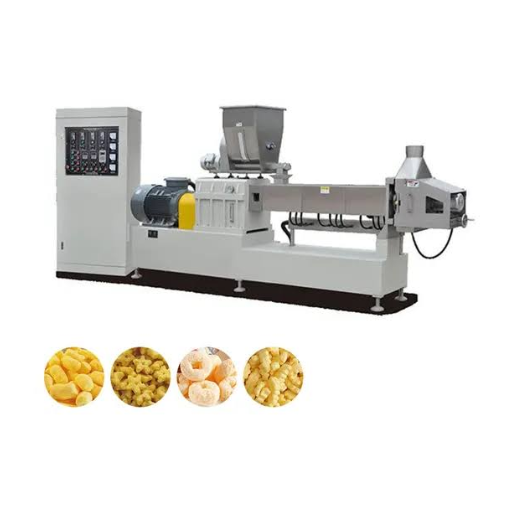
A useful report states the run boundary and interval, net saleable mass and moisture, saleable dry matter, other outputs, stock adjustment and unresolved residual. Keep measured, estimated and calculated quantities distinguishable.
In the hypothetical example, saleable dry matter is 960 kg. Dividing by opening dry matter plus all entering dry matter gives 960 / 1,014 × 100 ≈ 94.67%. Name this the saleable share of available dry matter, including opening stock and coating.
That share includes oil, seasoning and external rework. It cannot isolate virgin-ingredient recovery or retained coating pickup, and it is not an industry benchmark. A feed-to-product wet-mass ratio also needs its moisture, coating and inventory basis before comparison.
When comparing configurations, use the corn puff snacks production line guide alongside the run ledger. Ask whether a quoted output refers to feed, uncoated snack or final net saleable product, and which collection interval and product specification apply.
Questions buyers should clarify
Why can finished snack mass differ from ingredient feed mass? Water enters and leaves, coating adds material, and stock may change. Fines, rejects and samples also divert material from saleable output. List these streams before interpreting the difference.
Does oil count as dry matter? Its non-water portion does. Use the documented water fraction for the actual stream rather than assuming every oil-containing addition is water-free.
Is calculated water removal the same as measured evaporation? No. It is a difference derived from food-stream records. Independent water-transfer measurement would require additional evidence beyond this calculation.
How should internal rework be counted? Count only crossings of the chosen boundary. Internal circulation is a memo flow; material held inside at the end is closing inventory.
What residual is acceptable? Set the interpretation with the agreed protocol and measurement uncertainty. A small residual alone does not prove accurate measurements or acceptable product.
To discuss your snack production line with Loyal, send your recipe basis, proposed measurement points and target finished-product specification. Ask which output basis applies to the proposed configuration so that feed and saleable-product figures can be compared meaningfully.