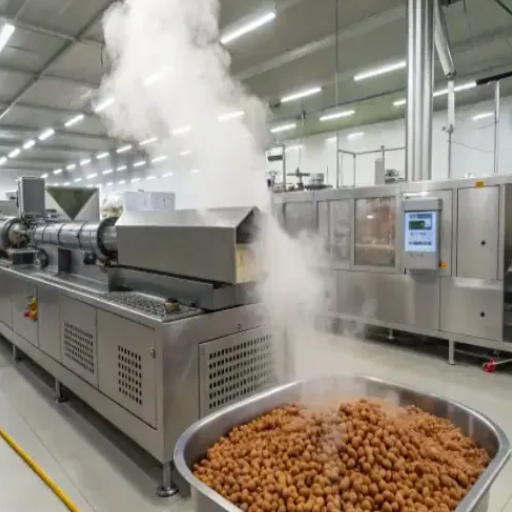
The primary HS code for food processing machinery is 8438 under Chapter 84 of the Harmonized System. This heading covers machinery for the industrial preparation or manufacture of food and drink, including pasta lines, snack extruders, bakery equipment, and meat processors.
Last spring, a snack producer in Poland named Marek ordered a new corn puff production line from overseas. The supplier listed the HS code as 8509.40, the code for household food processors. Customs held the shipment for nine days, and Marek paid extra storage fees because an industrial extrusion line does not belong in the household appliances category. A simple classification mistake cost him time, money, and a missed production deadline.
You probably know that feeling. Buying food processing machinery across borders already involves quotations, inspections, shipping terms, and certifications. Adding customs classification to the list can feel overwhelming. But getting the HS code right is not optional. It determines your import duty, clearance speed, and whether your documentation matches the machine on the pallet.
In this guide, you will learn the exact HS codes for different types of food processing machinery, how to distinguish between related codes, and what to watch for when importing from China. We will also show you how a reliable manufacturer helps you avoid classification headaches from the start.
Key Takeaways
- Most industrial food processing machinery falls under HS code 8438 in Chapter 84.
- 8438.10 covers bakery and pasta/macaroni machinery; 8438.80 is the catch-all for snack extruders, protein bar lines, and other unspecified food equipment.
- 8438.90 applies to parts of 8438 machinery, not complete machines.
- Countries extend the 6-digit HS code to 8–12 digits for local tariffs, so always confirm the full destination-country code.
- Working with an experienced manufacturer ensures your commercial invoice, packing list, and HS codes align before shipment.
What Is an HS Code and Why Does It Matter?

An HS code is a six-digit classification number managed by the World Customs Organization. It creates a common language for customs authorities in over 200 countries. The code tells a customs officer what a product is, which duty rate applies, and how trade statistics should be recorded.
The first two digits identify the chapter, the next two identify the heading, and the final two identify the subheading. For example, in 8438.10, the number 84 is the chapter for machinery, 38 is the heading for food and drink preparation machinery, and 10 is the subheading for bakery and pasta equipment.
Countries can add extra digits beyond the first six. The United States uses 10-digit HTS codes, the European Union uses 8-digit CN codes, and India uses HSN codes linked to GST. This means 8438.10 is harmonized globally, but the full code you put on your import declaration may be longer.
Getting the code wrong creates real problems. Delays at the port, unexpected duties, fines, and even shipment rejection can follow a simple mismatch. That is why importers should treat HS classification as a commercial detail, not just a customs formality.
Want to see how experienced suppliers handle documentation from day one? Explore our food production lines and learn how we support smooth global deliveries.
What Is the HS Code for Food Processing Machinery?
The international HS code for most food processing machinery is 8438. This heading is titled “Machinery, not specified or included elsewhere in this chapter, for the industrial preparation or manufacture of food or drink.” It specifically excludes machinery used for extracting or preparing animal or fixed vegetable fats or oils, which fall elsewhere.
Within 8438, the code splits into subheadings based on the type of food or drink the machine processes. Here is a clear breakdown you can use as a quick reference.
| HS Code | Description | Common Examples |
|---|---|---|
| 8438.10 | Bakery machinery and machinery for making macaroni, spaghetti, or similar products | Dough mixers, bakery ovens, pasta extruders, macaroni lines |
| 8438.20 | Machinery for manufacturing confectionery, cocoa, or chocolate | Candy wrapping machines, chocolate temperers, refiners |
| 8438.30 | Machinery for sugar manufacture | Sugar crystallizers, cane crushers, centrifuges |
| 8438.40 | Brewery machinery | Fermenters, brewing kettles, bottling equipment |
| 8438.50 | Machinery for preparing meat, poultry, fish, or seafood | Industrial grinders, sausage stuffers, deboners, defeatherers |
| 8438.60 | Machinery for preparing fruits, nuts, or vegetables | Peelers, slicers, juicers, blanchers, corers |
| 8438.80 | Other machinery for industrial preparation or manufacture of food or drink | Snack extruders, protein bar lines, tea processing machines |
| 8438.90 | Parts of machinery of heading 8438 | Blades, belts, molds, bearings, and other spare parts |
For most importers buying complete production lines, the relevant codes are 8438.10, 8438.80, and 8438.90. The exact choice depends on the machine’s principal function. A pasta line whose main purpose is producing macaroni belongs under 8438.10. A corn puff snack extruder whose purpose is general food processing usually falls under 8438.80.
HS Codes by Food Processing Machine Type
Different food machines have different classification needs. Below we map common Shandong Loyal Industrial equipment to the HS codes most frequently used for import.
Pasta and Macaroni Production Lines, 8438.10
Pasta and macaroni production lines fall under 8438.10 because the heading explicitly covers “machinery for the manufacture of macaroni, spaghetti or similar products.” This includes mixers, extruders, cutters, dryers, and cooling conveyors that work together as a pasta line.
In the United States, the Harmonized Tariff Schedule breaks this into 8438.10.00.10 for bakery machinery and 8438.10.00.90 for other machinery, including pasta equipment. Brazil applies a 12% import duty on NCM 8438.10.00, though exemptions may apply for capital goods with no domestic equivalent.
If you are importing a complete pasta and macaroni production line, make sure your supplier classifies the complete system by its principal function rather than listing each component separately.
Snack Food Extruders and Puff Lines, 8438.80
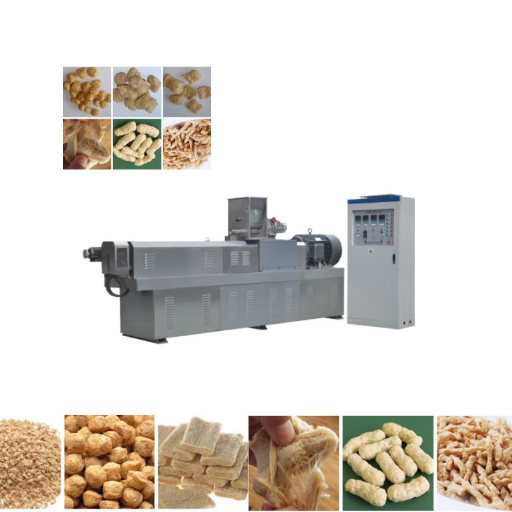
Snack food extruders, corn puff lines, and 2D/3D pellet production lines usually fall under 8438.80, the catch-all for other industrial food preparation machinery. Export records show snack puff food making machines shipped under codes such as 8438.80.00 or 8438.80.90, depending on the country.
A complete corn puff snacks production line typically includes a mixer, screw conveyor, twin-screw extruder, dryer, flavoring drum, cooling conveyor, and packaging machine. Because the line’s main purpose is general snack food manufacturing, 8438.80 is the most appropriate international code.
Bakery and Bread Crumb Machinery, 8438.10 / 8438.80
Bakery machinery is covered by 8438.10. This includes industrial dough mixers, biscuit production lines, and bread ovens. A bread crumbs production line may also fall under 8438.10 if customs classifies it as bakery-related equipment. In some countries, specialized crumb machinery may be classified under 8438.80. Always verify with the destination customs schedule.
Protein Bar Production Lines, 8438.80
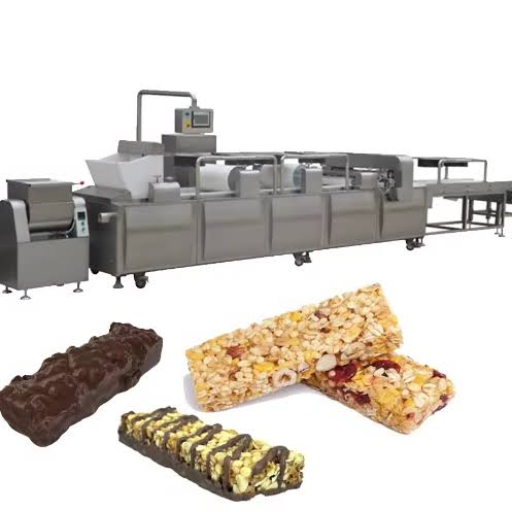
Protein bar production lines, cereal bar lines, and nutrition bar equipment generally fall under 8438.80 as other food manufacturing machinery. These lines mix ingredients, form bars, coat them, and package the finished product. Because the heading 8438.10 does not specifically mention protein bars, 8438.80 is the standard choice for a protein bar production line.
Meat and Poultry Processing Machinery, 8438.50
Industrial meat grinders, sausage stuffers, poultry defeatherers, and fish processing machines fall under 8438.50. This code is for machinery that prepares meat, poultry, fish, crustaceans, or mollusks. It is important not to confuse this with household meat grinders, which fall under 8509.40 or 8210.00 depending on whether they are electric or manual.
Fruit, Nut, and Vegetable Preparation Machinery, 8438.60
Machinery for washing, peeling, slicing, blanching, or juicing fruits, nuts, and vegetables falls under 8438.60. Industrial juicers, nut shellers, vegetable cutters, and blanchers all belong here. Again, household versions of these appliances are classified elsewhere.
Related HS Codes Buyers Should Know
Not every machine in a food factory belongs under 8438. Several nearby headings are easy to confuse, and choosing the wrong one can cause clearance problems.
8422, Packaging, Filling, Sealing, and Labeling Machinery
Machinery for filling bottles, cans, jars, or pouches; sealing containers; and labeling packages falls under 8422. Many food production lines include a packaging section at the end. If you buy the packaging machine separately, it may need its own HS code under 8422 rather than 8438.
8437, Grain Cleaning, Sorting, and Milling Machinery
Machines for cleaning, sorting, or grading grain, seeds, or dried legumes, as well as milling industry machinery, fall under 8437. A rice milling line or grain separator belongs here, not under 8438.
8509.40, Household Food Processors, Mixers, and Juicers
This is the code that caused Marek’s customs delay. 8509.40 covers electric, household-type food grinders, processors, mixers, and juice extractors. Industrial equipment does not belong here. If your machine is designed for a factory floor and produces at commercial scale, it almost certainly belongs under 8438.
8210.00, Hand-Operated Food Preparation Appliances
Manual appliances weighing 10 kg or less used for preparing, conditioning, or serving food or drink fall under 8210.00. Examples include hand-crank meat grinders and manual apple peelers. Industrial electric machines do not belong here.
8438.90, Parts of Food Processing Machinery
When you order spare parts for an 8438 machine, such as extruder screws, cutting blades, molds, or conveyor belts, the correct code is usually 8438.90. Parts should not be declared under the same code as the complete machine.
Country-Specific Tariff Codes: What Changes After the First Six Digits

The first six digits of an HS code are harmonized internationally. Everything after that is decided by the importing country. Here is what that looks like in practice.
United States, HTS Codes
The United States uses 10-digit Harmonized Tariff Schedule codes. For example, bakery and pasta machinery may appear as 8438.10.00.10 or 8438.10.00.90. US MFN duty rates on 8438 machinery range from 0% to 2.8%, depending on the subheading. From September 2025, complete HTS codes are mandatory for all US imports.
European Union, Combined Nomenclature
The EU extends HS codes to eight digits using the Combined Nomenclature. The 2025 CN update refined some subheadings for vegetable processing machinery and equipment with smart control systems. Always check the EU TARIC database for the current full code.
China, 8-Digit HS and 13-Digit CIQ
China uses eight-digit HS codes and adds 13-digit CIQ codes for inspection and quarantine. If you are importing machinery from China, your Chinese supplier should provide the export HS code, but you must still confirm the import code in your own country.
India, HSN and GST
In India, HSN code 8438 generally attracts 18% GST under the category of food machinery. The exact rate depends on the subheading and any applicable exemptions, so confirm with your customs broker.
GCC Countries, 12-Digit Codes
From January 1, 2025, Gulf Cooperation Council countries including the UAE and Saudi Arabia require 12-digit HS codes for imports. If you ship food machinery to the Middle East, make sure your documentation includes the full local code.
Common HS Code Mistakes When Importing Food Machinery
Even experienced buyers make classification errors. Here are the most common mistakes and how to avoid them.
Mistake 1: Using Household Appliance Codes for Industrial Equipment
Industrial food processing machinery belongs under 8438, not 8509 or 8210. Always check the machine’s rated capacity, power, and intended use. Factory-scale equipment is industrial by definition.
Mistake 2: Declaring Parts as Complete Machines
A buyer in Nigeria once imported a set of extruder screws and declared them under 8438.80. Customs flagged the shipment because the invoice described parts, not a complete machine. The correct code was 8438.90. The shipment was released after the declaration was corrected, but the delay cost a full week.
Mistake 3: Ignoring the Principal Function Rule
For a complete production line, classify by the line’s main purpose. A macaroni production line is 8438.10 even if it includes some general processing components. A mixed-use snack line whose main purpose is not bakery, meat, or vegetable processing usually falls under 8438.80.
Mistake 4: Forgetting Local Extensions
Never assume the six-digit HS code is enough. Your customs broker needs the full national code to calculate duty and process clearance. Verify the complete code before shipment.
Practical Checklist for Importing Food Processing Machinery
Use this checklist before your next shipment to reduce classification risk.
- Identify the machine’s principal function. Is it primarily for pasta, snacks, bakery, meat, or general food processing?
- Check the destination country’s full tariff schedule. Confirm the 8–12 digit code, not just the first six digits.
- Request the HS code from your supplier. A reliable manufacturer should provide the export HS code and technical description.
- Prepare detailed technical specifications. Include capacity, power, dimensions, and function for customs review.
- Separate parts from complete machines. Order spare parts under 8438.90, not under the complete machine code.
- Consult a licensed customs broker. When classification is uncertain, a professional ruling protects you from penalties.
- Review shipping documents before departure. Make sure the commercial invoice, packing list, and bill of lading all show consistent codes.
Proper preparation makes shipping food production lines smoother and helps you avoid unexpected costs at the destination port.
How Shandong Loyal Industrial Supports Smooth Imports

At Shandong Loyal Industrial, we have spent more than a decade building food processing machinery for clients in over 50 countries. We know that the right machine is only part of the equation. The right documentation matters just as much.
When you order a snack food machinery line, a pasta and macaroni production line, or a protein bar production line from us, we provide:
- A clear HS code and technical description for customs clearance.
- CE-certified equipment built to international standards.
- Customizable configurations for your specific product and capacity.
- Transparent communication from quotation through delivery.
Our goal is to help you focus on production, not paperwork. If you are unsure which HS code applies to your project, our team can guide you based on the machine type and destination country.
Ready to move forward? Contact us for a detailed quotation and HS code support for your next food production line.
Conclusion
The correct HS code for food processing machinery is usually 8438, with specific subheadings for bakery and pasta equipment, meat processors, fruit and vegetable machinery, and general food processing equipment. Always confirm the full national tariff code in your destination country, and make sure parts are classified separately from complete machines.
Here are the key points to remember:
- 8438.10 covers bakery and pasta/macaroni production lines.
- 8438.80 is the catch-all for snack extruders, protein bar lines, and other general food machinery.
- 8438.90 applies to spare parts for 8438 machinery.
- Household codes like 8509.40 and 8210.00 do not apply to industrial equipment.
- Country-specific extensions beyond the first six digits determine your actual duty rate.
Accurate classification protects you from delays, extra costs, and compliance risk. Partnering with an experienced manufacturer makes the process easier from the first quotation to the final customs clearance. If you are planning your next food machinery purchase, contact Shandong Loyal Industrial today. We will help you choose the right equipment and prepare the right documentation for a smooth import experience.