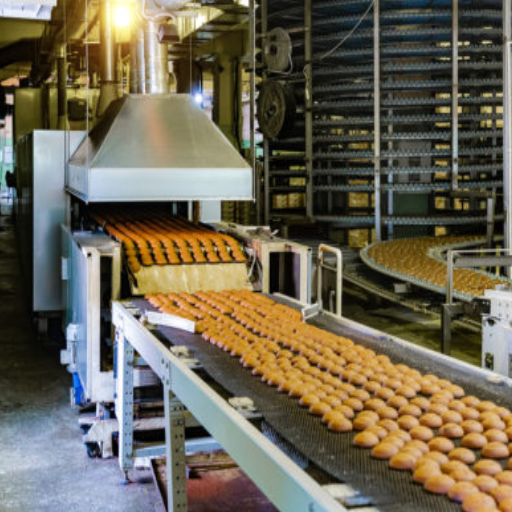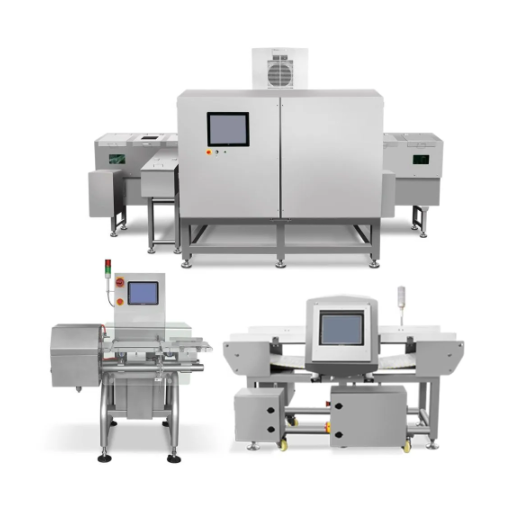
Biscuit production is a complicated process that involves combining precision, and innovation as well as efficiency to make the sweet treats that we all love. The manufacturers have to face the challenge of keeping their quality consistent and their output high, and this demand is even greater in the competitive marketplace where consumer preferences are constantly changing. This article is about the new biscuit-making machines that are changing the whole production process. The new machines are not only making the processes very fast but also saving a lot of energy, and ensuring that each batch is the same. Modern technology is changing the entire biscuit-making process. If you are a manufacturer who wants to get the best out of your production line or if you are just a curious person who wants to know about the food industry trends, then this guide will give you the needed insights into the tools and innovations that are making the future of biscuit manufacturing brighter.
Introduction to Biscuit Production

The production of biscuits starts with the careful choose of ingredients, which usually consist of flour, sugar, fats, and leavening agents. To make a dough, these ingredients are blended, after which the dough is rolled, cut, or shaped into the desired biscuit form. The dough that has been shaped is then baked at precise temperatures to guarantee uniformity in texture, taste, and look. After baking, biscuits are cooled, and if necessary, packaged by machines that perform automatic operations to maintain the product’s freshness and quality. Advanced technologies and apparatuses are vital in this process by way of optimizing it and improving both the quantity and quality of the product.
Overview of the Biscuit Industry
The biscuit market is a vibrant and fast-developing domain that is continually changing with the consumer’s tastes. The industry has a huge range of products to offer, from plain and cream-filled to specialty biscuits, thus serving different preferences and dietary requirements. The factors of convenience, long shelf life, and price have made the biscuits popular snacks all over the world, and on top of that the market is being expanded through innovations like healthier options and premium flavors. The consistent rise in and the ever-growing global demand for biscuits have been made possible through the technological developments in manufacturing and packing, thus putting the industry in a position where it will continue to grow.
Importance of Production Lines in Biscuit Manufacturing
The lines of production that are efficient are very important in biscuit making since they provide the three main factors of the product: the very same taste, the same good quality, and the same amount of the product. The automated operations have made the mixing, shaping, baking, and packaging stages faster by eliminating human error and speeding up production. This efficiency is not only able to supply the very high demands of the consumers but at the same time, it also helps in cutting costs and minimizing waste, thus, making it possible for the manufacturers to offer competitive prices. Moreover, the top-notch production lines are a source of new developments since they make it possible to quickly change to the new recipes, flavors, and the coils of the market, thus, bringing the industry to be able to inspire and even lead the trends.
Key Trends in Biscuit Production
🤖 Automation and Smart Technology
The amalgamation of AI and IoT in production lines not only improves the efficiency but also the accuracy and scalability of the production process. Hence, it is now possible for manufacturers to satisfy quickly changing market requirements.
🥗 Health-Focused Innovations
The increasing number of health-conscious consumers is the main reason for the manufacturers to come up with the new product lines of biscuits with low sugar, gluten-free, and high protein.
🌱 Sustainable Practices
The use of eco-friendly packaging and the sourcing of sustainable ingredients are becoming more common practices as they help companies to be more in line with the environmental issues and consumer preferences.
✨ Personalization of Products
By offering customized flavors, shapes, and packaging, businesses are able to provide niche markets and simultaneously increase their consumer engagement.
🌍 Global Flavors and Cultural Appeal
The use of regional and international flavors not only assists in product portfolio diversification but also makes it easier to win over global customers.
Industry Insight: These trends illustrate the adaptability of the industry to technology developments and changing consumer behavior.
Components of a Biscuit Production Line

The biscuit production line comprises several main components that do their jobs efficiently to make high-quality biscuits. The components are as follows:
Dough Mixing Equipment
It takes in and blends together flour, sugar, and fats, etc., to prepare a uniform dough with the suitable properties of consistency and texture to be used in biscuit production.
Dough Forming Machines
It gives the dough its required biscuit shape by using different techniques such as sheeting and cutting or molding, depending on the product type.
Baking Oven
It heat-treats the shaped dough at the respective temperatures, thus assuring uniformity of the product in terms of color, texture, and flavor and satisfying the requirement of food safety standards.
Cooling Conveyors
The system permits the hot biscuits to cool down slowly to the right temperature for packaging without ruining their quality or losing it through the unprotected opening.
Packaging Systems
It makes the packing process automatic so that the biscuits are wrapped in materials that not only keep them fresh but also make distribution easy.
Key Point: The aforementioned components are crucial for the smooth running of the biscuit manufacturing process and for the constant delivery of high-quality products.
Essential Biscuit Machinery
In order to efficiently produce biscuits of the highest quality, the necessary machines consist of mixing machines for the preparation of dough, cutting and shaping equipment for the uniform biscuit designs, baking ovens for the accurate cooking, cooling conveyors for the gradual cooling and automated packaging systems for the freshness preserving and distribution facilitating. These components collaborate in such a way that production is speed up without sacrificing the quality and consistency of the product.
Overview of Biscuit Making Equipment
Biscuit-making machinery is made to simplify production and, at the same time, keep the quality and consistency. The most important parts are dough mixers that mix the ingredients uniformly, sheeters and cutters for giving the dough the desired shape, ovens with precise temperature control for baking, cooling conveyors that provide cooling uniformly, and packaging machines that are automated to keep the product fresh and also allow effective distribution. The combination of all these tools makes biscuit production process faster and easier, and they are involved at the different stages of the process.
Types of Biscuit Production Machines
Manufacturing Process of Biscuits
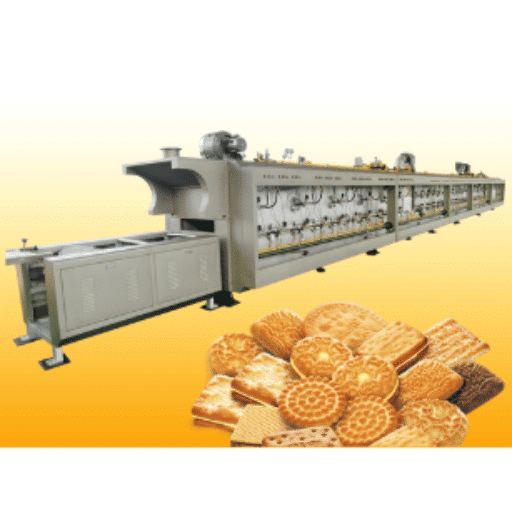
The series of key stages in the biscuit manufacturing process make sure that consistency and quality are the end products:
- 1
Ingredient Mixing: The very first step consists of the mixing of the most important ingredients like flour, sugar, fats, and water into the dough. If the recipe calls for it, other ingredients, such as flavors or leavening agents, are also added. - 2
Dough Forming: The dough that has been prepared is given the desired form and size by using rollers, cutters, or molds. This is the step that basically sets the biscuit’s size, shape, and design. - 3
Baking: The dough in the desired shape is then moved into the baking ovens, where controlled heat guarantees uniform cooking. The final texture and color of the biscuits are determined by this step. - 4
Cooling: The biscuits are placed on conveyor belts upon being baked and are then cooled to room temperature to stabilize their structure and avoid breaking. - 5
Packaging: In the end, the biscuits are packed in such materials that their freshness is preserved and they get the required protection during transportation.
Process Efficiency: The whole process, which is thoroughly planned, not only reduces the time but also assures the quality of biscuits with the same taste and texture across the board.
Ingredients and Their Role in Biscuit Production
Critical Factor: The use of each ingredient is crucial in the process of making biscuits with the ideal texture, taste, and look.
Step-by-Step Biscuit Making Process
Step1: Prepare the Ingredients
Measure accuracy, all ingredients properly, and thus ensure uniformity. Set the oven to the temperature indicated.
Step 2: Mix Dry Ingredients
Blend flour, baking powder, salt, and dry flavorings if any together in a large bowl.
Step 3: Cut in the Fat
Mix in the butter or shortening and with a fork or a pastry cutter make a mixture that is crumbly.
Step 4: Add Liquid
Milk or water is to be poured in slowly while mixing until the dough forms and no more is done by way of working it.
Step 5: Knead the Dough
Dough should be very lightly kneaded on a floured surface just enough to allow structure development but don’t let the dough get tough by over-kneading.
Step 6: Shape the Biscuits
The dough is to be rolled out and a cutter used to form the biscuits. They are to be placed on a baking sheet.
Step 7: Bake
Duration as per the recipe’s guidelines, but only until golden brown in the hot oven.
Step 8: Cool and Serve
The biscuits are to be allowed cooling at room temperature for some time and then served as fresh.
Pro Tip: When you strictly adhere to these measures, you can produce biscuits that are light, soft, and also very tasty every time.
Automation in Biscuit Production
The whole process of biscuit production is made easier and more efficient by automation, which also helps to reduce labor costs. Up-to-date equipment performs the different operations of mixing, shaping, baking, and packaging with great skill. AI and sensor technology are used together by sophisticated systems to keep an eye on quality, guarantee consistency, and even change the operation on the fly to cut down the amount of waste produced. This method not only increases the output but also keeps the product good enough to meet consumer demands efficiently.
Increased Efficiency
Automated systems speed up production significantly
Reduced Labor Costs
Less manual intervention required in processes
Quality Consistency
AI monitoring ensures uniform product quality
Waste Reduction
Smart systems minimize material waste
Machinery for Different Types of Biscuits

The different types of biscuits production require the use of the specialized machines that are process-specific:
Important Note: All the types of machines are indispensable in that they not only enhance the production efficiency but also guarantee the quality of the finished product.
Soft Biscuit Production Techniques
The production of soft biscuits is done through the application of particular techniques so that the desired texture and quality can be obtained. The most important steps include:
- ✓ Proper Mixing and Aeration: Mix ingredients to get a homogeneous dough with proper aeration
- ✓ Gentle Sheeting and Cutting: Use gentle techniques to keep the softness intact
- ✓ Controlled Baking Temperature: Carefully control temperature to achieve even cooking without drying out
- ✓ Addition of Humectants: Helps in keeping the moisture for a soft bite
- ✓ Efficient Cooling and Packaging: Methods used maintain the softness of the product and increase its longevity
All these methods add up to give a great taste and customer satisfaction in the production of soft biscuits.
Hard Biscuit Manufacturing Methods
The manufacture of hard biscuits includes a unique technique that gives priority to a lower moisture content as well as a crunchy texture:
🥖 Dough Preparation
The making of dough is usually done via mixing under controlled conditions in order to obtain the necessary toughness and stretch, and usually, strong flours with a higher protein content are added as well.
📏 Sheeting and Laminating
The process of sheeting and laminating is done so extensively that especially uniform layers are created, which also help to enhance the biscuits’ typical texture.
🔥 Precision Baking
The baking is done with great precision at high temperatures, so the biscuits not only get fully cooked but also gain a pleasant snap.
❄️ Cooling and Moisture Control
Cooling and moisture control during packaging are of great importance for hard biscuits to be crisp and not get spoiled.
Cracker Production and Equipment
The manufacturing of crackers is accomplished in a way that is similar to that of hard biscuits, but with some changes in the process that are specifically made so the crackers have that light and crisp texture that is so desired. The dough is usually either fermented or chemically leavened to obtain a structure with air in it. The layering of the dough makes it more flaky while the docking ensures that there will be no unwanted puffing during the baking.
Specialized Cracker Equipment
Laminators
Rotary Cutters
Dockers
Baking Ovens
The precise control of the baking temperature and time is very critical in getting the perfect combination of crispness and flavor, followed by cooling and packaging which are very effective in retaining quality.
Reference Sources
- Loyal Machines – How to Start a Biscuit Business: Gives valuable information on how to discern target markets, business plan making, and biscuit manufacturing setups.
- Foods Machine – A Step-by-Step Guide to Setting Up a Biscuit Production Line: The necessity of grasping biscuit market demand and recognizing the target consumers as the first step in the line’s success is one of the topics that the author presents.
- Quora – What Should the Target Audience Be for a Business?: Is a platform that provides overall guidance to identifying and meeting the demands of a target market, also valid for biscuit production units.
Frequently Asked Questions (FAQs)
What is a biscuit production line?
Biscuit production line refers to equipment utilized in factories for the industrial manufacture of biscuits, which consist of different machineries starting with the mixing of the ingredients up to the final packaging.
What are the key components of a biscuit production line?
Some of the most common machines used in biscuit production lines are dough mixers, sheeters, cutters, ovens, cooling conveyors, and packaging machines.
What types of biscuits can be produced on a production line?
The production lines are able to produce a large variety of biscuits according to the customization such as hard, soft, filled, and sandwich biscuits.
What are the benefits of using a biscuit production line?
Increased efficiency, consistent product quality, reduced labor costs, and higher production capacity are the benefits that one can get from the installation of a biscuit production line.
Can a biscuit production line be customized?
Indeed, production lines can be designed to the specific requirements of different biscuit types and their production.
Ready to Enhance Your Biscuit Manufacturing?
Modern biscuit production line machinery combines precision, efficiency, and innovation to deliver consistent, high-quality products that meet consumer demands. Whether you’re starting a new production line or upgrading existing equipment, understanding these technologies and processes is key to success in the competitive biscuit manufacturing industry.