The right cookie production line manufacturer is not the one quoting the highest kilograms per hour. It’s the one that can hold your piece weight, your spread and your changeover targets on your recipe, and prove it before you sign.
A line rated at 1,200 kg/h can look better than one rated at 800 kg/h until you learn the first figure assumes 8 g cookies and 95% uptime. Your cookies weigh 14 g.
This guide covers forming methods, capacity conversion, eight supplier questions and the acceptance test.
Key Takeaways
- Compare cookie line manufacturers on guaranteed piece-weight tolerance, spread control and recipe-to-recipe changeover, not headline capacity.
- Convert every capacity claim to pieces per minute and tonnes per shift at your own piece weight.
- Match the forming method to the dough: rotary moulding for short dough, wire-cut for inclusions, depositing for filled and high-fat products.
- Demand a factory acceptance test at rated capacity on your recipe. A demonstration recipe proves nothing.
- The lowest purchase price is rarely the lowest total cost once energy, changeover loss and spare parts are counted.
What a Cookie Production Line Manufacturer Actually Builds
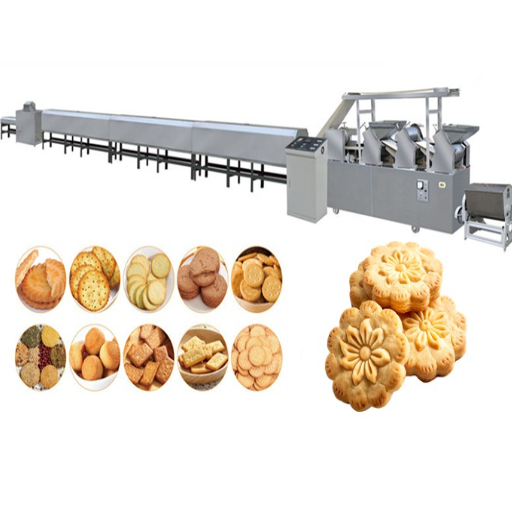
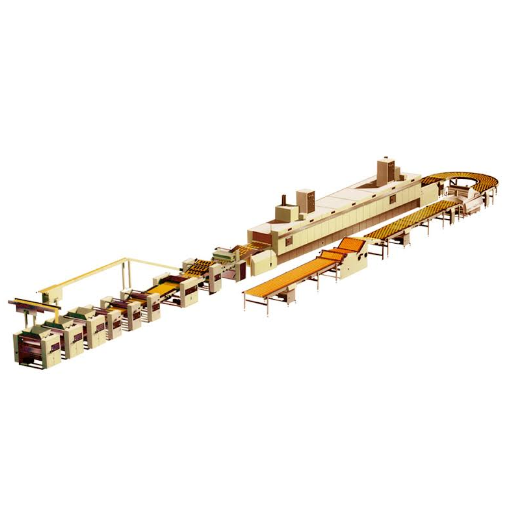
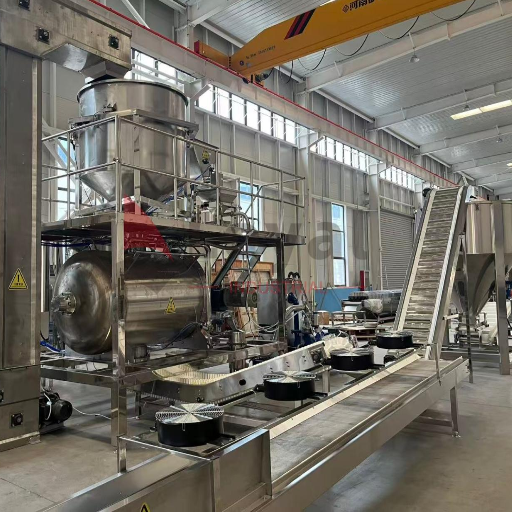
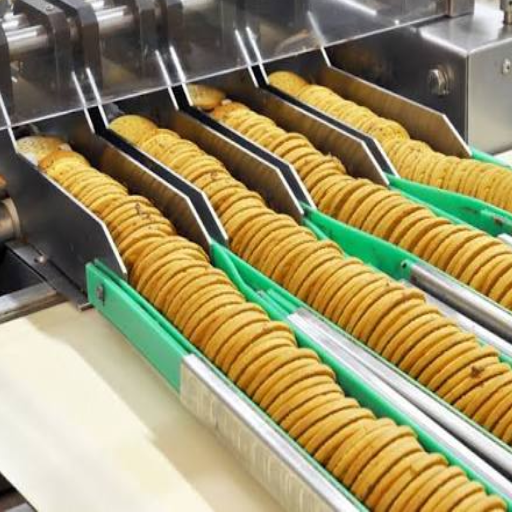
A cookie production line is a linked set of machines, not a single unit. It usually runs from a mixer and dough feeder through a forming machine, tunnel oven, cooling conveyor, stacker and packaging. The former decides what products the line can make. The oven decides how consistently it makes them. For the full line configuration, see our biscuit production line guide.
Video: a Loyal biscuit line, from forming to packaging.
Cookie dough behaves differently from hard biscuit dough. It carries more fat and sugar, develops less gluten, and spreads during baking.
That changes what you need from the equipment: tighter piece-weight control, better die release, gentler handling of inclusions, and an oven profile that holds shape as the dough relaxes. Our guide to the soft biscuit production line covers the dough and forming science. This page stays on the purchasing decision.
Three forming routes matter:
- Rotary moulding presses dough into engraved die cups on a rotating roller.
- Wire-cutting extrudes dough through a die and slices it with a wire.
- Depositing pumps or drops dough into shapes for softer or filled products.
Most cookie lines use one route as the primary former, with a second module for product changes. A manufacturer that can’t explain which route suits your recipe is not ready to quote.
Match the Forming Method to the Cookie
The forming method is the first specification to settle. Get it wrong and no amount of capacity or automation will fix the product.
| Method | Best suited dough | Typical products | Handles inclusions | Shape control | Main risk |
|---|---|---|---|---|---|
| Rotary moulding | Short, high-fat, low-moisture | Shortbread, butter cookies, stamped biscuits | Limited | High | Die wear and release problems |
| Wire-cutting | Soft, sticky, high-fat | Chocolate chip, oat, fruit and nut cookies | Good | Medium | Weight drift and wire wear |
| Depositing | Soft, high-fat, filled or multi-texture | Filled cookies, macaroons, dropped dough | Good | Low to medium | Spread and collapse in the oven |
Rotary moulding gives repeatable shape and weight. Dough is forced into die cups, the excess is scraped away, and the piece is lifted onto the oven band. It suits short dough and products where the pattern matters. Large inclusions can clog the die.
Wire-cutting is the better route for soft dough and inclusions. Dough is extruded through a die and cut by a wire, so raisins, chocolate chips and nuts pass through with less damage. Weight comes from extrusion rate, cut speed and dough consistency. Ask how the manufacturer holds weight when dough temperature moves two or three degrees across a shift.
Depositing handles very soft, high-fat or filled dough that can’t be sheeted or moulded. It suits multi-texture and centre-filled products. The trade-off is shape control: deposited pieces spread more, so the recipe and oven profile carry more of the work.
Many manufacturers offer hybrid lines with interchangeable rotary and wire-cut modules. That flexibility is real, but not free. Ask what the module swap costs, how long it takes, and whether the oven and cooling section can handle both products.
Reading Bakery Systems publishes a range of 200 to 3,600 kg/h for complete cookie lines. Treat vendor ranges as a starting point, not a benchmark.
How to Compare Cookie Production Line Capacity Claims
Capacity is where most comparisons go wrong. Manufacturers quote kilograms per hour, cuts per minute, pieces per minute and tonnes per shift as if the numbers were interchangeable. They are not.
Use four steps to make the claims comparable:
- Get the piece weight in grams for the product used in the quote.
- Convert to pieces per minute by dividing kg/h by piece weight and by 60.
- Apply a realistic uptime. A line quoted at 95% won’t run at 95% in your plant.
- Convert to tonnes per shift by multiplying kg/h by shift hours and uptime, then dividing by 1,000.
Here is the arithmetic. A wire-cut line running 200 cuts per minute at 12 g produces 200 × 0.012 × 60 = 144 kg/h at 100% runtime. At 85% uptime, that is about 122 kg/h, or roughly 0.98 tonnes over an eight-hour shift. If a supplier quotes 200 kg/h for the same line, ask which assumptions produced that number.
Consider a plant manager we will call Daniel. Supplier A quoted 600 kg/h. Supplier B quoted 480 kg/h. Daniel chose A.
After commissioning, the line settled at about 430 kg/h on his 14 g cookies. The 600 kg/h figure assumed 9 g cookies and 96% uptime. Supplier B had quoted on Daniel’s actual product. The slower quote was the honest one.
Published ranges vary widely:
| Source | Published range | Scope |
|---|---|---|
| Reading Bakery Systems | 200–3,600 kg/h | Complete cookie lines |
| WINDUSTRI buyer’s guide | 100–2,000 kg/h | Biscuit lines, 600–1,500 mm belt |
| Foodline | 100–1,000 kg/h | Cookie line |
| Loyal soft biscuit guidance | 100–2,000 kg/h | Soft biscuit and cookie lines, 600–1,500 mm width |
These are vendor-stated figures, not benchmarks. Use them to check the order of magnitude, not to compare suppliers.
Eight Questions That Separate Cookie Line Manufacturers
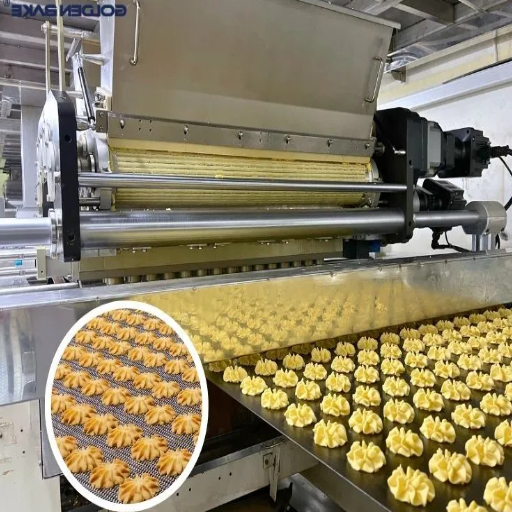
A supplier’s brochure won’t tell you whether the line will work in your plant. These eight questions will.
1. What piece-weight tolerance do you guarantee, and how do you measure it?
Ask for the tolerance in grams, the sampling method and the number of pieces measured. A line that averages the right weight but swings 2 g piece to piece still creates giveaway and complaints.
2. How do you control spread, and what bake profile do you recommend for my recipe?
Spread depends on recipe, dough temperature, resting time and oven zoning.
Ask for top and bottom heat settings, zone count and band speed for a product close to yours.
3. What is the full recipe-to-recipe changeover time?
Die changes are fast. Product changes are not. Changing from short dough to a laminated cracker can require sheeting, gauging and lamination, and take days. Ask for the time from the last good piece of product A to the first good piece of product B.
Consider Priya, a production manager at a mid-sized bakery. Her line came with a 15-minute die-change claim. The die change took 15 minutes. Switching from short dough to a laminated product took two days, because the line needed different sheeting and gauging equipment and a new oven profile.
4. How does the line handle inclusions without damage or segregation?
Raisins, nuts and chocolate chips can tear, smear or settle unevenly. Ask for the die design, wire arrangement and agitation method. Then ask for a trial with your inclusion load, not a plain control dough.
5. What is the oven zoning, and how is energy measured?
Compare energy in kcal per kilogram of product, not installed kilowatts. Ask about zone count, independent top and bottom control, heat recovery and fuel options. Our guide to the biscuit tunnel oven explains how zoning affects colour and moisture.
6. Which certifications apply, and can you show the declaration?
For export projects, ask for the CE declaration and the applicable safety and hygiene standards, including EN 1672-2 and ISO 12100. Check material certificates for 304 or 316 stainless steel on product-contact parts. If flour dust or thermal oil is present, ask about ATEX and PED.
7. What are the consumables, and what is the spare-parts lead time?
Wires, dies, belts and bearings wear. Ask which parts are consumables, how often they are replaced and how long replacements take.
8. Can you run my recipe at rated capacity before I sign?
This is the factory acceptance test. If the answer is no, or the test runs on a demonstration recipe at half capacity, you have no evidence the line will perform in your plant.
How to Run a Cookie-Specific Factory Acceptance Test
A factory acceptance test, or FAT, is the last clear moment to find a problem while the line is still in the factory. Run it on your recipe, at rated capacity, for a full shift.
Documents to request before the test:
- General arrangement drawings and process and instrumentation diagrams.
- A bill of materials with steel grades for product-contact parts.
- Electrical schematics, control philosophy and operating manuals.
- The CE declaration, material certificates and a spare-parts list.
What to measure during the test:
- Piece weight across a sample of at least 30 pieces every 15 minutes, recorded as mean and standard deviation.
- Spread or diameter on the same sample.
- Colour and moisture at the start, middle and end of the run.
- Actual throughput in kg/h and pieces per minute.
- Downtime, changeover time and the reason for every stop.
Red flags in the report:
- The line ran below rated capacity for most of the test.
- The recipe was a supplier demonstration product, not yours.
- No weights were recorded, or only the best run was reported.
- Operators trimmed or sorted product by hand to hit the specification.
- The report contains no downtime data.
If you need the broader procurement sequence, including how to evaluate the supplier before the FAT, our guide to biscuit production line manufacturers covers the commercial and documentation side. This page focuses on the cookie-specific tests.
What Drives the Price of a Cookie Line
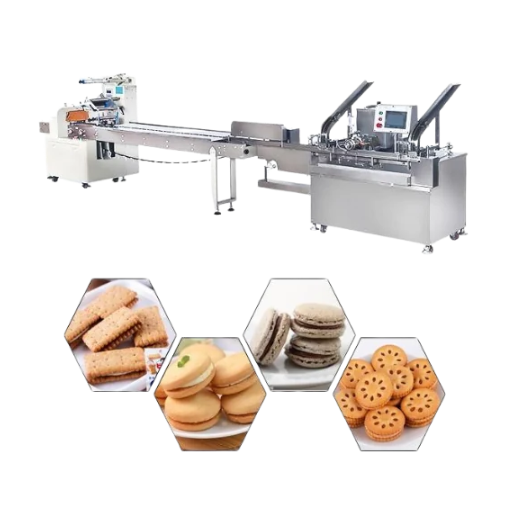
A cookie line is priced from four buckets: engineering, mechanical equipment, controls and electrical systems, and installation and commissioning. A serious quote itemizes them. A single-line price hides where the money goes and makes change orders almost certain.
Within the mechanical bucket, the main cost drivers are:
- Working width. A 1,200 mm line moves roughly twice the dough of a 600 mm line, but doesn’t cost twice as much.
- Oven length and zones. More zones give better control and higher energy use.
- Forming modules. A second module adds cost, but can be cheaper than a second line.
- Automation and controls. Servo drives, recipe management and remote diagnostics raise the price and cut changeover time.
- Packaging. Often quoted separately. Check whether the line price includes it.
Total cost of ownership matters more than purchase price. Energy, labour, changeover loss, downtime and spare parts usually exceed the initial price difference. For a fuller framework, see our custom food machinery buyer’s guide.
Where the line is made changes the risk, not just the price
Western OEMs such as Reading Bakery Systems and Baker Perkins offer deep process support, extensive documentation and a long track record, at higher capex.
Chinese manufacturers often compete on price and delivery speed; documentation and service depth vary more between suppliers, so verify both. The Turkish cluster sits between the two, with strong export experience and mid-market pricing. No category is automatically better. Verify the same eight questions regardless of origin.
Frequently Asked Questions
What is a cookie production line?
A cookie production line is an integrated set of machines that mixes dough, forms cookies, bakes them in a tunnel oven, cools them and prepares them for packaging. The forming machine, usually a rotary moulder, wire-cutter or depositor, determines which cookie types the line can produce.
How much does a cookie production line cost?
There is no single price. Cost depends on width, oven length and zones, forming modules, automation and packaging. Ask for an itemized quote, then compare total cost of ownership, not purchase price.
What capacity do I need to start?
Size for peak demand of your best-selling product, not average volume. Also plan for a second product; a single-SKU line is cheap until the market shifts.
Wire-cut or rotary moulded, which is better?
Neither is universally better. Rotary moulding suits short dough and products where shape and weight consistency matter. Wire-cutting suits softer dough and inclusions such as chocolate chips, raisins and nuts. The choice depends on your recipe and product shapes.
Can one line make biscuits and cookies?
Sometimes. Many lines run hard and soft dough with different forming modules. The constraint is changeover, so ask for recipe-to-recipe time and test both products.
The Decision Comes Down to Evidence
A cookie production line manufacturer can promise capacity, weight accuracy and fast changeovers. Only evidence separates suppliers who can deliver from those repeating a brochure.
Settle the forming method first. Convert every capacity claim to pieces per minute and tonnes per shift at your piece weight. Ask the eight questions, and insist on a factory acceptance test on your recipe at rated capacity. Then compare total cost, not sticker price.
If you have a recipe, a target throughput and a launch date, send them to our engineering team. We will tell you which configuration fits and what capacity is realistic. Start with your product specification.