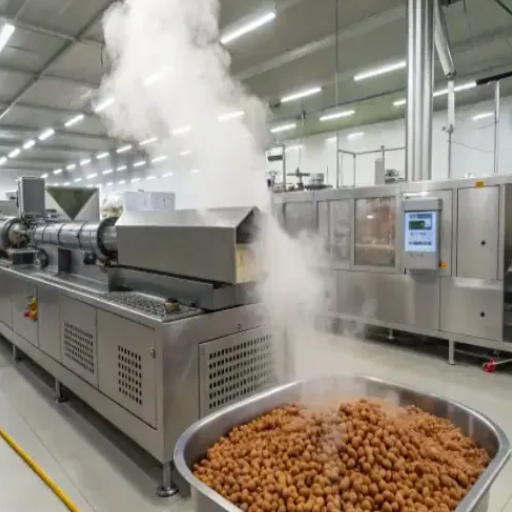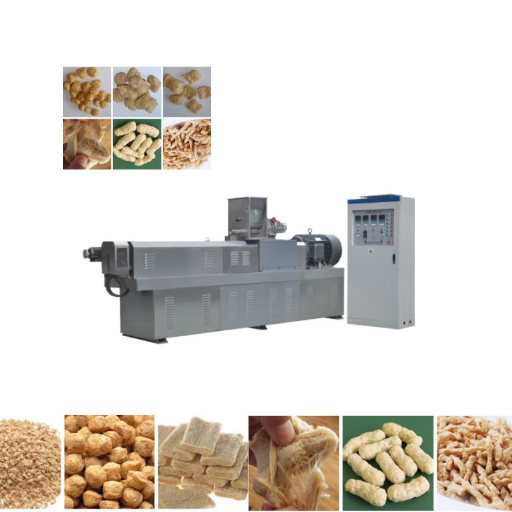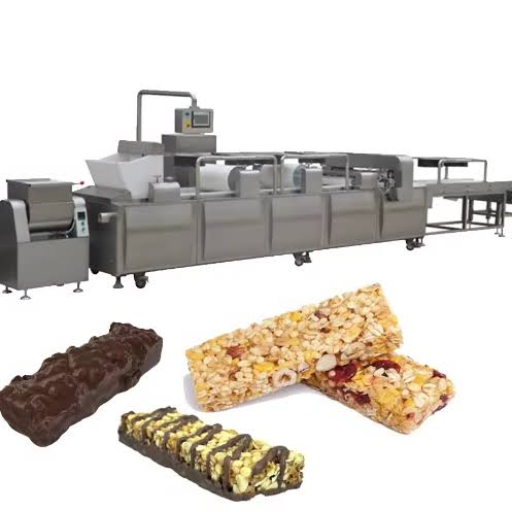
A modified starch extruder machine is a twin-screw extruder that converts native starch into modified or pregelatinized starch through a continuous process of heat, pressure, and mechanical shear. These machines act as continuous reactors, performing conveying, mixing, gelatinization, and chemical modification in a single unit, making them the core of every modern modified starch production line.
If you are evaluating equipment for food thickeners, oil-drilling fluid-loss additives, paper binders, or pharmaceutical excipients, the extruder you choose determines your final product quality, energy efficiency, and operating cost. Yet most buyers face a wall of model numbers and conflicting supplier claims. This guide explains how modified starch extruders work, what specifications actually matter, and how to match a machine to your application.
Key Takeaways
- A modified starch extruder machine is a twin-screw continuous reactor that gelatinizes or chemically modifies starch using heat, pressure, and shear.
- Twin-screw extruders outperform single-screw designs for starch modification because of better mixing, self-wiping action, and precise temperature control.
- Typical process ranges are 120–220°C barrel temperature, 0.5–10 MPa die pressure, 15–25% moisture, and screw speeds from 120 to 400 rpm.
- Screw configuration matters: conveying screws move material, kneading blocks apply shear, and venting zones remove moisture or volatiles.
- Match extruder model size to your target capacity, modification type, raw material, and required certifications.
What Is a Modified Starch Extruder Machine?

A modified starch extruder machine is industrial equipment that physically or chemically alters the structure of native starch. Native starch from corn, cassava, potato, wheat, or tapioca is fed into the extruder, where it is heated, pressurized, and sheared. The result is modified starch with new functional properties: cold-water solubility, altered viscosity, improved stability, or enhanced binding power.
Unlike snack or pet-food extruders, which focus on expansion and texture, modified starch extruders are optimized for controlled gelatinization and modification. They operate at lower moisture levels and higher shear intensities than general cooking extruders. This makes them suitable for producing pregelatinized starch, oxidized starch, cationic starch, esterified starch, and oil-drilling starch.
The most common design is the co-rotating intermeshing twin-screw extruder. Its two screws rotate in the same direction inside a heated barrel. This geometry creates forced conveying, self-wiping action, and intense but controllable shear, exactly what starch modification demands.
How a Modified Starch Extruder Works
The extrusion process for modified starch follows a clear sequence:
- Feeding and pre-conditioning. Native starch enters the extruder, often after being mixed with water or steam in a preconditioner. Moisture content is typically adjusted to 15–25%.
- Conveying and compression. Screw elements push the starch forward while the channel geometry compresses the material. This compression raises pressure and generates frictional heat.
- Gelatinization and modification. In the high-temperature, high-shear zone, starch granules absorb water, swell, and lose their crystalline structure. For chemical modification, reagents such as oxidizers or cationic agents are injected into the barrel at controlled points.
- Extrusion through the die. The molten starch is forced through a die. The sudden pressure drop causes controlled expansion and flash-drying.
- Downstream processing. The extrudate is cooled, dried to a stable moisture level, ground into powder, screened, and packaged.
Maria, a plant engineer at a Midwestern food ingredient company, recently upgraded her line for instant soup thickeners. Her previous batch cooker produced inconsistent pregelatinized starch, leading to clumping in customer formulations. After switching to a twin-screw modified starch extruder with a controlled temperature profile, her cold-water solubility index stabilized above 95%, and customer complaints dropped by 60%.
Single-Screw vs Twin-Screw Extruder for Starch
Buyers often ask whether a single-screw extruder can handle starch modification. The short answer is yes, for simple gelatinization. But for precise, high-quality modified starch, twin-screw extruders are the better choice.
| Feature | Single-Screw Extruder | Twin-Screw Extruder |
|---|---|---|
| Conveying | Relies on friction; risk of slip | Forced conveying by intermeshing screws |
| Mixing | Limited | Superior distributive and dispersive mixing |
| Shear uniformity | Less uniform | Highly uniform across the channel |
| Temperature control | Harder to control | Precise zone-by-zone control |
| Self-cleaning | Poor | Excellent self-wiping action |
| Raw materials | Best for high-starch, low-oil recipes | Handles high moisture, fats, proteins, blends |
| Energy use | ~900–1500 kJ/kg | ~400–600 kJ/kg |
| Reactive modification | Difficult | Practical with modular screw design |
Single-screw extruders work well for straightforward pregelatinization of pure starch. However, if your process requires chemical modification, consistent quality across batches, or flexible raw-material recipes, a twin-screw extruder is the more reliable investment. You can learn more about the fundamental differences in our single-screw vs twin-screw extruder comparison.
Key Components of a Modified Starch Extruder
Understanding the components helps you evaluate quotes and troubleshoot problems.
Feeding system and preconditioner. A volumetric or gravimetric feeder delivers starch at a constant rate. A preconditioner adds water or steam to bring the starch to the target moisture level before it enters the barrel.
Modular screws and screw elements. Twin-screw extruders use interchangeable screw elements. Conveying elements transport material, while kneading blocks create shear and mixing. The sequence of these elements defines the process.
Barrel with heating and cooling jackets. The barrel is divided into independently controlled temperature zones. Electric heaters raise temperature; cooling jackets prevent overheating during high-shear stages.
Die plate and cutter. The die shapes the extrudate. Die diameter and geometry affect pressure, expansion, and product density. Some lines use a cutter to reduce particle size before drying.
Drive system and gearbox. A variable-speed motor drives the screws through a heavy-duty gearbox. Power ratings range from 50 kW for small models to over 200 kW for industrial lines.
PLC control and sensors. Modern extruders monitor screw speed, motor load, barrel temperature, die pressure, and feed rate. This data lets operators maintain consistent product quality.
Screw Configuration for Starch Modification

Screw configuration is where engineering meets product quality. The wrong arrangement produces uneven gelatinization, poor solubility, or excessive starch degradation.
Conveying screws move material gently through the barrel. They dominate the feed section where starch is still powdery and fragile.
Kneading blocks apply mechanical shear. They are placed in the cooking and modification zones. The width, offset angle, and number of kneading discs determine shear intensity. Narrow blocks give high shear; wide blocks give gentle mixing.
Venting sections release steam, volatiles, or reaction by-products. They are essential for chemically modified starches where excess moisture or reagent residues must be removed.
Pressurizing elements build die pressure in the final section before the product exits.
For pregelatinized starch, a configuration with moderate shear and a long cooking zone produces high cold-water solubility. For cationic starch, a gentler profile with controlled reagent injection preserves the target degree of substitution. For oil-drilling starch, higher pressure and shear improve viscosity and fluid-loss control.
Process Parameters That Control Starch Quality
Stable modified starch depends on controlling several parameters simultaneously.
| Parameter | Typical Range | Effect on Product |
|---|---|---|
| Barrel temperature | 120–220°C | Higher temperatures increase gelatinization but can degrade starch |
| Die pressure | 0.5–10 MPa (5–100 bar) | Affects expansion, density, and shear history |
| Moisture content | 15–25% | Controls gelatinization degree and power consumption |
| Screw speed | 120–400 rpm | Higher speed increases shear and throughput |
| Residence time | 20–120 seconds | Longer time increases modification but risks degradation |
| Specific mechanical energy (SME) | 100–600 kJ/kg | Higher SME increases starch damage and solubility |
A University of Zaragoza study on cassava starch thermoplastic processing used a 12-zone barrel profile rising from 95°C to 160°C, a screw speed of 120 rpm, and a die pressure of 160–170 bar. That profile produced consistent gelatinization without excessive molecular breakdown.
James, a procurement manager for an oilfield services company in Texas, learned this lesson the hard way. His first modified starch extruder lacked independent barrel temperature zones. Summer heat pushed the final section above 210°C, degrading the starch and reducing drilling-fluid viscosity. After moving to a machine with zone-by-zone cooling and a pressure transducer at the die, his fluid-loss values stabilized within specification.
Modified Starch Extruder Specifications by Model
Model numbers usually refer to screw diameter in millimeters. A DSE65 extruder has approximately 65 mm screws; a DSE120 has approximately 120 mm screws. Capacity scales with screw diameter and motor power.
| Model | Screw Diameter | Installed Power | Real Power | Capacity | Dimensions (L×W×H) |
|---|---|---|---|---|---|
| DSE65 | ~65 mm | 72–88 kW | 50–62 kW | 100–150 kg/h | ~19×1.3×2.2 m |
| DSE70 | ~70 mm | 92–140 kW | 65–98 kW | 200–260 kg/h | ~21–22×1.5×2.2 m |
| DSE85 | ~85 mm | 108–245 kW | 76–175 kW | 400–700 kg/h | ~26–30×3.5×4.3 m |
| DSE100 | ~100 mm | 133–220 kW | 106–175 kW | 700–1000 kg/h | ~30–40×3.5×4.5 m |
| DSE120 | ~120 mm | 142–300 kW | 115–210 kW | 1500–2000 kg/h | ~45×4.5×6 m |
Food-contact parts are typically 304 or 316 stainless steel. Screws and barrels are often made from 38CrMoAl alloy steel or bimetallic materials for wear resistance. For chemically modified starches, corrosion-resistant screw coatings and barrel linings are available. If you want to see how the extruder fits into a complete system, read our modified starch production line overview.
Choosing the Right Modified Starch Extruder
Selecting the right machine means matching equipment capability to product requirement. Ask these questions:
What modification type do you need? Pregelatinized starch needs moderate shear and controlled temperature. Cationic, oxidized, or esterified starches need reagent injection ports, corrosion-resistant materials, and precise residence-time control.
What is your target capacity? Match daily production targets to the model size. Remember that real output depends on recipe, moisture, and final product specifications.
Which raw materials will you process? Corn and cassava starches behave differently under shear. High-protein or high-fat blends need a twin-screw design with superior mixing.
What certifications do your markets require? CE, ISO 9001, SGS, and BV certifications are common for export. Food-grade construction using SUS 304 or SUS 316 is essential for edible applications.
What support will you receive? Installation, commissioning, operator training, spare parts availability, and remote diagnostics reduce long-term risk.
At Shandong Loyal, we configure each extruder around the customer’s recipe and end product. Our engineering team reviews your starch source, target modification, capacity target, and local power supply before proposing a machine layout.
Maintenance, Troubleshooting, and Safety
Regular maintenance protects your investment and keeps product quality stable.
Daily checks. Inspect feed consistency, die condition, and control readings. Clean any starch buildup around the die and cutter.
Weekly checks. Lubricate bearings and gearbox per the manufacturer schedule. Check belt tension and electrical connections.
Monthly checks. Examine screw and barrel wear. Starch is abrasive, especially at high pressure. Worn screws reduce shear efficiency and widen output variation.
Common issues and solutions:
- Overheating: Reduce screw speed, check cooling water flow, or lower barrel zone temperatures.
- Die blockage: Clean the die; check moisture content and foreign particles in feed.
- Uneven output: Verify feeder calibration and screw element integrity.
- High motor load: Reduce feed rate or increase preconditioning moisture.
Dust control and explosion protection are critical. Starch dust is combustible, so grounding, dust collection, and spark-free electrical fittings must meet local safety standards.
Chen, a maintenance supervisor at a Vietnamese starch plant, schedules a 30-minute cleaning routine at every shift change. Since he introduced this habit, unplanned stops on his modified starch extruder have fallen from three per month to one per quarter.
Why Shandong Loyal’s Modified Starch Extruders

Shandong Loyal Industrial Co., Ltd. has spent more than a decade designing and manufacturing extrusion systems for food and industrial applications. Our modified starch extruders are built around the same engineering principles that power our snack food machinery and food production lines: reliable mechanics, precise control, and customer-focused customization.
What sets our extruders apart:
- Modular screw design tailored to pregelatinized, oxidized, cationic, and oil-drilling starch recipes.
- Food-grade construction with SUS 304 or SUS 316 contact parts and CE-certified electrical systems.
- Zone-by-zone temperature control with independent heating and cooling for stable product quality.
- Capacity range from pilot-scale 100 kg/h units to industrial 2,000 kg/h lines.
- Global support including installation, commissioning, training, and spare parts.
For buyers focused on pregelatinized starch, our Pre Gel Starch Production Line integrates the extruder with mixing, drying, grinding, and packaging into a complete turnkey system.
Frequently Asked Questions
What is a modified starch extruder machine?
A modified starch extruder machine is a twin-screw extruder that converts native starch into modified or pregelatinized starch using controlled heat, pressure, and mechanical shear.
How does a modified starch extruder work?
Starch is fed into the extruder, preconditioned with moisture, conveyed through heated barrel zones, subjected to shear and pressure, and forced through a die. The product is then cooled, dried, ground, and packaged.
What is the difference between single-screw and twin-screw extruders for starch?
Single-screw extruders are simpler and less expensive but offer limited mixing and temperature control. Twin-screw extruders provide better shear uniformity, self-cleaning, and process control, making them ideal for precise starch modification.
What capacity options are available?
Modified starch extruders are available from approximately 100 kg/h pilot units to 2,000 kg/h industrial models. Model numbers such as DSE65, DSE70, and DSE120 refer roughly to screw diameter in millimeters.
What raw materials can be processed?
Corn starch, cassava starch, tapioca starch, potato starch, wheat starch, and various grain flours can be processed. Recipe and screw configuration must be adjusted for each material.
What certifications should a modified starch extruder have?
Look for CE, ISO 9001, SGS, and BV certifications. Food-grade applications require SUS 304 or SUS 316 construction and hygienic design.
Conclusion
A modified starch extruder machine is more than a purchase; it is the core unit that defines the quality, consistency, and economics of your modified starch operation. The right twin-screw extruder gives you precise control over gelatinization, modification, and throughput, while the wrong choice leads to inconsistent product and hidden operating costs.
Focus on screw configuration, barrel temperature control, die pressure management, and raw-material flexibility when comparing machines. Match the model size to your capacity target, and make sure the supplier understands your specific modification chemistry.
If you are planning a modified starch project, our engineers can help you select the right extruder configuration. Contact us today for a custom quote and process review.