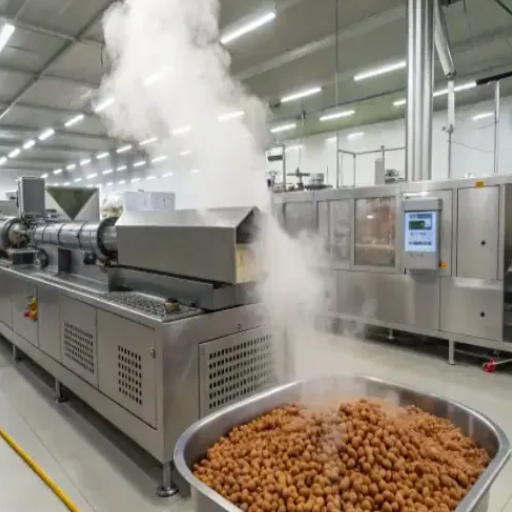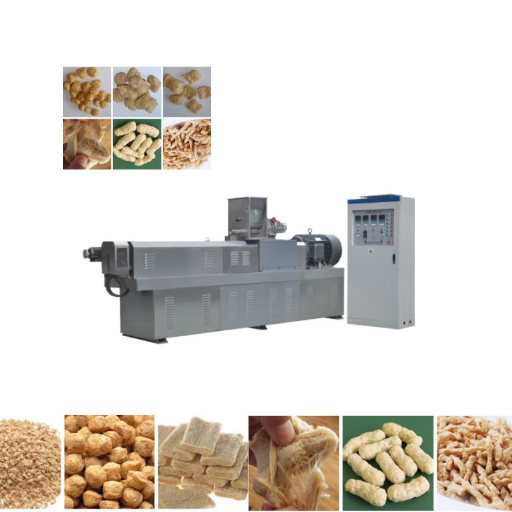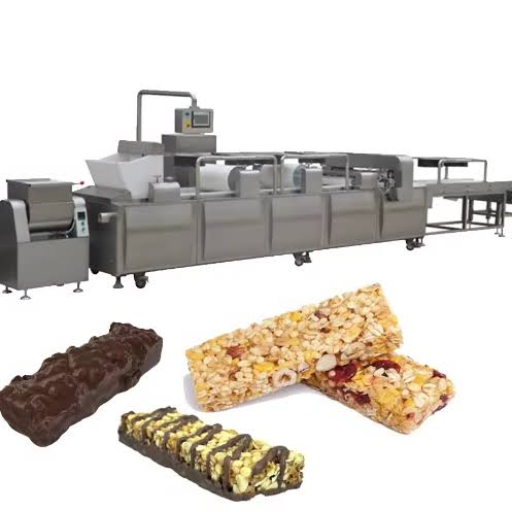
Only second to the right recipe of food processing machinery, food-processing business operations would have efficiency, quality, and profitability level. By 2025, several new opportunities and challenges will be available for all professionals in the food industry due to new technological advancements and an ever-evolving market. Whether your company operates at a small-scale or large-scale manufacturing level, this guide provides a one-stop solution for selecting industrial machinery tailored to your specific requirements. We cover topics regarding the latest trends and innovations and discuss cost issues, durability concerns, and application needs for your machinery. Read on to see how you can create a winning infrastructure for your business in this fast-paced, highly competitive landscape.
Understanding Food Processing Equipment
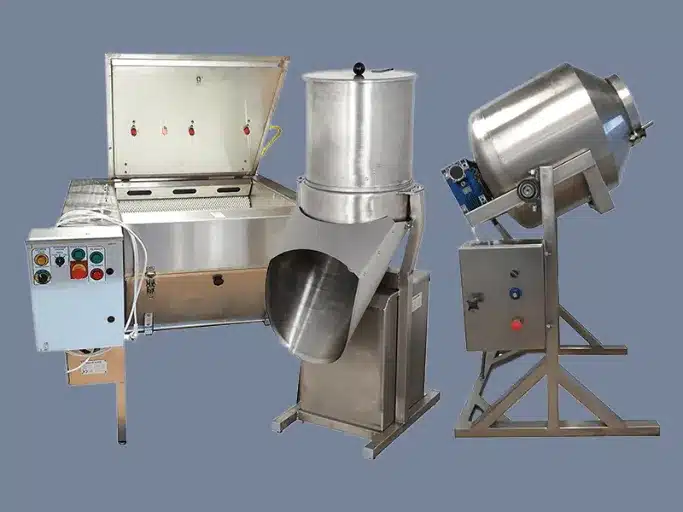
Food processing equipment refers to machinery and tools capable of handling food to prepare, cook, package, and store it efficiently and safely. This equipment comprises a wide array of machinery, including mixers, slicers, grinders, ovens, and packaging systems, which enable the special tasks to be performed in the process chain. These measures are designed to enhance production efficiency, maintain food quality, and comply with sanitary and safety standards. Choosing the equipment depends on the nature of the food to be processed, the quantity produced, and the intended purpose.
What is Food Processing Equipment?
The term “food-processing machinery” encompasses a wide range of apparatus involved in transforming raw ingredients into finished food products. These machines are employed to mix, cut, pulverize, cook, freeze, dry, package, and so forth. Contemporary food-processing equipment integrates state-of-the-art technologies, including automation and smart sensors, thereby boosting efficiency, ensuring consistency, and complying with stringent food safety standards. Recent trend data show growing demand for more precise, energy-saving, and diverse types of equipment to keep up with the changing consumer trends. This equipment serves various industries, including dairy processing, baked goods production, meat processing, beverage production, and more, being crucial for large-scale food preparation and ensuring high standards of quality.
Types of Food Processing Equipment
Food processing equipment includes mixers, grinders, cutters, peelers, homogenizers, pasteurizers, dryers, slicers, separators, and packaging machines.
| Equipment | Function | Industry | Key Feature |
|---|---|---|---|
| Mixers | Blend ingredients | Bakery | High precision |
| Grinders | Break down food | Meat | Energy saving |
| Cutters | Slice and shape | Vegetables | Sharp blades |
| Peelers | Remove skin | Fruits | Efficiency |
| Homogenizers | Uniform mixing | Dairy | Consistency |
| Pasteurizers | Heat treatment | Beverages | Safety |
| Dryers | Dehydrate | Snacks | Even drying |
| Slicers | Precise cuts | Meat | Adjustable |
| Separators | Divide components | Dairy | Accuracy |
| Packaging Machines | Seal products | All | Durability |
Choosing the Right Food Processing Equipment
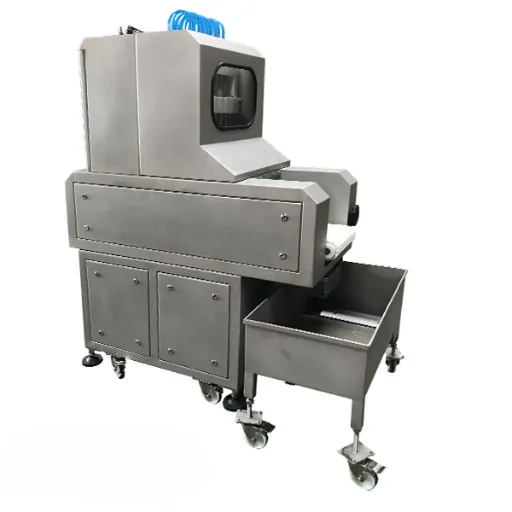
Several factors influence the selection of food processing equipment, including the type of food being processed, the desired finished product, and the scale of production. Determine the necessary steps for using the equipment, including slicing, mixing, heating, or packaging. Does the equipment do that job efficiently and well? Will the equipment be durable, and will it work on my product? Examine the features of the equipment, such as precision slicing, energy saving, and adjustable settings, in consideration of the product that will undergo processing. It is also necessary to comply with safety and hygiene standards to safeguard product quality and ensure conformity with regulations. If these items are selected carefully, they will be able to streamline the operation satisfactorily and achieve productivity improvements.
Factors to Consider When Choosing Food Processing Equipment
- Equipment Capacity: Ensure that the equipment has a suitable capacity for your operation and can handle the proposed production volume without causing undue downtime or overloading.
- Ease of Maintenance: Utilize equipment that is easy to clean, maintain, and repair, thereby preventing contamination and minimizing interruptions to operation.
- Energy Efficiency: Select machines or equipment that conserve energy, reduce operational costs, and support the pursuit of environmental sustainability.
- Automation and Technological Features: Are there automated functions or technology incorporated into the design that can improve accuracy, lessen human error, and enhance productivity?
- Cost and ROI: Initial cost must be weighed with benefits such as savings during operation, savings in maintenance and operation, and performance improvements that bring in real value during their lifetime so as to ensure that the investment is secured.
Key Factors to Consider for Optimal Performance
Energy Efficiency
Select machines equipped with energy-efficient features that consume less power while maintaining high performance levels.
Material Quality and Durability
Equipment must be made of high-grade food-grade material that resists wear, corrosion, and contamination.
Ease of Maintenance and Cleaning
The design should facilitate easy access and cleaning, while complying with hygiene standards and minimizing downtime.
Scalability and Flexibility
Consider equipment adaptation to accommodate changes in production volume or product settings for future business requirements.
Comply with Food Safety Regulations
Ensure that the equipment complies with all relevant food safety, compliance, and other standard regulations for safe and reliable operation.
Choosing Equipment Based on Food Product Type
When procuring equipment for food production, the specific requirements of the food product to be produced should be considered. Realizing that each type of food, whether it is dough-related, dairy, beverage, or meat, has its own production methods and handling needs is crucial for making informed stock-check decisions for equipment. Equipment for baked products may require precise temperature control and uniform heat distribution; dairy may require strict sanitation and temperature control to prevent spoilage; whereas meat generally needs some specialized cutting, grinding, or packaging equipment to guarantee quality and safety. Matching equipment to the product needs will ensure that production proceeds at its most efficient level, that product integrity is maintained, and that all applicable food safety standards are met.
Types of Equipment Used in Food Processing
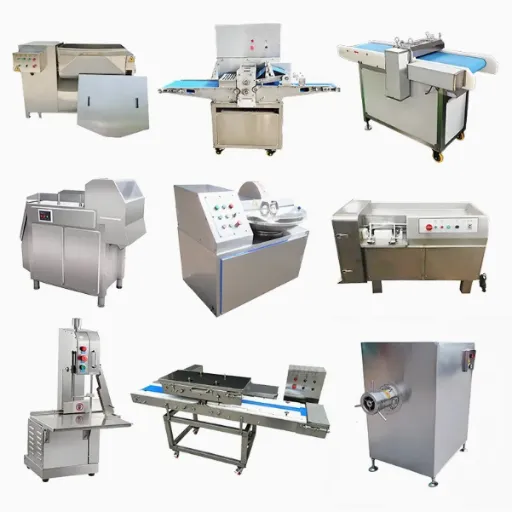
Food processing involves a wide range of specialized equipment for various operations throughout the production process. Cleaning equipment is widely used for washing raw materials; milling machines are used for grinding grains; mixing machines are used for mixing ingredients; and cutting tools are used for cutting. Packaging equipment used includes sealing machines and labeling machines. Thermal processing equipment is used in one way or another for cooking and sterilization of products. Refrigeration/freezing equipment are used to keep items fresh, extending their shelf life without compromising safety standards. Selecting equipment in accordance with the desired efficiency level and quality level for the product is of utmost importance.
Specialized Equipment for Different Food Products
Different food products require specific types of equipment to optimize production processes and ensure compliance with quality standards. In the dairy sector, for instance, the equipment includes homogenizers and milk separators for processing and standardization. Baking utilizes specialized equipment for mixing, proofing, and tunnel baking to ensure uniformity. Processing meat with grinders and slicers, combined with automated deboning machinery, increases efficiency and accuracy. For beverages, bottling lines and carbonation systems ensure uniformity in packaging and taste. Being the best equipment in the food industry to meet demands, maximize production, and comply with regulatory standards will be utilized.
Conveyor Systems in Food Production Lines
The conveyor in food manufacturing is the primary source of efficiency, accuracy, and safety in the handling of food products. They carry the ingredients and finished products through every stage of production, from sorting to processing, packaging, and finally storage. Advanced conveyor technologies conversely ensure sanitary conditions through use of modular belts, hygienic constructions, and automated monitoring, without affecting throughput. Conversely, conveyor systems can also be specially customized according to the unique requirements of a food product, whether it is a delicate baked product or a heavy bulk product. By enriching operations, limiting manual handling, and reducing contamination risks, conveyors provide critical support to quality and productivity in the food industry.
Packaging Equipment and Its Importance
Packaging equipment means to be of utmost importance in food processing to ensure the safety, quality, and shelf life of food products. A packaging system provided to food renders it contamination-free, thereby increasing its shelf life due to the packaging nature, while giving modalities for transportation and storage. Advanced packaging equipment further enhances productivity by automating packaging processes, enabling uniform portioning and reducing waste. Packaging that carries out its duties and secures product integrity will equally assist the build-out of brands and consumer confidence by the package design-if it is visually pleasing and tamper-proof.
Maintenance and Care for Food Processing Equipment
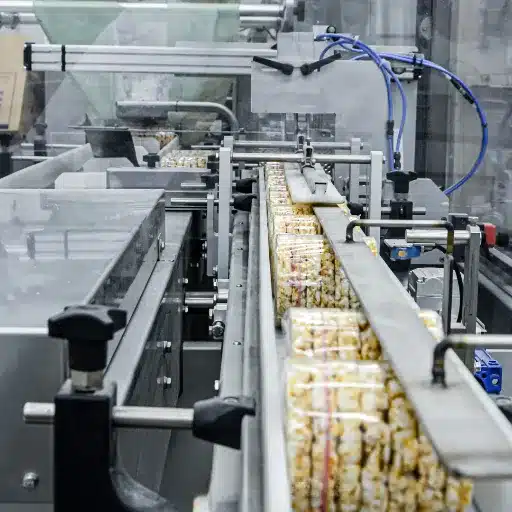
Correct and regular maintenance of food processing equipment ensures its efficiency, safety, and longevity. It entails regular inspection and cleaning of the equipment after every use to avoid contamination. Repair and servicing are performed according to the manufacturer’s guidelines. Machines must be lubricated perfectly on moving parts, worn-out parts should be replaced immediately, and there should be a proper calibration process for the equipment. Proper equipment maintenance can help businesses reduce downtime, enhance performance, and meet stringent food safety standards.
Practical Maintenance Tips for Longevity
- Schedule Regular Maintenance Checks: Plan routine inspections and maintenance whenever possible to catch potential problems while small enough to be fixed. Early identification of wear and tear can significantly reduce the likelihood of a significant breakdown.
- Use the Right Tools and Products: Ensure compatibility between the machinery and products used for cleaning or lubrication. Using the wrong tools or products for your machinery can cause gradual damage or significantly reduce its operational effectiveness.
- Train Staff Thoroughly: Train operators and maintenance personnel in proper procedures and safety protocols. Properly trained personnel can also help to prevent errors that cause equipment damage.
- Monitor Performance Metrics: Current changes in KPIs such as energy consumption levels, output level, and efficiency may be indicators for maintenance or adjustment if significant deviations are observed.
- Proper Storage of Equipment: The equipment must be stored appropriately so that while not in use, it will not get exposed to adverse environmental conditions that might cause corrosion or damage.
Combining these practical tips with diligent check-ups can help keep the maintenance cost low, and the equipment active for a longer period.
Ensuring Product Quality Through Proper Equipment Care
Proficient maintenance of equipment plays a crucial role in ensuring consistent product quality. Proper maintenance enables the equipment to operate smoothly, thereby reducing the likelihood of defective products or inconsistencies during the production process. Regular inspection, cleaning, and timely repair ensure that contaminants or wear will not compromise production quality, while also guarding against malfunctions. Furthermore, performing calibration at appropriate intervals enables the machinery to operate within tight parameters, which sets the path for maintaining product standards. An amalgamation of advanced monitoring technologies, coupled with structured maintenance, not only safeguards equipment but also preserves the integrity and reliability of products.
Future Trends in Food Processing Equipment
1
Automation and AI
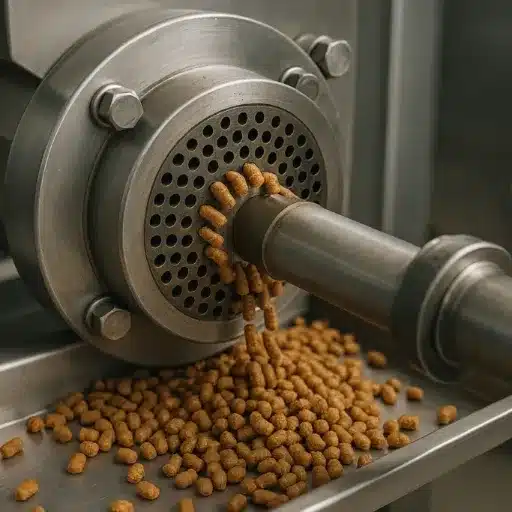
Combination of automation and AI is transforming the entire gamut of food processing equipment. With systems that automate the various steps of the production process, efficiency is enhanced, accompanied by a reduction in human intervention and, consequently, errors. AI enables predictive maintenance through quality control, with major decision-making based on large datasets in real-time.
2
Sustainability Initiatives
As the industry is gearing towards sustainability, energy-efficient equipment and processes are developed to ensure it does not promote waste generation. The need to reduce environmental impact is driving innovations such as water-efficient cleaning systems and recyclable packaging solutions.
3
Advanced Robotics
With robotics playing a crucial role in enhancing precision and speed in food processing, robots can now handle tasks that were previously considered less-than-rigid, such as delicately handling food, maintaining hygienic standards, and performing repetitive tasks with precision.
4
Smart Equipment and IoT Integration
Innovative equipment connected via IoT allows for real-time monitoring and analytics. These systems enhance operational control, improve traceability, and support training in compliance checks with regulatory requirements.
5
Food Safety
Food safety technologies are among the leading advancements. Antimicrobial surface coatings, enhanced hygienic designs, and automated contamination detection systems are among the solutions being developed to reduce risks and foster consumer acceptance.
By creating these trends, the food processing industry can improve on efficiency, sustainability, and safety while responding to the ever-changing needs of consumers and regulatory bodies.
Eco-Friendly Innovations in Food Processing
Energy conservation is one of the key new eco-friendly changes in food processing. A modern food processing facility is equipped with machines designed to operate efficiently while using less energy. Another feature of solar/wind power generation is that it replaces fossil fuels used in power generation in the facility. Another advancement involves water recycling systems, which treat wastewater from the production process into recycled water, helping reduce water wastage. These methods support lowering the food production’s carbon footprints and conserving global resources for the future.
Impact of Consumer Trends on Equipment Development
Consumer trends have shaped significantly the food equipment development methodology, pushing innovation along sustainability, efficiency, and customization lines. Increasing awareness and demand for green practices have minimized the importance of energy-consuming appliances and machines made from unsustainable materials. Currently, food equipment is equipped with advanced technology to reduce energy consumption while enhancing operational efficiency, thereby satisfying consumer needs for green solutions.
Growing public esteem for plant-based cuisine and allergen-free foods dictates that equipment design accommodate specialized production lines to minimize cross-contamination and preserve product integrity. On the customization dimension, there remains an increasingly popular possibility of small-batch production equipment that allows brands to cater for niche demands and offer customized products. These developments underscore the enduring role of consumer behavior as the driving force behind innovation in food equipment.
Reference Sources
- 12 Best Sources for Food Truck Cooking Equipment in 2025 – A detailed guide on sourcing food equipment, including compact and specialized options.
- Essential Food Manufacturing Equipment: A Buyer’s Guide – Covers key trends and tips for choosing scalable and efficient food manufacturing solutions.
- Top 10 Innovations in Food Processing Equipment for 2025 – Highlights the latest innovations and industry context for food processing equipment.
- Top 10 Food Processing Industry Trends in 2025 – Explores industry trends and startups shaping the food processing sector.
- Top-Rated Restaurant Equipment Suppliers in the USA – Lists trusted suppliers for restaurant and food processing equipment.
Frequently Asked Questions (FAQs)
What is a comprehensive guide to food processing equipment?
A comprehensive guide to food processing equipment, which describes in detail the various kinds of equipment used primarily in the food industry, may cover all aspects of food processing, from preparation to packaging. Also contains a list of food processing machinery, describing the good stuff worthy of consideration by the food industry. This guide helps one understand the workings and appraisal of these equipment for efficiency and safety.
What type of food processing equipment is available?
There are numerous types of food processing equipment, namely mixing, grinding, conveying, and packaging. Each equipment is meant to perform a particular function in the production processes: mixing of ingredients, preservation of food, and safe packaging of foodstuff. The correct equipment must be chosen to produce products on a large scale and maintain quality count.
How does one choose food-processing equipment?
Several factors should be considered when selecting food processing equipment properly. Firstly, the viewer should analyze the specifics of their food material, production scale, and types of food they plan to process. Secondly, assess efficiency and safety, while compliance with stringent hygiene standards and USDA regulations should also be a big tick to ensure legitimacy.
What is packaging equipment doing to food processing?
Packaging equipment is one of the most critical aspects of food processing, ensuring the best sealing of food products for storage and distribution. The food packaging equipment is designed to keep food items as pure and protected as possible from contamination and value loss.
What are the requirements for processing equipment for a commercial kitchen?
Processing equipment requirement for commercial kitchens involves high workmanship that can efficiently work on various foods according to material. It should follow strict food safety and hygiene standards to ensure that food products remain safe for consumption. Another requirement will be for it to consider the workflow of the kitchen, thereby enabling the easy integration of production lines into the existing ones for maximum efficiency.
How can food processing equipment assure product quality?
Choosing food processing equipment specially designed for the types of food products being processed is paramount to ensuring product quality through adequate food processing equipment. Also, machinery must be regularly maintained and calibrated to prevent malfunctions that cause variations in food quality. Quality checks implemented throughout the production period will further maintain the desired quality consistency of the products.
Ready to Transform Your Food Processing Operations?
With the right equipment selection and maintenance practices, your food processing business can achieve new levels of efficiency, quality, and profitability in 2025 and beyond.