The market for instant noodles has experienced a remarkable increase in size and sales over the last few years, with its advantages of convenience, low cost, and wide acceptance being the key factors driving its growth. In order to supply this increasing need, manufacturers cannot rely on anything less than a dependable and effective production line. This is the main idea of the present blog post: a comprehensive guide to the selection of the right supplier of instant noodle production lines. We will discuss the essential aspects to be considered whether you are starting a new factory or upgrading existing facilities, we will introduce you to the state-of-the-art technologies in noodle-making, and we will show you how to boost production and achieve the highest quality at the same time.
Overview of Instant Noodles

Instant noodles are a well-known, convenient food item that consists of wheat flour, water, and a mixture of spices. They are first cooked, then dehydrated, and packed for an extended shelf life which makes them easy to use, just by adding hot water. The initial market was in Japan in the 1950s, since then instant noodles have become a worldwide staple with every taste and style available to meet different consumer needs. Their low cost, fast cooking time and adaptability have turned them into a meal or snack choice for people and families all over the world.
History and Popularity of Instant Noodles
Momofuku Ando invented instant noodles in 1958, he aimed at making a food product that was easy to prepare and cheap. The Chicken Ramen launch brought about the start of their worldwide popularity. By the 1970s, the birth of cup noodles transformed the market, providing even more comfort to the users.
Instant noodles are now a common food product, widely consumed and tailored to local preferences, thus turning into a cultural event and an answer to quick, available meals all over the world.
Types of Instant Noodles
- Ramen Noodles
Generally sold in packets or cups with accompanying seasoning - Vermicelli Noodles
Thinner noodles usually produced from rice or mung beans - Udon Noodles
Thicker noodles considered more filling - Glass Noodles
Appreciated for their transparency and elasticity - Healthier Options
Whole grain or low salt varieties for health-conscious consumers
Market Trends in Instant Noodles
The instant noodle market is undergoing noticeable development mainly due to changing consumer habits and demands worldwide. Healthier versions like low-sodium, whole-grain or organic noodles are turning into favorites among the health-conscious consumers who are getting more and more concerned about their health. Moreover, the factors of convenience and price still hold a strong position in the market as the young generation looks for fast meal options due to their hectic lifestyles. The market is further getting wider by the advent of flavor innovations which include regional and international palates. The surge in e-commerce sales has also enabled brands to communicate with and sell to wider audiences which, in turn, has influenced the distribution and accessibility modes of the industry.
Understanding Noodle Production Lines
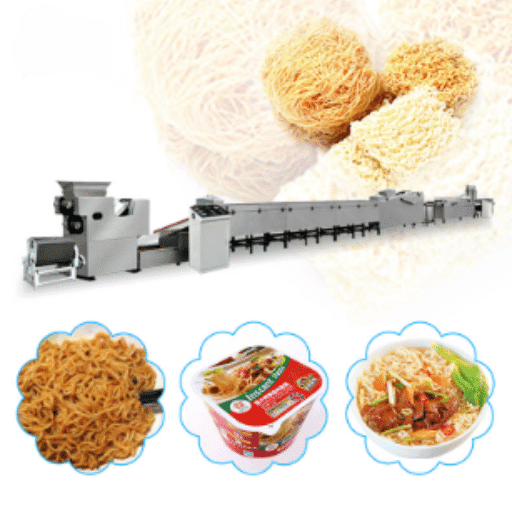
Noodle production lines are set up to produce instant noodles in huge volumes at a fast pace with steady quality. The production starts with raw material mixing such as wheat flour, water, and other important ingredients to make a dough which is then rolled into thin sheets. The noodles are then cut into strings and steamed to get the right texture and firmness. After steaming, the noodles are either fried in oil or air-dried to prevent spoilage. The last steps of the process involve the seasoning packet being made and the product being packaged, ensuring it is ready for sale. High-speed manufacturing lines typically utilize automation to increase production rate, reduce waste and assure cleanliness.
Components of an Instant Noodle Production Line
- Dough Mixer – For mixing the noodle base ingredients
- Sheeting and Rolling System – Making thin sheets of dough
- Slitter – Cutting sheets into uniform strands
- Steamers – Cooking all noodle strands properly
- Frying or Drying Units – Preservation and shelf-life extension
- Seasoning Packet Dispenser – Providing ready-to-use flavoring
- Packaging Machines – Sealing and labeling for distribution
Automation is, in many cases, applied across the components mentioned above to improve the productivity and, at the same time, to ensure the desired quality is achieved.
Types of Noodle Production Lines
It is customary for each type of production line to be fitted with specific equipment and designed in a way that it will produce the best quality and the most efficient production, depending on the demand of the market.
Importance of Quality Machinery in Production
Noodle production requires top-notch machinery to guarantee uniformity, efficiency, and quality of the product. Having trustworthy equipment reduces the time not working, lowers the costs involved in operation, and makes each step more accurate, from mixing to packaging. This leads to high-quality noodles that not only satisfy the consumers’ expectations but also allow for production increase and compliance with food safety regulations, which are very important for keeping a company competitive in the market.
Fried Instant Noodle Production Line

A production line for fried instant noodles is constructed in a way that it not only produces but also delivers the best quality instant noodles in an efficient manner. The production generally consists of the following steps:
- Mixing and Kneading: Flour and water together with other ingredients are mixed to create a dough that is uniform in texture.
- Rolling and Slitting: The dough is rolled out into large sheets before cutting into narrow strips of noodle.
- Steaming: Noodle strands are steamed for starch pre-gelatinization and texture enhancement.
- Frying: Noodle strands are fried in oil at perfect temperature to reduce moisture content and enhance taste and longevity.
- Cooling: Cooled fried noodles maintain their structure and become ready for packing.
The entire process is made in such a way that it guarantees top quality and fast production, which ultimately supplies the market with fried noodles of instant variety across the globe.
Frying Process in Instant Noodle Making
The frying process in instant noodle making consists of controlling the temperature while submerging pre-steamed noodle strands into hot oil, normally around 140°C-160°C. This step causes the moisture content to drop to less than 3%, thus, the noodles become more tasty and creamy, having a longer shelf life. However, temperature and timing must be very precise to get the same quality as well as to keep the noodles’ structural integrity.
Key Machinery for Fried Instant Noodles
The process of fried instant noodle production calls for specially designed machines that provide the required efficiency and consistency. The most important pieces of equipment are as follows:
- Steaming Machine – Prepares noodle strands for frying through even cooking
- Frying Machine – Controls temperature and time to lower moisture and achieve desired texture
- Cutting and Rolling Machine – Shapes and divides noodles into consistent portions
- Cooling System – Rapid cooling after frying to stabilize quality and maintain texture
- Packaging Machine – Creates airtight seal ensuring extended shelf life
The combined efforts of these machines result in the efficient production of high-quality, uniform instant noodles.
Advantages and Disadvantages of Fried Noodles
Production Process and Quality Control

The production process for fried instant noodles is a fully automated system which guarantees the same quality and efficiency of the output, and high-quality production. The major operations consist of mixing the ingredients, dough sheeting, steaming, frying, cooling and packaging. The continuous monitoring of each stage is done in order to keep the product within the set standards and also to conform to the given safety regulations.
Quality control is an essential part of the process during every stage. The raw materials are first checked for their freshness and their conformity to the food safety standards. For instance, during the production, the automated systems keep a check on the parameters like the consistency of the dough, the smoking point of the frying oil and the moisture content in the noodles. The products that are finished go through visual inspections, weight checks, and taste tests to make sure they do not differ from the quality standards before they are sent to the consumers. This strict method guarantees the same quality, safety, and consumer satisfaction.
Steps in the Instant Noodle Production Process
- Ingredient Preparation: Best quality raw ingredients picked and weighed by precise formulations
- Mixing and Kneading: Raw materials mixed to form single mass of dough with desired texture
- Rolling and Cutting: Dough rolled into thin sheets and cut into equal-sized noodle strands
- Steaming: Noodle strands subjected to steam for pre-cooking, improving taste and texture
- Frying or Air-Drying: Noodles processed to reduce moisture content and increase shelf life
- Seasoning and Packaging: Flavoring packets prepared and packed with noodles under hygienic conditions
- Quality Control: Final check ensuring product conforms to safety and taste criteria
Quality Control Measures in Noodle Manufacturing
Quality control not only guarantees the noodle production process safety, consistency, and taste but also involves a number of different steps that are all important. The measures taken include:
- Regular checks of raw materials for quality and compliance
- Strict hygiene rules maintained in production areas
- Ensuring machines work at optimal performance
- Extensive testing of dough for texture, elasticity, and moisture content
- Flavor evaluations and microbiological tests on end products
- Instant process corrections to maintain consistent quality
Importance of Compliance and Standards
It is important to follow compliance and standards for product safety, consumer trust, and certification. This will provide quality assurance, risk of contamination or defects will be minimized, and the production will be done according to the regulations. The companies that fulfill these standards will not only strengthen their reputation but also enhance their processes and enjoy continuous competition in the market as their success would be guaranteed over the long term.
Frequently Asked Questions (FAQs)
Reference Sources
- Fortune Business Insights – Instant Noodles Market Size, Share & Growth: Market growth of instant noodles is discussed, which is mainly due to their acceptance in different cultures and regions.
- Ken Research – Global Instant Noodles Market: Growing need for instant noodles as an easy-to-cook meal has been particularly noticeable in cities.
- Custom Market Insights – Global Instant Noodles Market Size, Trends, Share 2032: Hunger for instant noodles and their types is investigated in the nations like China, Japan, and South Korea.
Conclusion
Selecting the right instant noodle production line supplier is a critical decision that directly impacts your manufacturing efficiency, product quality, and long-term business success. From understanding the various types of production lines available to recognizing the importance of quality machinery and strict quality control measures, every aspect plays a vital role in delivering consistent, high-quality instant noodles to meet growing global demand. Whether you’re investing in a fried noodle production line or exploring alternatives like fresh or frozen noodle systems, prioritizing automation, compliance with food safety standards, and reliable supplier partnerships will position your business for sustainable growth. By implementing the insights and best practices outlined in this guide, manufacturers can optimize their production processes, reduce operational costs, and maintain competitive advantage in the dynamic instant noodle market. Remember that continuous improvement, adherence to quality standards, and staying updated with the latest production technologies are essential for long-term success in this rapidly evolving industry.