The global textured soy protein market is expected to grow from 6.01 billion in 2025 to over 10.66 billion by 2034. The rapid market expansion forces food producers to select between two critical options which involve purchasing appropriate soy protein meat manufacturing machinery at this moment or losing market share to their business rivals.
You already know that consumer demand for plant-based meat is rising. Your equipment selection has a major effect on three critical business aspects which include product quality and operational efficiency and long-term profitability. The wrong extrusion line can leave you with spongy, inconsistent products that fail in retail. The right line produces fibrous meatlike textures which enable sales at high market rates.
This guide will show you the entire soy protein meat production process which explains the essential distinction between low-moisture textured vegetable protein TVP and high-moisture meat analog HMMA systems and shows how to choose matching equipment based on your production needs and financial resources. This article provides essential guidance for making successful investment decisions which apply to both new facility development and existing operation expansion.
What Is Soy Protein Meat Production?
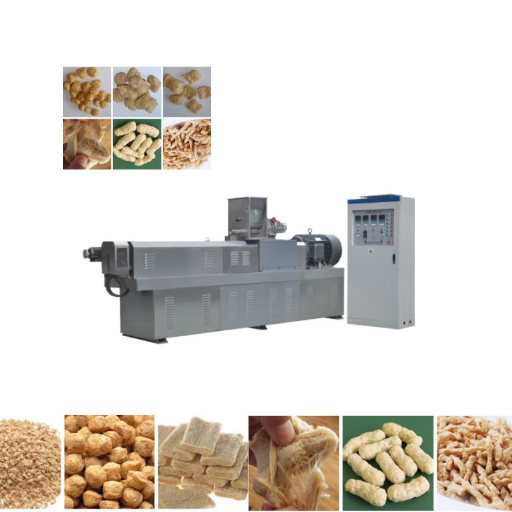
The industrial process of soy protein meat production transforms soy protein isolate concentrate and defatted flour into fibrous meat-like textures through a thermo-mechanical extrusion method. The resulting products range from dry textured vegetable protein (TVP) to hydrated high-moisture meat analogs (HMMA). These products operate as meat extenders for cash markets and food service establishments while also functioning as independent plant-based protein sources.
You must understand the two primary extrusion methods before you start to assess any machinery.
Low-Moisture Extrusion: The TVP Path
Low-moisture extrusion (LME) operates at 15% to 30% moisture content. The mixture enters an industrial cooking system which uses high-temperature and high-pressure conditions to prepare the material for subsequent processing through a die which induces a pressure drop that instantaneously transforms water into steam. This process creates a spongy body which expands to form multiple openings.
High-Moisture Extrusion: The HMMA Path
High-moisture extrusion (HME) runs at 40% to 80% moisture content, typically using soy protein isolate blended with wheat gluten. Instead of a simple die, the extruder uses a long cooling die at the outlet. This cooling die prevents expansion and solidifies aligned protein fibers into dense, layered sheets that mimic whole muscle meat. According to the Good Food Institute India, HME is now the dominant technology for premium whole-cut plant-based meat and is growing at double-digit rates globally.
| Feature | Low-Moisture Extrusion (TVP) | High-Moisture Extrusion (HMMA) |
|---|---|---|
| Moisture | 15% to 30% | 40% to 80% |
| Texture | Spongy, porous, expanded | Dense, fibrous, layered |
| Storage | Ambient, shelf-stable | Refrigerated or frozen |
| End Use | Meat extenders, dry mixes | Whole-cut analogs, ready-to-cook |
| Equipment Cost | Lower | Higher (requires cooling die) |
The Science of Soy Protein Extrusion
Turning powdered protein into a convincing meat alternative requires precise control over three molecular stages: denaturation, alignment, and stabilization.
Stage 1: Denaturation
Inside the extruder barrel, the protein mixture is exposed to temperatures between 100°C and 180°C combined with intense mechanical shear from rotating screws. This unfolds the globular soy proteins and exposes reactive hydrophobic sites. Without proper denaturation, the proteins cannot bond into a cohesive matrix.
Stage 2: Alignment
As the plasticized protein mass moves toward the die, the laminar shear flow orients the unfolded protein chains in parallel. This directional alignment is what creates the anisotropic, meat-like fiber structure. The screw design and barrel geometry directly influence how well these fibers align.
Stage 3: Stabilization
The stabilization process for TVP material starts when the flash expansion occurs at the die exit. The pressure drop causes the porous structure to become permanently fixed. The cooling die establishes a mandatory requirement for HMMA production because it stabilizes temperature to create solidified material from aligned chains.
Raj Patel opened his plant-based food facility in Mumbai during 2023 because he believed all twin-screw extruders would create authentic meat substitutes. His first batch of soy protein isolate created breakfast cereal-like puffing instead of producing fiber-based products. He had purchased a standard snack extruder without a cooling die which created the actual problem.
His HMMA output achieved the required dense layered texture for foodservice clients after he switched to a high-moisture extrusion line that included a thermoregulated cooling die. The lesson shows that scientists need to control both temperature and pressure at the die exit to create fiber formation.
Key Equipment in a Soy Protein Production Line
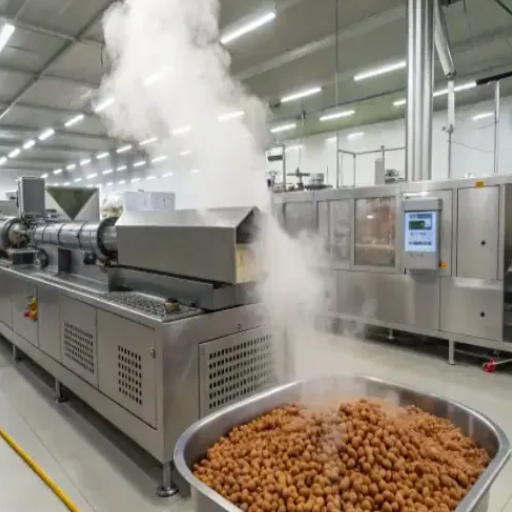
A complete textured soy protein production line integrates multiple specialized systems. Each component must be matched to your target product, scale, and automation requirements.
Raw Material Handling and Dosing
The process begins with automatic handling of soy protein isolate (SPI), soy protein concentrate (SPC), or defatted soy flour. Stainless steel silos with level indicators feed precise recipes into the line. For multi-protein formulations, additional hoppers may hold wheat gluten, pea protein, or starches.
Preconditioner and Mixer
Before entering the extruder, dry powders are mixed with water and steam in a preconditioner. Steam is typically injected at 0.3 to 0.4 MPa and 140°C to 150°C. This step initiates uniform hydration and partially heats the protein, which is critical for preventing expansion instead of fiber formation in HMMA lines.
Twin-Screw Extruder
The twin-screw extruder is the heart of any soy protein meat production facility. Co-rotating twin-screws offer superior mixing, heat transfer, and process control compared to single-screw designs. Key specifications to evaluate include:
- Screw speed: Up to 1,800 rpm on high-performance industrial models
- L: D ratio: Typically 15.5:1 to 20:1
- Free volume ratio: Do/Di of 1.8 for maximum capacity in a compact footprint
- Motor power: 18.5 kW for lab units, up to 200 kW for industrial lines
- Capacity: Dry TVP lines range from 100 to 1,000 kg/h; wet HMMA lines typically run 100 to 600 kg/h
Modular screw and barrel configurations allow you to customize shear intensity, heating zones, and residence time for different formulations.
Cooling Die (HMMA Lines Only)
For high-moisture meat analog production, the cooling die is the most critical differentiator. This long, thermoregulated die channels the plasticized protein mass from approximately 180°C down to a solid phase without allowing expansion. The result is a stable, fibrous block that can be sliced into strips, patties, or nuggets.
Cutting, Drying, and Downstream Processing
The TVP production process uses hot cutting blades to cut expanded extrudate material at the die face into three distinct product forms: chunks, granules, and flakes. The product then passes through a dryer to reduce moisture below 10%, followed by cooling and screening to remove fines before packaging.
The HMMA process starts with operators cutting the dense extrudate while it remains warm and flexible. The material then moves to its next stage which combines flavors and fats to create a new product before final steps which involve refrigeration or freezing. The moisture level of HMMA matches that of real meat, thus it needs to be transported using cold-chain methods.
Packaging Integration
Downstream packaging systems must match the product format. TVP products get packaged using multi-layer bags which include nitrogen flushing as a standard method. The HMMA products need vacuum packaging or MAP (Modified Atmosphere Packaging) to achieve maximum shelf life under refrigerated storage conditions.
How to Choose the Right Production Line for Your Business
Selecting the correct scale and extrusion technology depends on more than just budget. Your target market, product strategy, and operational capabilities should drive the decision.
Lab and R&D Scale: 10 to 30 kg/h
If you are developing new recipes or testing formulations, a lab-scale twin-screw extruder is the right starting point. These units typically run 10 to 30 kg/h with 18.5 kW motors. They allow you to experiment with screw configurations, temperature profiles, and raw material blends without committing full production capacity.
Pilot Scale: 80 to 150 kg/h
Pilot lines are ideal for market validation, regional distribution, or co-manufacturing partnerships. At 80 to 150 kg/h, you can produce enough volume to test retail acceptance while refining your process parameters. This scale often serves as a bridge between recipe development and full commercialization.
Industrial Scale: 200 to 1,000+ kg/h
For national or export production, industrial lines offer the throughput and automation required for profitability. Large-scale extruders with PLC controls, remote diagnostics, and automated CIP (Clean-In-Place) systems reduce downtime and ensure batch-to-batch consistency. According to industry analysis, large-scale equipment currently dominates approximately 54% to 58% of plant-based protein processing equipment revenue.
TVP vs. HMMA: Which Should You Invest In First?
Elena Vargas runs a mid-sized food manufacturing co-op in Barcelona. In 2024, she faced a classic crossroads. Her budget allowed for either a TVP line or an HMMA line.
She mapped her target market, local restaurants wanting ready-to-cook plant-based chicken, and chose HMMA. Within 18 months, her average selling price per kilogram had doubled, justifying the additional cold-chain investment.
Use this framework to make your own decision:
- Choose TVP if you have limited capital, lack refrigerated storage, or plan to sell to industrial buyers who will rehydrate and formulate the protein themselves.
- Choose HMMA if you are targeting retail consumers or foodservice operators who want ready-to-cook whole-cut analogs and are willing to pay premium prices.
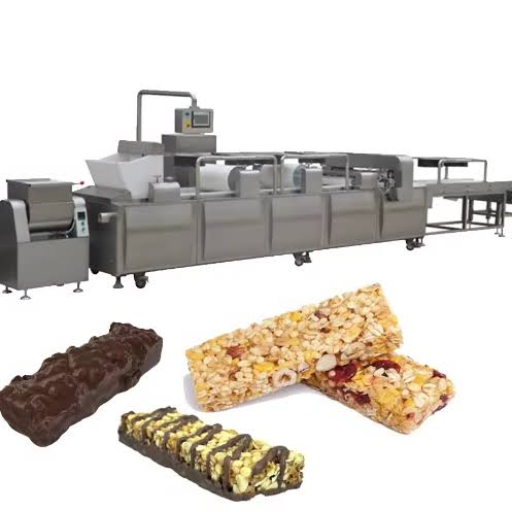
If your business already operates other protein-based lines, such as a [protein bar production line](https://loyal-foodmachine. com/protein-bar-production-line/), you may already have the formulation expertise and quality control systems that make scaling into HMMA a natural next step.
Quality, Certification, and Operational Best Practices
Even the best equipment will underperform without rigorous process control. Maintaining consistent texture, meeting international standards, and troubleshooting defects quickly are essential for long-term success.
Maintaining Consistent Texture
Three variables determine final product texture: moisture content, Protein Dispersibility Index (PDI), and screw configuration.
- Moisture control: Even small deviations in hydration can collapse fibrous structures in HMMA or cause uneven expansion in TVP.
- PDI: A high PDI (60 to 70+) is critical for effective texturization. Excessive heat during ingredient production can denature proteins prematurely and ruin texture.
- Screw configuration: The arrangement of conveying, kneading, and reverse elements must be tailored to your specific formulation. Most experienced equipment suppliers will help optimize this during commissioning.
CE Certification and International Standards
For manufacturers exporting to Europe or competing for global contracts, CE-certified machinery is often a requirement, not a preference. CE marking demonstrates that your equipment meets EU safety, health, and environmental protection standards. It also signals reliability to distributors and co-manufacturers in over 50 countries.
Troubleshooting Common Extrusion Defects
Even experienced operators encounter issues. Here are three common problems and their typical causes:
- Puffing instead of fiber formation (HMMA): Usually caused by a missing or improperly calibrated cooling die, excessive screw speed, or too-low moisture content.
- Uneven hydration or burnt particles: Often results from inconsistent steam injection, worn preconditioner paddles, or hot spots in the barrel heating zones.
- Weak texture after rehydration (TVP): Typically linked to low PDI ingredients, insufficient barrel temperature, or inadequate residence time in the cooking zone.
Need a customized production line designed for your specific capacity and certification requirements? [Contact Shandong Loyal Industrial for a tailored quote →](https://loyal-foodmachine. com/food-production-lines/)
Conclusion
Soy protein meat production is no longer a niche category. It is a fast-scaling global industry where the right equipment separates market leaders from followers. The core technology, thermo-mechanical extrusion, transforms simple soy protein powders into convincing meat alternatives through precise control of heat, moisture, and shear. But the specific path you choose, TVP or HMMA, determines your capital requirements, storage needs, and pricing power.
Here are the key takeaways to remember:
- Understand the extrusion type: TVP lines use flash expansion and produce dry, shelf-stable products. HMMA lines require a cooling die and deliver dense, ready-to-cook whole cuts.
- Match scale to your stage: Lab units (10 to 30 kg/h) are for R&D, pilot lines (80 to 150 kg/h) validate markets, and industrial lines (200+ kg/h) drive profitability.
- Prioritize process control: Moisture, PDI, and screw configuration directly impact texture and consistency.
- Invest in certified equipment: CE-marked machinery opens global markets and signals quality to partners.
When the team at GreenProtein Foods in Jakarta partnered with an experienced equipment manufacturer for their first soy protein meat production line, they did not just buy machines. They gained process consultation, factory layout design, and on-site training. Two years later, their HMMA nuggets supply supermarkets across Southeast Asia. The right partnership turned a complex engineering challenge into a scalable, profitable business.
If you are ready to build or expand your own soy protein meat production capability, start with a clear understanding of your product goals and target market. Then partner with a manufacturer who brings both the engineering expertise and the industry experience to make those goals a reality. With over 10 years of expertise, Shandong Loyal Industrial delivers reliable, CE-certified machinery that ensures consistent quality and efficiency. [Contact us today to discuss your customized production line →](https://loyal-foodmachine. com/food-production-lines/)