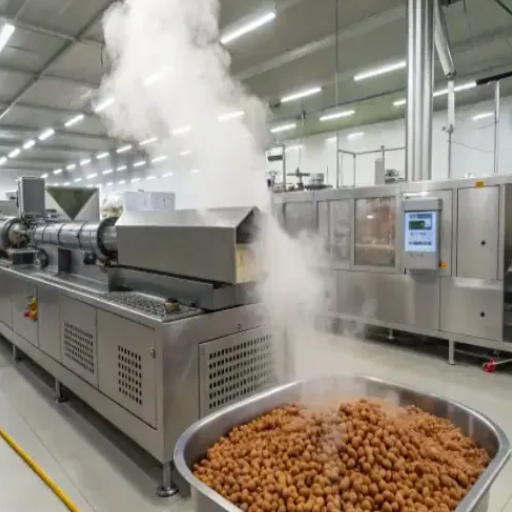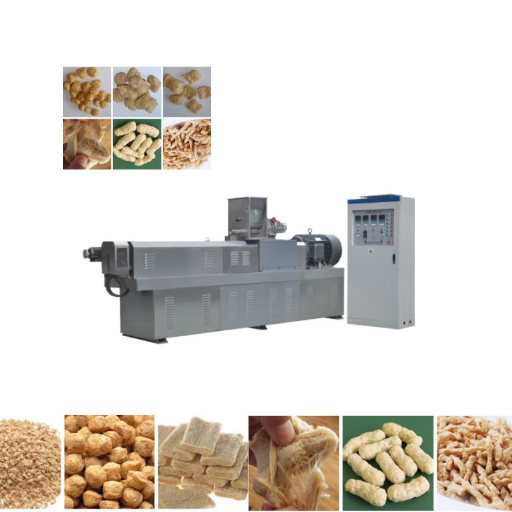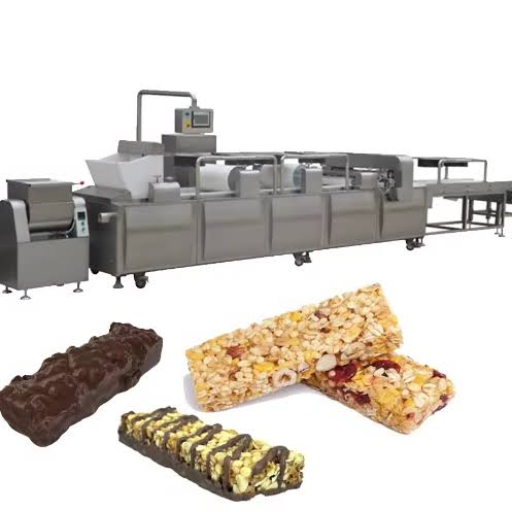
An overseas food machinery manufacturer is a company that designs, engineers, and ships food processing equipment across international borders, often providing installation, commissioning, and long-term support from abroad. Selecting the best option requires organizations to achieve cost reductions while maintaining strict quality checks and establishing effective communication and building a cooperative relationship which extends beyond the procurement process.
The global food processing machinery market is projected to exceed $88 billion in 2026, growing at a 5.67% CAGR. The market distribution shows that Asia Pacific holds between 30 and 36 percent of that market while China maintains its position as the top global exporter of food processing equipment. The extensive market presence presents substantial opportunities for business expansion. The extensive market presence creates substantial business opportunities while simultaneously producing significant dangers.
You have probably heard the horror stories. A buyer sends a deposit and receives machinery that does not match the specifications. The documents are not present. The certifications are found to be only photocopies. The alleged manufacturer operated as a trading office which lacked any manufacturing facilities.
Those stories are not urban legends. In 2023, Ahmed, a snack producer in Lagos, wired 40% upfront to an overseas supplier he found through a B2B platform. The equipment arrived three months late. The extrusion system could not hold temperature tolerance. The manuals were untranslated PDF scans. Ahmed spent another eight months and $18,000 on local repairs before the line produced a single batch of corn puffs. The overseas manufacturer selection mistake cost him money because he did not select the correct manufacturer verification process.
This guide explains exactly how to avoid that outcome. The first section teaches buyers about international sourcing while the second section provides seven evaluation criteria to assess overseas food machinery manufacturers. The third section shows how to compare overseas and local options with complete transparency while the fourth section explains which red flags require immediate exit from the situation. We will also show you how to frame the relationship as a long-term partnership, not a one-time transaction.
Key Takeaways
- An overseas food machinery manufacturer can reduce upfront costs by 20–40% while delivering specialized extrusion and turnkey technology that local suppliers may not offer.
- Verification matters more than price: business license checks, third-party factory audits, CE marking documentation, and factory acceptance testing (FAT) separate reliable partners from risky vendors.
- The initial purchase price represents only 20–30% of total cost of ownership (TCO) over a decade, so after-sales support, spare parts availability, and remote diagnostics should drive your decision as much as the sticker price.
- Milestone-based payments, clear Incoterms, and video factory tours mitigate the majority of cross-border sourcing risks.
- The best overseas relationships last 5–10+ years and function as engineering partnerships, not transactional orders.
Why Buyers Choose an Overseas Food Machinery Manufacturer
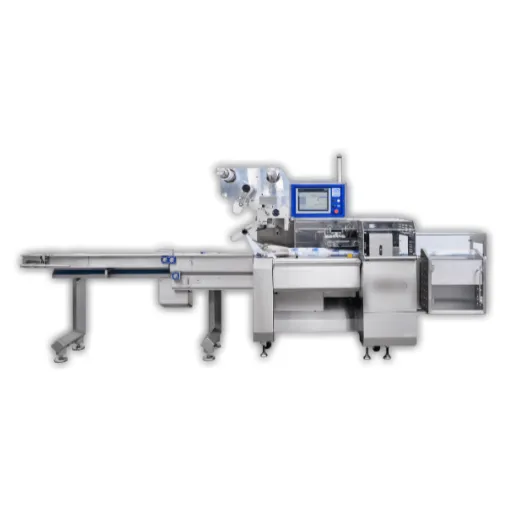
Cost efficiency is the obvious draw. Labor and material costs in major manufacturing regions allow overseas producers to offer advanced extrusion systems, drying lines, and packaging integrations at prices that would be impossible elsewhere. But framing the decision around price alone is a trap.
Cost Efficiency Without Compromising Quality
A well-run overseas food machinery manufacturer invests the savings from efficient production into engineering talent and quality control infrastructure rather than padding margins. That means you can access PLC-controlled production lines, automated seasoning systems, and stainless steel construction at a capital outlay that leaves room in your budget for installation, training, and working capital.
According to Velec Systems, the initial purchase price of food processing equipment typically represents only 20–30% of the total cost over a decade. Energy consumption, maintenance, downtime, spare parts, and operator training dominate the rest. An overseas manufacturer that bundles installation and commissioning into the project can actually improve your TCO compared with a low-priced local vendor that drops the equipment at your dock and disappears.
Access to Specialized Technology and Niche Expertise
Certain regions have built decades of concentrated expertise in specific technologies. Extrusion systems for snack production, pasta macaroni forming dies, protein bar slitting equipment, and bread crumb processing systems are categories where specialized overseas manufacturers have iterated through thousands of installations. A generalist local fabricator simply cannot match that depth.
If your product requires recipe flexibility, modular line configurations, or rapid changeover between SKUs, an international food machinery supplier with focused expertise often outperforms a broad-based local alternative. Tortilla chip production lines are one example where die geometry, masa preparation, and precision cutting determine product consistency. Turnkey food production lines designed by specialists integrate mixing, extrusion, shaping, drying, cooling, and packaging as a single optimized workflow rather than a collection of mismatched machines.
Scalability for Growing Businesses
Enterprise-scale local manufacturers often optimize for high-volume, standardized contracts. They may decline smaller orders or charge prohibitive tooling fees for recipe customization. An overseas food equipment manufacturer that serves global markets, including emerging economies, typically offers flexible minimum order quantities and modular line designs that scale with your growth.
For startups and small-to-medium factories, that flexibility is not a luxury. It is a survival advantage. You can start with a compact line, validate your product in market, and expand capacity by adding modules rather than replacing the entire system.
Want to see how a turnkey approach works in practice? Explore our food production lines to see complete systems designed for global delivery.
7 Essential Steps to Evaluate an Overseas Food Machinery Manufacturer
Sourcing across borders demands a structured process. The following seven steps represent a due diligence framework that serious buyers use to separate professional manufacturers from opportunistic traders.
1. Verify Business Credentials and Physical Presence
Start with the basics. Request a scanned business license, export registration, and factory address. Use satellite mapping services to verify the address. A legitimate overseas food machinery manufacturer will have a clearly identifiable factory campus which includes loading bays and production halls and warehousing facilities.
The supplier should not continue until they share their exact location. The supplier should not continue until they provide their specific location. The supplier should not continue until they provide their specific location. The supplier should not continue until they provide their specific location. Request a live video call that includes a walk through the production floor. The facility should contain active CNC machining centers and welding stations and assembly lines which operate together with the showroom area.
For additional assurance, commission a third-party audit through SGS Bureau Veritas or a similar inspection body. The audits establish the organization’s legal existence together with their financial strength and production capabilities and their quality control procedures. The cost of the service ranges from 800 to 2,500 which represents a minor expense when compared to the potential financial damage from a poor procurement choice.
2. Assess Industry Specialization and Track Record
A manufacturer who produces everything for all customers will become proficient at nothing. Request a portfolio that includes your specific food category. If you produce extruded snacks you need to find an overseas food machinery manufacturer who owns snack-specific extrusion dies together with seasoning drum designs and frying or baking equipment.
Request reference clients who operate in your local area or in a similar market. Contact those references directly. In addition to their direct contact information, ask your references to provide operational details about their contact with your company. The operators received complete training, which achieved their educational goals. The technical support team responds to issues, which measure their time to resolution. The spare parts shipping expenses amounted to a total of $700 while the delivery period extended for 20 days.
At Shandong Loyal Industrial, we maintain export records across more than 50 countries. Our history is more than a marketing statement. Our company presents a verified record that demonstrates our successful installations and repeat orders and ongoing service ties with customers which prospective customers can examine.
3. Demand Certifications and Compliance Documentation
The market requirements of Europe demand that products with CE marking must prove their compliance to health safety and environmental protection standards. North American requirements for equipment depend on two groups of standards which include FDA compliance and NSF/ANSI certification. The local regulatory framework of each territory establishes different requirements for documents which must be original and capable of authentication.
Request material certifications as well. Food-grade 304 or 316 stainless steel should come with mill test certificates. Electrical components should carry UL or CE marks. Documents from manufacturers who issue certificates upon request without serial numbers or accredited body logos should raise doubt about their authenticity.
4. Inspect Quality Assurance Protocols
Quality control at a professional overseas food machinery manufacturer happens in stages, not as a single final glance. The assembly process includes inspections which check welding seams and surface finishes and dimensional tolerances. Factory acceptance testing (FAT) runs the complete line or key subsystems under production conditions before shipment.
Request a detailed FAT protocol. The document should contain test recipes together with target throughput rates and temperature and pressure setpoints and acceptance criteria. Request photo and video documentation for the FAT process. Some manufacturers stream the test live for overseas clients who cannot travel.
The pre-shipment inspection process includes additional inspection steps. An independent inspector visits the factory, verifies that the finished equipment matches the purchase order and technical specifications, and confirms packaging adequacy for ocean freight. This step catches discrepancies while correction is still possible, not after a container arrives at your port.
5. Evaluate Communication and Project Management
The primary reason for cross-border project failures occurs through communication breakdowns which outnumber technical issues. Your overseas partner must deliver English-language technical documentation together with operator manuals and electrical schematics. A dedicated project manager who understands your production goals, your facility constraints, and your timeline is essential.
During early discussions, test responsiveness. Do emails receive detailed replies within one business day? Do video calls show engineers who handle technical questions, or do they show only sales representatives who read from scripts? The manufacturer does not ask detailed questions about your raw materials and target capacity and facility layout but instead provides a standard quotation.
The quality of early communication predicts the quality of the entire relationship.
6. Understand Shipping, Customs, and Delivery
International shipping for food processing machinery involves Incoterms, customs documentation, and specialized packaging. The Incoterms 2020 rules published by the International Chamber of Commerce define where risk transfers from seller to buyer. Common arrangements include:
- FOB (Free on Board): The manufacturer delivers the goods to the port of departure. You arrange and pay for ocean freight and insurance.
- CIF (Cost, Insurance, and Freight): The manufacturer arranges shipping to your destination port. You handle unloading, customs clearance, and inland transport.
- DDP (Delivered Duty Paid): The manufacturer handles everything including customs duties and delivery to your facility. This offers the simplest experience but typically costs more.
Clarify packaging standards. Heavy machinery requires seaworthy crating, moisture barriers, and shock-absorbing supports. Vibration during ocean transit can damage sensitive components like gearboxes and electrical panels if packaging is inadequate.
Customs clearance requires accurate HS codes, commercial invoices, packing lists, and certificates of origin. Any food processing machinery import requires clarity on these elements. An experienced food machinery exporter handles this documentation routinely. A novice trader may submit incorrect paperwork, triggering port delays and storage fees.
7. Confirm After-Sales Support and Spare Parts Availability
The current process will identify which partners establish genuine relationships with the organization while identifying which vendors function as transactional entities. The first step requires users to ask direct questions which include two specific inquiries about equipment commissioning and training procedures for operators and post-warranty technical support access.
The IoT-enabled PLC system combined with video conferencing technology enables the overseas food equipment manufacturer to deliver diagnostic services to clients who operate in multiple time zones. Chinese technicians provide real-time support to local electricians for sensor calibration and parameter adjustment procedures. The organization offers remote support services yet its capabilities remain restricted. Some issues require physical presence. The manufacturer should explain its commissioning process which includes both on-site services and the associated travel cost structure.
Regular access to spare parts constitutes an essential requirement. The user should request a recommended spare parts list which should include part numbers and descriptions and pricing information. The user should verify standard shipping durations which apply to their specific area. International food machinery suppliers establish regional spare parts hubs which enable them to minimize equipment downtime from weeks to days.
Ready to discuss your specific production requirements? Contact our engineering team for a transparent consultation on turnkey solutions tailored to your facility.
Overseas vs. Local Food Machinery Manufacturer: An Honest Comparison
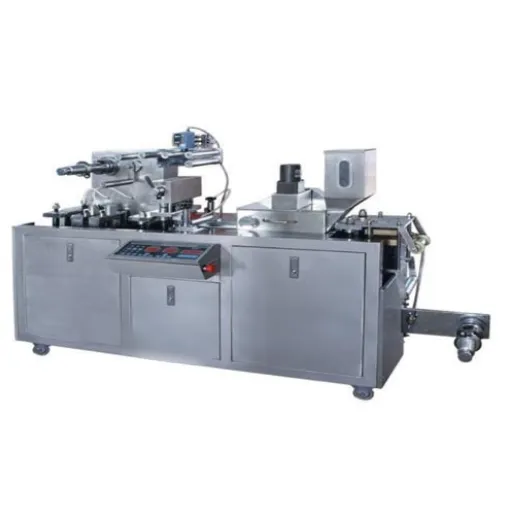
No sourcing decision is one-dimensional. The table below compares overseas and local manufacturers across factors that actually matter in daily operations.
| Factor | Overseas Manufacturer | Local Manufacturer |
|---|---|---|
| Upfront Equipment Cost | Typically 20–40% lower | Higher due to local labor and material costs |
| Customization Flexibility | High; specialized in niche applications | Often limited to standardized designs |
| Shipping and Lead Time | 30–90 days by sea plus customs | Faster; often weeks rather than months |
| Installation and Commissioning | Requires travel or remote coordination | Easier on-site presence; faster response |
| After-Sales Support Speed | Remote-first; regional hubs improve response | Immediate local service availability |
| Certification Range | Often CE-certified for global markets | Typically focused on local regulatory standards |
| Technology Access | Concentrated expertise in extrusion, snack, pasta | Broader but shallower technical portfolios |
| Scalability for SMEs | Flexible MOQs and modular designs | May prioritize large-volume contracts |
Where Overseas Manufacturers Win
Overseas food machinery manufacturers excel when you need specialized technology, customizable configurations, or cost structures that allow investment in complementary systems like packaging integration or quality control automation. A snack food machinery specialist with thousands of extrusion installations simply knows more about screw profiles, barrel heating zones, and die designs than a general fabricator. For producers focused on fried products, fried snack production lines offer integrated frying, de-oiling, and seasoning configurations designed for consistent output.
Where Local Manufacturers Win
Local suppliers dominate on immediacy. When a bearing fails on Friday afternoon, a local technician can be on-site Monday morning. That speed minimizes production losses. Local manufacturers also navigate regional regulatory requirements instinctively, which simplifies compliance for first-time producers.
How to Mitigate Overseas Risks
The risks of overseas sourcing are real but manageable. Use milestone-based payment terms: typically 30% deposit, 60% after factory acceptance testing, and 10% after successful commissioning. Insist on third-party pre-shipment inspection. Conduct video factory tours before finalizing contracts. Document service level agreements for installation, training, and warranty response times in the purchase order itself.
Red Flags: Warning Signs When Sourcing Overseas
Some signals are unambiguous when vetting an overseas food machinery manufacturer. If you encounter any of the following during evaluation, consider it a reason to pause or walk away entirely.
- No verifiable factory address or refusal of video audit. A manufacturer with nothing to hide welcomes transparency.
- Missing or forged certification documents. Authentic CE certificates include the notified body number, certificate number, and date of issue. You can verify these directly with the issuing body.
- Unrealistically low prices with vague specifications. If a quotation is 50% below comparable bids, the manufacturer is either cutting material quality, omitting critical components, or planning to add charges later.
- Pressure for 100% upfront payment. Professional manufacturers operate on milestone terms. Demanding full payment before production begins is a hallmark of fraudulent operations.
- No clear warranty terms or spare parts list. If the manufacturer cannot define what is covered and for how long, assume nothing is covered.
- Poorly translated manuals and no English-speaking technical contact. Communication quality during sales predicts communication quality during a breakdown.
- No references from clients in your region or industry. Every established manufacturer can provide references. Absence of references usually means absence of experience.
In 2019, Elena, a bakery owner in Warsaw, ignored the last red flag on this list. She chose an overseas supplier for a pasta production line based solely on a glossy brochure and a competitive price. The supplier had no pasta-specific references. When the line arrived, the extrusion die for gluten-free dough was incompatible with the motor torque rating. Elena spent six months and an additional €12,000 retrofitting the system. The original “savings” evaporated completely.
The lesson is not to avoid overseas sourcing. The lesson is to verify before committing.
Building a Long-Term Partnership with Your Overseas Manufacturer
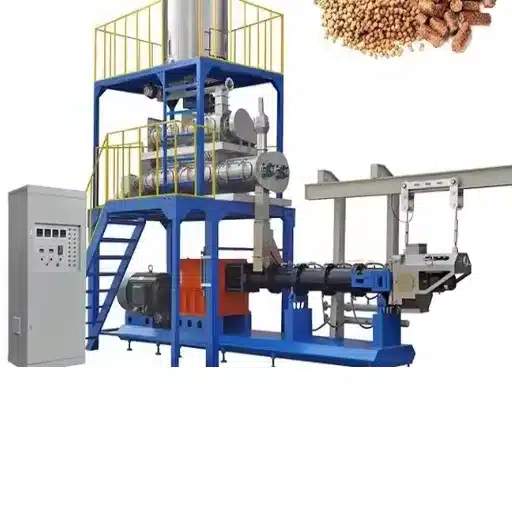
Food processing machinery is not a consumable. A well-maintained extrusion system, frying line, or packaging station from a trusted overseas food machinery manufacturer operates for 5–10+ years. The relationship you build with your manufacturer during year one determines your operational experience during years three through ten.
Manufacturers who view clients as long-term partners invest differently than those who view them as one-time transactions. They maintain detailed records of your equipment configuration, so spare parts orders are precise and fast. Whether you operate Kurkure production lines or corn puff systems, that traceability reduces downtime and simplifies expansion. They proactively share recipe optimization suggestions based on new installations in similar markets. They upgrade control software and notify you when improvements become available.
Carlos, a distributor in São Paulo, understood this from the start. In 2018, he partnered with an overseas manufacturer for a corn puff snack production line targeting the Brazilian market. Rather than treating the purchase as a finished transaction, Carlos scheduled quarterly video reviews with the manufacturer’s engineering team. Over seven years, that relationship produced three line expansions, two recipe modifications for local ingredient profiles, and a regional spare parts agreement that reduced his average downtime from eleven days to under three.
Carlos did not simply buy machinery. He built an engineering partnership.
That is the mindset we encourage at Shandong Loyal Industrial. With over 10 years of export expertise, CE-certified machinery shipped to more than 50 countries, and a team of 650+ engineers and production specialists, we design our process around long-term collaboration. From the first consultation, we ask about your production goals, your facility layout, and your growth plans. We do not sell equipment. We build production partnerships that scale.
Conclusion
The selection process for an overseas food machinery manufacturer needs no assessment because it presents no danger. The selection process becomes dangerous when an organization chooses a supplier without implementing an assessment system. The seven steps which this guide presents, verification, specialization, certifications, quality assurance, communication, shipping clarity, and after-sales support, establish a system which safeguards your financial assets and enables a successful business relationship.
The least expensive bid will not provide the minimum total ownership expenses. Actual production line costs arise from installation, commissioning, spare parts, training, and downtime. A manufacturer who provides clear information about their international operations proves to be a better business partner than a low-cost supplier who stops supporting customers after they receive products.
The global food processing machinery market provides exceptional business prospects to manufacturers who effectively manage their international supply chain operations. The same due diligence principles which safeguard your investment when you purchase food machinery from China will apply to your purchases from Europe and Southeast Asia. Your overseas food machinery manufacturer needs to establish itself as your engineering team extension through verification and milestone-based safeguards and partnership development.
Ready to explore how a global partnership can support your production goals? Contact Shandong Loyal Industrial today for a consultation on turnkey food production lines, 2D and 3D snack pellet process lines, protein bar production systems, or customized extrusion solutions tailored to your market.
Shandong Loyal Industrial Co., Ltd. has delivered CE-certified food processing machinery to clients in over 50 countries. Our turnkey production lines cover snack extrusion, pasta and macaroni forming, protein bar manufacturing, bread crumb processing, and biscuit production. Tell us your production goals, and we will design a solution tailored to your needs.