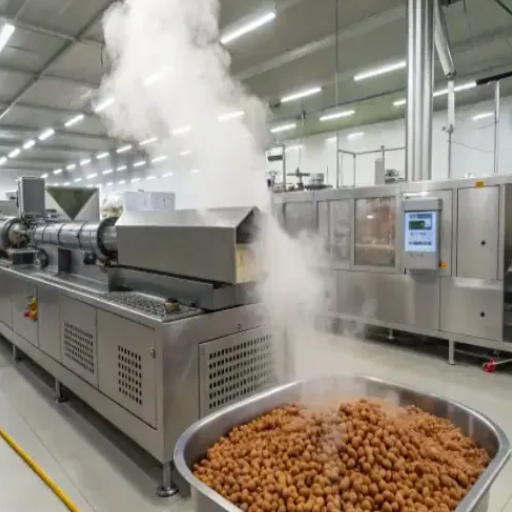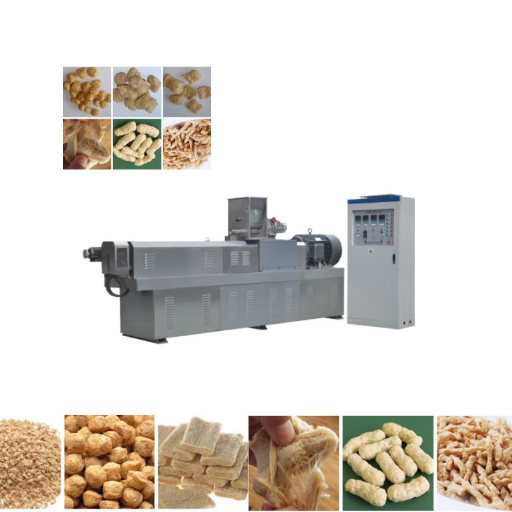
An oil drilling starch production line converts native starch into pregelatinized or modified starch that controls fluid loss and viscosity in water-based drilling fluids. The most common setup uses a twin-screw extruder to cook starch under heat, pressure, and shear, followed by drying, grinding, and packaging. Capacities typically range from 100 kg/h pilot systems to 1,500+ kg/h industrial lines, with prices from around 15,000to15,000to150,000+ depending on automation and output.
That short answer saves you from wading through 20 supplier catalogs. But buying the wrong oil drilling starch production line can cost far more than the invoice price.
Mini-story: In 2023, a drilling-chemical startup in the Middle East bought a generic modified-starch extruder based on capacity alone. The line produced starch that looked fine in the lab but failed the API 13A filtration test in 10% NaCl brine. Six months and one lost contract later, they retrofitted the extruder with a longer barrel, added a precision dryer, and reformulated the feed moisture. The upgrade cost 40% more than the original machine. Their mistake was not the budget, it was treating oil drilling starch like ordinary food starch.
This guide explains how a drilling starch production line works, what equipment you actually need, and how to choose a configuration that meets oilfield quality standards.
Key Takeaways
- Oil drilling starch is usually pregelatinized or modified starch that acts as a fluid-loss control agent and viscosifier in water-based drilling muds.
- A complete production line includes mixing, twin-screw extrusion, drying, grinding, screening, and packaging, plus dust collection and PLC control.
- Capacities range from 100 kg/h to 1,500+ kg/h; typical investment starts around 15,000forpilotlinesandexceeds15,000forpilotlinesandexceeds150,000 for industrial systems.
- API 13A and OCMA filtration tests are the benchmarks buyers use to verify drilling starch performance.
- Raw material choice (corn, cassava, potato, wheat) and extrusion parameters directly affect viscosity, brine stability, and filter-cake quality.
What Is Oil Drilling Starch?

Oil drilling starch, including modified starch for oil drilling, is a natural or modified polysaccharide added to water-based drilling fluids. It is usually made from corn, cassava, potato, or wheat starch. The starch hydrates in the drilling mud, swells, and forms a thin, low-permeability filter cake on the borehole wall. That cake limits fluid loss into porous formations, stabilizes the wellbore, and helps transport rock cuttings to the surface.
The most common form used today is pregelatinized starch for oil drilling, sometimes called pregel starch. Because it is already cooked during extrusion, it dissolves quickly in cold or saline water. That instant solubility matters on a drilling rig where mixing time and tank space are limited.
How Drilling Starch Works in Water-Based Muds
Drilling mud has several jobs: cool the bit, suspend cuttings, maintain wellbore pressure, and prevent formation damage. Starch helps with the last three.
When starch granules hydrate, they absorb free water and create a polymer network. This network:
- Reduces filtrate invasion by plugging micro-pores and fractures.
- Builds viscosity so cuttings stay suspended when pumping stops.
- Lubricates the drill string and reduces friction against the borehole wall.
- Forms a thin, removable filter cake that improves casing and cementing later.
Typical dosage ranges from 2–6 lb/bbl (about 5.7–17.1 kg/m³) depending on mud weight, salinity, and downhole temperature.
Common Grades: HV, LV, HT, and Pregelatinized Starch
Not all drilling starch is the same. Oilfield buyers specify grades based on viscosity build and thermal tolerance.
| Grade | Full Name | Main Function | Typical Use Case |
|---|---|---|---|
| HV | High Viscosity | Strong thickening and suspension | Fresh-water muds, viscosity building |
| LV | Low Viscosity | Fluid-loss control with minimal viscosity increase | High-solids or weighted muds |
| HT | High Temperature | Thermal stability above 250°F (121°C) | HPHT wells, deep drilling |
| Pregelatinized | Cold-water soluble | Instant solubility, fast mixing | Field mud plants, remote locations |
| CMS | Carboxymethyl Starch | Strong filtration control in fresh and salt water | Brine-based drilling fluids |
Data adapted from Basekim drilling starch grades overview.
Why Pregelatinized Starch Dominates the Market
Native starch must be heated in water to gelatinize. On a rig, that takes time, energy, and tank capacity. Pregelatinized starch removes that step because the extrusion line has already cooked and dried it. Field crews can add the powder directly to the active mud system and see viscosity develop in minutes.
Pregelatinized starch is also easier to store, ship, and dose. That convenience is why most new oil drilling starch production lines are configured for pregelatinization rather than simply drying native starch.
Oil Drilling Starch Production Process
The production process for an oil drilling starch production line follows the same sequence as most extruded, pregelatinized starches. The difference lies in the target specifications. For drilling applications, you need controlled cold-water solubility, consistent viscosity, and brine-stable filtration performance.
A standard extrusion-based process has seven steps.
1. Raw Material Selection
The starting starch can be corn, cassava, tapioca, potato, or wheat. Each raw material behaves differently.
- Corn starch: Low cost, widely available, consistent quality. Good for general-purpose pregelatinized starch.
- Cassava/tapioca starch: High purity, neutral taste, strong film-forming ability. Popular in tropical markets where cassava is local.
- Potato starch: Higher viscosity and stronger swelling power. Often used when high water-holding capacity is needed.
- Wheat starch: Regional option; lower swelling than potato but economical where wheat is abundant.
For most drilling-fluid applications, corn or cassava starch offers the best balance of cost and performance.
2. Mixing and Preconditioning
Native starch is blended with water and any additives in a batch or continuous mixer. Feed moisture is typically 15–30% depending on the extruder design and target degree of gelatinization. Accurate moisture control matters because it affects expansion, solubility, and final viscosity.
Some producers add salts or pH buffers at this stage to improve brine compatibility. Others keep the formula simple and rely on extrusion conditions to develop the right functional properties.
3. Twin-Screw Extrusion / Pregelatinization
This is the core step. The conditioned starch enters a co-rotating twin-screw extruder where barrel temperatures reach 120–200°C and pressure can exceed 5–10 MPa. High shear and residence time of 20–90 seconds gelatinize the starch granules and disrupt their crystalline structure.
Screw configuration controls the result:
- Conveying elements move material forward.
- Kneading blocks generate shear and mixing.
- Reverse elements increase residence time and pressure.
For drilling starch, the goal is usually high gelatinization with moderate viscosity, not the sticky, high-viscosity paste used in food sauces.
4. Drying and Cooling
The extrudate leaves the die as a expanded rope or flake. It still contains too much moisture for storage. A multi-layer belt dryer or fluid-bed dryer reduces moisture to 8–14%, depending on the target specification and local climate.
After drying, the product is cooled to ambient temperature. Cooling prevents clumping during grinding and packaging.
5. Grinding and Screening
The dried extrudate is milled to a target particle size, commonly 60–120 mesh. A hammer mill, pin mill, or ultrafine pulverizer does the work. A vibrating screener separates oversize particles, which are recycled back to the grinder.
For drilling starch, particle size distribution affects solubility speed and filter-cake quality. Too coarse, and it hydrates slowly; too fine, and it creates dust handling problems.
6. Packaging
The finished powder is weighed and packed in 25 kg bags, big bags, or custom containers. An automated packaging line reduces labor and exposure to airborne starch.
7. Quality Control
Every batch should be tested for:
- Water Absorption Index (WAI)
- Water Solubility Index (WSI)
- Viscosity in fresh and saline water
- Filtration volume (API/OCMA test)
- Moisture content
- Particle size distribution
These tests tie production parameters to oilfield performance.
Key Equipment in an Oil Drilling Starch Production Line

A complete oil drilling starch production line is more than an extruder. Each unit must be sized for the target capacity and coordinated with the others. The right combination of drilling starch production equipment determines both output and product quality.
Mixer and Screw Conveyor
The mixer blends starch and water to a uniform moisture content. Continuous mixers with variable-speed feeders give better consistency than batch mixers for high-capacity lines. A screw conveyor transfers the conditioned starch to the extruder hopper at a steady rate.
Twin-Screw Extruder (Core Unit)
The extruder is the heart of the line and the core oil drilling starch machine. Look for:
- Independently heated and cooled barrel zones.
- Modular screw and barrel design.
- Variable screw speed (typically 200–600 rpm).
- Robust gearbox rated for high torque.
- Food-grade or industrial-grade SUS304/316 contact surfaces.
For oil drilling starch, screw design is often more important than maximum throughput. The right screw profile produces the shear history needed for brine-stable pregelatinization.
Dryer and Cooling System
Most lines use a multi-layer belt dryer heated by electricity, gas, oil, or steam. Dryer length, air temperature, and residence time must match extruder output. A short or underpowered dryer becomes the bottleneck of the whole line.
A cooling conveyor or fluid-bed cooler brings the dried product to ambient temperature before grinding.
Grinder, Screener, and Packaging Machine
The grinding system determines final powder fineness. Common choices:
- Hammer mill: economical, good for coarse to medium grinding.
- Pin mill: finer particle size, lower heat generation.
- Ultrafine pulverizer: very fine powders, higher energy use.
A vibrating screener ensures uniform particle size. Oversize material returns to the grinder. An automatic packaging machine completes the line.
PLC Control and Dust Collection
A centralized PLC system monitors temperature, screw speed, feed rate, dryer settings, and alarms. Recipe memory lets operators switch between HV, LV, and HT grades without re-entering parameters.
Starch dust is combustible. A dust collection system with explosion vents or suppression is essential for safety and yield recovery.
Technical Specifications and Capacity Tiers
Buyers usually group an oil drilling starch production line by extruder model and output. Below is a representative range based on common extrusion-based systems.
| Model Tier | Capacity | Installed Power | Footprint (approx.) | Best For |
|---|---|---|---|---|
| Pilot / small | 100–150 kg/h | 74–88 kW | 15–25 m × 1.3–2.0 m | R&D, small commercial trials |
| Medium | 200–500 kg/h | 95–140 kW | 20–30 m × 1.5–2.5 m | Regional suppliers, startups |
| Large | 500–1,000 kg/h | 150–245 kW | 30–50 m × 2.0–3.5 m | Industrial producers |
| Heavy industrial | 1,000–1,500+ kg/h | 200–300+ kW | 45–60 m × 2.5–5.5 m | Large-scale commodity production |
Data compiled from Loyal Food Machine pregelatinized starch line specifications and industry supplier listings.
Power, Footprint, and Labor Requirements
Small lines may run with 2–3 operators per shift. Large industrial systems need 4–6 operators plus maintenance staff. Utility requirements include electricity, compressed air, and water. Heating source selection (electric, gas, steam) affects both operating cost and product quality.
Quality Control Metrics
| Metric | Why It Matters | Typical Target |
|---|---|---|
| WAI | Water absorption capacity | 4–8 g/g |
| WSI | Cold-water solubility | 60–95% |
| Viscosity | Mud rheology control | Grade-dependent |
| Filtrate volume | Fluid-loss performance | ≤10 mL (API test) |
| Moisture | Storage stability | 8–14% |
| Mesh size | Hydration rate, dust | 60–120 mesh |
Oil Drilling Starch Quality Standards
Buyers judge the output of an oil drilling starch production line by how it performs in standardized tests, not by appearance. Two standards dominate the market.
API 13A and OCMA Filtration Requirements
API 13A is the American Petroleum Institute specification for drilling-fluid materials. For drilling starch, the key test measures filtrate volume after hot rolling a starch sample in standard brine. A typical API target is ≤10 mL of filtrate under specified conditions.
OCMA (Oil Companies Materials Association) sets similar filtration-control standards widely used outside North America. Many buyers accept OCMA-grade starch for non-critical applications.
You can read more about API starch specifications at GDFCL Drilling Starch API 13A.
Brine Solubility and Temperature Resistance
A starch that dissolves well in fresh water may fail in salt water. Drilling starch must hydrate in brines containing NaCl, KCl, CaCl₂, or MgCl₂. High-temperature grades must resist thermal degradation above 250–350°F (121–177°C) in HPHT wells.
Extrusion conditions, raw material choice, and optional chemical modification all influence these properties.
HV vs LV Grades for Different Well Conditions
- HV starch: Builds viscosity quickly. Best for fresh-water muds where suspension and cuttings transport are priorities.
- LV starch: Adds fluid-loss control without excessive viscosity. Preferred in weighted or high-solids muds where rheology must stay within narrow limits.
- HT starch: Chemically stabilized for thermal resistance. Necessary for deep wells, geothermal drilling, or high-temperature sections.
How Much Does an Oil Drilling Starch Production Line Cost?
Price depends on capacity, automation, materials, heating source, and supplier location. An oil drilling modified starch production line that includes chemical modification reactors or specialty dosing systems will cost more than a standard pregelatinized line.
Price Ranges by Capacity
| Capacity Range | Typical Price Range (USD) | Notes |
|---|---|---|
| 100–150 kg/h | 15,000–15,000–35,000 | Pilot or small commercial lines |
| 200–500 kg/h | 30,000–30,000–80,000 | Most common entry-level industrial range |
| 500–1,000 kg/h | 80,000–80,000–150,000 | Higher automation, larger dryers |
| 1,000+ kg/h | $150,000+ | Turnkey plants with full controls |
Prices are estimates based on Made-in-China and Alibaba supplier listings; actual quotes vary by configuration.
Factors That Affect Total Investment
- Extruder size and screw design: Larger extruders cost more, but custom screw profiles can add cost even on smaller units.
- Dryer type and length: Longer belt dryers or fluid-bed dryers increase capital cost but improve consistency.
- Grinding fineness: Ultrafine pulverizers cost more than hammer mills.
- Automation level: PLC control, recipe memory, and remote monitoring add upfront cost but reduce labor.
- Certifications: CE, ISO 9001, SGS, or BV inspections may affect pricing.
- Shipping and installation: International projects should budget for freight, customs, foundation work, and commissioning.
ROI and Operating Cost Considerations
A 300–500 kg/h line running 20 shifts per month can produce 60–100 tonnes of drilling starch. At a typical commodity selling price of 600–600–1,200 per tonne depending on grade and region, monthly revenue can reach 36,000–36,000–120,000. Gross margins depend heavily on raw material cost, energy price, and labor efficiency.
Utilities are the largest operating cost after raw materials. Extrusion and drying together can consume 60–80% of total line power. Choosing an efficient dryer and optimizing extrusion moisture can significantly reduce cost per kilogram. Want a precise ROI estimate for your scale? Request a tailored oil drilling starch production line quote.
Choosing the Right Oil Drilling Starch Production Line Supplier

Mini-story: Ramesh, a plant manager in India, evaluated five suppliers for a 500 kg/h line. Two offered the lowest price but could not explain how screw configuration affects WSI. One supplier asked detailed questions about his target API filtrate volume, local starch source, and brine chemistry before proposing a screw layout. That supplier also provided formula support and spare-part pricing upfront. Ramesh paid 12% more initially but avoided the trial-and-error costs that often add 25–30% to a project budget.
Price should not be the only selection criterion. For oil drilling starch, supplier expertise directly affects product quality. The best supplier for your oil drilling starch production line will ask about your target grade, raw material, and brine chemistry before quoting.
Screw Design and Formula Support
Ask whether the supplier has experience with oil drilling starch specifically. A supplier who understands the application can recommend screw elements, barrel temperature profiles, and feed moisture levels that produce the right WSI and viscosity.
Formula support matters if you plan to produce HV, LV, and HT grades from the same line. The supplier should help you develop recipes and provide test reports from similar projects.
After-Sales Service and Spare Parts
Extruder screws, barrels, and dies wear over time. Confirm:
- Spare parts availability and lead times.
- Whether the supplier offers on-site installation and training.
- Remote troubleshooting capability.
- Warranty terms for mechanical and electrical components.
Certifications and Export Experience
For global buyers, CE certification, ISO 9001, and SGS/BV inspection reports reduce import risk. Ask for references in your target market, especially buyers who have successfully produced API/OCMA-compliant starch.
At Shandong Loyal Industrial Co., Ltd., we provide CE-certified extrusion systems with customizable screw configurations, PLC recipe control, and full factory layout design. Our team works with you from raw material testing through commissioning so the line produces starch that meets your customers’ oilfield specifications. Contact us for a tailored quote and process review.
Common Mistakes to Avoid
Ignoring End-Application Quality Requirements
A line configured for food-grade pregelatinized starch may not produce API-compliant drilling starch. The extrusion intensity, dryer temperature, and grinding fineness all affect filtration performance. Define your target API/OCMA tests before buying an oil drilling starch production line.
Undersizing Dryer or Grinding Capacity
Buyers often size the extruder correctly but underestimate the dryer. If the dryer cannot remove moisture fast enough, the line runs below rated capacity or produces off-spec product. Similarly, a grinder matched to food starch may not reach the fineness needed for drilling applications.
Overlooking Dust Explosion Safety
Starch dust is explosive in certain concentrations. A proper dust collection system, grounding, and explosion protection are not optional. They protect workers, equipment, and product quality.
Frequently Asked Questions
What is an oil drilling starch production line?
An oil drilling starch production line is a set of connected machines that converts native starch into pregelatinized or modified starch for use in water-based drilling fluids. A typical line includes mixing, extrusion, drying, grinding, screening, and packaging equipment.
What is the difference between pregelatinized starch for oil drilling and modified starch for oil drilling?
Pregelatinized starch for oil drilling is physically cooked by extrusion so it dissolves quickly in cold or saline water. Modified starch for oil drilling may also be chemically treated, for example, carboxymethyl starch or cross-linked starch, to improve thermal stability, brine tolerance, or filtration control.
How much does an oil drilling starch machine cost?
A small oil drilling starch machine or pilot line starts around 15,000.Mid−sizelinesrangefrom15,000.Mid−sizelinesrangefrom30,000 to 80,000,whileindustrialsystemscanexceed80,000,whileindustrialsystemscanexceed150,000 depending on capacity, automation, and certifications.
What equipment is included in drilling starch production equipment?
Standard drilling starch production equipment includes a mixer, screw conveyor, twin-screw extruder, dryer, cooling conveyor, grinder, vibrating screener, packaging machine, PLC control system, and dust collection.
What is the capacity of an oil drilling modified starch production line?
Capacities range from 100–150 kg/h pilot lines to 1,000–1,500+ kg/h industrial systems. The right size depends on your target market, available raw material, and capital budget.
How do you test API 13A compliance?
API 13A compliance is tested by hot-rolling a starch sample in standard brine and measuring the filtrate volume. A typical target is ≤10 mL of filtrate under specified test conditions.
Why is twin-screw extrusion better than batch cooking for drilling starch?
Twin-screw extrusion cooks starch continuously in 20–90 seconds under controlled heat, pressure, and shear. This gives consistent gelatinization and solubility. Batch cooking is slower and harder to scale for commercial production.
Conclusion
The oil drilling starch market is growing as operators look for biodegradable, cost-effective fluid-loss control additives. But producing starch that performs in the field requires more than a standard extruder. You need the right raw material, screw configuration, drying capacity, and quality control to meet API 13A or OCMA standards.
A well-designed oil drilling starch production line gives you control over viscosity, solubility, and filtration performance. It lets you serve drilling contractors and mud companies with a product that replaces synthetic polymers in many applications.
If you are planning a new line or upgrading an existing one, start with your end specification. Then choose equipment that is proven for oil drilling starch, not just modified starch in general. With over 10 years of extrusion and starch processing experience, Shandong Loyal Industrial Co., Ltd. designs turnkey production lines configured for corn, cassava, potato, or wheat starch. Contact our team today for a customized process review, layout proposal, and competitive quote.