Soy protein meat applications fall into four main categories: processed meat extenders and binders, plant-based ground and formed products, high-moisture whole-cut analogs, and hybrid meat-plant blends. The right format—soy protein isolate, concentrate, flour, or textured soy protein—depends on texture, moisture, yield target, and production equipment.
What if choosing the wrong protein format cost you 15% in yield before your product left the factory? That is exactly what happened to a European sausage producer in 2024. They switched from soy protein concentrate to a lower-cost flour to save money. Emulsion stability collapsed and cooking losses spiked. Six months later, they moved back to concentrate and added a twin-screw extrusion line to control texture in-house. Their yield recovered, and they gained the flexibility to enter the plant-based segment.
This guide shows how food manufacturers match soy protein formats to end products. You will also learn what equipment turns each choice into scalable production.
Key Takeaways
- Soy protein isolate works best in emulsified meats like sausages and frankfurters because it binds up to 5 parts water and stabilizes fat.
- Soy protein concentrate is the workhorse for burgers, meatballs, and poultry-style products where balance of cost, texture, and moisture matters.
- Textured soy protein (TVP/TSP) provides chew and bulk for crumbles, nuggets, and meat extenders.
- High-moisture meat analogs (HMMA) from twin-screw extrusion create whole-cut steaks, fillets, and strips.
- Hybrid meat-plant products use soy protein to cut cost and environmental impact while keeping familiar taste.
- CE-certified turnkey lines from mixing through packaging make it practical to switch or scale formats.
What Is Soy Protein and Why Is It Used in Meat Products?

Soy protein comes from defatted soybean meal. It is processed into four main formats: flour, concentrate, isolate, and textured products. Each format has a different protein level and functional profile. That profile determines where it performs best in meat and meat-analog applications.
Soy flour contains roughly 50–54% protein and works as a low-cost extender. Soy protein concentrate (SPC) reaches 65–70% protein and is valued for water binding and fat emulsification. Soy protein isolate (SPI) contains 90% or more protein and delivers the strongest gelation and emulsion stability. Textured soy protein is made by extruding defatted soy flour or concentrate. It gives a fibrous, meat-like chew.
The reason manufacturers use these ingredients is simple. Soy protein improves water holding, binds fat, increases yield, and adds protein at a lower cost than meat alone. According to the Agriculture Institute, soy protein concentrate binds approximately 4 parts water. Isolate can bind up to 5 parts water. That binding power reduces cooking loss and improves juiciness in processed meats.
From a nutrition standpoint, soy is one of the few complete plant proteins. It contains all nine essential amino acids. That makes it attractive for both traditional meat processors and plant-based brands. It also carries a smaller environmental footprint than animal protein. Soy protein concentrate production uses roughly 90% less water than beef protein and has a 75% lower carbon footprint.
Soy Protein in Processed Meat Products
Before plant-based burgers became mainstream, soy protein was already a staple in processed meats. It functions as a binder, extender, emulsifier, and yield improver.
Emulsified Meats: Sausages, Frankfurters, and Bologna
Emulsified meats rely on a stable suspension of fat droplets in water and protein. Soy protein isolate is ideal here. Its high solubility and strong emulsifying capacity coat fat droplets and prevent separation during cooking. A common industry emulsion uses a soy protein : water : fat ratio of 1:5:5.
Soy protein concentrate also works well in finely comminuted sausages. It fits where cost is tighter and slightly lower binding strength is acceptable. The result is a firm, sliceable product with less fat leakage.
Ground and Restructured Meats: Burgers, Meatballs, and Meatloaf
For ground-meat applications, soy protein concentrate and textured soy protein are the most common choices. Concentrate improves moisture retention and bite. Textured protein adds chew and visual texture that mimics lean meat particles. These formats help processors manage raw-material costs without losing the eating experience consumers expect.
In restructured products such as formed nuggets, steaks, or deli slices, soy protein acts as an adhesive. It binds meat pieces together and improves sliceability. It also reduces breakage during cooking and handling.
Poultry and Seafood Analogs: Nuggets, Patties, and Surimi-Style Products
Soy protein appears in formed poultry nuggets and fish-stick-style products as both a binder and protein booster. When hydrated and mixed with seasonings and breading, textured soy protein creates a consistent bite. It holds up to frying or baking. In surimi-style applications, soy protein improves gel strength and water retention.
Soy Protein in Plant-Based Meat Analogs
The fastest-growing use of soy protein is in plant-based meat. Here, soy is not an additive. It is the main structural ingredient.
Crumbles, Mince, and Ground-Meat Replacements
Textured vegetable protein (TVP) or textured soy protein (TSP) is the go-to choice for plant-based crumbles, taco fillings, and Bolognese-style sauces. After rehydration, TVP absorbs flavors and spices while keeping a chewy texture. It is shelf-stable, easy to store, and inexpensive. Those reasons make it popular in foodservice vegetarian options.
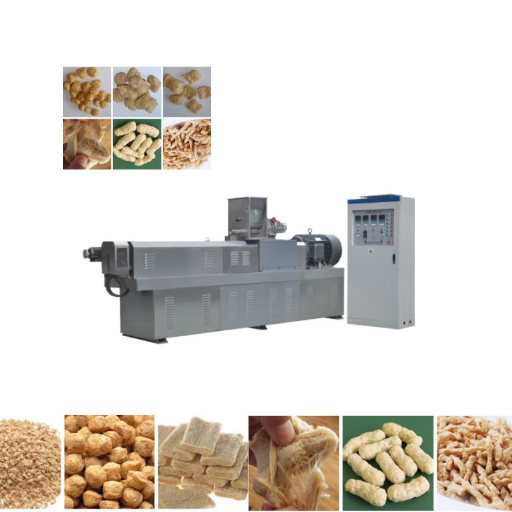
These products are typically made on low-moisture extrusion lines. The extruder cooks and texturizes defatted soy flour or concentrate. It then forms granules, chunks, or flakes that are dried and packaged. Manufacturers can later rehydrate them at ratios from 1:2 to 1:3 with water or broth.
Burgers and Patties
Plant-based burgers often use a blend of soy protein concentrate, isolate, and textured pieces. Impossible Burger, for example, uses soy protein concentrate combined with soy leghemoglobin to replicate the color and flavor of beef. BOCA Original Vegan Veggie Burgers rely on non-GMO soy and deliver 14 g of protein per patty.
For manufacturers, the challenge is balancing bite, juiciness, and cook stability. The right combination of protein format, fat source, and binders determines whether the patty holds together on a grill or falls apart in a pan. Twin-screw extrusion systems allow precise control over texture by adjusting moisture, temperature, and shear.
Sausages and Links
Plant-based sausages use textured soy protein as a base, supported by concentrated proteins and binding systems such as methylcellulose or starch. These products must replicate the snap, chew, and fat release of traditional sausages. Extrusion gives processors the ability to align proteins and create the desired fibrous structure before stuffing and cooking.
Nuggets and Bites
Textured soy protein nuggets are rehydrated, seasoned, formed, and coated. They are then fried, baked, or air-fried for foodservice or retail. Delight Soy Soy Nuggets are one example of a simple, clean-label product made from non-GMO soybean proteins. Production lines for these items need mixing, forming, battering, breading, and frying or baking modules.
High-Moisture Meat Analogs and Whole-Cut Applications
Not every plant-based product can be built from crumbles or patties. Whole-cut steaks, chicken breasts, and fish fillets need a different approach: high-moisture extrusion (HME), also called high-moisture meat analog (HMMA) production.
How High-Moisture Extrusion Works
HME runs at 40–70% moisture inside a co-rotating twin-screw extruder. The protein mixture is heated, sheared, and hydrated. Then it is pushed through a long cooling die. The cooling die prevents water from flashing to steam. This preserves a dense, layered, fibrous structure that mimics whole muscle.
Soy protein isolate is the most common base for HMMA. Its high protein content helps form strong fibers. Concentrates and defatted flours can be blended in to adjust cost and texture. Vital wheat gluten is often added for elasticity.
Whole-Cut Products: Steaks, Fillets, Strips, and Chunks
The long cooling die creates a layered structure resembling muscle tissue. Manufacturers tune screw speed, temperature, moisture, and die design to match the texture of chicken, beef, pork, or lamb. The output is then sliced, marinated, seasoned, and packaged as ready-to-cook steaks, stir-fry strips, or chunks for prepared meals.
Industrial HMMA lines range from lab-scale units of roughly 10 kg/h to large production systems of 500–650 kg/h. Key equipment includes the twin-screw extruder, water-cooled long slit die, heating and cooling barrel zones, and downstream cutting and packaging equipment.
Hybrid Meats: Blending Soy Protein with Animal Meat

Between 100% animal meat and 100% plant-based lies a fast-growing middle category: hybrid meat-plant products. These items replace part of the meat with soy protein to reduce cost, improve sustainability, and appeal to flexitarian consumers.
Cost Reduction and Sustainability Benefits
Hybrid burgers, sausages, and meatballs can cut raw-material costs while maintaining the taste and nutrition consumers expect. Because soy protein concentrate has a much lower environmental footprint than beef, brands can also market improved sustainability. This appeals to the large group of consumers who want to reduce meat intake without giving it up entirely.
Common Hybrid Products
The most common hybrid applications are ground-meat products where texture is forgiving. Burgers with 20–30% plant protein, sausages with soy extender, and meatballs with textured soy are already on shelves in several markets. These products process on conventional meat equipment with minor adjustments. That makes them attractive to traditional processors looking to diversify.
Formulation and Labeling Considerations
Formulators must balance meat-to-soy ratios carefully. Too much soy can create a beany flavor or rubbery bite. Too little fails to deliver cost or sustainability benefits. Labeling also varies by region. Some markets require clear disclosure of plant-protein content and allergen warnings for soy and wheat.
Choosing the Right Soy Protein Format for Your Product Line
Selecting a soy protein format is not just a recipe decision. It is a production decision. The format you choose affects mixing time, equipment type, throughput, yield, and final texture.
Product Goal → Protein Format → Equipment Pathway
| Product Goal | Recommended Soy Protein Format | Production Equipment |
|---|---|---|
| Emulsified sausages, frankfurters | Soy protein isolate | High-shear mixer, stuffer, cooker/smoker |
| Burgers, meatballs, meatloaf | Soy protein concentrate, textured soy protein | Mixer, former, cooker/freezer |
| Plant-based crumbles, taco fillings | Textured soy protein (TVP/TSP) | Low-moisture twin-screw extruder, dryer, cooler |
| Plant-based burgers, nuggets | Concentrate + textured pieces | Mixer, former, coating/frying line |
| Whole-cut steaks, fillets, strips | Soy protein isolate + wheat gluten | High-moisture twin-screw extruder with cooling die |
| Hybrid meat-plant products | Concentrate or textured soy protein | Conventional meat processing equipment |
Texture, Moisture, Yield, and Cost Trade-Offs
Soy protein isolate delivers the best functional performance but at the highest cost. Concentrate offers a middle ground. Textured soy protein is the most economical for bulk and chew but needs hydration and seasoning. Flour is the cheapest option but can introduce flavor and texture challenges at higher inclusion rates.
Yield is another critical factor. Because isolate and concentrate bind more water and fat, they reduce cooking loss and increase saleable output. Over a production run, that yield advantage can offset a higher ingredient price.
When to Use Low-Moisture TVP vs. High-Moisture HMMA
Choose low-moisture TVP when you need a shelf-stable ingredient that can be rehydrated later, when products are ground or formed, or when capital budgets favor simpler drying and packaging lines. Choose HMMA when the target product is a whole-cut analog with visible fibers and a juicy, meat-like bite.
Production Equipment for Soy Protein Meat Applications
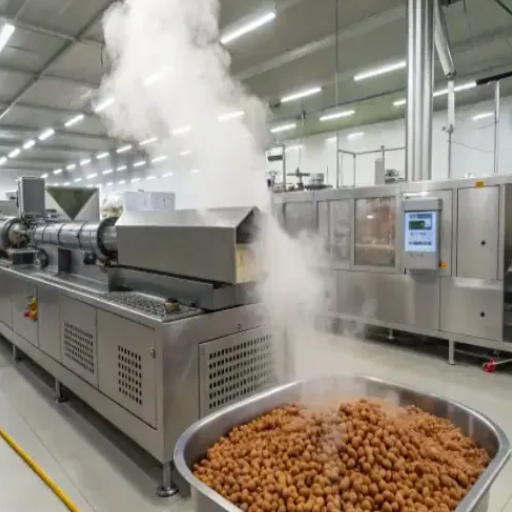
Turning soy protein into a finished meat or meat-analog product requires more than a single machine. A complete line includes mixing, extrusion or forming, cooking, drying or cooling, and packaging.
Mixing and Preconditioning
Uniform hydration is critical. Dry soy proteins must be mixed with water, oils, flavors, colors, and binders before extrusion or forming. Preconditioners heat and hydrate the blend. This improves texture and reduces extruder wear.
Twin-Screw Extrusion Systems for TVP/TSP
Low-moisture extrusion lines cook and texturize defatted soy flour or concentrate under heat and shear. The extruder forms the product into granules, chunks, flakes, or strips, which are then dried and cooled. These systems are the backbone of textured soy protein production.
High-Moisture Extrusion Lines with Cooling Dies
HMMA lines use co-rotating twin-screw extruders with long cooling dies to preserve fibrous structure. Barrel temperatures can reach 60–180°C or higher, depending on capacity and formulation. The cooling die is the defining component. It transforms the molten protein into layered, whole-muscle-like sheets.
Drying, Cooling, Cutting, and Packaging
After extrusion, low-moisture TVP is dried to extend shelf life, then cooled and cut to size. HMMA products skip drying and move directly to seasoning, forming, and packaging in modified atmosphere to maintain freshness. Downstream equipment must match the product format: slicers for steaks, dicers for chunks, or formers for patties.
CE-Certified Turnkey Line Advantages
A turnkey production line integrates every stage from raw material intake to packaged product. For manufacturers, this means one supplier, one commissioning process, and consistent support. Shandong Loyal designs CE-certified lines tailored to the product—whether that is TVP crumbles, plant-based sausages, or high-moisture whole cuts.
Want to see how a soy protein line fits your factory? Explore our food production lines or contact our engineers for a customized layout.
Quality, Safety, and Regulatory Considerations

Soy is a major allergen in most markets, so clear labeling is non-negotiable. Products containing soy protein must declare it on ingredient panels. Facilities must also manage allergen cross-contact through validated cleaning procedures.
Regulatory limits on soy protein inclusion vary by product and region. In the United States, for example, raw sausage formulations may limit binders and extenders to 3.5% of batch weight. Processors should verify local rules before launching or reformulating a product.
Food safety systems such as HACCP should cover every step. That includes supplier approval for raw materials, metal detection, temperature control during extrusion and cooling, and environmental monitoring for allergens. A well-designed line supports these controls rather than working against them.
FAQ
What is the difference between TVP and textured soy protein?
TVP, or textured vegetable protein, is a general term for textured plant proteins. Textured soy protein (TSP) specifically refers to textured protein made from soy. In practice, the terms are often used interchangeably because soy is the most common source.
How much soy protein can replace meat in a product?
In processed meats, soy protein can replace 10–30% of meat depending on the product and regulations. In plant-based analogs, soy protein is often the primary structural ingredient. Hybrid products typically use 20–30% plant protein.
What equipment is needed for high-moisture meat analogs?
HMMA production requires a co-rotating twin-screw extruder with a long cooling die, precise heating and cooling barrel zones, and downstream cutting or forming equipment. Capacities range from lab-scale to 500+ kg/h.
Is soy protein suitable for whole-cut meat analogs?
Yes. Soy protein isolate is widely used for whole-cut analogs because it forms strong, fibrous structures under high-moisture extrusion. Blends with wheat gluten or other proteins can fine-tune texture.
Conclusion
Soy protein meat applications now span traditional processed meats, plant-based analogs, whole-cut alternatives, and hybrid products. The key to success is matching the right soy protein format to the right product. Then you must equip your line to deliver consistent texture, yield, and quality at scale.
Soy protein isolate leads in emulsified and whole-cut applications. Concentrate balances cost and function for burgers and sausages. Textured soy protein provides chew and bulk for crumbles, nuggets, and extenders. High-moisture extrusion opens the door to whole-cut steaks and fillets that rival animal muscle.
For manufacturers, the real advantage comes from a production line that can adapt as markets shift. Whether you are adding soy to processed meats, launching a plant-based brand, or scaling HMMA output, the right equipment turns ingredient choice into commercial success.
Ready to configure a soy protein production line for your product goals? Contact Shandong Loyal for a consultation, or learn more about our soy protein meat production solutions today.