Plant based meat extrusion troubleshooting comes down to controlling five interlinked variables: moisture content, barrel and die temperature, screw speed, feed rate consistency, and die design. When one of these drifts, you see the same symptoms on the production floor, rubbery texture, weak fibers, off-flavors, surging throughput, or a motor pulling too much torque. Fix the parameter, and you usually fix the product.
Last quarter, a production manager named Elena watched her new pea-protein pulled-pork analogue fall apart in the cooling die. The line had run soy successfully for months. Her team chased the protein blend for two days before they discovered the water injection valve was partially clogged. Moisture was running 8% below target. Once the valve was cleaned and the flow meter recalibrated, the fibrous structure returned within three passes. Her story is not unusual. Most extrusion defects look like formulation problems but originate in process control.
In this guide, you will learn how to diagnose the most common plant based meat extrusion troubleshooting scenarios, adjust the right parameters, and prevent defects through maintenance and equipment selection. Whether you run high-moisture extrusion for whole cuts or low-moisture extrusion for textured vegetable protein, the framework here will help you move from reactive fixes to stable output.
Key Takeaways
- Most plant-based meat extrusion defects stem from five variables: moisture, temperature, screw speed, feed rate, and die design.
- Weak fibrous structure usually points to cooling die temperature, protein-to-starch ratio, or inadequate shear before the die.
- Off-flavors such as beany or cardboard notes often come from lipid oxidation, residual enzymes, or thermal degradation, not just the protein source.
- Feed instability is the hidden cause of many downstream defects; check feeders, preconditioners, and steam traps first.
- The right extrusion system and die configuration can turn troubleshooting from guesswork into repeatable process control.
What Is Plant-Based Meat Extrusion?

Plant-based meat extrusion is a thermomechanical process that converts hydrated plant proteins into fibrous, meat-like structures. Inside a twin-screw extruder, the protein mixture is heated, sheared, and pressurized. Proteins denature, align, and cross-link through hydrogen bonds, disulfide bonds, and hydrophobic interactions. When the mixture exits the die, controlled cooling locks the aligned structure in place.
The global plant-based meat market is projected to reach 12.24–12.24–13.09 billion in 2026, growing at roughly 14–20% year over year. High-moisture extrusion equipment alone is forecast to grow from about 0.8billionin2025to0.8billionin2025to1.5 billion by 2034. These figures come from recent industry market reports summarized by Towards FnB and MarketIntelo.
High-Moisture vs. Low-Moisture Extrusion
High-moisture extrusion runs at 40–80% moisture, typically 50–70% during texturization. It uses a long cooling slit die to prevent water from flashing to steam. The result is a dense, fibrous, whole-muscle-like analogue often called high-moisture meat analogue, or wet textured vegetable protein. It is used for whole cuts, chunks, strips, and pulled meats. As the Good Food Institute explains, optimizing extrusion conditions for novel protein sources requires substantial troubleshooting. High moisture extrusion troubleshooting usually centers on cooling die temperature, moisture content, and protein alignment.
Low-moisture extrusion runs below 30–50% moisture. It uses a short, high-temperature die and relies on flash-off to create a spongy, expanded structure. The product is dry textured vegetable protein that must be rehydrated before use.
The choice between the two depends on your end product. High-moisture extrusion dominates premium whole-cut analogues. Low-moisture extrusion remains common for ground-meat extenders and crumbles. If you are troubleshooting a line, the first question to answer is which process you are actually running, because the fix for a high-moisture defect can make a low-moisture defect worse. A clear understanding of low moisture extrusion vs high moisture extrusion prevents you from applying the wrong corrective action. The Good Food Institute’s manufacturing guide provides detailed process flow diagrams for both approaches.
Key Equipment in the Extrusion Line
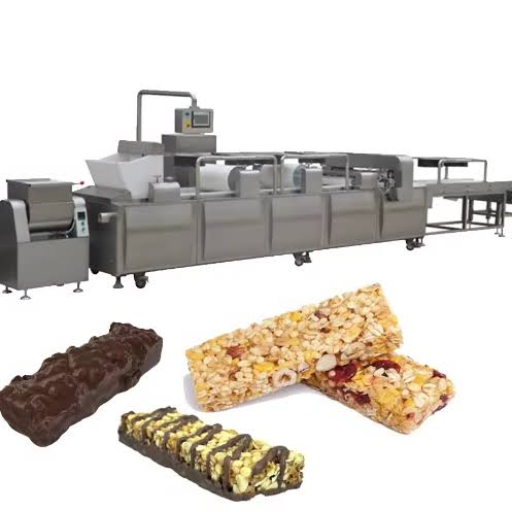
A typical plant-based meat extrusion system includes several integrated stages. Many of these same building blocks appear in other protein-processing lines, such as a protein bar production line, where mixing, forming, and cooling must also stay tightly synchronized.
- Ingredient handling and mixing, dry feeders, liquid pumps, and preconditioners that create a uniform mash.
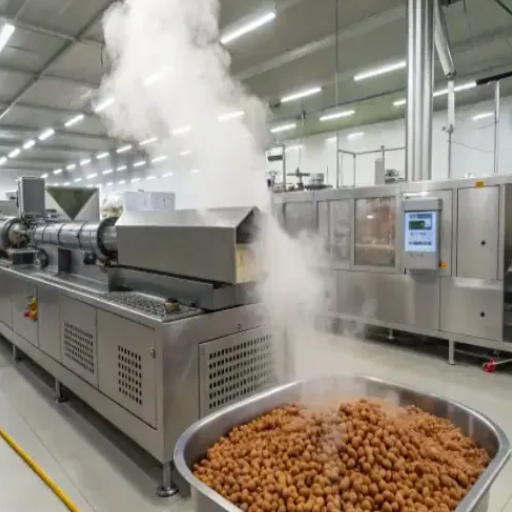
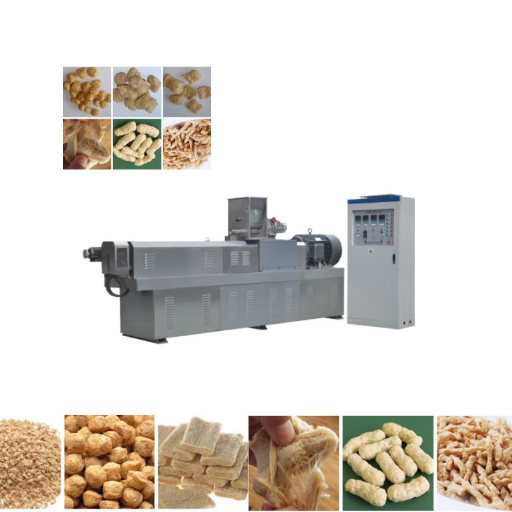
- Twin-screw extruder, the heart of the process, where heat, shear, and pressure develop texture.
- Die and cooling section, shapes the product and sets the fibrous structure.
- Cutting and handling, haul-off, cutters, and cooling conveyors.
- Control system, monitors temperature, pressure, torque, and flow rates.
Twin-screw extruders account for 54.3% of high-moisture extrusion equipment sales. Their superior mixing and thermal control make them the standard for plant-protein texturization. A well-configured twin screw extrusion meat analog line can process soy, pea, wheat gluten, and emerging pulse proteins with consistent results. If your current single-screw line struggles with consistency, upgrading to a twin-screw system is often the most effective long-term fix.
Want to see how a complete extrusion-based production line is configured? Explore our snack food machinery solutions to compare line layouts and equipment options.
Critical Process Parameters to Monitor
Before you can troubleshoot, you need to know what to measure. To start, the five parameters below drive almost every extrusion defect.
Moisture Content and Water Injection
Moisture acts as a plasticizer and solvent. For example, too little water raises viscosity, increases die pressure, and can produce a tough, rubbery product. Conversely, too much water softens the structure, reduces fiber formation, and causes the product to lose bite.
For high-moisture extrusion, the typical target is 50–70% moisture. For low-moisture extrusion, it is usually below 30–50%. Water must be injected consistently along the barrel. A clogged nozzle, drifting flow meter, or failing pump will show up as texture defects long before it triggers an alarm.
Barrel and Die Temperature Profiles
Temperature works hand in hand with moisture. Barrel temperatures for high-moisture extrusion commonly range from 120–180°C. Below about 120°C, proteins may not fully denature and align, leaving a dough-like texture. Above 160–180°C, excessive aggregation can create a rubbery or tough mouthfeel.
The cooling die is equally important. In high-moisture extrusion, die temperatures of 20–80°C help set the fibrous structure without flash-off. If the die is too warm, the product expands and loses density. If it is too cold, flow becomes uneven and surface defects appear.
Screw Speed and Shear Rate
Screw speed controls residence time and mechanical energy input. Higher speeds increase shear stress, which can improve mixing and fiber alignment. However, excessive shear can degrade protein structure and create heat spots that damage texture.
A study on co-rotating twin-screw extrusion found that screw speed directly affects shear stress and molding quality. Each formulation has an optimal window. When you change protein source or recipe, screw speed should be one of the first variables you revisit.
Feed Rate Consistency
Inconsistent feed is the silent cause of many extrusion problems. If the feeder delivers pulses of dry mix, the extruder sees alternating wet and dry zones. The result is variable torque, uneven texture, and intermittent surface defects.
Volumetric feeders perform best when kept full. Loss-in-weight feeders need careful refill settings to avoid spikes after each refill. Preconditioner mash temperature should stay within ±3°C of target, typically 80–95°C.
Die Design and Cooling Configuration
Die geometry controls the final texture. Longer dies promote laminar flow and pork-like fibers. Shorter dies produce chicken-like textures. Die height, length, and cooling jacket design must match the target product density and fiber orientation. Proper extrusion die design for plant protein applications is therefore a core part of product development, not just an afterthought.
Research on fibrous structure in plant-based meat shows that die height and length significantly affect fibration and anisotropy. A die designed for soy may not work for pea or fava bean without adjustment. Recent research in the Journal of Food Process Engineering also covers high-moisture extrusion challenges and emerging trends, including structure control and protein variability.
Common Plant-Based Meat Extrusion Problems and Solutions

Now that the key parameters are clear, the symptoms on the production floor almost always map back to them. Below is a practical plant based meat extrusion troubleshooting guide that connects defects to root causes.
Poor or Weak Fibrous Structure
A weak, non-fibrous product is one of the most common plant based meat texture problems in high-moisture extrusion. The meat-like bite is missing, and the analogue feels more like a dense gel.
Likely causes:
- Cooling die temperature is too high or too low.
- Protein-to-starch ratio is unbalanced.
- Protein blend lacks viscoelasticity.
- Insufficient shear before the die.
- Excess fat or fiber disrupting the protein network.
Solutions:
- Optimize cooling die temperature first. Lower die temperatures generally increase viscosity and help set fiber structure.
- Add a breaker plate before the die to increase shear and improve protein alignment.
- Adjust the protein-to-starch ratio. Amylopectin can promote protein rearrangement, while excess amylose may create undesirable gel-like layers.
- Blend proteins. Combinations such as soy or pea with wheat gluten often improve viscoelasticity and anisotropy.
- Limit oils high in polyunsaturated fatty acids, which reduce apparent viscosity and weaken fibrous structure.
Rubbery or Tough Texture
A rubbery texture suggests the proteins have over-aggregated. The product chews like rubber and lacks juiciness.
Likely causes:
- Barrel temperature is too high, often above 160°C.
- Moisture is too low.
- Screw speed or shear is excessive.
- Residence time is too long for the formulation.
Solutions:
- Reduce barrel temperature in small increments.
- Increase water injection to lower viscosity.
- Reduce screw speed or feed rate to decrease mechanical energy input.
- Check for die blockage that may be increasing back pressure and residence time.
Dry Mouthfeel and Low Juiciness
Dry plant-based meat is a major consumer complaint. Even with the right flavor, poor mouthfeel can kill repeat purchases.
Likely causes:
- Over-extrusion causing excessive protein denaturation.
- Insufficient water-holding capacity.
- High fiber content creating voids that release water.
- Cooling die setting incorrectly, allowing moisture loss.
Solutions:
- Increase moisture content or reduce barrel temperature to preserve some native protein structure.
- Add hydrocolloids or fibers that bind water, but keep fiber levels moderate to avoid weakening the structure.
- Optimize die cooling to retain moisture during structure setting.
- Consider reformulating with proteins that have higher water-holding capacity.
Off-Flavors: Beany, Bitter, or Cardboard Notes
Off-flavors are often blamed on the protein source, but processing conditions play a major role. Beany, bitter, astringent, and cardboard notes can develop during extrusion.
Likely causes:
- Lipid oxidation of unsaturated fatty acids.
- Residual lipoxygenase enzyme activity in pea or soy.
- Thermal degradation of phenolics, carotenoids, or vitamins.
- Maillard and deamidation reactions producing cooked or burnt notes.
Solutions:
- Use heat-treated or stabilized protein ingredients to inactivate lipoxygenase. Typical treatments range from 65–90°C.
- Store raw materials under low temperature, low oxygen, and dark conditions.
- Add antioxidants to control lipid oxidation.
- Consider solvent extraction or supercritical CO₂ to remove polar lipids and volatile off-flavor compounds.
- Use fermentation or enzyme treatments as clean-label flavor improvement strategies.
Marcus, an R&D lead at a European plant-based brand, spent weeks reformulating a fava bean burger to remove a cardboard aftertaste. The breakthrough came when his team switched to a heat-treated fava protein and lowered the final barrel zone by 12°C. The off-note disappeared, and consumer scores for overall liking rose by 18%. The lesson: flavor problems are often temperature and ingredient-quality problems in disguise.
Inconsistent Throughput and Feed Instability
Surging output, varying torque, and intermittent defects often trace back to the feed system, not the extruder itself. The extrusion troubleshooting checklist from FoodExtrusion.org is a useful starting point for diagnosing feeder and preconditioner issues.
Likely causes:
- Volumetric feeder running low on material.
- Loss-in-weight spike after refill.
- Preconditioner mixing unevenly.
- Paddle wear or steam trap issues.
- Scaling drift in liquid addition.
Solutions:
- Keep volumetric feeders as full as possible for consistent head pressure.
- Raise the refill setpoint on loss-in-weight systems to reduce post-refill spikes.
- Calibrate water and steam flow meters monthly.
- Inspect preconditioner paddles quarterly for wear.
- Drain steam traps weekly to prevent condensate buildup.
- Maintain mash temperature within ±3°C of target.
High Die Pressure, High Torque, or Motor Overload
High pressure and torque are warning signs that the extruder is working harder than it should. Left unchecked, they can damage screws, dies, or motors.
Likely causes:
- Moisture content is too low.
- Screw speed is too high for the formulation.
- High-fat or high-fiber formulation increasing viscosity.
- Die blockage or incorrect die design.
Solutions:
- Increase water injection to reduce viscosity.
- Reduce screw speed or feed rate.
- Reformulate to reduce fat, or choose fats with less impact on viscosity. Saturated fatty acids such as stearic acid generally affect viscosity less adversely than unsaturated oils.
- Inspect the die for blockage or wear. Ensure die design matches the target product density.
Surface Defects and Expansion Problems
Blisters, cracks, uneven surfaces, or unwanted expansion make the product look unappealing and can indicate deeper process issues.
Likely causes:
- Incorrect temperature profile along the barrel.
- Rapid flash-off in low-moisture extrusion.
- Uneven cooling or flow in the die.
- Wet or contaminated raw materials.
Solutions:
- Adjust the temperature profile first, then screw speed, then haul-off or back pressure.
- For low-moisture extrusion, use short, high-temperature dies to promote controlled expansion and drying, similar to the principles behind a corn puff snacks production line.
- For high-moisture extrusion, use long cooling dies to prevent expansion and retain moisture.
- Dry raw materials if bubbles appear.
- Keep materials clean to prevent contamination spots.
A Step-by-Step Plant Based Meat Extrusion Troubleshooting Decision Tree
When a defect appears, use this sequence before making formulation changes. Following this order prevents you from chasing symptoms instead of root causes.
- Check the feed system first. Verify feeder setpoints, hopper levels, and refill behavior. Inconsistent feed causes most downstream defects.
- Verify moisture and temperature profiles. Measure actual moisture content and confirm barrel and die temperatures match the recipe.
- Inspect the die and cooling section. Look for blockage, wear, or temperature deviations that destroy fibrous structure.
- Review ingredient variability. Protein, ash, fiber, fat, and water-holding capacity can vary by lot and strongly affect extrusion behavior.
- Reformulate incrementally. Change one variable at a time and document the result. Avoid changing protein, moisture, and temperature simultaneously.
This structured approach saves time and material. It also builds a process knowledge base your team can reuse when scaling to new proteins or products.
Preventive Maintenance for Stable Extrusion
The best troubleshooting is troubleshooting you never have to do. Therefore, a preventive maintenance plan keeps extrusion parameters stable.
Feeder and Preconditioner Maintenance
- Calibrate dry feeders and liquid pumps monthly.
- Check feeder screws and agitators for wear.
- Verify scale accuracy with test weights.
- Clean preconditioner paddles and inspect for erosion every quarter.
Die and Screw Inspection Schedule
- Inspect die openings for buildup or wear weekly.
- Check screw elements for wear or damage during scheduled shutdowns.
- Verify cooling jacket flow rates and temperatures.
- Replace seals and gaskets before they leak.
Calibration Routines for Temperature and Flow
- Verify thermocouple accuracy against a calibrated reference quarterly.
- Calibrate water, steam, and oil flow meters monthly.
- Record baseline torque and pressure values for each product.
- Train operators to spot early warning signs before alarms trigger.
If your current line requires constant firefighting, a turnkey food production line with integrated extrusion, drying, and control systems may be the most cost-effective upgrade. Contact us for a line audit and proposal.
When to Upgrade or Customize Your Extrusion Line

Sometimes the root cause of repeated defects is equipment that does not match the process. In that case, upgrading prevents months of wasted development time.
Scaling from Pilot to Production
Pilot extruders are valuable for recipe development, but they rarely translate directly to commercial output. Scale-up changes residence time distribution, heat transfer, and shear history. If your pilot recipe works but your production line fails, the issue is often equipment geometry, not the formulation.
Matching Equipment to Novel Proteins
Novel proteins such as pea, fava bean, mung bean, hemp, and chickpea each require source-specific optimization. Their protein content, ash, fiber, and water-holding capacity differ from soy. A die and screw configuration optimized for soy may need redesign for pea or fava.
Custom Die Design for Whole-Cut Textures
Whole-cut analogues need precise fiber orientation and density. Custom die designs with the right length, height, and cooling geometry can mean the difference between a premium product and a commodity analogue. Working with a machinery partner that offers custom die development shortens the iteration cycle significantly.
At a facility in Southeast Asia, a production team struggled for six months to replicate a chicken-breast analogue they had developed on a lab extruder. The commercial line used a generic die that was too short for their pea-wheat blend. After switching to a longer cooling slit die with zone-controlled cooling, the line hit target texture within two weeks. The right die did not just fix the defect; it unlocked commercial viability.
Conclusion
Plant based meat extrusion troubleshooting does not have to be guesswork. Most defects fall into a small set of root causes: moisture content, barrel and die temperature, screw speed, feed rate consistency, and die design. By checking the feed system first, verifying your process parameters, inspecting the die, and reformulating one variable at a time, you can resolve texture, flavor, and throughput issues faster.
The broader opportunity is clear. The plant-based meat market is growing at 14–20% per year, and high-moisture extrusion is the leading technology for premium whole-cut analogues. Manufacturers that master process control today will be the ones scaling profitably tomorrow.
Ready to move from trial-and-error to repeatable extrusion? Partner with Shandong Loyal Industrial for customized extrusion systems, CE-certified production lines, and expert engineering support. Contact us today for a consultation tailored to your plant-based meat production goals.