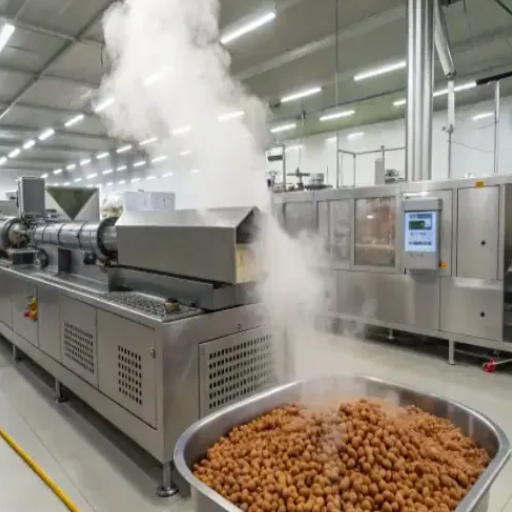
A cat food production line is an automated system that grinds, mixes, extrudes, dries, coats, and packages cat food into finished kibble or wet products. The critical thing most buyers miss is that a cat line isn’t a generic pet food line: cats are obligate carnivores, so protein, taurine, kibble size, and moisture targets all differ from dog food, and building the wrong line quietly caps your product’s nutritional quality for a decade.
Here is the short version. When Elena, a startup founder in Barcelona, ordered her first cat food production line in 2024, she bought a system sized and configured for dog kibble because the supplier listed it under “pet food” without distinction.
Three months in, her lab results showed taurine was degrading during drying, and her 4 mm kibble was too large for her target market of small and senior cats. She spent roughly $40,000 retrofitting to 2 to 3 mm dies and a gentler drying profile. The lesson: for cat food, species-specific parameters aren’t a marketing detail. They are the engineering.
Key Takeaways
- A cat food production line is built around 38 to 42% protein and 2 to 3 mm kibble, not the 25 to 30% protein and 4 to 5 mm kibble a dog line requires.
- Cats are obligate carnivores, so taurine, arginine, arachidonic acid, and preformed vitamin A must be formulated in and protected through processing, especially during extrusion and drying.
- A twin-screw extruder handles 30 to 40% fresh meat inclusion, which a single-screw extruder cannot, and it unlocks the high-meat recipes cats need.
- Cats eat a disproportionate share of wet food, so the smartest cat line decision is often a dry-plus-wet portfolio, not dry kibble alone.
- Complete cat food lines range from roughly 10,000to10,000to44,000 for small-to-medium capacity, and $100,000+ for industrial turnkey systems, with Chinese CE-certified builds costing 50 to 67% less than European equivalents.
What Is a Cat Food Production Line?

A cat food production line is a connected sequence of machines that turns raw ingredients into shelf-stable cat food. Most lines produce dry extruded kibble, but cat food carries a heavier wet and canned share than dog food. In fact, cats drive about 62.2% of wet pet food demand, which means a balanced cat operation often needs both a dry line and a wet line.
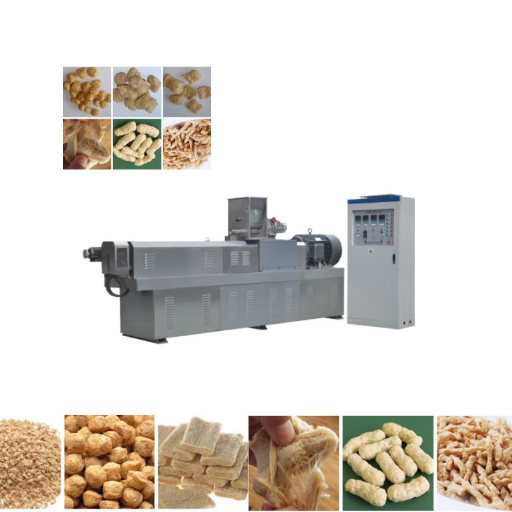
A typical dry cat food line includes a grinder, a mixer, a steam pre-conditioner, a twin-screw extruder, a multi-layer dryer, a coater or oil sprayer, a cooler, a screening machine, and a packaging machine. When the recipe uses fresh meat or bone meal, the line also integrates a bone crusher and a colloid mill.
Beyond dry kibble, a cat food production line can be configured for wet or canned food, which follows a different process path of filling, sealing, and retort sterilization. This guide focuses on dry kibble and the species-specific science behind it. For the full picture across wet, semi-moist, and freeze-dried formats, see our complete pet food production line guide.
Why Cat Food Lines Differ From Dog Food Lines
The single biggest mistake in cat food manufacturing is treating “cat” and “dog” as the same production problem. They are not. Cats are obligate carnivores, which means their bodies can’t make several nutrients that dogs can, and that nutritional difference cascades into equipment, dies, and drying targets.
Cats need 38 to 42% protein with far less room for starch than dogs, which thrive on 25 to 30% protein. Because starch is what makes kibble expand and hold together, the two species need different grind sizes, extrusion temperatures, and drying endpoints. Here is the comparison that most supplier pages never publish, drawn from published extrusion research on cat and dog kibble:
| Parameter | Cat Food Line | Dog Food Line |
|---|---|---|
| Protein target | 38–42% | 25–30% |
| Kibble size | 2–3 mm | 4–5 mm (large breeds) |
| Target moisture | ~6% | ~8% |
| Ingredient grind | ~402 µm | ~545 µm |
| Adult extrusion temp | up to 140–150°C | 130–140°C |
| Expansion ratio | 2.0–2.2x (softer) | 1.8–2.0x (harder kibble) |
| Starch gelatinization | ~83–88% | ~75–77% |
What this means in practice: a cat food production line uses smaller die orifices, a finer grind, and a lower moisture endpoint. A manufacturer running both species on one line can switch dies in about 15 minutes, but must adjust drying parameters per species, or the kibble will be either too brittle or too soft.
If you’re planning a dedicated cat line, this table should drive your equipment spec. If you’re planning a mixed-species line, it tells you exactly which parameters need to be flexible. Our complete pet food production line guide covers the same dog-versus-cat comparison from the dog’s side.
Cat Nutrition and Formulation: The Obligate Carnivore Challenge
This is where a cat food production line truly separates from a dog line, and where almost every supplier goes silent. Cats can’t synthesize certain nutrients that dogs can, so the recipe and the processing have to work together to protect them.
Taurine is the headline concern. Cats can’t make enough taurine on their own, so it must come from meat and stay intact through processing. Taurine is heat-sensitive, which means extrusion temperature and drying time directly affect the finished nutrient level. The standard fix is to extrude at the lower end of the temperature range and then apply taurine after drying, through the coater, rather than expecting it to survive the full thermal cycle.
Cats also need arginine, arachidonic acid, and preformed vitamin A, because unlike dogs they can’t convert beta-carotene into vitamin A. Each of these is a formulation input with a processing safeguard. Here is how they map out:
| Nutrient | Why cats need it preformed | Processing safeguard |
|---|---|---|
| Taurine | Can’t synthesize enough | Post-extrusion coating; gentler drying profile |
| Arginine | Highly sensitive to deficiency | Precise meat batching; minimal thermal stress |
| Arachidonic acid | Can’t convert from linoleic acid | Fresh meat inclusion; cold-chain handling |
| Vitamin A | Can’t convert beta-carotene | Add preformed form post-extrusion |
Fresh meat inclusion is the second half of the equation. A single-screw extruder struggles above roughly 15 to 20% fresh meat, while a twin-screw extruder handles 30 to 40%, which is what premium high-meat cat food demands. That single decision, single-screw versus twin-screw, is the biggest lever you’ll pull on a cat line.
Urinary health adds one more constraint. Cats are prone to urinary tract issues, so mineral balance, especially magnesium and phosphorus, matters, and moisture matters too. This is one reason wet food holds such a large share of the cat market. It’s also why many cat food brands plan a wet line alongside a dry one.
Want to see how this works in practice? Explore our pet food production line capabilities to match the right process to your formula.
How a Cat Food Production Line Works (Step by Step)

The dry cat food manufacturing process is standardized across the industry. Understanding the eight steps, and the operating parameters at each, is what separates a smooth launch from a line that never quite hits spec.
1. Raw material receiving and grinding. Cereal ingredients like corn, wheat, and rice flour are ground to 60 to 100 mesh. For cat food, the grind is finer, around 402 µm, to support the smaller, denser kibble. Meat and bone require two-stage processing: a bone crusher breaks large pieces down, then a colloid mill turns them into a slurry or paste.
2. Weighing and mixing. Ingredients are batched precisely, then blended in a ribbon or paddle mixer with water to reach the target moisture of 12 to 14% before extrusion. For cat recipes, this is also where taurine, arginine, and premixes are incorporated, so batching accuracy is non-negotiable.
3. Steam pre-conditioning. Steam heats and hydrates the mix for 60 to 180 seconds to gelatinize the starch. This step reaches a starch gelatinization target above 90%, which is what gives cat kibble its cohesion and digestibility.
4. Twin-screw extrusion. The conditioned dough is forced through a die at high temperature and pressure. For cat food, the die produces 2 to 3 mm shapes, and the extruder runs at the upper temperature range of 140 to 150°C while managing meat inclusion. This is the step where twin-screw design earns its cost.
5. Drying. The extruded kibble passes through a multi-layer oven at 0 to 150°C, drying to below 10% moisture, targeting around 6% for cat food. A gentler, more controlled drying profile protects heat-sensitive taurine.
6. Coating and flavoring. Oils, fats, palatants, and any post-extrusion taurine are applied in a vacuum coater or tumbler. This is where the nutrition that can’t survive extrusion gets added back.
7. Cooling. The kibble is cooled to ambient temperature so residual moisture doesn’t condense and spoil the batch.
8. Screening and packaging. The line screens out fines and oversized pieces, then packages the finished kibble in VFFS bags, often with nitrogen flush for shelf life.
For cat food with a wet component, the flow diverges at the filling stage into canning or pouch lines. That process, including retort sterilization, is covered in depth in our complete pet food production line guide.
Key Equipment in a Cat Food Production Line
The equipment list for a cat line looks similar to a dog line on paper, but the specifications are different. Smaller dies, finer grinding, and taurine-conscious drying are the cat-specific details.
Pre-processing. A hammer mill or grinder with a finer screen handles the smaller particle size cats need. A bone crusher and colloid mill handle fresh meat and bone into a slurry, and a ribbon or paddle mixer blends ingredients and premixes to a tight tolerance.
Pre-conditioner and twin-screw extruder. The extruder uses wear-resistant screw material and interchangeable dies for 2 to 3 mm kibble in star, fish, and triangle shapes. A die changeover takes about 15 minutes. This is the heart of the line and the component where single-screw versus twin-screw matters most for meat inclusion.
Drying and cooling. A multi-layer oven with controlled temperature zones dries to the tighter 6% moisture target, and a counter-flow cooler brings the kibble to ambient temperature. Both should be spec’d for gentle, taurine-safe thermal profiles.
Coating and packaging. A vacuum coater or palatant applicator applies fats, palatants, and post-extrusion nutrients. A VFFS packaging machine with a multi-head weigher and nitrogen flush completes the line.
For a deeper equipment selection framework across species, see our pet food manufacturing equipment buyer’s guide. This section is a selection summary, not a catalog.
Choosing the Right Cat Food Production Line
Your line choice should start with your product goal, not with a model number. Here is the simple decision logic.
First, decide your format mix. If you’re launching dry kibble only, a single dedicated dry line is enough. If your cat customers skew toward wet food, and many do, budget for a dry line plus a wet line. The wet line is a separate capital decision, but ignoring it means leaving a large share of the cat market on the table.
Second, decide your meat inclusion. Standard dry cat food can run on a single-screw extruder up to about 15 to 20% fresh meat. Premium high-meat cat food needs a twin-screw extruder to hit 30 to 40%. If premium is your positioning, twin-screw is your requirement.
Third, size the line with headroom. Buffer capacity 10 to 20% above your target, and match the dryer to the extruder output, or the dryer becomes the bottleneck.
Here is a decision table to match your goal to a configuration:
| Product goal | Meat inclusion | Extruder | Recommended setup |
|---|---|---|---|
| Standard dry kibble | 15–20% | Single-screw | Dry line, standard dies |
| Premium high-meat | 30–40% | Twin-screw | Dry line, vacuum coater, taurine post-coat |
| Wet-forward portfolio | Varies | Twin-screw | Dry line + canning/pouch line |
| Mixed dog and cat | Varies | Twin-screw | Flexible dies, per-species drying profiles |
Automation is the last dial. PLC and HMI automation with recipe memory lets you switch between dog and cat profiles in minutes, which is exactly what a mixed-species operation needs.
Ready to spec your line? Tell us your production goals, and we’ll design a cat food production line around them.
Cat Food Production Line Cost and ROI
Cat food line pricing follows the same tiers as dog food, because the equipment is largely the same. What changes is the spec, not the sticker.
A single extruder alone runs from roughly 1,000to1,000to3,200. A small-to-medium complete line lands between about 10,000and10,000and44,000, and a mid-range Shandong-built twin-screw line is typically 22,000to22,000to36,000. Industrial turnkey systems run $100,000 and up.
The honest regional note: Chinese-made, CE-certified lines cost 50 to 67% less than comparable European equipment, often around 129,000versus129,000versus400,000 for a roughly 5-ton-per-hour twin-screw line. That gap is real, and it’s why so many global cat food brands source from China.
Your operating cost splits roughly into raw materials at 50 to 65%, energy at 15 to 25%, labor at 10 to 20%, and maintenance at 3 to 5%. For cat food specifically, high meat inclusion pushes raw material cost up, which is precisely why getting taurine and meat inclusion right matters for both quality and margin.
Consider Marcus, a co-manufacturer in Ohio who ran a single dog-and-cat line and quoted cat food as if it were dog food. After a year of rework and nutrient-assay failures, he split the operation into two dedicated lines. His cat line paid for itself in under two years because he stopped losing batches to taurine degradation and wrong-sized kibble.
Shandong Loyal’s Cat Food Production Line Range

Shandong Loyal builds cat food production lines around twin-screw extrusion, which is the technology high-meat cat food requires. Our lines are configurable for 2 to 3 mm kibble, fresh meat inclusion up to 40%, and the gentler, taurine-conscious drying profiles that cat nutrition demands.
We deliver turnkey systems, from factory layout through installation and training, with CE and ISO compliance for export to 50+ countries. Our LY-model range spans pilot to industrial capacity, so you can start small and scale as distribution grows. Specific model numbers and capacities depend on your recipe and throughput, so the next step is a short conversation with our engineering team.
For the full range across every pet food format, see our complete pet food production line guide and our turnkey pet food manufacturing page.
Frequently Asked Questions
How much does a cat food production line cost?
A single extruder runs from about 1,000to1,000to3,200. A complete small-to-medium line costs roughly 10,000to10,000to44,000, and industrial turnkey systems run $100,000 and up.
What’s the difference between a cat and dog food production line?
Cat lines are built for 38 to 42% protein, 2 to 3 mm kibble, and about 6% moisture, while dog lines target 25 to 30% protein, 4 to 5 mm kibble, and about 8% moisture. Cat lines also need finer grinding and gentler, taurine-safe drying.
How is dry cat food made?
Raw ingredients are ground, mixed, steam pre-conditioned, twin-screw extruded, dried to about 6% moisture, coated with fats and palatants, cooled, and packaged.
Do I need a twin-screw extruder for high-meat cat food?
Yes. A twin-screw extruder handles 30 to 40% fresh meat inclusion, while a single-screw extruder tops out around 15 to 20%. Premium high-meat cat food requires twin-screw.
Why is taurine important in cat food processing?
Cats can’t synthesize enough taurine, and taurine is heat-sensitive. Extrusion and drying can degrade it, so cat lines apply it post-extrusion through the coater to protect the finished nutrient level.
Can a cat food production line make wet food too?
Wet food follows a different process of filling, sealing, and retort sterilization. A dedicated wet line is usually a separate investment, but many cat food brands plan both a dry and a wet line.
Build a Cat Food Line That Gets the Nutrition Right
A cat food production line is a different engineering problem from a dog line, and the difference shows up in the details: 38 to 42% protein instead of 25 to 30%, 2 to 3 mm kibble instead of 4 to 5 mm, a 6% moisture target, and a processing profile that protects heat-sensitive taurine.
Get these three things right and the rest follows. First, commit to twin-screw extrusion if premium or high-meat cat food is your goal, because it’s the only way to hit 30 to 40% meat inclusion. Second, build taurine protection into the process itself, with gentler drying and post-extrusion coating. Third, think in portfolio terms, because a cat line that ignores the wet food share is leaving a large part of the market on the table.
Elena’s retrofit in Barcelona cost her $40,000 and months of delay because she bought a dog line by mistake. You don’t have to. With over 10 years of expertise, Shandong Loyal designs cat food production lines that get the species-specific engineering right from the first batch.
Request a custom cat food production line quote and tell us your production goals. We’ll design a line tailored to your recipe, your capacity, and your market.