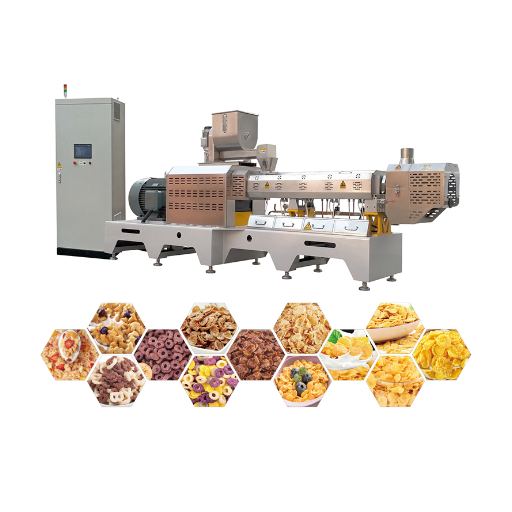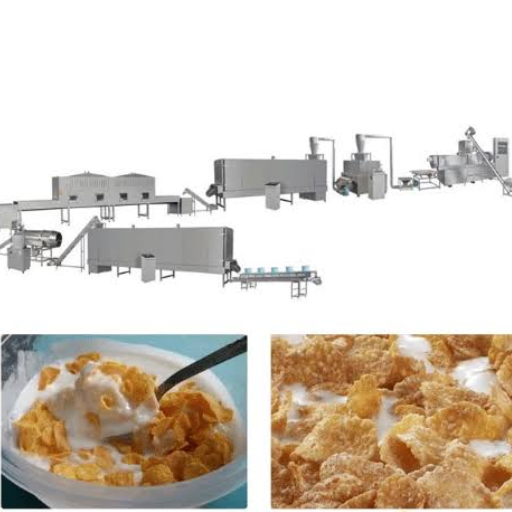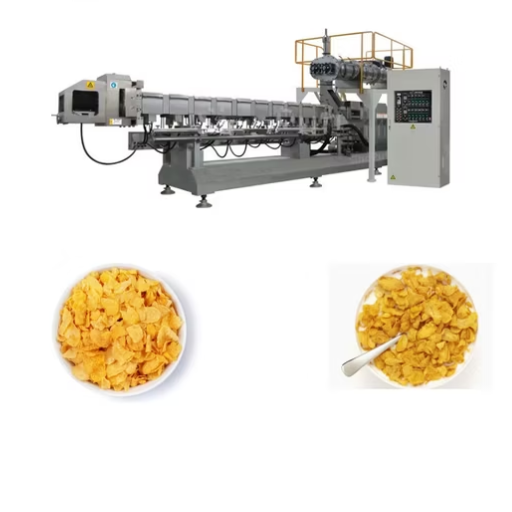
The pet food treats production equipment you need depends entirely on which treat format you plan to make. Cold extrusion forms jerky and dental chews, hot twin-screw extrusion makes puffed treats, and a freeze-dryer replaces the oven for premium raw-style treats. Treats are also the lowest-cost door into pet food manufacturing, because a treat line skips the retorts and high-volume dryers that full kibble lines require.
Here is the short version. When Ana, a founder in Guadalajara, decided to enter pet food in early 2025, she priced a complete dry kibble line at nearly $300,000 and nearly walked away. Her equipment supplier instead suggested she start with a single-format extruded treat line at roughly a quarter of that cost. Eighteen months later she runs three treat SKUs, holds a dental chew contract, and is only now budgeting for a freeze-dry line. The lesson: in pet food, the treats category is where small brands get started, and the equipment decision starts with format, not with a machine catalog.
Key Takeaways
- Pet treats is a $38.4 billion market growing at 8.9% a year, with jerky and freeze-dried treats the fastest-growing product types.
- Your treat format determines your machine: cold extrusion for jerky and dental chews, hot extrusion for puffed treats, and freeze-drying for premium raw-style snacks.
- A small pet treat production line runs from roughly 22,000to22,000to120,000, far below the $300,000-plus cost of a complete kibble line.
- Interchangeable dies let one extruder produce bone, star, heart, strip, and core-filled shapes, so you can launch multiple SKUs without buying multiple machines.
- Freeze-dried treats command the highest margins but the highest equipment cost, making them a growth stage, not an entry stage, for most startups.
What Is Pet Food Treat Production Equipment?
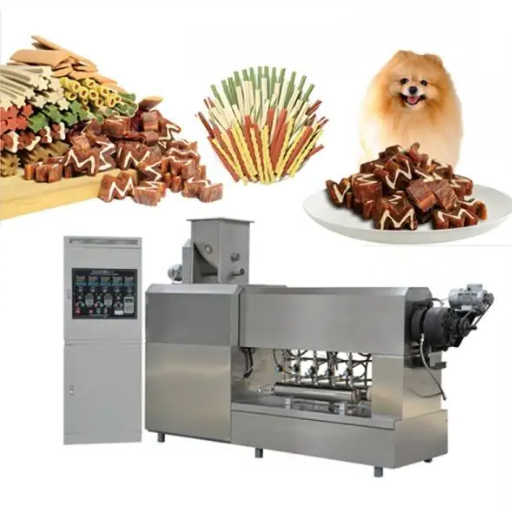
Pet food treat production equipment is the set of machines that forms, dries, coats, and packages snacks for dogs and cats. It differs from a complete pet food production line in one important way: it’s smaller, faster to install, and less capital-intensive, because treats are usually made in batches of hundreds of kilograms per hour rather than thousands.
Every treat line is built around a forming technology, and there are really only three of them. Hot extrusion cooks and puffs a dough through heat and pressure. Cold extrusion shapes a dense, wet mix at low temperature to preserve meat and chew texture. Freeze-drying removes water by sublimation instead of heat, keeping nutrients and a raw, crunchy texture intact. The rest of the line, drying, coating, and packaging, is configured around whichever forming method you choose.
This matters because most “pet treat machine” searches return a single vendor’s spec sheet for a single format. That is a fast way to buy the wrong line. If you start with the format and then map equipment to it, the whole purchase becomes simple. See our complete pet food production line guide for how treats fit the wider category.
Types of Pet Treat Production Lines
The fastest way to scope a project is to match the format to its production method and core machine. Here is the table most supplier pages never publish:
| Treat Format | Production Method | Key Equipment | Typical Entry Scale |
|---|---|---|---|
| Extruded puffed treats | Hot twin-screw extrusion, then drying and coating | Twin-screw extruder, belt dryer, drum coater | 100–300 kg/h |
| Jerky and meat strips | Cold or vacuum extrusion, then low-temperature drying | Vacuum leaf extruder, multi-stage dryer | 50–200 kg/h |
| Dental chews | Cold extrusion with shaped dies, then drying | Cold extruder, interchangeable dies, dryer | 100–300 kg/h |
| Semi-moist treats | Mixing and forming with hurdle technology | Mixer, former, light dryer | 100–300 kg/h |
| Freeze-dried treats | Prep, then vacuum freeze-drying | Dicer, freeze-dryer | 4–19 kg/batch (pilot) |
| Baked biscuits | Dough mixing, rotary moulding, oven baking | Mixer, rotary moulder, continuous oven | 200–500 kg/h |
The market is growing because pet owners keep humanizing their pets. The global pet treats market is projected to reach 58.7billionby2031,upfrom58.7billionby2031,upfrom38.4 billion in 2026, at an 8.9% CAGR. Jerky and meat-based treats hold the largest share, while freeze-dried and jerky treats are the fastest-growing product types in the US at 8.5% CAGR.
Want to see how a specific format translates into a machine spec? Explore our pet food manufacturing equipment buyer’s guide →
Extruded Treats and Dental Chews: Cold vs. Hot Extrusion
Most treat lines are built on an extruder, but “extruder” hides a decision that shapes your whole product range. Hot and cold extrusion produce different textures, and mixing them up is the most common treat-making mistake.
Hot extrusion cooks a starch-based dough at 110 to 180°C. The sudden pressure drop at the die flashes moisture to steam and puffs the treat into a light, crunchy shape, the same physics behind a pet food manufacturing process for kibble. Hot extrusion is fast and cheap to run, which is why it anchors most extruded and filled treat lines.
Cold extrusion, by contrast, forms a dense, wet mix below 50 to 80°C, sometimes under vacuum. Because there is no cooking step, the meat protein stays intact, and the finished product comes out firm and chewy rather than puffed. That is exactly what a dental chew needs.
Dental chews are the quiet giant of the category, holding 23.2% of the US pet treat market in 2025, the largest product type by value. They are built on a starch and glycerin base, extruded cold through shaped dies, and dried to a hard, abrasive texture that scrapes plaque as the dog chews. The glycerin controls water activity, which is what gives the chew its shelf-stable, leathery bite.
Here is where interchangeable dies become the startup’s secret weapon. One cold extruder fitted with quick-change inserts can switch between a bone, a star, a ring, and a core-filled stick in about 15 minutes. Miguel, a co-packer in Monterrey, runs a single cold line across a dental chew for one client and a core-filled cheese stick for another, changing dies between runs. One machine, four SKUs, zero additional capital.
For the engineering behind the machine itself, screw type, die design, and how much fresh meat it can run, see our pet food extruder machine guide.
Jerky and Meat-Strip Production Equipment
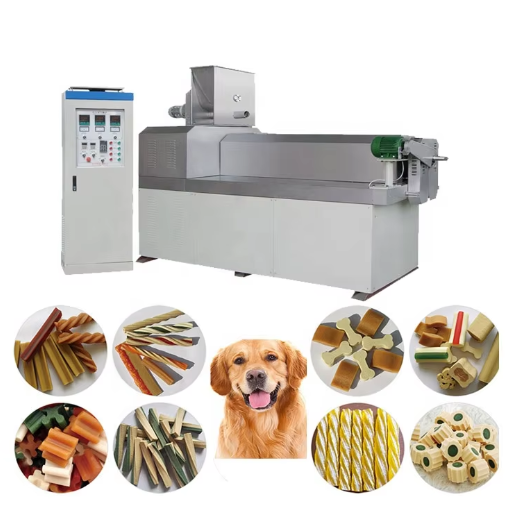
Jerky is the largest treat segment by volume, and it is also the most recipe-sensitive. A jerky line has to handle 80% to 100% meat without cooking it, which rules out hot extrusion and pushes buyers toward two specific machines.
The first is a cold extruder configured for high-meat, low-starch mixes. It forces a dense meat paste through a die to form strips, cubes, or rounds without heat, so the protein stays intact. The second, used widely for premium jerky, is a vacuum leaf-type extruder. By forming under vacuum, it removes trapped air, which prevents fat oxidation and produces a bubble-free, dense, uniform strip.
After forming, jerky goes through low-temperature, multi-stage drying rather than a hot oven. The goal is a specific moisture and water activity level that is low enough to be shelf-stable but high enough to stay soft. Because meat is the costliest input in any treat, jerky margins depend on hitting that drying target precisely, every batch.
This is also where high-protein recipes and a high-protein pet food manufacturing approach converge. A jerky line that can run 100% chicken breast or salmon is a different spec from one that runs a starch-heavy extruded treat, and it costs accordingly.
Freeze-Dried Pet Treat Equipment
Freeze-dried treats are the fastest-growing process in the category, and for good reason. Freeze-drying removes water by sublimation under vacuum at very low temperature, so the treat keeps its color, aroma, nutrients, and a raw, crunchy texture with no added preservatives. Single-ingredient chicken breast and salmon treats built on this process now command premium retail prices.
The core machine is a freeze-dryer, or lyophilizer. A typical commercial unit runs a cold trap at minus 50 to minus 60°C and pulls a vacuum of 5 Pa or below. Water in the product goes straight from ice to vapor, leaving structure intact. Entry-level units process 4 to 19 kilograms per batch, which makes freeze-drying a pilot-scale proposition until you can justify a larger production unit.
That’s the catch. Freeze-drying is the most capital-intensive treat process per kilogram of output, and batch cycles run in hours rather than minutes. Most brands therefore enter with extruded or cold-extruded treats, prove demand, and add a freeze-dry line as a growth stage. Priya, a brand owner in Chennai, followed exactly this path: she launched with an extruded treat, and only after two years of repeat orders did she bring freeze-drying in-house for a single-ingredient salmon line.
Semi-Moist and Baked Treat Equipment
Two smaller formats round out the category, and each has simpler equipment needs than the formats above.
Semi-moist treats use hurdle technology instead of aggressive drying. Glycerin and sugar lower the product’s water activity enough to keep it shelf-stable, even though it stays soft and chewy. The line is essentially a mixer, a former, and a light dryer, which makes it one of the cheapest treat lines to run. The trade-off is formulation skill: getting the water activity right without a long drying step is a chemistry problem, not a machinery problem.
Baked biscuits, by contrast, share their DNA with human biscuit lines. A dough mixer feeds a rotary moulder, which shapes the dough, and a continuous oven bakes it. This is the format where Shandong Loyal’s snack food expertise transfers directly. The same extrusion and baking technology behind a snack food machinery line powers a dog biscuit line with only recipe changes.
Pet Treat Production Line Cost and the Startup Path
This is the section most buyers care about, and it’s where treats win decisively over kibble. A treat line costs a fraction of a complete pet food line because it skips the largest, most expensive machines.
A pilot extruded-treat line runs roughly 22,000to22,000to50,000. A small commercial line in the 300 to 500 kg/h range lands around 60,000to60,000to120,000. A complete dry kibble line, by contrast, often starts above $300,000. That gap is why treats are the standard entry point for new brands, and why the cluster’s startup path starts here rather than with kibble.
The same 50 to 67% cost advantage applies across the board: Chinese-built treat lines with CE certification cost half to two-thirds less than comparable European equipment for the same capacity.
Freeze-dried is the exception that proves the rule. Because the freeze-dryer is expensive per kilogram of output, freeze-dried treats carry the highest entry cost despite being the highest-margin finished product. Budget freeze-drying for after your first two formats are cash-flow positive.
The scaling path most brands follow is predictable:
- Start with one extruded or cold-extruded format on a pilot line.
- Add SKUs through interchangeable dies.
- Layer in a coating drum for flavored or functional treats.
- Add freeze-drying for the premium tier.
Each step reuses the line you already own.
Ready to model your first treat line? Tell us your target format and monthly volume, and we will spec the line to match. Get a custom quote →
How to Choose Pet Treat Production Equipment
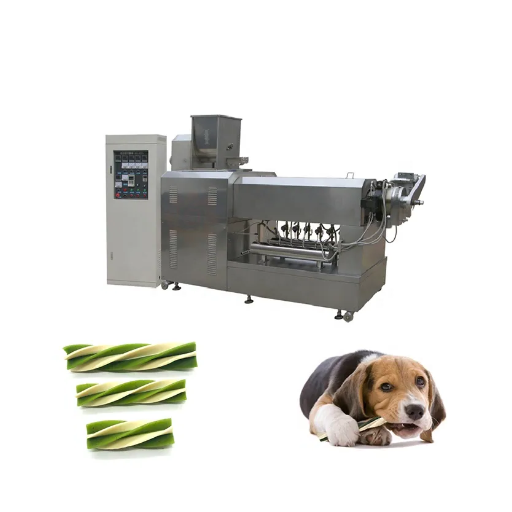
Choosing equipment in the right order saves you from the most expensive mistake in the category: buying a machine, then forcing your product to fit it. Work through these six decisions instead.
1. Choose your format against your brand first. A premium, raw-style brand points to freeze-dried or jerky. A mass-market dental brand points to cold extrusion. The format is a positioning decision, and the equipment follows it.
2. Match forming technology to texture. Hot extrusion makes puffed, crunchy treats. Cold extrusion makes dense, chewy jerky and dental chews. Freeze-drying makes raw, crunchy single-ingredient treats. There is no single machine that does all three well.
3. Size capacity with 20 to 30% headroom. Buy for your 18-month volume, not this quarter’s. Upgrading a too-small extruder later costs more than the headroom up front.
4. Verify food-grade materials and certification. Confirm 304 or 316L stainless contact surfaces, CE marking, and FDA or AAFCO compliance where your market requires it.
5. Ask about die and insert changeover. Interchangeable dies are what turn one machine into a multi-SKU line. Confirm changeover time and die cost before you commit.
6. Demand pilot and trial runs. Any serious manufacturer will run your recipe on a trial machine before you pay. If they won’t, walk away.
Shandong Loyal’s Pet Treat Production Line Range
Shandong Loyal Industrial Co., Ltd. builds turnkey pet food treat production equipment for extruded treats, jerky, dental chews, semi-moist snacks, and freeze-dried lines. With over a decade of food machinery manufacturing and clients in more than 50 countries, we configure each line around your recipe rather than fitting your recipe to a stock machine.
Every line is CE-certified and built on food-grade stainless steel, with interchangeable dies for bone, star, heart, strip, and core-filled shapes. We support the full project from consultation and factory layout through installation, commissioning, and after-sales technical support.
The LY-model treat line range spans pilot systems from roughly 100 kg/h to industrial systems of 1,000 kg/h and above, in both single- and twin-screw configurations. Contact our engineering team for a specification table matched to your format and capacity.
Frequently Asked Questions
How are pet treats made?
Pet treats are made by forming a mix through extrusion, moulding, or freeze-drying, then drying or baking it to a stable moisture level, coating it with flavor, and packaging it. The exact process depends on the treat format.
What equipment do I need to make pet treats?
You need a forming machine, an extruder, moulder, or freeze-dryer, plus a dryer, a coater for flavored treats, and a packaging machine. A basic single-format line can start with just the extruder and dryer.
How much does a pet treat production line cost?
A pilot pet treat line runs roughly 22,000to22,000to50,000, and a small commercial line around 60,000to60,000to120,000. Freeze-dried lines cost more because the freeze-dryer is capital-intensive.
What is the difference between extruded and freeze-dried pet treats?
Extruded treats are cooked and puffed by heat and pressure, producing a crunchy starch-based snack. Freeze-dried treats remove water by sublimation under vacuum, keeping raw nutrients and a lighter, crunchier texture.
How do you make dog jerky treats?
Dog jerky treats are made by cold-extruding a high-meat, low-starch mix into strips, often under vacuum, then drying at low temperature to a stable water activity without cooking the meat.
Can one machine make multiple types of pet treats?
Yes. An extruder with interchangeable dies can switch between bone, star, heart, strip, and core-filled shapes in about 15 minutes, letting one line produce several treat SKUs.
Conclusion
Pet food treats production equipment is the most accessible entry point in pet food manufacturing, and it is simpler than the category looks once you match format to machine. Cold extrusion builds jerky and dental chews, hot extrusion builds puffed treats, and freeze-drying builds premium raw-style snacks.
Start with your brand and format, then let the equipment follow. Choose interchangeable dies to stretch one machine into multiple SKUs, size for 18-month volume, and treat freeze-drying as a growth stage rather than a starting point. In a market growing at 8.9% a year, the brands that win are the ones that enter lean and scale deliberately.
Shandong Loyal Industrial Co., Ltd. can help you plan the right pet food treats production line for your product and budget. Contact us for a custom quote and let us spec the line that gets your first treat to market.