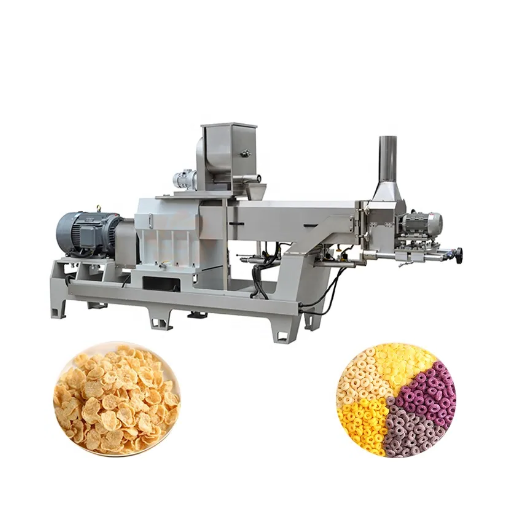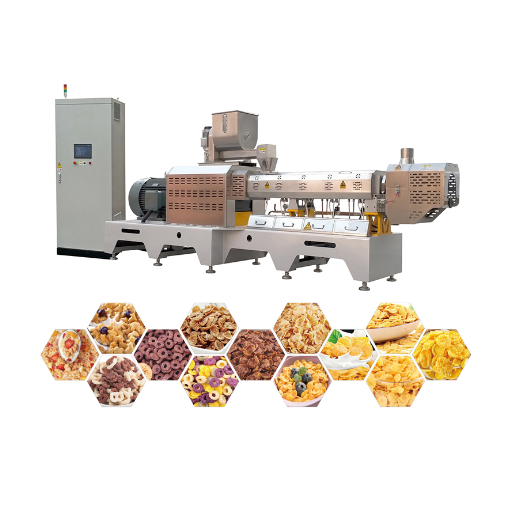
Automated controls for food processing are the layered system that measures a process, decides what to change, and acts on that decision without an operator in the loop. In practice that means field devices, sensors, a controller such as a PLC, an operator interface, and a supervisory layer. What most buyers don’t realize is that the capability of that system is fixed on the purchase order, long before anyone writes code.
automated controls for food processing here’s the uncomfortable part. Two production lines can carry identical extruders, identical dryers, and identical packaging equipment, and still behave completely differently for the next decade. The difference isn’t the machines. It’s the control specification that was agreed, or quietly skipped, at the quoting stage.
Key Takeaways
- A food processing control system is built in five layers (field devices, sensors and actuators, PLC or DCS, SCADA or MES, ERP), and most mid-sized plants operate at the bottom two with isolated islands above.
- Washdown is the constraint that separates food from every other industry: IP69K means 80 °C water at 80 to 100 bar, and most general-purpose industrial hardware is not built for it.
- “IP69K” does not imply “IP68”. Water ratings do not stack past IPX6, so an immersion claim needs separate verification.
- 21 CFR 117.135 requires process control parameters and their limits to be written down, which makes control-system data a compliance record, not a convenience.
- Roughly a dozen lines on a purchase specification determine whether your line is integrable in five years or locked to one vendor forever.
If you are specifying a line this quarter, the short version is this: decide the protocol, the sensor points, and the hygienic rating of everything in the product zone before you sign. Everything else can be adjusted later. Those three cannot.
What Is a Food Processing Control System?
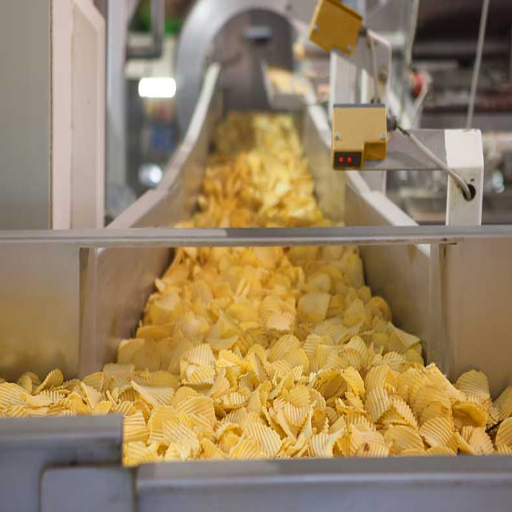
A food processing control system is the combination of instruments, controllers, and software that holds a process at its target conditions. Sensors measure variables such as temperature, pressure, flow, and moisture. A controller compares each reading to a setpoint and adjusts an actuator. The supervisory layer records what happened.
That definition is worth separating from “automation,” because buyers routinely conflate the two. Automation is the machine doing work that a person used to do. Control is the machine deciding how much work to do.
A line can be heavily automated and poorly controlled. That’s exactly how you get consistent throughput of inconsistent product.
automated controls for food processing. Two production lines can carry identical extruders, identical dryers, and identical packaging equipment, and still behave completely differently for the next decade. The difference isn’t the machines. It’s the control specification that was agreed, or quietly skipped, at the quoting stage.
The Five Layers, and Where Most Plants Actually Sit
The clearest way to think about food processing control systems is as a stack. The ISA-95 standard, also published as IEC 62264, defines this hierarchy and remains the common reference point even in an Industry 4.0 world.
| Layer | What it does | Typical hardware | Where food plants stop |
|---|---|---|---|
| Level 0 | The physical process itself | Extruder, fryer, dryer, conveyor | Never skipped |
| Level 1 | Senses and manipulates the process | Sensors, transmitters, valves, drives | Rarely fully instrumented |
| Level 2 | Monitors and supervises control | PLC, DCS, local HMI | Where most mid-sized plants live |
| Level 3 | Manages manufacturing operations | SCADA, MES, historian | Usually one reporting island |
| Level 4 | Business planning and logistics | ERP | Order entry only |
A typical snack or pasta plant has solid Level 1 and Level 2 coverage on its main line, a SCADA installation covering perhaps one section, and an ERP that receives a monthly production total typed in by hand. The gaps between layers are where data dies.
The practical consequence is blunt. If you want OEE reporting, you aren’t buying a dashboard. You’re filling in Level 1 and Level 2 gaps that were never instrumented. That work is much cheaper to specify at build time than to retrofit.
The Components of Automated Control Systems for Food Processing
automated controls for food processing — Six components do the work. For each one, the question that matters isn’t “what is it” but “what does it have to survive on a food line.” For the broader equipment picture these components sit inside, see the equipment that makes up an automated line.
Hygienic Sensors for Food Processing
Sensors convert a physical condition into a signal the controller can read. On a food line the common measurements are temperature, pressure, flow, level, moisture, and position.
Hygienic sensors for food processing are specified for survival, not accuracy.
A sensor in the product zone has to withstand daily caustic and acid exposure, steam, and physical cleaning. That means a 316L stainless body, a crevice-free design, and a sanitary connection rather than a threaded port. EHEDG Guideline Document 37, “Hygienic Design and Application of Sensors,” is the specific reference to ask for. Surface finish matters too: the difference between a 0.8 µm and a 3.2 µm finish is a cleanability difference, not a cosmetic one.
Actuators, Valves, and Drives
Actuators do what the controller decides: control valves regulating steam or flow, and variable frequency drives regulating motor speed.
Valves are the most under-specified item on most food lines. A standard industrial valve with a threaded body is a hygiene liability in a wet area. Hygienic valves, mixproof valves, and diverter valves for dry particulate lines each have their own EHEDG documents. The valve you choose determines whether CIP can reach every surface.
The PLC: Where the Logic Lives
The programmable logic controller runs the control logic. It reads inputs, executes a program, and writes outputs, on a cycle measured in milliseconds.
The programmable logic controller is the core of a food processing PLC control system. Two attributes matter more than brand. First, I/O count and spare capacity. A controller specified at exactly the required I/O can’t absorb a new sensor or a safety interlock later. Second, protocol openness. A PLC that speaks only a proprietary protocol is a closed door.
The HMI: What the Operator Sees
The human-machine interface is the screen. It shows readings, allows setpoint changes, and displays alarms.
HMI quality varies enormously and rarely appears on a quotation. An HMI with 40 undifferentiated alarm popups trains operators to ignore alarms. ANSI/ISA-101 addresses HMI design, including screen navigation, graphics and color conventions, and alarming conventions. It’s worth asking whether the supplied interface follows any documented standard at all.
SCADA for Food Processing: Line-Level Supervision
SCADA, or supervisory control and data acquisition, sits above the PLCs. It collects data from multiple controllers, presents the whole line on one screen, and keeps a history.
This is where recipe management usually lives. A food line often runs several products on one set of equipment, and each changeover means new setpoints and new limits. SCADA is what lets an operator switch recipes without editing PLC code. PackML, defined in ANSI/ISA-TR88.00.02 and developed by OMAC with ISA, standardizes machine states and commands so machines from different vendors behave consistently. Asking whether a line is PackML-aligned is a fast way to find out how seriously the vendor takes integration.
Networks and Protocols
The network is what makes the layers a system rather than a collection of boxes. Common industrial protocols include PROFINET, EtherNet/IP, Modbus TCP, and OPC UA.
The specification rule is simple and non-negotiable: require documented, open protocols and a published data map. If the vendor won’t tell you what protocol the controller speaks and what data it exposes, assume the answer is “none you can use.”
Want a second pair of eyes on a controls specification? Send us the controls page of your purchase order and our engineering team will mark it up against these six components before you sign.
Why Automated Controls for Food Processing Is Harder Than Other Manufacturing
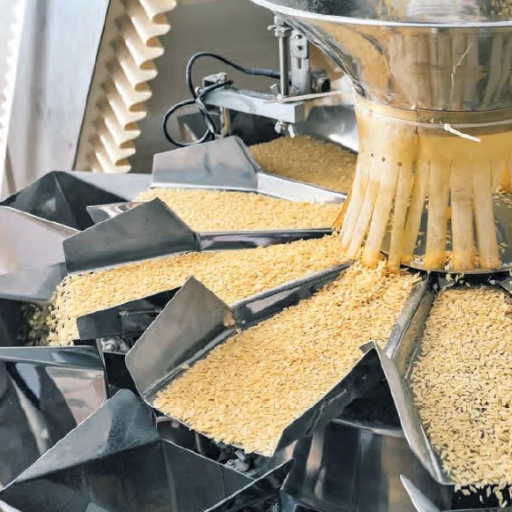
Every industry has control systems. Food has a constraint the others don’t: the equipment gets washed, aggressively, every day.
Washdown Is a Harsh Environmental Spec
IP69K is the rating that describes high-pressure, high-temperature washdown. Under ISO 20653, the test uses water at 80 °C delivered at 8 to 10 MPa (80 to 100 bar, roughly 1,200 to 1,500 psi), at 14 to 16 liters per minute, from a nozzle held 10 to 15 cm away, for 30 seconds at each of four angles.
Read those numbers as a specification, not a marketing badge. Most general-purpose industrial enclosures are rated IP65 or IP66, which describes low-pressure jets. They aren’t in the same category.
One error appears constantly in real specifications: assuming IP69K implies IP68. It doesn’t. IP68 describes continuous immersion. IP69K describes close-range high-pressure spray.
Water ratings don’t build on each other past IPX6. If a supplier claims both, ask for both certificates.
Hygienic Design Is an Architecture Problem, Not a Sensor SKU
Hygienic design is usually sold as a product attribute: buy the stainless sensor, tick the box. In reality it’s an architectural constraint that governs where things can be placed.
A control panel can’t sit in the product zone. Cable entries can’t create crevices. Instruments must be positioned so cleaning fluid drains rather than pools.
The practical rule is a two-zone split. The product zone holds only equipment that is hygienic by design and cleanable in place. Everything else lives in a technical zone. Get that boundary wrong during layout and no amount of premium instrumentation will fix it. Our guide to EHEDG hygienic design standards covers the design criteria.
CIP Cycles Punish the Wrong Components
Clean-in-place runs caustic and acid at elevated temperature through the line on a schedule. Every sensor, valve, and seal in that path has to survive it repeatedly, without degrading and without creating a harbor for bacteria.
This is why CIP is a control problem as much as a chemistry problem. Flow, temperature, concentration, and time all have to be held and recorded. Our article on how a CIP cycle works covers the seven steps and the TACT parameters.
Food Safety Regulation Makes the Data a Record
Under 21 CFR 117.135, preventive controls must be written, and process controls must include the parameters associated with hazard control and the maximum or minimum value each must be held to.
That has a direct engineering consequence. A process control without a documented setpoint and a logged actual isn’t a preventive control in the regulatory sense. The control system is the evidence. That’s the strongest argument for instrumenting and logging properly, and it has nothing to do with efficiency.
Control Loops, Explained Without the Math
A control loop is the basic unit of process control, and you can understand it without a single equation.
The loop has four parts. A sensor measures a variable. A controller compares that measurement to a setpoint and calculates a correction. An actuator applies it. Then the sensor measures again, and the cycle repeats.
That’s a closed loop: the system continuously corrects itself based on what it measures. An open loop applies a fixed action with no feedback, such as a heater running on a timer. Open loops are cheaper and drift.
The classic food example is fryer temperature. Oil temperature directly drives product color, texture, and oil pickup. As product enters the fryer, oil temperature drops. A closed loop detects the drop and increases heat input. A poorly tuned loop either overshoots or responds so slowly that a whole batch fries at the wrong temperature.
Most industrial loops use PID control: proportional reacts to the current error, integral to accumulated error over time, derivative to how fast the error is changing. You don’t need the mathematics to specify the requirement. You need to ask one question: who tunes the loops at commissioning, and what evidence do they leave that each loop was tested?
What to Put on Your Automated Controls Specification
automated controls for food processing — These are the items that are cheap to specify now and expensive to add later.
The 12-Point Control Specification Checklist
- Protocol and data map. Named, open protocols (PROFINET, EtherNet/IP, Modbus TCP, OPC UA) and a written list of the data points exposed. No exceptions.
- I/O schedule with spare capacity. A documented count of used and spare inputs and outputs, with a minimum spare percentage agreed in writing.
- Sensor list with hygienic ratings. Every device in the product zone named, with its IP rating, material, connection type, and the EHEDG or 3-A reference it meets.
- Sensor placement drawing. Not just which sensors, but where. Placement determines whether the measurement is meaningful and whether the device can be cleaned.
- Panel location and enclosure rating. Where the panel sits, how it’s sealed, and what the cable entries look like. This is where most hygiene failures originate.
- Recipe management approach. How recipes are stored, who can change them, and whether changes are logged.
- Alarm philosophy. Which conditions alarm, at what priority, and whether alarms are recorded with timestamps.
- Data export format and retention. What the system can export, in what format, and for how long it retains history.
- Safety functions and performance level. Safety-related control functions should be identified and their required performance level stated, following ISO 13849-1, which defines Performance Levels PL a through PL e.
- Documentation and source code ownership. Whether you receive the PLC program, the HMI project, and the network drawings, and whether you own them.
- Remote access and support model. How the vendor connects for support, and what you can disable.
- Commissioning evidence. Loop tuning records, FAT results, and a signed I/O check.
What Vendor Lock-In Actually Looks Like
Lock-in rarely announces itself. It looks like a controller with a proprietary programming environment, a program the vendor won’t hand over, or a data interface that requires a licensed gateway.
Here’s how it usually surfaces. Picture a mid-sized snack operation two years into a line that runs well. The plant manager wants line-level reporting to find where the day is being lost.
The existing controller exposes no usable data interface. The quote to add a single gateway comes in above what the original control package cost. Nothing has broken. The specification simply had no line about data access, and that omission has a price.
The defense is one sentence on the purchase order: the buyer receives the PLC program, HMI project, network documentation, and a documented data map at handover, and owns them outright. Vendors who expect to support the line long-term will agree. Vendors who refuse have told you something useful.
Retrofit or New Line?
Retrofitting modern controls onto mechanically sound equipment is often sensible. The mechanicals are good, the hygiene design is correct, and the constraint is an obsolete controller. It’s usually not worth doing when the equipment has hygienic design problems, because new controls won’t fix a crevice.
Not sure whether your existing line can be retrofitted? Describe the equipment and current controls, and we’ll tell you honestly whether a controls upgrade makes sense or whether the money belongs elsewhere.
What Automated Controls for Food Processing Cost
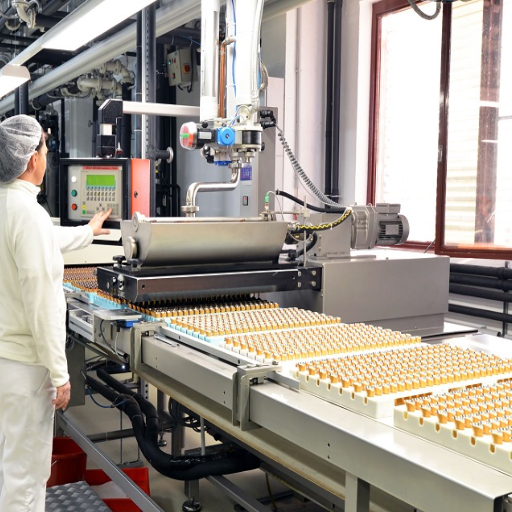
Control packages vary widely in price for reasons that are rarely explained on a quotation.
Most of the variation sits in four places: the number and quality of instruments, the hygienic rating of devices in the product zone, the extent of the supervisory layer, and the documentation package. A cheap package is usually cheap because it has fewer sensors, general-purpose hardware in a wash environment, and no data layer.
That’s not automatically wrong. A single-product line running one shift may genuinely not need SCADA. The mistake is buying the cheap package without knowing which of those four things was removed. Our breakdown of what food automation costs covers the budget side.
Settle the measurement question early, because it drives cost more than any single component. OEE, overall equipment effectiveness, is calculated as Availability × Performance × Quality. All three need data the control system has to capture. If you want OEE, you’re specifying food processing instrumentation, not software.
Frequently Asked Questions
What is the difference between a PLC and a SCADA system?
A PLC controls a machine or small group of machines in real time. SCADA sits above multiple PLCs, collects their data, and presents the whole line to operators. Most food plants need PLCs at machine level and SCADA above for reporting and recipe management.
Do I need a DCS instead of a PLC?
Rarely. A distributed control system suits very large continuous processes. For most snack, pasta, bakery, and pet food lines, PLCs with SCADA above are the right architecture and cost less.
What does IP69K actually mean?
It means the enclosure survives dust ingress and high-pressure, high-temperature washdown: water at 80 °C, 80 to 100 bar, from 10 to 15 cm, for 30 seconds per angle. It doesn’t mean the device is submersible. IP68 covers immersion and must be verified separately.
Can automated controls be retrofitted to older food machinery?
Often yes, when the mechanical condition and hygienic design are sound. The usual constraint is an obsolete controller with no data interface. Retrofit is poor value if the equipment has hygiene problems, because controls don’t fix crevices.
Does a control system help with food safety compliance?
Yes, in a specific way. 21 CFR 117.135 requires process control parameters and their limits to be documented. A system that logs setpoints and actuals produces that record as a by-product of normal operation.
Conclusion
The control system on your next line is not a component you shop for at the end. It’s a set of decisions made on the specification, and most of them are hard to reverse.
Four things worth carrying into your next quotation review:
- Insist on open protocols and a documented data map. This single line prevents most lock-in.
- Specify every device in the product zone by hygienic rating, not by price. IP69K is 80 °C at 80 to 100 bar, and IP69K is not IP68.
- Treat hygienic design as a layout constraint. Panels and instruments belong in a technical zone, not next to the product.
- Ask who tunes the loops and what evidence they leave. Then put it in the contract.
Automated controls for food processing reward the buyer who specifies precisely and punish the buyer who compares only the total. The good news is that precision costs almost nothing at the quoting stage.
If you’re planning a line or upgrading an existing one, send us your process description and product range. We’ll come back with a control architecture proposal that names the protocols, the sensor points, and the hygienic ratings, so you have something concrete to compare against every other quote on your desk.