Pregelatinized starch is a type of modified starch, but not every modified starch is pregelatinized. If you’re buying or producing starch ingredients, that distinction matters. Choose the wrong one and your instant soup may clump, your frozen meal may weep water after thawing, or your snack product may fail to expand properly. The difference between modified starch and pregelatinized starch comes down to how the starch is treated, how it behaves in water, and what your production process demands.
At Shandong Loyal Industrial, we’ve spent more than a decade helping food manufacturers select and run the right starch processing equipment. We’ve seen plants struggle because they treated “modified starch” as one uniform ingredient. It isn’t. This guide explains what each term means, when to use which type, and how to produce pregelatinized starch at scale with a twin-screw extrusion system.
You’ll leave with a clear decision framework, real production numbers, and practical next steps for your line.
Key Takeaways
- Pregelatinized starch is a physically modified starch that thickens in cold water without further cooking.
- “Modified starch” is a broad category that also includes chemically and enzymatically modified starches designed for heat, acid, shear, and freeze-thaw stability.
- Choose pregelatinized starch for instant, no-cook, or clean-label products; choose chemically modified starch for cooked, frozen, or high-stress processes.
- Twin-screw extrusion is the dominant industrial method for producing pregelatinized starch, with lines ranging from 100 kg/h to 2,500 kg/h.
- The global pregelatinized starch market is projected to grow from USD 2.18 billion in 2025 to USD 2.77 billion by 2030.
What Is Modified Starch?

Modified starch is native starch, usually from corn, tapioca, potato, wheat, or waxy corn, that has been intentionally altered to improve its performance. Native starch works well as a thickener, but it breaks down under heat, acid, shear, or freezing. Modification solves those limitations.
The change can be physical, chemical, or enzymatic. Each method creates a different functional profile. You can explore the full range of treatments in our overview of starch modification methods, which covers the science behind extrusion, cross-linking, esterification, and more.
The Three Main Categories of Modified Starch
Physically modified starches are treated with heat, moisture, pressure, or mechanical shear instead of chemicals. Pregelatinized starch is the best-known example. Other physical modifications include heat-moisture treatment, annealing, and extrusion cooking.
Chemically modified starches are reacted with approved food-grade reagents to create new bonds or functional groups. Common types include:
- Cross-linked starches (e.g., distarch phosphate), resist heat, acid, and high shear.
- Stabilized or substituted starches (e.g., acetylated, hydroxypropylated), improve freeze-thaw stability and reduce retrogradation.
- Oxidized starches, lower viscosity, better adhesion, useful for coatings and batters.
- Octenylsuccinated starches, act as emulsifiers for flavors and beverages.
Enzymatically modified starches are broken down or reshaped by enzymes such as amylases and pullulanases. The result is controlled viscosity, maltodextrins, or dextrins used in beverages, fillings, and coatings. AGRANA’s starch portfolio overview provides a useful supplier-side summary of native, modified, and pregelatinized starch grades.
Physically Modified Starch vs Chemically Modified Starch
When manufacturers compare physically modified starch vs chemically modified starch, the main trade-off is process tolerance versus instant functionality.
- Physically modified starch (including pregelatinized starch) uses heat, moisture, pressure, or shear. It swells in cold water and suits instant, no-cook, or clean-label formulations.
- Chemically modified starch is reacted with approved food-grade reagents to build cross-links or substituent groups. It resists breakdown under retort temperatures, acidic pH, high shear, and freeze-thaw cycling.
Both are “modified starches,” but they solve different production problems.
Why Food Manufacturers Use Modified Starch
Modified starches give processors predictable control over texture, viscosity, shelf life, and process tolerance. A canned sauce that must survive retort sterilization needs cross-linked starch. A frozen dairy dessert that must not become icy after thawing needs a stabilized starch. A gluten-free bakery product needs a starch that mimics the structure wheat flour provides.
Without modification, native starch can thin out, weep water, form lumps, or lose viscosity exactly when the product needs it most.
What Is Pregelatinized Starch?
Pregelatinized starch is native starch that has already been cooked, gelatinized, and then dried and milled into a powder. Because the starch granules have already swollen and ruptured, the powder dissolves and thickens in cold or warm water without a separate cooking step. It’s also called alpha starch or cold-water-soluble starch.
This makes it ideal for instant products. You can stir it into a dry soup mix, a cake batter, or a baby-food formulation and get thickening the moment water is added. For manufacturers looking to produce this ingredient in-house, our pregelatinized starch production line guide covers the full equipment setup, from mixer to packaging.
How Pregelatinized Starch Is Made
There are three common industrial methods:
- Drum drying. A starch slurry is cooked and dried on heated drums, then scraped off and milled. This method produces high-viscosity starch but uses significant energy and water.
- Spray drying. Cooked starch milk is atomized into a hot-air tower. It yields fine, spherical particles with good solubility, but capital and energy costs are high.
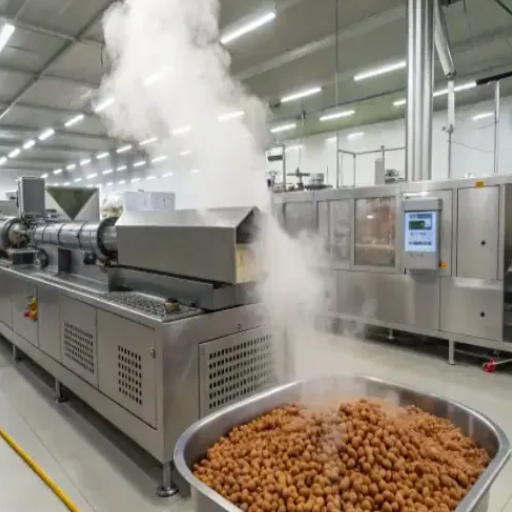
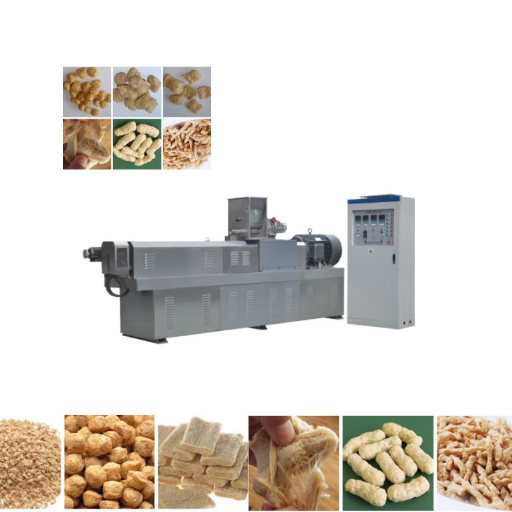
- Twin-screw extrusion. Conditioned starch is fed through a co-rotating twin-screw extruder at 120–200°C and 3–10 MPa. Gelatinization, expansion, and partial drying happen in one continuous step. This method has lower capital cost, less wastewater, and flexible capacity from 100 kg/h to 2,500 kg/h.
Extrusion has become the preferred route for food, oil-drilling, construction, and feed applications because it’s continuous, energy-efficient, and easy to scale. See how the core technology works in our guide to the modified starch extruder machine.
Key Properties of Pregelatinized Starch
- Cold-water solubility: thickens instantly without heat.
- Binding and water retention: holds ingredients together and reduces moisture loss.
- Flowability and compressibility: useful for dry mixes and pharmaceutical tablets.
- Clean-label potential: because it’s only physically modified, it can often be labeled simply as “starch.”
Looking to produce cold-water-soluble starch in-house? Our pregelatinized starch production line combines mixing, extrusion, drying, grinding, and packaging into one turnkey system.
Is Pregelatinized Starch a Modified Starch?
Yes, pregelatinized starch is a modified starch. More specifically, it is a physically modified starch: the native starch has been cooked and dried so it can thicken in cold water without a separate heating step.
That said, not every modified starch is pregelatinized. The modified-starch category also includes chemically modified starches (such as cross-linked or acetylated types) and enzymatically modified starches. These are altered for heat, acid, shear, or freeze-thaw stability rather than instant cold-water solubility.
Modified Starch vs Pregelatinized Starch: Key Differences and Applications
The table below summarizes the practical differences between modified starch as a broad category and pregelatinized starch as a specific physical modification.
| Feature | Modified Starch (General) | Pregelatinized Starch |
|---|---|---|
| Modification type | Chemical, enzymatic, or physical | Physical (hydrothermal) |
| Cold-water solubility | Usually requires heat to thicken | Yes, thickens instantly in cold or warm water |
| Heat/acid/shear stability | High, especially cross-linked types | Moderate; depends on base starch |
| Freeze-thaw stability | Excellent with stabilized/etherified types | Often lower unless chemically modified |
| Typical texture | Tailored by modification type | Slightly less smooth than cook-up starches |
| Clean-label status | Often labeled “modified starch” or with an E-number | Can often be labeled simply as “starch” |
| Common uses | Cooked sauces, frozen meals, dairy, snacks | Instant foods, baby food, cold sauces, dressings |
| Production complexity | May require reaction vessels, washing, drying | Often a single extrusion or drying process |
A Common Point of Confusion: Modified Pregelatinized Starch
A starch can be both chemically modified and pregelatinized. For example, E1414 acetylated distarch phosphate, pregelatinized has been chemically treated for stability and then physically cooked and dried for instant solubility. These dual-modified starches are useful when you need both convenience and process tolerance, but they must be labeled as modified starch.
Production Implications
Chemically modified starches often need dedicated reaction tanks, pH control, washing steps, and drying equipment. That makes the capex higher and the process batch-oriented.
Pregelatinized starch, especially by extrusion, can be made on a continuous line that fits in a single production hall. The footprint is smaller, wastewater is lower, and capacity can be scaled by adding extruder size or run time.
When to Use Modified Starch vs Pregelatinized Starch

Choose Pregelatinized Starch
- The product is instant or no-cook (soup mixes, instant puddings, cake mixes).
- You need cold-water thickening (salad dressings, cold-process sauces).
- Clean label is a priority and you want to avoid “modified starch” on the ingredient list.
- You need binding or water retention in processed meats, poultry brines, or pet food.
- You want to eliminate a cooking step to save energy and labor.
Maria runs a mid-sized soup-mix plant in Southeast Asia. She switched from native corn starch to pregelatinized corn starch and removed the pre-cooking kettle from her line. Cycle time dropped by 25%, energy use fell, and her customers noticed the smoother texture in the finished cup. The move paid for itself in 14 months.
Choose Chemically Modified Starch
- The product is canned, retorted, or UHT-processed and needs heat stability.
- It will experience high shear from pumps, homogenizers, or mixers.
- The pH is acidic (tomato sauces, fruit fillings, dressings).
- Freeze-thaw stability is required (frozen meals, ice cream, prepared foods).
- You need a specific texture such as short bite, clear gel, or stable viscosity.
David, an R&D manager at a frozen-food company, learned this lesson during a product reformulation. He first tried pregelatinized starch in a frozen curry sauce. After two freeze-thaw cycles, the sauce wept water and separated. Switching to a hydroxypropylated distarch phosphate solved the problem and kept the sauce smooth through six months of storage.
Choose Pregelatinized Modified Starch
You need both instant solubility and process stability. A classic example is a ready-to-drink beverage emulsion that must stay stable on the shelf but also reconstitute instantly. These starches cost more but solve both problems at once.
Pregelatinized Starch Production Process: Equipment and Line Setup
For ingredient producers and large food manufacturers, mastering the pregelatinized starch production process in-house can cut raw-material costs and open new product lines. The standard extrusion-based process looks like this:
- Raw material intake and sieving, remove foreign matter from native starch.
- Mixing, blend starch with water to 15–30% moisture; add additives if needed.
- Conveying, feed conditioned starch into the extruder hopper.
- Twin-screw extrusion, gelatinize at 120–200°C and 3–10 MPa under controlled shear.
- Expansion at the die, pressure drops, moisture flashes, and the starch expands.
- Drying, reduce moisture to below 14–16%.
- Cooling, bring product to ambient temperature.
- Grinding and screening, achieve 60–120 mesh particle size.
- Packaging, fill moisture-barrier bags or pouches.
Shandong Loyal PGS Series Specifications
Our PGS-series pregelatinized starch production lines are built to handle corn, cassava, potato, wheat, rice, and tapioca starches. Contact surfaces use food-grade SUS 304 or 316L stainless steel, and lines can be configured to CE, ISO 9001, SGS, and BV requirements.
| Model | Capacity | Installed Power | Typical Use |
|---|---|---|---|
| PGS65 | 100–150 kg/h | ~72–110 kW | Pilot / small commercial |
| PGS70 | 200–250 kg/h | ~90–120 kW | Small commercial |
| PGS75-2 | 300–500 kg/h | ~110–150 kW | Medium commercial |
| PGS95-2 | 500–800 kg/h | ~140–190 kW | Medium industrial |
| PGS120-3 | 800–1,200 kg/h | ~180–250 kW | Large industrial |
| PGS140-3 | 1,200–2,500 kg/h | ~220–300+ kW | Heavy industrial |
Quality Control Parameters
Every batch should be checked for:
- Gelatinization degree, confirms cold-water solubility.
- Water solubility index (WSI) and water absorption index (WAI), measures functional performance.
- Viscosity, usually tested with a Brookfield or Brabender viscometer.
- Moisture content, target below 14–16% for shelf stability.
- Particle size, commonly 60–120 mesh depending on application.
- Color, odor, and microbial limits, essential for food and pharma grades.
Safety Note: Starch Dust
Starch dust is combustible. Any grinding, conveying, or packaging area needs dust collection, grounding, and explosion-protection measures. This isn’t optional; it’s a core part of line design.
Need a line that matches your capacity and raw material? Explore our modified starch production line options, or contact us for a customized PGS-series configuration.
Pregelatinized Starch vs Modified Starch Applications by Industry
Comparing pregelatinized starch vs modified starch applications shows that the two overlap in some industries but excel under different process conditions. Pregelatinized starch is preferred when instant thickening, cold-water solubility, or clean-label status matters. Chemically modified starches are preferred when the product must survive heat, acid, shear, or repeated freeze-thaw cycles.
Food and Beverage
Pregelatinized starch appears in instant soups, sauces, gravies, puddings, pie fillings, bakery mixes, and baby foods. Chemically modified starches are more common in canned soups, dressings, frozen desserts, dairy products, and processed meats where stability under stress matters.
In snack manufacturing, pregelatinized starches improve expansion, crispiness, and uniformity in direct-expanded products. If snack production is your focus, our snack food machinery page explains how extrusion systems handle starch-based formulations.
Pharmaceuticals
Pregelatinized starch is widely used as a tablet binder, disintegrant, and diluent. It helps tablets hold their shape during compression and then break down quickly in the digestive tract. Pharma-grade production requires higher purity, stricter microbial controls, and pharmacopeial compliance.
Industrial Uses
Pregelatinized starch is a key ingredient in oil drilling fluids, construction adhesives, gypsum boards, paper sizing, and textile sizing. In oil drilling, it controls fluid loss and builds filter cake. In construction, it improves workability and water retention of tile adhesives and putty powders.
Animal Feed
Extruded or pregelatinized starches improve digestibility and act as binders in pelleted feeds. Young animals and aquaculture feeds benefit especially from the pre-cooked starch because their digestive systems handle gelatinized starch more easily than raw starch.
Market Overview and Trends
The global starch ingredient market is growing steadily, driven by convenience foods, clean-label demand, and expanding industrial applications.
- The modified starch market is estimated at USD 14.9–16.7 billion in 2025 and is projected to grow at roughly 3–5% CAGR through 2030/2031, according to industry analysts at MarketsandMarkets.
- The pregelatinized starch market was valued at approximately USD 2.18 billion in 2025 and is forecast to reach USD 2.77 billion by 2030 at a 4.92% CAGR, based on Research and Markets data.
- Corn/maize dominates raw-material supply with roughly 70–71% share.
- Food and beverage accounts for about 55% of total modified starch demand.
- Asia-Pacific is the fastest-growing region, led by China and India.
Clean-label pressure is pushing more manufacturers toward physically modified starches like pregelatinized starch, which can avoid the “modified starch” label in some markets. At the same time, demand for convenience foods and ready-to-eat meals continues to expand the need for instant thickening solutions.
How to Choose the Right Starch and Production Line

Use this checklist when deciding between modified starch and pregelatinized starch, and when selecting equipment to produce it.
Starch Selection Checklist
- What is the end product, and what texture should it have?
- Will the product be cooked, or does it need to thicken instantly?
- What temperature, pH, and shear will the starch experience during processing?
- Does the product need freeze-thaw stability?
- Is clean-label labeling a requirement?
- What is the target shelf life?
Equipment Selection Tips
- Match the production method to viscosity needs. Drum drying gives higher viscosity; extrusion is more energy-efficient and continuous.
- Choose food-grade contact materials. SUS 304 or 316L stainless steel is standard for food and pharma grades.
- Plan for dust and explosion protection. Starch dust is combustible, especially during grinding and packaging.
- Verify certifications. CE, ISO 9001, SGS, and BV requirements vary by market.
- Ask about recipe support. Screw profiles, barrel temperatures, and die designs should be tuned to your raw material and end use.
Use the checklist above to narrow your options, then read our detailed guide on how to choose a modified starch production line for capacity, material, and certification decisions.
Li Wei, a project engineer at a Chinese ingredient company, followed this process when he sourced a pregelatinized tapioca starch line. He started with a 200 kg/h PGS70 system to prove the process, then scaled to a PGS95-2 after validating viscosity and solubility targets. The phased approach reduced his technical risk and let him refine the recipe before committing to full capacity.
Video: Pregelatinized Starch Production in Action
A short video of a twin-screw extruder running pregelatinized starch can show the continuous flow from hopper to die better than any diagram. If you are evaluating equipment, ask your supplier for a running trial with your actual raw material.
Conclusion
The modified starch vs pregelatinized starch debate, and the related pregelatinized starch vs modified starch question, isn’t about which one is better. It’s about matching the right ingredient to your process, application, and product goals.
Pregelatinized starch gives you instant cold-water solubility, clean-label potential, and a simpler production process. It is ideal for instant foods, cold-process sauces, baby foods, and applications where eliminating a cooking step saves time and money.
Chemically and enzymatically modified starches give you heat, acid, shear, and freeze-thaw stability. They are the right choice when your product must survive aggressive processing or long frozen storage.
If you are ready to produce pregelatinized starch in-house, twin-screw extrusion offers the best balance of capital cost, energy efficiency, and scalability. At Shandong Loyal Industrial, we design turnkey PGS-series lines from 100 kg/h pilot systems up to 2,500 kg/h industrial plants, with customization for corn, cassava, potato, wheat, rice, and tapioca starches.
Contact our team today for a tailored quote, recipe development support, or a running trial with your raw material. We will help you choose the right starch, and the right equipment to produce it.