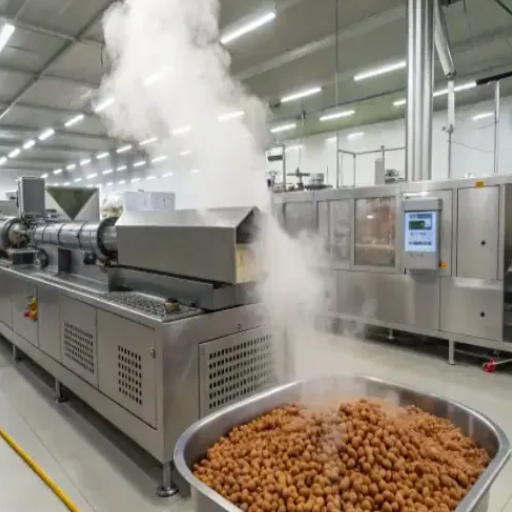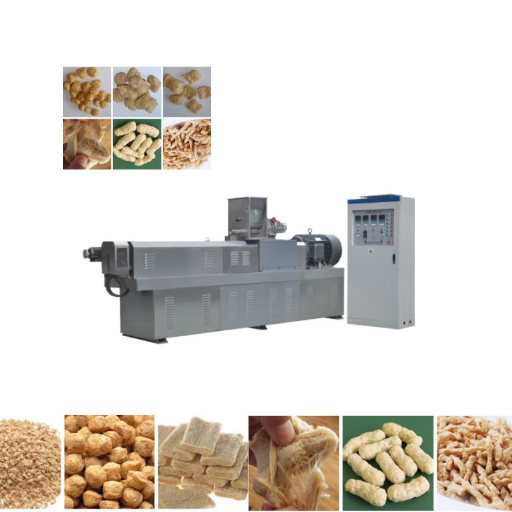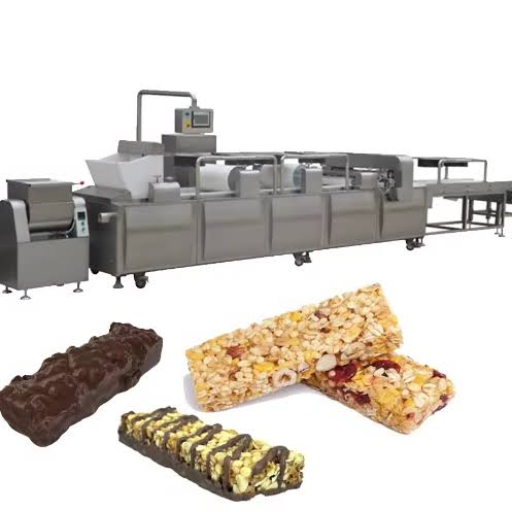
In the fast-paced world of food production efficiency and quality are the:- to words>first concern, the manufacture of pasta being no exception. The equipment of macaroni plant has experienced a noticeable change with the availability of new pasta production lines that feature improved and faster ways to process and that are able to handle the demand of a growing number of consumers. The paper gets deep into pasta production lines, talking how the newest equipment can be very useful in terms of productivity, consistency in the production, and product quality that remains very high throughout. Basically, this paper gives you the best of the best practices and trends that prevail in the industry if you wish to either scale up your present establishment or otherwise follow the lead with new inventions in your macaroni mill. The above guide will be not only beneficial but also a source of great educational aspects to know what is happening in the industry.
Pasta Production Overview

The process of producing pasta follows a certain order which changes the raw components into various shapes and forms of pasta. The principle steps are the combination of semolina flour and water along with possible other ingredients to produce a dough, molding the dough to shapes that are wanted through dies or molds and then extruding the product, and lastly drying the pasta under the right conditions to assure that the physical properties and shelf steadiness are of the right degree. Each stage needs tight control which is a very important step in quality control and safety standard meeting. Modern production facilities usually employ smart machines to smoothen the operation by increasing the speed, however, at the same time reducing the wastes. Yields marking an increase, and also the quality transferred into the pasta being produced, are the outcomes the manufacturers hope for by means of the new ways of manufacturing adopted.
Understanding Pasta and Macaroni Production
The pasta and macaroni business has undergone very big changes in the previous years, thanks to the following innovations: the development of technology, the change in customer preference, and the growing environmental concern. A report that has just recently been out showed that in the year 2022, the global pasta market was valued at $65.2 billion, and by 2030 it is expected to be around $90 billion with the increasing need for more natural and exotic pasta types being one of the major drivers of this growth.
The flood of consumer interest in nutritional substitutes comes up as one of the major trends reshaping the industry. Manufacturers are committing to the use of ingredients such as whole grains, lentils, chickpeas, and even spinach and beets to provide healthy options for the market. For example, gluten-free pasta has seen a huge rise in production as it is aimed at people with dietary restrictions or gluten sensitivities.
Furthermore, the role of technology in improving the quality and efficiency of products is very important. Extrusion systems are now made with sensors and AI algorithms that are high-tech, which makes possible the precise control of parameters such as dough consistency, moisture content, and drying temperature thus achieving the sameness of the product and minimizing production defects. The application of automation even leads to lower energy consumption and less operational waste which is in line with the industry’s mission of sustainability.
The reason that consumer demand is the main factor for this push is that it has made producers adopt systems for traceability, which in the end help to find and approve the origin of the raw materials This change is especially evident when we look at the increased popularity of some organic food and non-GMO labeled pasta brands. Moreover, the need for and the utilization of sustainable packaging have been on the rise with most companies choosing the option of biodegradable and recyclable wrap.
Producers are moving with the market as it changes and at the same time they are getting a hold on the global trends. The uncontrollable love of the international cuisines in particular has made people more eager to try various pasta shapes and old models, such as the Italian handmade varieties or the Asian ramen noodles. Moreover, the e-commerce websites are altering the shape of the supply chain by allowing the smaller artisan partners to sell their products on a global scale besides the bigger producers that sell directly to end-users.
Through the infusion of up-to-the-minute technology, unique ingredient solutions, and the observance of sustainability, the pasta and macaroni business depicts its flexibility in the face of changing consumer demands along with the aid of growth in a globally competitive market.
Importance of Quality in Pasta Production
Quality is a key aspect of pasta manufacture, and it has a big knock-on effect on everything from whether consumers are satisfied or not to how competitive the market is. The first-rate pasta is one that combines a number of aspects like texture, taste, nutritive value, and cooking performance. The fact that consumers presently have developed a preference for premium pasta products that are made from natural, sustainable ingredients and are clearly labeled, is evident from the latter’s search trend. The above preference switch is in turn the reason for the existence of pasta producers who have incorporated high-tech manufacturing machines and set up very strict quality control rules to respond to the increasing demands.
📊 Market Insight: A 2023 search report data presents the information of more than 35% increases in the searches related to “best quality pasta brands” and “durum wheat pasta benefits” from the year 2022. All of this indicates that the consumers are putting more importance to pasta that is made with 100% durum wheat semolina, which is famous for having a gluten structure of the highest quality and a strong texture.
A high level of quality control is necessary to be able to implement it, which will result in an even total protein content, exact drying procedures, and consistent shapes, all of which will eventually lead to consumer contentment through a good product experience.
Moreover, it cannot be more essential to put in place the internationally accepted standards, like ISO 22000 for food safety management, for producers who are aiming at foreign markets. Such certificates are beneficial not only for the marketing but also for the health of the people. Take for instance, certifications that are present in terms of the preservation of the environment like those that are organic and non-GMO have a great impact on the one to buy, according to a Statista report which claims that 70% of the customers are willing to pay a higher price for the confidence of quality.
Together with the use of sophisticated methods, the consistency of the ingredients, and the awareness of the consumer’s tastes that are always changing, the pasta production is still the best in quality as it always was and at the same time is also answering the preferences of the modern consumer. Producers can meet the changing market needs, get loyalty and growth in the global business, being as competitive as they are now by changing the methods of production.
Recent Trends in the Pasta Industry
The worldwide pasta sector is seeing serious expansion at present, and this growth is being caused by the rising consumer needs for better health and sustainable food. Recent studies and market evaluations have shown that the changes in the diet spectrum as well as the increased focus on health have paved the way for the appearance of a lot of innovative products. Survey data suggests that the market for gluten-free pasta is predicted to reach the amount of $1.28 billion on a global level by 2027, with a growth rate at the compound annual growth rate (CAGR) of 4.5%. This change mirrors the increasing recognition of food and health-related needs and preferences by customers.
At the same time, the sustainability aspect is a hot topic within the industry. Brands are incorporating greener packaging and carrying out responsible ingredient sourcing to go hand in hand with the consumer relative to the low footprint. For instance, the companies are moving towards a more carbon-neutral production process and are at the same time looking into the use of the recyclable material. This is something that aligns with the aforementioned environmentally friendly product pass, which holds the consumer share of 62% as per the latest data.
In the meantime, the trend of protein-packed pasta consumption has been on the rise so high, especially among the fitness junkies and health-freaks. The pasta kinds that are originated from lentils, chickpeas, and quinoa are on top of the list when it comes to the incredible amount of protein they have and the health benefits they provide thus being perfect examples of the demand for the so-called functional foods that promote a healthy lifestyle.
Digital habits are also responsible for the way trends are heading in the industry. Online searches for “homemade pasta recipes” and “making pasta from scratch” are continuously increasing, which shows that people have an inclination towards the idea of cooking at home, which the pandemic and its consequences have made even stronger. The change in food preference has resulted in the demand for DIY pasta kits and virtual cooking classes from the companies, which in turn has helped them to owe their customers and become the first choice for the future.
The pasta industry has not only remained in the game of consumer preference change by being a blend of innovation, sustainability, and adaptability but also kept opening many doors of opportunities. The trends being discussed are not only resulting in the growth of the business but also are placing pasta as a global food staple that is versatile, for all and future-driven.
Components of a Pasta Production Line
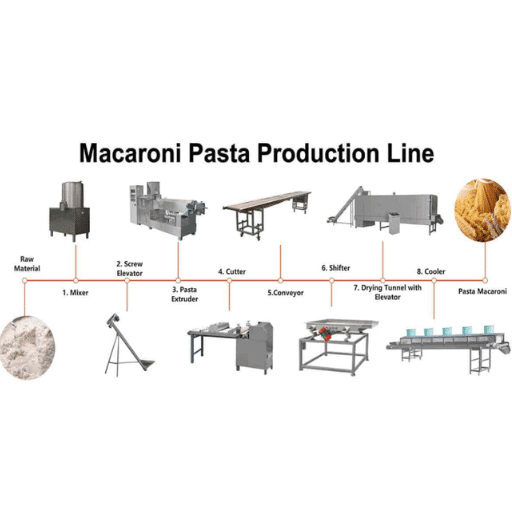
A typical pasta production line involves the following primary components:
1. Mixing Unit
The ground and water (or other ingredients) to form a homogeneous dough.
2. Extrusion System
Creating the pasta in different shapes via the process of using various dies.
3. Drying Section
The gradual elimination of water from the pasta with the goal of achieving the desired texture and a prolonged shelf life.
4. Cutting and Shaping Equipment
The machines that do a very precise job of cutting the pasta as per the final shape and size.
5. Cooling Unit
Handling breakage or deformation during the handling process takes place post-drying.
6. Packaging Machine
The final product is packed and sent for distribution while keeping freshness and quality the same.
All of those are equally important and contribute to the efficiency and production quality of the pasta making process.
Mixers and Their Role in Pasta Making
Mixers play a critical role in the pasta making process, thanks to which it becomes possible to properly mix the ingredients creating a dough that is not only of the same quality but also remains consistent over time. Mixers are a big part of the evolution of today’s pasta production because they have introduced really good and efficient mixing technology that runs both efficiency and quality of the output. They usually process different types of dough that have a wide spectrum of textures, from very soft to very firm, depending on the kind of pasta that is produced.
The main task of a mixer is to make the ingredients that are put in it, like flour, water, and, per caso, eggs, salt, or spices, to be uniformly mixed. Getting the right dough thickness is a must as it has an instant bearing on the feel, elasticity, and taste of the last pasta product. Then they become an automatic step as the mixers in the factories normally have programmable settings. This functioning helps managers to be able to control the recipes of their dough mixing speeds and durations. With this, spiral mixers have become a preferred choice when there is massive production because they knead so much better while also preventing the dough from getting too hot.
⚡ Performance Impact: The data from the latest research shows that the use of automatic mixers has increased the efficiency of the production process by up to 30% and, at the same time, decreased the amount of work done by hand.
Besides, high-capacity mixers with in-built temperature control systems help in making the dough better by keeping the environmental conditions constant all through the blending. This, in turn, gives the manufacturer the advantage to expand the production volumes without a change in the product quality.
One way to come up with new entertain ideas is the one where the vacuum mixers are the main attraction the whole idea being that during the process all the air pockets are always removed. This then will result in a dough that is not only denser but also smoother and hence easier to operate and also less likely to be broken during extrusion or cutting. In addition to this, the mixers of today have integrated sensors which provide the manufacturer with real-time empirical data ensuring that the end product is always within the needed quality limits.
Acquiring cutting-edge pasta mixing machinery can drastically boost the output of the pasta producers, elevate the product quality, and at the same time, help manufacturers easily adapt to the different pasta recipes. The mixers are thus indispensable in the industrial pasta-making process.
Twin-Screw Extruders for Macaroni Production
In the production cycle of macaroni, nothing has caused more of a change than the use of twin-screw extruders which bring precise, rapid, and flexible production capabilities. The machines are on the work of the two screws that are interlocked and spin inside a barrel to do the kneading, cooking, and shaping of the dough. This elemental technical advance makes the producers capable of being able to optimize the important parameters of their production such as shear, temperature, and residence time, which when optimally adjusted gives them a relatively constant, top quality production even on the tiniest changes and at high production rates as well.
On the same course of achieving these highly technological twin-screw extruders, there are seen other auxiliary systems such as the intelligent automatic control systems which are installed to, in effect, make the real-time extrusion process control continuous. In accordance with the information databases that the industry has produced, among the advantages of the smart monitoring features that the modern extruders built in have are being seen to lessen energy consumption up to 20% and consequently diminishing the material waste also during production. Furthermore, they can produce in a high quantity of gluten frees, enriched, and so forth doughs this feature of being this versatile leads to the companies aligning their production with this globalization offering.
📈 Production Capacity: There are reports which suggest that their macaroni and similar pasta shape output can go above 500 kg/hour, hence making them very useful in big-scale production companies.
Moreover, they are able to switch quickly between the shapes of pasta because the design is divided into modules which means shortening the period of the whole pasta shape changing process and at the same time their capability of enhancing the total operational efficiency all along the production line.
When macaroni makers will use the twin-screw machine, they might be the only ones who can compete in such a competitive market which means being able to produce traditional quality standards as well as offering diverse options concerning the market. Also, it is worth mentioning that the innovation which takes place in the sector of the extruder is the main reason why pasta, a product which once was quite expensive, now has a very competitive price which does not compromise sustainability at all rather it goes in that way; however, it helps in both promising profits on one hand and on the other hand, growing customer satisfaction.
Automated Packaging Solutions
The development of automated packaging solutions is a major milestone in the food production sector that has achieved efficiency, product quality homogeneity, and the decrease of labor costs as well. High-end robotics, AI-based monitoring, and IoT-enabled machines are the key elements of modern packaging systems that smoothly execute all production steps, starting from filling and sealing and ending with labeling and palletizing. A report of MarketsandMarkets argues that the global market of automated packaging will increment from 49.9 billion dollars in 2021 to 69.3 billion dollars in 2026 which is about 6.8% growth annually.
An important innovation is incorporating vision systems within the packaging lines, so that they can conveniently and accurately carry out quality checks by recognizing defects, misalignments, or inconsistencies really fast. Image recognition systems, for instance, by a real-time check, can spot poorly sealed products and thus stop them from the supply chain. Besides, the dumbing-down of the machine also the real-time power of the data comes in the form of smart sensors and data analytics, reducing downtime and lessening maintenance repair cost at the same time.
Another trend that influences automated packaging is the used of materials that are eco-friendly. Automated systems can already deliver the speed of processing requested by the market by using plastics that decompose and recyclable materials. One example is the use of biodegradables in flexible packaging, which allows a range of foot products that even differ greatly in shape and size to be handled with only a slight reduction in waste and sometimes with no waste reduction at all.
In general, packaging solutions with the use of automation are making it possible for manufacturers to adjust to variable sales, to be more productive and to meet high quality standards. The companies, by employing such technologies as advanced data analytics and the use of eco-friendly materials, will be able to conform with industry rules and, at the same time, to be in as much in vogue with the consumers’ desire for novelty and care for the environment as possible.
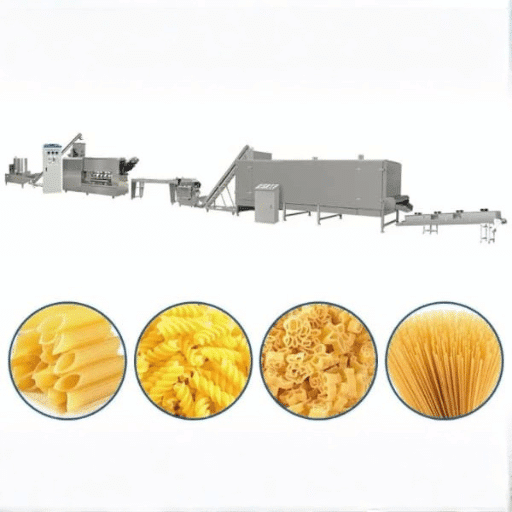
Types of Macaroni Production Machines
1. Dry Pasta Press Machines
A specific feature of this equipment type is the making of macaroni from flexible dough through the use of changing molds which guarantee that the size and quality are always the same.
2. Industrial Dryers
For the purpose of lowering the moisture, industrial dryers are significant as they are closely associated with the size and quality of the pasta and its shelf life.
3. Continuous Pasta Extruders
Working on an immense scale, this equipment gives its users a stream of macaroni of the same shape.
4. Cutting and Shaping Machines
Custom machines made to release the potential of the variety of macaroni designs and to cater for the constant changes in pasta trends.
5. Vacuum Mixers
These devices operate on the same principle as the forming machine but their scope is actually processing ingredients with the main benefit being voiding air pockets and other adverse effects which cause ran(digestives)
Each machine is very important in making the production process of macaroni much easier and at the same time maintains the quality of macaroni all through the process.
Entry-Level vs. High-Output Macaroni Machines
It’s important to have a deep knowledge of all the main distinctions in performance, size, and particular production requirements suitability before choosing between low and high capacities macaroni machines.
1. Machines for Newbies into Macaroni Making
Beginners, who are taking their first steps in the pasta-making industry or working in the home industry, are the target group of entry-level machines. These machines usually produce lesser quantities of macaroni, such as between 30 and 100 pounds per hour, and they are also smaller in size, hence, a good fit for the kitchens that are short of space. The entry-level machines are generally characterized by unsophisticated design and low levels of automation, hence, they might require more time for the production process. But still, they are cost-effective, the prices usually being between $1,000 to $5,000, depending on the model and the qualities. The feature of these machines is that they are for businesses like a pasta boutique, farmers’ markets, and small catering businesses, where they can make exclusive macaroni shapes by playing with the dies.
2. High-Output Macaroni Machines
Rather than for the ones making macaroni for parties, high-output machines serve the needs of giant manufacturers or plants which strongly require high speed, high efficiency, and high consistency; in any case, all elements are only a little different from each other, so this industrial-size machine can produce 500 to 2000 pounds or even more per hour (between 50 and 200 slewed kilograms per hour). The sophisticated features like the automatic modes for the mixing, extrusion and cutting steps are regularly included, which makes at least 90% of all the bad-quality product due to the human workers’ fault get significantly less if it’s with the machines, and the quality that gets through is always the same throughout a batch. Moreover, the high-output machines usually have the drying system within them so that the whole process becomes more compact. However, with all their high tech and heavy-duty capacity, the price of the machines can be anywhere from 20,000 to more than 100,000 dollars. At the same time, they are an essential link in the supermarket, restaurant chain, or export market for supplies of the company.
Performance Comparisons
Latest Industry Insights
In 2023, there was a very high demand for macaroni machines that produce large quantities albeit a result of the ever-increasing consumption of pasta world-wide according to the latest findings. The pasta market, as indicated by recent studies, shows a CAGR of 3.2% for 2023-2028 indicating the re-evaluation of the importance of extensively upgrading the companies to the new levels of production to meet consumer needs. Pavan, Bühler, and Italgi are the most well-known high-output manufacturers who are also the front of the pack in terms of innovating and customers’ preferred choices because of the smart integration of their facilities with the internet and the low power consumption of the systems and at the same time aiming with these to increase production and meet the optimization of the operation requirement for the same.
Choosing between entry-level and high-output macaroni machines ultimately hinges on the company’s scale of production, available financial resources, and future objectives in revenue generation. Companies planning to shift from the production of pasta on a small scale to a larger scale must invest in equipment with features that are easy to scale up.
Specialty Macaroni Making Machines
Specialty macaroni making machines are specially designed for specific production needs, thereby enabling manufacturers to make special and high-quality pasta varieties. In many cases, these machines are conspicuous by their very advanced features, in every sense of the word i.e., customization options, and impetus for working with different ingredients. Below is a summary of key details and data regarding specialty macaroni machines that have been sourced from the latest industry trends:
Key Features of Specialty Macaroni Machines
1. Customizable Designs:
There are multiple machines on the market from various suppliers that have the capability of producing those specialty shapes. Among such shapes are gluten-free, organic, or gourmet artisan pasta varieties. Dies and molds are some of the components that can be replaced to enable the production of the desired product design.
2. Durable and Hygienic Build:
Thanks to its stainless steel construction, the machine is food safety-compliant and can handle very high loads of production. Moreover, there are some models with eco-friendly and sanitary cleaning systems that, in turn, result in lower downtime and hence improve the overall state of the kitchen.
3. Energy Efficiency:
The new-generation machines are equipped with in-built energy-saving motors and parts, which hence cause less consumption of power at the same time keeping equally high performance. For instance, there have been machines that are not only heat-insulated but also with heat recovery, thus leading to further decrease in operational cost.
4. Smart Integration:
Specialty machines with IoT-enabled features can potentially be connected to the internet of things. This will not only provide them with access to the internet but will also let the user interface with them using a mobile device. Consequently, data such as production metrics, for example the output rate, energy consumption, and maintenance schedules can be found as real-time input plus more, if the user so wishes.
Production Capabilities
Typically, specialty macaroni machines produce pasta in the amount of 50 up to 1000 kilograms per hour depending on the machine. High output machines are the best choice for big manufacturers while small machines are better for the producers who make pasta in the traditional way and are sometimes referred to as artisans.
Global Market Insights
- In 2029, Fortune Business Insights’ report projected that the world pasta market would be $68.8 billion, up from $45.3 billion in 2022; the growth was driven by a higher need for healthy, specialty, and ready-to-cook foods. Thus, the use of specialty macaroni appliances plays an important role in this; they serve as a passage for the business and at the same time introducing new pasta varieties.
- The biggest producers are moving towards automation and partially hybrid technologies this year. Fava SpA and Pavan Group, for example, are ahead, both have systems that are capable of 30% less energy use, they are cutting the industry as well.
Cost Considerations
There is a wide range of costs when it comes to specialty macaroni machines. It could be otherwise stated that small-scale machines for artisan pasta are often about $5,000 to $20,000, while industrial-grade with new features might scoop even up to millions of dollars, but all of them depends on the variety and tech requirements. Accordingly, the leasing options have gained popularity among firms that are starting businesses for the purpose of cost management.
Applications in Trend
1. Gluten-Free and Alternative Grains:
The proverbial “no wheat” bakery product automatic machines are fast becoming the rage as health-conscious consumers become more health-conscious.
2. Ethnic and Gourmet Pasta:
Sustained demand for pasta of different ethnic origin, like soba noodles or stuffed ravioli, shows the necessity of being able to go that way- behaving production-wise that is.
Specialty macaroni making machines that are driven by the most advanced automation and customization empower businesses to remain competitive in an expanding pasta market, as well as to increase productivity and respond to the changing demands of health-conscious and adventurous consumers.
Stainless Steel Design and Hygiene Standards
It is becoming more common to find macaroni machines with stainless steel as the material of choice on the market. At the same time, this material has become the first choice in the food industry being one of the metals, which is the most resistant to oxidation and one of the easiest to clean, while, at he same time, one of the most durable ones when running continuously and in a tough environment. Its non-permeable outer layer disallows the building-up of bacteria, and, therefore, very easy and fast sanitation is possible. This is crucial for the industry to follow food safety standards set by institutions like FDA, USDA, and EU.
🔬 Safety Impact: Reducing foodborne illness risks is one of the benefits of stainless steel equipment as it is superior up to 20% capable than apparatus that has weaker materials.
Additionally, the latest models are the result of welding becoming seamless and of the production of the equipment with rounded corners so as to completely get rid of the places within the equipment that are hard to be reached where the food particles and potential contaminants can be collected. A vast majority of the machines now available in the market also includes clean-in-place (CIP) systems leading to automation of the cleaning process and a subsequent reduction of time not operated.
The demand for stainless steel as a primary material within the pasta production equipment of businesses is implied by the internet search trends for this material. The use of sensible search terms like “hygienic pasta machines” and “stainless steel food equipment” has increased and the growth is substantial- more than 30% in the last year, this fact is also interpreted as referring to the utilization of sanitary manufacturing practices at every level of producer’s capacity. Manufacturers that merge sturdy stainless steel structures with state-of-the-art sanitation facilities can produce safer food and please health-conscious shoppers at the same time.
Production Process of Macaroni Pasta
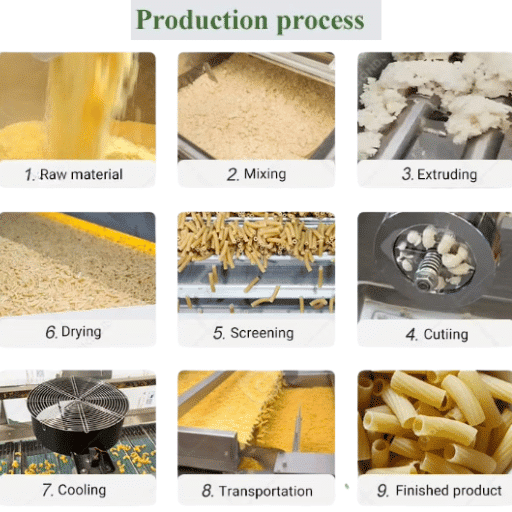
Macaroni pasta is produced by following a series of well-coordinated steps in order to maintain uniformity, quality, and cleanliness. The process of production commences with wiring semolina flour and water to create dough that is smooth and consistent. The next step in the process is the expression of the dough through the use of molds or dies which can make the pasta adopt the classic macaroni shape. The pasta of the same classic form is then put through drying whereby the controlled heat and airflow remove moisture while preserving texture and preventing cracks. The dried pasta is eventually cooled, packaged, and sealed in order to preserve the freshness until the consumers get it. Each of the processes is closely monitored to ensure quality of the product and that the whole process results in high quality macaroni pasta.
Steps in the Pasta Making Process
Macaroni making requires very careful processes combining rigor and creativity thus ensuring the quality and taste will be the same every time, as the innovation and technology that have been the case are now further improving the process by reducing manpower and standardizing the product. The following is a minute examination of the stages in creating macaroni of the best kind together with the ideas coming from the present time:
Ingredient Selection and Mixing
The principal ingredient is high-quality wheat semolina, which is highly valued and thus used due to its high protein content, which inturn make sthe pasta very strong and elastic. Water is mixed in to the ratio of 1:1 vis-a-vis the flour develop consistency of the dough. Some modern processes now incorporate durum wheat alternatives or enriched ingredients like lentil or chickpea flour to cater to health-conscious consumers. According to the latest studies conducted by the industry, the demand for gluten-free pasta has increased by more than 15% per year and has thus become the major driver of innovation at this stage.
Extrusion and Shaping
The dough is forced through the bronze or Teflon-coated dies at very high pressure to get the desired shape. Bronze dies provide the texture that is more appropriate for sauces, but Teflon dies will give a smoother appearance. The application of new machines in the latest years has allowed for the same shape in all cases and waste reduction with 30% maximum efficiency in some plants.
Drying Process
Once the pasta has been formed, a carefully controlled drying phase becomes vital for the maintenance of the pasta’s quality and the prolonging of its shelf life. Multi-stage systems that apply special temperature and humidity controls depending on the pasta’s shape and density are being used in the latest drying techniques. According to data collected from recent studies, it was observed that, at 104°F to 131°F (40°C to 55°C), the drying temperatures that were applied to the pasta were able to reduce brittleness which kept the pasta’s flavor profile the same.
Cooling and Packaging
The process of cooling is applied to the pasta after the drying is completed so that there is no case of condensation and cracking. At the same time, the use of vacuum sealing or biodegradable materials has become quite common in the packaging of pasta which, at the same time, causes a lessening in the harm put on the environment. The current consumer trends show that the buying of environmental-friendly packing products has increased due to such issues as sustainability with 60% of consumers being in this circle.
Quality Control and Distribution
Contemporary factories incorporate Al and sensor technology to keep an eye on the quality throughout the whole manufacturing process. These systems look at moisture levels, consistency in shapes, and overall condition. Nowadays, logistics and distribution networks have been also improved and thus there is the possibility of much faster delivery along with keeping the products fresh and delivering them to any place in the world.
The timeless techniques and the technology and consumer trends advancements have been combined, in such a way that the pasta industry is still able to satisfy the increasing demand for innovative, high-quality, and sustainable products.
Energy Efficiency in Pasta Production
With the growing trend in the pasta manufacturing industry focusing on costs reduction and eco-friendliness, the enhancement of energy efficiency has emerged as a necessity and caught the spotlight. To the greatest extent possible, pasta factories have been implementing various energy-saving strategies such as high-efficiency dryers and thermal system optimization. As an example, modern drying processes now have in place sophisticated heat recovery systems that are able to make a 30% cut on energy use, with the added benefit of achieving the desired product quality and consistency.
Also, renewable energy sources are starting to be used more often in pasta manufacturing. A few of the manufacturing plants have started combining solar panels, wind energy systems, or bioenergy solutions so that their operations can be run on nothing but renewable energy, and this is also one step to being less dependent on fossil fuels. As an illustration, Barilla, the top pasta producer, has pledged to be dependent on 64% renewable energy in every production plant and thus the company aims to be completely carbon-neutral by 2040.
Energy monitoring and data analytics tools are also utilized as a part of the measures to advance the production methods. They keep a check on the usage of energy in real-time, highlight the areas of inefficiency, and aid manufacturers in modifying operations to reduce waste as much as possible. The European Manufacturers of Pasta (AIDEPI) state that the application of predictive analytical tools can result in a 15-20% saving in the energy-related costs.
By implementing these eco-friendly strategies, the pasta industry is not only in tune with the trend but also addresses consumer requests for planet-friendly products thus gaining competitive advantage.
Traceability and Quality Control Features
Implementing traceability and quality control measures are crucial in the pasta industry as they make all the production processes and final products meet the highest standards. This facilitates visibility through the chain of supply and assures the same level of quality. The following are the five main features of traceability and quality control:
Batch Number Tracking
A unique identifier is given to each batch of pasta to track its production history from sourcing of raw materials to packaging, thus, allowing for prompt identification of possible issues.
Verification of Ingredient Sourcing
Cutting-edge systems effectively follow the trail of each ingredient right back to the place where it came from, which guarantees their safety and, at the same time, proves that they are of the recommended quality and have been through ethically operated sources.
Real-time Monitoring Systems
Real-time monitoring systems are controlled by the devices which send the constant data about production parameters such as temperature, humidity, and cooking time to ensure the highest quality right during the production stages.
Automated Quality Analysis
Quality inspection of pasta is done through vision systems as well as machine learning algorithms that detect flaws like irregular cuts and rough textures thereby getting rid of the need for human intervention and also bringing about a higher level of uniformity in the process.
Compliance and Certification Management
Digital platforms located in one place are used for the purpose of monitoring and keeping compliance documents. They help to check the industry regulations, for example, HACCP (Hazard Analysis and Critical Control Points) and ISO standards.
In addition, the qualities enrich the product and also generate consumer trust by taking the safety and transparency as the main issues in the production procedure.
Market Insights and Future Trends

The worldwide pasta market is still showing growth as consumers look for fast and versatile food products. Tailored consumer health patterns among the major drivers for product innovations can be traced to the following: the growing demand for healthier, whole-grain, gluten-free, and high-protein pasta; and plant-based diets which are gaining in popularity day by day, and thereby providing the chances for more eco-friendly and unconventional ingredients.
In terms of production, the ongoing automation and energy-saving machinery improvements are not only boosting but it is also cutting the operational cost. Moreover, the manufacturers are also spending the money on the traceability system to comply with the strict regulations on quality and safety, and this is what helps the consumers trust these companies and products.
The market is predicted to witness the innovation continuing in the form of a variety of products and production technologies. The pasta consumption rise globally further spurred by the urbanization and changed dietary habits will be evident in the significant contribution of emerging markets to the expansion.
Global Growth in Pasta Production Equipment
The market for pasta production equipment has been rising relatively steadily. The factors driving this growth are the increase in pasta product consumers and the technological advancements in the automation and efficiency of the production of pasta. The market research report suggests that during the next decade, the value of the pasta processing equipment market will cross $5.5 billion which is currently at $3.5 billion. The expected 5% growth rate is the result of all the markets being in a positive trend. This is mainly due to the manufacturing facilities’ extension into the developing countries and the increasing consumption of fast food in the metropolitan areas.
The regions that have contributed a lot to this growth are Europe and Asia-Pacific, which means that Europe still has a big advantage and plays a dominant part in the pasta market with rich pasta-making traditions and technology, and the economies in Asia-Pacific nations such as China and India are experiencing an increase in pasta consumption, as a result of change in consumer preferences, and people getting urbanized. Makers have been seen investing in technology including a machine that can make all forms of pasta like fresh pasta, pasta for people who cannot have pasta with gluten, and pasta variants, in order to be able to accurately mirror the choice of the consumer.
Automation and Industry 4.0 technologies have changed the industry by allowing it to be fast, of a good quality and to create less waste. The product advanced features of accurate cutting, automatic drying, and energy-efficient operations have all served to be the new manufacturing equipment add-ons to make the plant cost-efficient and green. On the other hand, the inclusion of systems for monitoring that are of real-time types ensures quality checks that are becoming one of the main requirements in the food industry globally due to the strict regulations set by the global food safety board.
Another significant factor is the fixation on sustainable production. Building equipment companies are putting green designs that reduce water and energy usage first, thus in line with the global sustainability targets. Additionally, all the above, together with the increased attention to the sourcing of materials from local suppliers as well as the detectability of the source of the materials used in the supply, are very instrumental in driving the need for the latest pasta making machines.
Health-conscious consumers will sustain the alternative pasta varieties demand, one of which is whole grains, legumes, and plant-based ingredient-made pasta varieties. In the meantime, the pasta production equipment sector, due to the implementation of cutting-edge technology and the promotion of sustainable practices, will be able to cater to global demand and at the same time handle the issues which have been faced by food production in the present time.
Adoption of Industry 4.0 in Pasta Manufacturing
The inclusion of the principles of Industry 4.0 in the making of pasta has made a big change in the industry, making it a lot more efficient, of better quality and more eco-friendly too. Producers are able to optimize their work and be in accord with the requirements of the end-consumer by the use of the same technologies which are smart and those which are responsible for the production through the entire pasta chain. Below are five main aspects of Industry 4.0 adoption in the pasta manufacturing industry:
Smart Sensors for Monitoring
Smart sensors of the IoT era change the way machines are to be watched closely and managed effectively. Data collected by sensors provide highly accurate information on the production process to ensure that the conditions for pasta production are ideal temperature, humidity, and production speed.
Automation and Robotics
Using advanced robotics systems, one can deal with tedious tasks like packaging and sorting. This will lead to increased productivity and fewer chances of contamination, thus more equal quality and less labor costs.
AI and Machine Learning Integration
The AI-based systems inspect the data from manufacturing to make it the most efficient, to both predict possible mistakes and counter them with the help of their automatic decisions. The learning methods provided by machine learning, are going to make it better to develop the perfect recipe with the help of the ingredient interaction model, and this will result in breakthrough pasta types.
Digital Twins for Production Optimization
Digital twin technology creates digital copies of production lines that can be tested, and processes can be optimized without the need to disrupt actual operations. This also leads to the reduction of waste and better decision through the performance of digital twins.
Blockchain for Supply Chain Transparency
Blockchain technology offers end-to-end visibility into the supply chain, which means that it is possible to track raw materials and boost customer confidence among other advantages. And it makes great sense for certifying organic and sustainable ingredients.
The advances of Industry 4.0 not only allow the manufacturers of modern pasta to work more efficiently but also help them achieve their sustainability goals, thereby placing them on the path of eventual success.
Opportunities for Mid-Capacity Automated Lines
When it comes to automated assembly lines that fall in the mid-volume category, I feel that by striking a good balance between efficient production and flexibility, we achieve the main winning points. These assembly lines are the best of both worlds—scaling production fast and at the same time, being ready to cope with the ever-changing consumer preferences. Implementing automation customized for mid-volume operations will help us cut costs through the reduction of waste, guarantee that the quality of the products gets checked and give us the opportunity to control the usage of the resources in the best manner possible – so we can be sure of reaching our market and sustainability targets successfully.
Reference Sources
1. Pasta-Making Process: A Narrative Review on the Relation Between Processing Variables and Pasta Quality
This comprehensive review, published in Foods (2022), delves into the interplay between processing variables—such as hydration, extrusion pressure, and drying conditions—and the resulting pasta quality. It also highlights innovations in each step of the pasta-making process, providing valuable insights for optimizing production lines. PMC
2. Extruding and Drying of Pasta
This paper discusses the critical role of semolina quality and granulation in the pasta extrusion and drying process. It details the procedures involved in durum milling, including the implications of particle size distribution on hydration and dough development. Quality parameters such as protein content, ash levels, and troubleshooting common defects associated with pasta are also addressed, providing insights into optimizing pasta production. Academia
3. Pasta Quality and Equipment Design
This analysis emphasizes the importance of equipment design in maintaining consistent pasta quality. It suggests that a robust equipment monitoring and feedback system can help keep processing variables within acceptable ranges, thereby reducing loss and ensuring high-quality output. Academia
4. Energy Performance Analysis of Pasta and Macaroni Factory: A Case Study
This study investigates the energy consumption performance and potential energy-saving measures in a pasta and macaroni factory. It provides insights into the thermal and electrical energy consumption of the factory and analyzes various energy-saving measures, contributing to sustainable production practices. Academia
Frequently Asked Questions (FAQs)
1. What is the goal of examining the pasta and macaroni factory through the research?
The research is designed to review the energy consumption of the factory and look for areas where energy conservation measures may be applied. Through this process, sustainability in production methods is supported and furthered.
2. How is the measurement of energy consumption carried out in the study?
The study looks into the use of both types of energy, i.e., thermal and electrical, within the factory. The detailed assessments and calculations are aimed to find the points with the highest energy consumption and the rooms for optimization.
3. What are the energy-saving measures that are proposed?
The research paper discusses a number of energy-saving measures such as the enhancement of equipment efficiency, the streamlining of production processes, the utilization of the heat recovery systems, and the minimization of the energy waste during the operations.
4. How will the study results help the factory?
The study results benefiting the factory are the following: the decrease in energy costs, the optimization of energy consumption that leads to a more sustainable future. These, in a similar way, will not only make the planet more secure but also the factory more capable and productive.
5. How important is energy performance analysis for industries?
Energy performance analysis is a crucial tool for identifying inefficiencies, reducing operating costs, and achieving sustainability goals. It’s not just about cost; it’s also about environmental awareness, which is crucial for industry compliance and market attractiveness.
准备好升级您的意大利面食产量了吗?
了解现代设备和技术如何改变您的制造流程并提升您在全球市场的竞争优势。