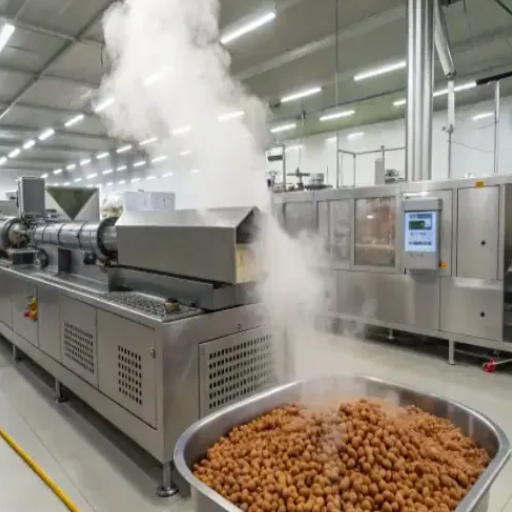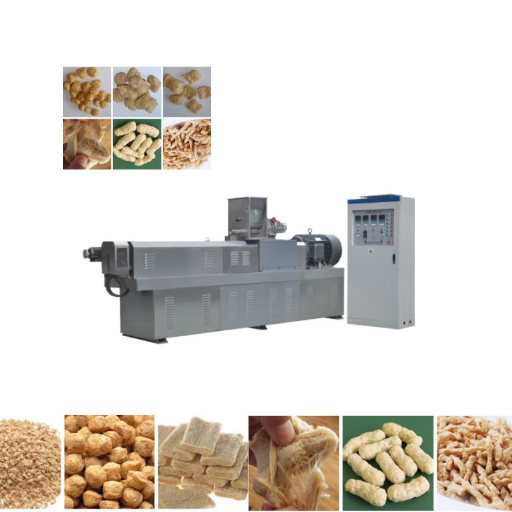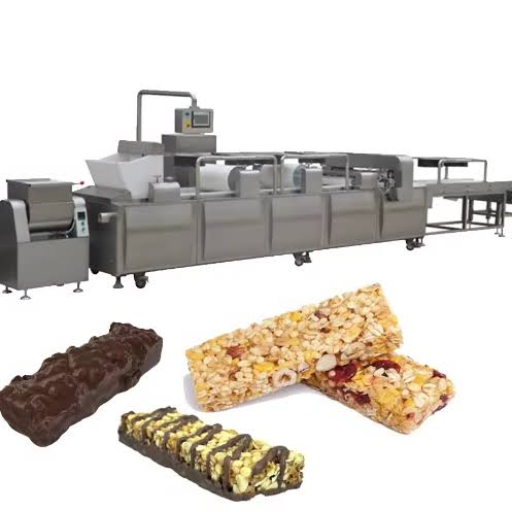
In the modern-day bakery industry, the factors of efficiency and accuracy stand as the most basic needs, especially in the case of highly demanding factories. The biscuit production line makers are so crucial as well as the whole process that they transform the raw materials to nice products through their support in automation and highly-skilled technicians. The article brings to light the latest technological developments in biscuit-making process and how manufacturers are changing the trade with the customized solutions that allow them to flow, keep the same product quality and meet the consumers’ frequently changing needs. Besides, if you are a small sized bakery aspiring to grow or a huge manufacturer planning to increase your output, then this guide will be loaded with insights regarding the importance of reliable biscuit producing machinery and how they could be the reason for your success in the battle for a market that is very competitive.
Biscuit Production Overview
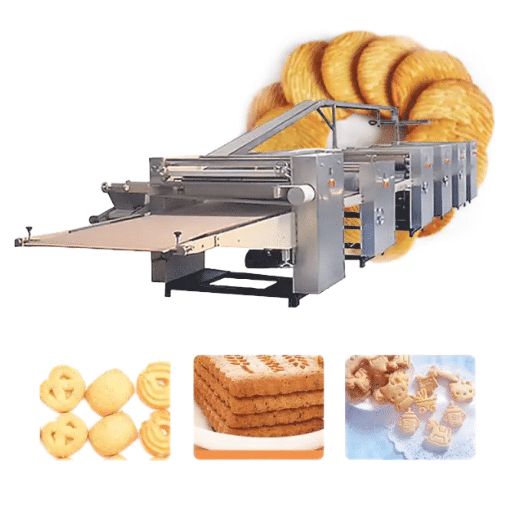
The biscuit-making process consists of a series of steps, each of which is closely monitored to quality, consistency, and efficiency of production. The first step is mixing the ingredients, where different components of the dough are measured very precisely to ensure uniformity. The second step is shaping, where mainly rolling and cutting or molding are used for the biscuits to have a defined shape. Biscuit mass is then baked through a very controlled process with the aim of producing the best texture and taste as a result of the uniformity of the whole cooking process. The next step, cooling, is very crucial as it helps in both preventing the biscuits from being soft and maintaining their shapes nicely. The last step is packaging, which is done in such a way that the product has the same freshness as when it was produced and it also complies with the required food safety standards. Every step of the process is critical and will determine the quality of biscuits that can be sold in consumer markets and will, in turn, determine the type of biscuits that will be sold in consumer markets.
Understanding Biscuit Production
The innovative biscuit making process that is now being used is a combination of modern production techniques, as well as data and smart technologies, and at every point in the process the optimization occurs. New data from the market suggests that the world’s biscuit market was about $110 billion USD in 2022 and will grow at a compound annual growth rate (CAGR) of 4.5% through 2028. Furthermore, consumers’ demands for healthier options such as gluten-free and high-fiber biscuits have been a key influencer on the choice of ingredients and the quest for formulation innovations.
The precision in mixing is a crucial factor in developing dough with consistent high quality. Sophisticated control software is employed in fast mixers to assure the proper and equal mixing of the diverse ingredients. The monitored parameters include mixing time, temperature, and speed, and their accuracy is within ±1%, which results in a significant decrease in batch variation. Different methods of shaping such as rotary molding, cutting machinery, and wire cutting are all capable of creating intricate shapes with minimal wastage, and at the same time, computer-vision systems are increasingly being used for the identification of defects during the shaping stage.
💡 Energy Insight: The process of baking still consumes the most energy and accounts for approximately 45-55% of the total energy used in the biscuit production plants. To solve this issue, the new ovens are coming with energy recovery systems that are quite efficient and apply zoned heating technologies that can adjust the energy according to the biscuit type. It is said that the energy consumption can be reduced by up to one-third with these upgrades when compared to the traditional approaches.
During baking, data acquisition in real-time ensures that the moisture content is known as well as the thermal dynamics and texture which in turn guarantees the optimum result.
Eventually, the automated cooling tunnels and robotic packaging lines are among the technologies employed in post-production to not only raise operational efficiency but also maintain the quality of the product. In addition, the packaging materials have changed; the use of recyclable or biodegradable packaging has increased to over 60% in recent years by major manufacturers in response to the environmental issues. The biscuit industry not only keeps pace with the times through the implementation of modern solutions but also by meeting the world’s strictest food safety standards, thus continually evolving along the lines of consumer wants and sustainability.
The Role of Biscuit Machines
Biscuit machines have become an indispensable part of modern biscuit manufacturing and have made the production process quicker and more uniform, accurate, and large-scale at the same time. The high production rates and quality standards in the industry, which are now being maintained in a competitive scenario, are mainly attributed to these machines. They have replaced and made the manual processes very efficient and thus reduced the labor costs tremendously. Let us present to you below the five categories of biscuit machines and their respective roles in the production cycle:
🥣 Dough Mixers
To get biscuit dough, all the components flour, sugar, fat, and water, are blended together proportionally to obtain a uniform dough. The newer dough mixers are so powerful that they can prepare a single batch of dough weighing as much as 1,000 kg, thus making large volume production a non-issue.
📏 Rolling and Laminating Machines
There is a great distinction between the roles of the rolling machine and the laminating machine. While the rolling machine is the one responsible for spreading the dough to the required thickness, the laminating machine is the one that folds the layers of dough and thus produces the right types of biscuits such as puff or flaky. The contemporary systems can really accurately truncate to a thickness of ±0.1 mm.
🔄 Rotary Cutters and Molders
The machines come with programmable settings that allow either cutting or shaping the dough into various forms and sizes. The rotary cutters are designed in such a way that they can handle a variety of designs, thereby allowing seasonal or custom biscuit patterns to be made easily.
🔥 Oven Systems
Industrial ovens guarantee uniformity in the baking process with accurate control of the temperature, conveyor systems, and steam levels. The tunnel oven, which is the most common type of oven, during peak production, can have a capacity of up to 2,500 biscuits every minute.
📦 Packaging Machines
The wrapping, sealing, and boxing of biscuits are done by these automated systems in a very efficient way to conserve freshness as well as quality. The use of robotic arms and vacuum sealing along with other innovations have not only increased the packaging process but also lessened the occurrence of waste with some systems running at over 150 packs per minute.
Every piece of equipment that is engaged in the manufacturing process is responsible for not just the supply of high-quality biscuits but also for the observance of food safety and industry regulations. They form a smooth, interconnected operation that can meet the requirements of a fluctuating global market.
Types of Biscuits: Hard vs Soft
Top 3 Biscuit Production Line Manufacturers


Biscuit Production Line Components

To reach the intended degree of efficiency, quality, and scalability throughout the production process, biscuit manufacturing requires today coordination of several machines and technologies. The major components involved are described in detail below:
Ingredient Mixing Systems
The very first step that can be termed as quality mixing performed via automatic mixers which give uniform quality to the dough is the production process. Depending on the type of dough, the high-speed industrial mixers usually operate at 20-60 rpm and the batch quantities they can manage range from 50 kg to 500 kg in one cycle. The systems are fitted with load cells and digital controls to maintain strict accuracy in weighing and mixing of flour, sugar, and fats, which are the main raw materials.
Forming and Sheeting Machines
From the mixed dough, dough forming and sheeting machines create even sheets of dough with variable thickness. The advanced technology includes servo-driven rollers and knives that provide precision and flexibility when it comes to different shapes and sizes of biscuits. ±0.1 mm is the tolerance that thickness can be achieved accurately by the machines and this is vital for uniform baking and good quality of the product.
Baking Ovens
Using tunnel ovens is the most common method for biscuit production. They provide high output and even heat distribution. The type of heating system for these ovens can be gas, electric, or hybrid depending on the recipe and the temperature can go up to 250°C for the case of electric or hybrid ovens. The biscuit production industry that yields 10 tons of the final product daily can have tunnels where the belt width is 1.5 meters and the length is over 50 meters.
Cooling Conveyors
In order to prevent packing problems caused by moisture, biscuits are to be cooled down on the conveyor system to room temperature after baking, hence special conveyor systems are for this purpose. Spiral or linear cooling conveyor systems, which sometimes allow a total length of over 30 meters, enable cooling to be done gradually while production remains at a high rate. New setups are constructed in a manner that they occupy less space and are capable of processing up to 60,000 biscuits a minute.
Inspection Systems
Quality of the biscuits produced is to be controlled constantly by means of a great number of inspection and control systems, therefore, X-ray, vision, and metal-detection technologies are in use in biscuit production and at the same time, they are the ways that safety regulations are made to be adhered to. The minimum dimensions for foreign particles that these systems can detect is 0.3 mm and they can also verify whether the items are of the right shape, size, and weight to be sold. Automated rejection systems expel defective products from the line without human involvement.
Packaging Machines
For the last stage in the production process, high-speed packaging lines featuring robotic arms for precise positioning and vacuum sealing methods are used. Horizontal form-fill-seal (HFFS) machines can go as fast as 300 packs per minute and can do many types of packaging like flow packs, pouches, and trays. Modified atmosphere packaging (MAP) systems are also employed for prolonging the shelf life while still ensuring product freshness.
All these machines are designed to work in unison, thus forming a well-organized and productive manufacturing flow. Furthermore, continuous advancements in technology in relation to automation, IoT, and energy-efficient technology are the main players behind the improvement of operational efficiency and sustainability which have made it possible for manufacturers to meet the rising global consumer demand.
Biscuit Making Machines Explained in Detail
The use of biscuit manufacturing machines today in food production is to a great extent the same as that of bonus stage automation. They are used for the whole process of biscuit production starting from the dough making, molding, baking, cooling, and packing. The machines are designed so that they will be operated at an extremely high rate while the quality of the output is not affected. A detailed description of the major steps is given below together with the tech advancements that are behind the biscuit production:
1. Dough Preparation Systems
The very first step is the use of high capacity mixers that will make flour, water, sugar, and other ingredients mix. Up-to-date mixers come equipped with very smart sensors that monitor the dough’s consistency and temperature making uniformly baked product possible. Besides, the recently invented systems can do mixing and molding of 2,500 kg of dough per hour which reduces the differences of batches and the need for human interference.
2. Forming and Shaping Units
Once the mixing is done, the dough is prepared for the forming machines which will shape it according to the desired specifications. The main equipment in this process is usually rotary molders and cutting machines. Take for example rotary molders that can engrave intricate patterns on the biscuit surface while achieving a speed of up to 200 biscuits per minute or more, and virtually no waste is created.
3. Baking Ovens
Baking is the most crucial point, where the taste and feel are actually formed. Convection ovens with continuous production systems such as tunnel ovens are applying dry and wet heat control for accuracy. The temperature range for these ovens is 200°F to 500°F (93°C to 260°C), thus the different types of biscuits together can be baked with the right conditions.
4. Cooling and Conveying Systems
The cooling of the baked biscuits has to happen immediately in order to prevent the internal moisture from softening the biscuits and keep the texture. Cooling conveyors, which are usually 1.5 to 2 times the length of the oven, will reduce the temperature of the biscuits to below 85°F (29°C) before they are packed.
5. Packaging Units
Biscuits to be fresh are passing through high-speed Modified Atmosphere Packaging (MAP) systems or flow wrappers. The newest packaging machines are equipped with vision systems that can automatically detect defects, hence quality is assured through such systems. As a result of such automated lines, high production rates of up to 150 packs per minute can be obtained.
Technological Advancements in Biscuit Machines
🌐 IoT Integration
Process monitoring in real time and predictive maintenance lead to downtime being reduced by as much as 30%.
⚡ Energy Efficiency
Energy use of hybrid ovens and energy recovery systems is approximately 20% less than before.
🎯 Customization
From gluten-free to vegan options, depending on the trend in the market, machines are now equipped to switch over to different product lines responding to the increasing demand.
Industry Data
The latest worldwide market analysis places the biscuit production equipment market at about $14.5 billion in 2023 with an expected annual growth rate of 5.6% till the year 2030. The growing need for ready-to-eat products and the technical advancements in automated food production systems are the primary drivers of this growth.
The machines for making biscuit combining the latest technologies and maintaining high-quality standards have become a necessity for the fast-paced food industry to be competitive and meet the changing demands.
Importance of the Biscuit Forming Machine
The biscuit forming machine is an integral part of the modern biscuit-making process. It allows the manufacturers to produce more with less effort, keep a standard product, and also have an option to increase the size of their operations. The large-scale production and fine-tuning production methods are the results of merging engineering with automated systems in these machines. While they have become an industry standard, they can easily cope with both, bulk supply and individual order needs. To begin with, here are the five factors that illustrate the importance of the biscuit forming machine:
1️⃣ Production Efficiency Going Up by a Notch
Biscuit forming machines are the main reason as of now for the enormous increase in production efficiency because of the minimal-skilled workers’ involvement in the operations of holding and forming. One machine can produce hundreds or even thousands of biscuits in an hour, thus cutting down both costs as well as time to a large extent.
2️⃣ Biscuit Quality Being Consistent
Uniformity and accuracy are the two most important factors in food making. Machines will not allow the production of biscuits of varying sizes, weights, and designs; thus there will always be the same quality across the different batches and less wastage will occur.
3️⃣ The Art of Making and Customizing
Modern biscuit forming machines offer a wide range of customization options; this way, manufacturers can produce different kinds, forms, and designs of biscuits that are in line with the consumers’ likings and the market’s needs.
4️⃣ Meeting Health and Safety Standards
The food safety laws are becoming more stringent by the day, and thus the biscuit forming machines are made from food-safe materials and their cleaning procedures are very effective. This not only keeps the machines in harmony with the global hygiene and safety standards but also reduces the risk of contamination.
5️⃣ Expanding Market through Scalability
These machines are powerful enough to handle different production capacities thus making it easier for the manufacturers to scale up or down the operations as per the requirement. Whether the focus is on local sales or on global distribution, biscuit forming machines will facilitate smooth scaling up to meet the ever-growing demand.
Biscuit forming machine has become an indispensable tool in the food manufacturing industry through its capabilities and advantages by being able to juggle quality, efficiency, and innovation all at once.
Choosing a Biscuit Production Line Manufacturer

Finding the right manufacturer for a biscuit production line is a complex process. There are several main considerations, and if they are well-adjusted to the defined criteria and production priorities, the investment will be very beneficial. The manufacturer’s choice directly affects the production line’s efficiency, cost-effectiveness, and quality. The aspects and insights below that are data-driven and have been explained in detail will assist you in making a decision:
1. Reputation and Experience Level
It is best to choose the manufacturers whose past performance is well-documented. For example, Bosch, Bühler, and GEA, which are among the leading companies, have been manufacturing high-quality and durable food processing equipment for decades. Newcomers to the market might sometimes offer sophisticated technologies that have not been properly tested leading to their failure in the long run, poor and inconsistent output. The latest market data indicates that the manufacturers older than 25 years, if combined, account for approximately 60% of the installed biscuit production lines worldwide which is a strong indication of their trustworthy skill.
2. Customization and Scalability
There are different biscuit production markets, each with different requirements regarding the shape, texture, and types of ingredients used. The manufacturers should be able to mold their production lines to the specific needs of the product, whether it is classic biscuits or maybe healthy options or sandwich cookies. The market predicts a strong demand for hybrid and flexible systems from 2023 to 2030 at a rate of 8% CAGR, for example, with modular production lines being able to adapt to rapidly changing production capacities.
3. Technological Advancements
Pick the manufacturers who are not only going to use but also who would integrate the most up-to-date technologies such as automation, IoT connectivity, and energy-efficient systems. The current players are pouring money into Industry 4.0 and among the technologies being applied are real-time monitoring, predictive maintenance, and seamless integration with enterprise systems. A Google research estimates that smart automation in the production lines can lead to 15% less downtime and 20% less operating costs.
4. Compliance with the Safety and Hygiene Standards
Safety is a major concern in the food industry, and therefore, the machines used in biscuit manufacturing must meet international food manufacturing standards—ISO 22000, HACCP, and CE certifications. Reputable suppliers not only guarantee compliance but also build machines that are easy to clean, thereby minimizing the likelihood of contamination. Recent surveys have reported a 30% increase in the food sector’s non-compliance fines in 2023 compared to the previous years, which is one of the main reasons why customers should ensure that the systems they choose are compliant.
5. Post-Sales Support and Maintenance
Complete after-sale support— training, spare parts and technical assistance— is very crucial for the smooth operation. An industry report in 2023 revealed that 78% of the total manufacturers surveyed reported that fast technical support is one of the criteria they use to pick their equipment vendor. Besides providing global service networks and offering 24/7 support, the manufacturers are a significant advantage to companies.
6. Cost-Benefit Analysis
The price of the machines is still the most important factor to consider at the start. However, it is also important to consider the long-term operational efficiency, energy consumption, and productivity as these factors will reflect the impact of the production line on the business. The production lines that are more advanced and have integrated automation might require a greater initial investment but will yield a quicker ROI. Case studies, in fact, show that the use of an automated biscuit production line results in almost a 25% increase in the production of the manufacturers within the first year of their operation.
A methodical approach to factor analysis combined with the use of existing market knowledge will lead businesses to the right choice of biscuit production line manufacturer and consequently reap the benefits of high performance and profits for many years to come.
Criteria for Selecting a Line Manufacturer
When selecting a producer of biscuit production lines, I give great emphasis at the outset to a few important factors. The very first thing I do is to research the manufacturer’s reputation and reliability within the industry. I am going to make it clear that they possess a track record of being the best that includes their equipment being of high quality and very durable. Then I will take into consideration the technological innovation they are introducing to the market, prioritizing the manufacturers that allow for advanced automation, provide energy-saving technologies, etc.. Moreover, I will look into customer support and the maintenance service as the latter should be dependable and always on hand to minimize downtime. Lastly, I will scrutinize cost-effectiveness by comparing the upfront investment with the lifespan of the operational efficiency and the return on the investment. Doing this, I will ensure that I am working with a producer whose capacity for production will not only fit the current demand but also the future one.
🎯 Conclusion
The manufacturer of the right biscuit production line is very important, both, for the competitive bakery industry in terms of the efficiency, quality, and longevity of the product. By properly assessing the factors like reputation, technological capabilities, safety standard compliance, and post-sale support, not only the businesses but also the whole industry can really make decisions that will enhance their productivity and profitability.