The main starch modification methods are physical, chemical, enzymatic, and dual or combined treatments. Each method changes how starch behaves under heat, moisture, acid, or shear, making it suitable for specific food and industrial applications. Choosing the right approach depends on your product goals, regulatory requirements, clean-label priorities, and production scale.
What happens when the wrong method meets the right product? A soup manufacturer discovers that their “modified starch” thickener breaks down after freeze-thaw cycles. A snack producer finds their puffed product turns soggy within days.
These failures rarely come from bad starch. They come from a mismatch between the modification method and the production process. In this guide, you will learn how each method works, when to use it, and how to scale it on a reliable food processing machinery line.
Key Takeaways
- Starch modification methods fall into four categories: physical, chemical, enzymatic, and dual or emerging treatments.
- Physical modification, especially extrusion, is the cleanest path for snack, instant-food, and pregelatinized starch production.
- Chemical modification offers the strongest control over stability, viscosity, and freeze-thaw resistance for sauces, dressings, and dairy.
- Enzymatic modification supports clean-label goals but requires tighter process control and longer residence times.
- Scaling any method requires matching lab results to production-line equipment: mixers, extruders, dryers, grinders, and packaging systems.
What Is Starch Modification?
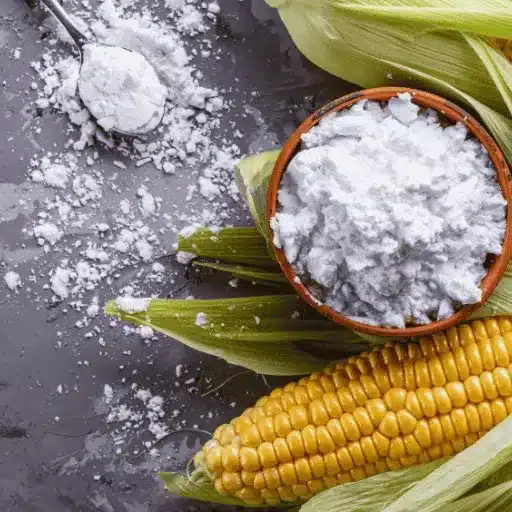
Native starch is a carbohydrate stored in plant granules. It contains two main polymers: amylose, the linear chain, and amylopectin, the branched chain. In their natural state, starch granules resist cold water, swell unpredictably when heated, and retrograde, or weep water, when cooled and reheated. These traits make native starch unsuitable for most industrial food systems.
Starch modification changes how native starch behaves. It does not change the basic fact that starch is a carbohydrate. According to StudySmarter, the goal is to improve properties such as gelatinization temperature, paste viscosity, freeze-thaw stability, solubility, and digestibility.
Food manufacturers modify starch because finished products demand predictable behavior. A frozen dinner sauce must remain smooth after thawing. A puffed snack must hold its crisp texture, and a gluten-free bread must mimic the mouthfeel of wheat.
Each need points to a different modification strategy.
Physical Modification of Starch
Physical modification of starch uses heat, pressure, moisture, or mechanical shear instead of chemicals. It is the preferred route for clean-label products because it leaves no chemical residues and often avoids E-number additives.
Pre-gelatinization
Pre-gelatinization is the most common physical method. It cooks starch completely and then dries it so the granules become cold-water soluble. Industrial producers use three main approaches:
- Drum drying: Starch slurry spreads across heated drums, cooks, and dries in one pass. The dried film is scraped off and milled.
- Spray drying: Atomized starch milk meets hot air in a drying tower, producing fine spherical particles.
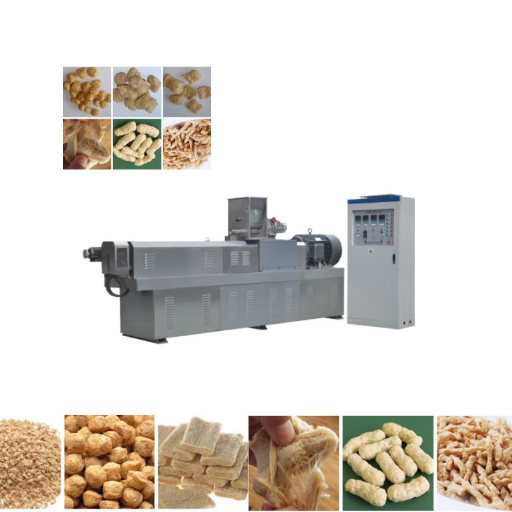
- Extrusion: Starch passes through a twin-screw extruder at 120–200°C and 3–10 MPa, gelatinizing under high-temperature, short-time conditions.
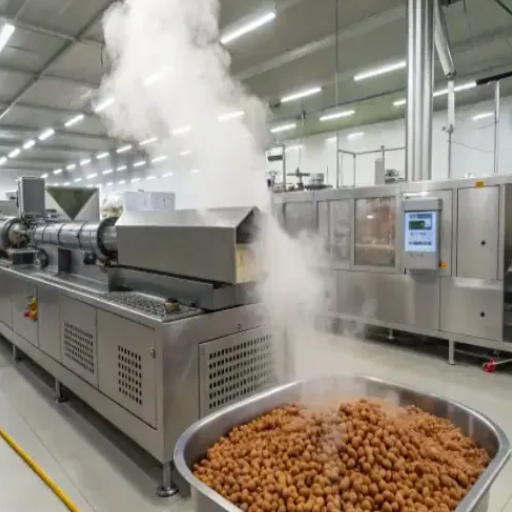
Extrusion offers lower capital cost than drum drying for many applications and supports continuous operation. It is also the foundation of snack food machinery systems that produce puffed snacks, cereal pieces, and pellet bases. For shaped pellets, manufacturers often use 2D/3D snack pellet machinery before final frying or baking.
Heat-Moisture Treatment and Annealing
Heat-moisture treatment (HMT) heats starch at controlled moisture and temperature below its gelatinization point. Annealing does the same at higher moisture. Both methods change granule crystallinity and raise gelatinization temperature without chemicals. They are popular for producing slowly digestible or resistant starch.
Other Physical Methods
- High-pressure processing forces water into granules at extreme pressure.
- Ultrasonication uses sound waves to disrupt granule structure.
- Pulsed electric field and cold plasma are emerging non-thermal methods used to increase resistant starch content.
- Ball milling reduces particle size and changes crystallinity.
Extrusion starch modification remains the most scalable physical method for food manufacturers. It converts native starch into cold-water-soluble or pregelatinized forms in a single continuous pass.
Mini-Story: Maria’s Snack Line Decision
Maria runs a mid-sized snack plant in Southeast Asia. Her team wanted to launch a corn-puff line using native corn starch, but the product collapsed during cooling and lost its crunch within 48 hours. After testing pregelatinized starch made on a twin-screw extruder, she saw a stable expansion ratio and a shelf life that stretched past six months. The extrusion process became the core of her new corn puff snack production line, and she avoided the clean-label concerns that come with chemical additives.
Chemical Modification of Starch
Starch chemical modification results in addition of new groups to starch molecule. This approach gives the strongest control over paste behavior, acid and heat stability, and shear resistance.
Esterification
Esterification reacts starch with acids or anhydrides. Common forms include:
- Acetylation improves clarity, swelling, and freeze-thaw stability.
- Octenylsuccination creates amphiphilic starch that stabilizes emulsions and encapsulates flavors.
- Phosphorylation improves viscosity and water-holding capacity.
Etherification
Etherification uses reagents such as propylene oxide to produce hydroxypropylated starch. This type resists retrogradation and syneresis, making it ideal for frozen foods and dairy desserts.
Oxidation
Oxidized starch is treated with hydrogen peroxide or sodium hypochlorite. The process introduces carbonyl and carboxyl groups, lowering viscosity and improving adhesion. It is widely used in paper sizing, batters, and coatings.
Cross-Linking
Cross-linking connects starch chains with agents such as sodium trimetaphosphate (STMP) or epichlorohydrin. The result is a starch that resists breakdown under acid, heat, and high shear. Cross-linked starches are essential for canned soups, retort sauces, and UHT dairy.
Cationization
Cationic starch carries a positive charge. It binds strongly to negatively charged surfaces such as cellulose fibers, so paper and textile manufacturers use it heavily.
Clean-Label Considerations
Chemically modified starches often carry E-numbers in global markets. Acetylated distarch phosphate, for example, may appear as E1414. If your product markets itself as natural or clean-label, chemical modification may conflict with brand positioning even when it performs perfectly.
Enzymatic Modification of Starch

Enzymatic modification of starch uses enzymes such as amylases, glucoamylases, pullulanases, and branching enzymes to reshape starch molecules. Enzymes are highly specific, so this method creates precise changes in molecular weight, chain length, and digestibility.
Common Enzymatic Processes
- α-amylase hydrolysis breaks starch into shorter chains and dextrins.
- β-amylase produces maltose and maltodextrins.
- Glucoamylase converts starch almost completely into glucose.
- Pullulanase debranches amylopectin to increase resistant starch content.
- Branching enzymes rearrange branch patterns to alter texture and retrogradation.
Advantages and Limitations
Enzymatic modification operates under mild temperature and pH conditions. It produces fewer by-products and supports clean-label claims. However, it typically requires longer residence times, stricter process control, and higher raw-material quality than physical or chemical methods. Enzyme cost and inactivation steps also add complexity.
Mini-Story: The Clean-Label Bakery Switch
A European bakery R&D team wanted to replace chemically modified starch in its gluten-free sandwich bread. Consumers were rejecting E-number ingredients. The team tested a pullulanase-treated starch that increased resistant starch content while maintaining crumb softness. After six months of shelf-life testing, the enzyme-modified bread matched the original texture. The bakery reformulated its entire gluten-free line and added “enzyme-modified starch” to its front-of-pack messaging.
Dual and Emerging Modification Techniques
Single starch modification methods sometimes fail to deliver every property a product needs. Dual modification combines two approaches to create synergistic effects.
Common Dual Combinations
- Cross-linking + hydroxypropylation produces starch that is both heat-stable and freeze-thaw stable.
- Acetylation + oxidation improves clarity and adhesion simultaneously.
- Extrusion + heat-moisture treatment can increase resistant starch while maintaining process efficiency.
- Ultrasound-assisted enzymatic treatment speeds up reaction rates and improves functionality.
Emerging Green Methods
Researchers are exploring non-thermal technologies that reduce chemical use and energy consumption:
- Pulsed electric field (PEF) modifies starch structure in milliseconds.
- Cold plasma treats starch surfaces without heating the bulk material.
- Microwave-assisted reactions reduce chemical modification time.
- Electrochemical oxidation offers a cleaner path to oxidized starch.
A ScienceDirect review notes that dual and green modifications are among the fastest-growing research areas in starch science. For manufacturers, these methods may become viable at production scale within the next five to ten years.
How to Choose the Right Starch Modification Method
Selecting a method requires balancing product performance, regulatory status, clean-label goals, equipment cost, and throughput. Use the following decision framework.
| Goal | Best Method | Why |
|---|---|---|
| Cold-water solubility for instant foods | Physical: pregelatinization by extrusion or drum drying | No chemical residues; fast rehydration |
| Heat, acid, and shear stability for sauces | Chemical: cross-linking | Maintains viscosity under retort and UHT conditions |
| Freeze-thaw stability for frozen meals | Chemical: hydroxypropylation or cross-linking | Resists retrogradation and syneresis |
| Clean-label thickener for bakery or dairy | Enzymatic or physical | Avoids E-numbers and chemical reagents |
| Resistant starch for digestive health | Physical: HMT, annealing, or extrusion; enzymatic: pullulanase | Increases slowly digestible starch fractions |
| Emulsion stabilization or flavor encapsulation | Chemical: octenylsuccinated starch | Amphiphilic structure binds oil and water |
Scale Matters
A method that works in a pilot lab may not transfer cleanly to a 1,000 kg/h line. Shear history, residence time, and heat-transfer rates differ between batch reactors and continuous extruders. Test every formulation on production-scale equipment before you commit.
Contact our engineering team if you need help matching a starch modification method to your target capacity and product specifications.
Scaling Starch Modification with a Production Line
Industrial starch modification requires more than a single piece of equipment. A complete modified starch production line integrates feeding, cooking or reaction, drying, size reduction, and packaging into one continuous workflow. Pregelatinized starch production by extrusion follows the same layout with slight adjustments to moisture and screw profile.
Typical Extrusion-Based Line Layout
For physical modification via extrusion, the standard process flow is:
- Raw material intake and sieving, removes foreign particles and ensures consistent feed.
- Mixer, blends starch with water and any additives to target moisture.
- Screw conveyor, feeds conditioned material into the extruder.
- Twin-screw extruder, applies heat, pressure, and shear to gelatinize and modify the starch.
- Air conveyor, transfers extrudate to drying.
- Dryer, reduces moisture to storage-stable levels, typically below 14%.
- Cooling conveyor, brings product to ambient temperature.
- Grinder or pulverizer, mills extrudate to the required particle size.
- Packaging machine, weighs, fills, and seals bags.
Equipment Specifications
| Scale | Capacity | Installed Power | Typical Length |
|---|---|---|---|
| Pilot / Small | 100–250 kg/h | 50–90 kW | 15–25 m |
| Medium | 250–600 kg/h | 65–130 kW | 25–35 m |
| Large | 600–1,000 kg/h | 100–180 kW | 35–45 m |
| Industrial | 1,000–3,000 kg/h | 150–295 kW | 45–60 m |
A well-designed line uses food-grade 304 or 316 stainless steel and complies with HACCP, FDA, and CE standards. Shandong Loyal Industrial builds turnkey lines with customizable screw profiles, barrel configurations, and die designs to match specific starch sources and end products.
Mini-Story: Chen’s Soup Factory Upgrade
Chen managed a soup plant that imported pregelatinized starch at a premium. After a capacity review, his team calculated that producing modified starch in-house would pay back within 18 months. They installed a 500 kg/h extrusion-based modified starch production line with automated mixing, drying, and grinding. Within the first year, unit cost dropped by 30% and supply-chain delays disappeared. The line also gave Chen flexibility to adjust cold-water solubility for different soup bases.
Applications of Modified Starch in Food Processing
Modified starch appears in nearly every processed-food category. The table below maps common applications to the most suitable modification methods.
| Application | Preferred Modification | Function |
|---|---|---|
| Instant soups and sauces | Pregelatinized starch | Thickens in cold or warm water without cooking |
| Puffed snacks and cereals | Extruded starch | Provides expansion, texture, and binding |
| Salad dressings and mayonnaise | Octenylsuccinated starch | Stabilizes oil-in-water emulsions |
| Frozen meals and ice cream | Hydroxypropylated or cross-linked starch | Prevents ice crystal growth and syneresis |
| Canned soups and retort sauces | Cross-linked starch | Maintains viscosity after severe heat treatment |
| Gluten-free bakery | Enzyme-modified or physically modified starch | Improves crumb structure and moisture retention |
| Pet food and animal feed | Extruded or pregelatinized starch | Improves digestibility and pellet durability |
| Confectionery and gummies | Acid-thinned or oxidized starch | Controls gel strength and clarity |
The versatility of modified starch explains why the global market is growing steadily. According to Future Market Insights, the market is expected to reach 9.4billionin2025,withChinaaloneaccountingforroughly9.4billionin2025,withChinaaloneaccountingforroughly2.3 billion.
Market Trends and the Future of Starch Modification
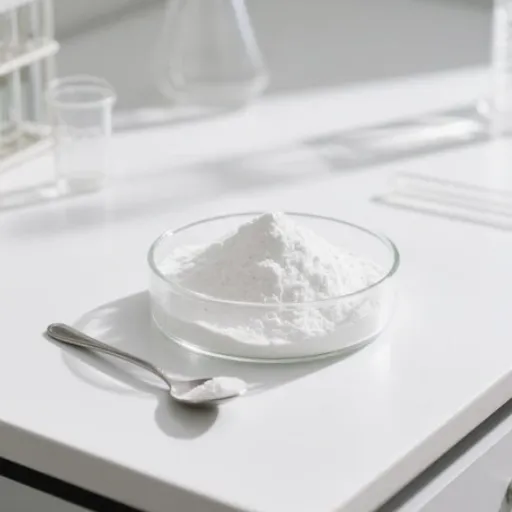
Several forces are reshaping how manufacturers choose starch modification methods.
Clean-Label Demand
Consumers increasingly reject ingredient lists with unfamiliar chemical names. Enzyme-modified and physically modified starches are gaining share because they can carry simpler, more natural-sounding labels.
Resistant Starch and Digestive Health
Resistant starch behaves like dietary fiber in the human gut. It supports glycemic control and digestive health. Physical methods such as HMT, annealing, and extrusion are the main production routes for increasing resistant starch content.
Sustainable Packaging
Modified starch is a feedstock for biodegradable films and packaging foams. As plastic restrictions expand globally, starch-based bioplastics present a long-term growth opportunity for processors who can supply consistent material.
Asia-Pacific Growth
The global modified starch market is expected to reach $13 billion in 2025, with physical modification leading demand. Manufacturers are investing in food processing machinery that can produce consistent, clean-label modified starch at scale.
AI-Driven Process Design
Emerging research published in 2025 explores electric-field-assisted modification and AI-optimized process parameters. While not yet mainstream, these technologies could reduce energy use and improve batch consistency within the next decade.
Conclusion
Starch modification methods are not interchangeable. Physical modification, especially extrusion, delivers clean-label, cold-water-soluble starch for snacks and instant foods. Chemical modification provides the strongest stability for demanding applications such as canned soups and frozen meals.
Enzymatic modification supports clean-label goals with precise molecular control. Dual and emerging methods combine these benefits for next-generation functional ingredients.
The right choice depends on your product, your market, and your production scale. Lab results are only the starting point. Success comes from translating those results into a reliable, CE-certified production line that runs at your target capacity day after day.
At Shandong Loyal Industrial, we have spent more than 10 years designing turnkey food production lines for manufacturers worldwide. Whether you need a snack extrusion system, a pasta production line, or a complete modified starch production line, our engineering team can customize a solution around your raw materials, output targets, and quality standards.
Get a free quote today and tell us about your starch modification project. We will help you choose the right method and the right equipment to bring it to scale.
FAQ
What are the main starch modification methods?
The main starch modification methods are physical, chemical, enzymatic, and dual or combined treatments. Physical methods use heat, pressure, or shear. Chemical methods add functional groups. Enzymatic methods use enzymes to reshape starch molecules. Dual methods combine two approaches for synergistic effects.
Which starch modification method is best for clean-label products?
Physical modification, especially extrusion, and enzymatic modification are the best choices for clean-label products. They avoid chemical reagents and E-number additives while still delivering functional properties such as cold-water solubility and texture improvement.
What equipment do I need for a modified starch production line?
A typical extrusion-based line includes a mixer, screw conveyor, twin-screw extruder, air conveyor, dryer, cooling conveyor, grinder, and packaging machine. Capacity ranges from 100 kg/h for pilot lines to over 1,000 kg/h for industrial operations.
How does extrusion modify starch?
Extrusion subjects starch to high temperature, pressure, and shear inside a twin-screw extruder. This gelatinizes the starch, disrupts crystalline structure, and can produce pregelatinized or cold-water-soluble starch in a continuous, high-throughput process.
Why is modified starch important in food processing?
Modified starch improves texture, stability, shelf life, and processing tolerance. It allows manufacturers to create consistent products such as instant soups, sauces, snacks, frozen meals, and gluten-free baked goods that would be difficult or impossible with native starch.