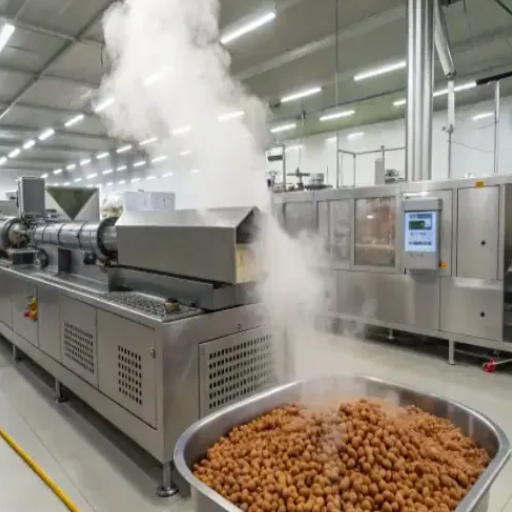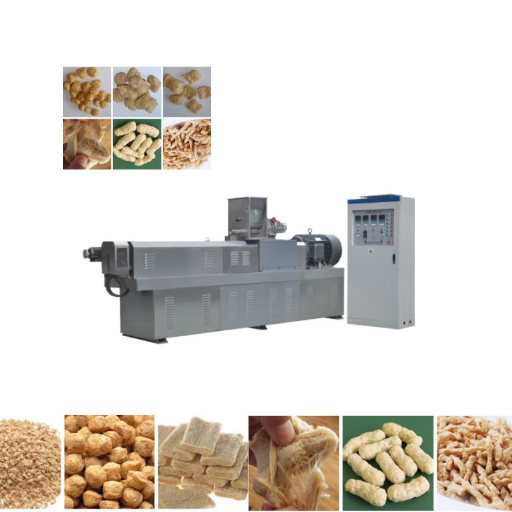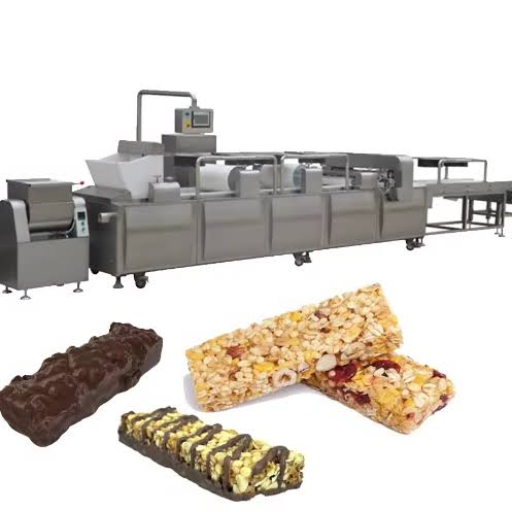
A pregelatinized starch production line converts native starch into cold-water-soluble powder. It cooks starch under heat and moisture, then dries and mills it so the final product thickens, binds, or gels without traditional cooking. Most modern lines use twin-screw extrusion because it combines gelatinization, expansion, and drying into one continuous, energy-efficient process.
But not every pregelatinized starch line is built the same. The right configuration depends on your raw material, target application, capacity, and the functional properties your customers demand. Choose the wrong method, and you may end up with starch that hydrates poorly, loses viscosity, or fails quality testing in your customer’s plant.
In this guide, you will learn how the process works, how drum drying, spray drying, and extrusion compare, and what equipment you need to produce food-grade, pharmaceutical, oil-drilling, or construction-grade pregelatinized starch at scale.
Key Takeaways
- A pregelatinized starch production line cooks native starch and dries it so the powder dissolves or swells in cold water.
- Twin-screw extrusion is the most common industrial method because it is continuous, scalable, and cost-effective for capacities from 100 kg/h to 2,500 kg/h.
- Drum drying produces higher-viscosity starch but requires higher capital investment; spray drying creates fine spherical particles but consumes the most energy.
- Food, pharmaceutical, oil-drilling, construction, paper, and textile industries all use pregelatinized starch, but each has different quality requirements.
- Key equipment includes mixer, twin-screw extruder, dryer, grinder, screener, and packaging machine, supported by PLC control and dust collection.
What Is Pregelatinized Starch?
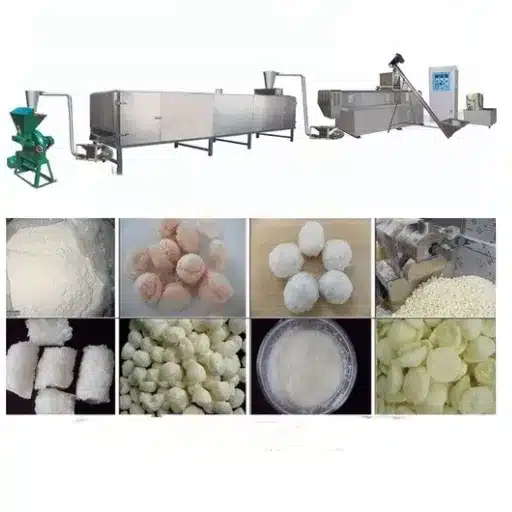
Pregelatinized starch is native starch that has been cooked and dried. The cooking step disrupts the crystalline structure inside starch granules. Once milled into powder, the starch can absorb water and form a paste at room temperature without additional heating. This makes it ideal for any cold water soluble starch production line targeting instant foods, pharmaceuticals, or industrial binders.
You may also hear it called alpha starch or cold-water-soluble starch. It is made from corn, cassava, potato, wheat, rice, or tapioca starch. An alpha starch production line uses the same core equipment as a pregelatinized starch system. The source affects the final color, viscosity, clarity, and taste.
The main advantage is convenience. Food manufacturers use pregelatinized starch in instant soups, sauces, and puddings. Pharmaceutical companies use it as a tablet binder and disintegrant. Oil drilling operators add it to water-based drilling fluids. Construction producers blend it into adhesives, putty powders, and tile mortars.
Pregelatinized starch is also a type of physically modified starch. Unlike chemically modified starches, it does not require reagents or E-number additives. That makes it attractive for clean-label and natural-product markets.
When David Okafor, a food ingredient distributor in Lagos, started importing pregelatinized starch for instant noodle seasonings, he assumed all pregel starch was identical. His first shipment worked well in dry mixes but clumped when customers added it to warm broth. After switching to an extrusion-based line with tighter moisture control and finer grinding, his product dispersed cleanly. Customer complaints dropped by 70%.
How Pregelatinized Starch Is Made: Three Industrial Methods
Industrial producers use three main methods to make pregelatinized starch. Each method changes the pregelatinized starch manufacturing process, equipment layout, investment level, energy use, and final product properties.
Drum Drying
In drum drying, a starch slurry is spread across heated rotating drums. The starch cooks and dries simultaneously. The dried film is scraped off and milled into powder. According to Celotech, drum-dried pregelatinized starch tends to have higher viscosity and better elasticity than extruded starch. It is often preferred for food applications where texture matters. However, drum dryers are large, expensive, and energy-intensive. They also require a slurry preparation step and generate more wastewater than extrusion.
Spray Drying
Spray drying cooks starch into a slurry and then atomizes it into a hot-air drying tower. The result is fine, spherical particles with excellent cold-water solubility.
This method produces very consistent particle size, which is valuable for pharmaceutical and cosmetic applications. The downside is high energy consumption and the highest capital cost of the three methods. Spray drying is usually economical only for high-value specialty starches.
Twin-Screw Extrusion
Twin-screw extrusion is the dominant method for industrial pregelatinized starch production lines. Dry or slightly moistened starch is fed into a co-rotating twin-screw extruder. Mechanical shear, compression, and barrel heating raise the temperature to 120–180°C and pressure to 5–10 MPa. When the starch exits the die into atmospheric pressure, it expands and partially dries. Research on extrusion-cooked starch published in MDPI Foods explains how temperature, moisture, and shear alter starch molecular structure.
The extruded product is then dried, cooled, ground, and screened.
Extrusion offers several advantages:
- Lower capital cost than drum or spray drying for equivalent capacity.
- Continuous operation with high throughput.
- Flexible capacity from 100 kg/h pilot lines to 2,500 kg/h industrial systems.
- No slurry preparation or large wastewater streams.
- Adaptable screw and die configurations for different starch sources and end products.
The trade-off is that extruded pregelatinized starch usually has lower peak viscosity than drum-dried starch. For many applications, this is acceptable or even desirable.
| Method | Capital Cost | Energy Use | Typical Viscosity | Best For |
|---|---|---|---|---|
| Drum drying | High | High | High | Food thickeners, premium textures |
| Spray drying | Very high | Very high | Medium | Pharma, cosmetics, fine powders |
| Twin-screw extrusion | Medium | Medium | Low–medium | Food, oil drilling, construction, feed |
If you are evaluating which method fits your product, our detailed modified starch manufacturing process page explains how extrusion fits into the broader starch modification workflow.
Contact our engineering team to discuss which pregelatinization method matches your raw material, capacity, and target market.
Complete Pregelatinized Starch Production Line Process Flow
A modern extrusion-based line moves material through a continuous sequence. The NIIR Blog manufacturing guide outlines a similar workflow covering slurry preparation, cooking, drying, milling, blending, and packaging. Each stage affects the final gelatinization degree, solubility, particle size, and moisture content.
- Raw material intake and sieving. Native starch is unloaded from bags or silos and passed through a sieve to remove foreign particles.
- Mixing. Starch is blended with water and sometimes additives to reach 15–30% moisture, depending on the target product.
- Conveying. A screw or vacuum conveyor feeds conditioned starch into the extruder hopper at a steady rate.
- Twin-screw extrusion. Heat, pressure, and shear gelatinize the starch and force it through a die.
- Expansion and partial drying. The extrudate puffs as it exits the die, releasing moisture.
- Drying. A multi-layer belt dryer or oven reduces moisture to below 16%.
- Cooling. The dried product is cooled to ambient temperature before grinding.
- Grinding and pulverizing. A hammer mill or ultrafine grinder reduces extrudate to 60–120 mesh.
- Screening. A vibrating screener classifies particles and returns oversize material for regrinding.
- Packaging. An automatic packing machine fills bags or pouches with the finished powder.
This continuous design minimizes handling, reduces labor, and improves batch-to-batch consistency.
Key Equipment in a Pregelatinized Starch Production Line
A pregelatinized starch machine is never a single piece of equipment. It is a coordinated system of pregelatinized starch equipment that includes mixing, extrusion, drying, grinding, screening, and packaging. Dayi Food Industry describes a practical 200–250 kg/h line with a high-speed mixer, twin-screw extruder, dryer, ultrafine crusher, and PLC control. Here are the core components and what they do.
Mixer
The mixer blends raw starch with water and any additives. Precise moisture control is critical. Too little water reduces gelatinization. Too much water increases drying load and energy cost.
Twin-Screw Extruder (Pregelatinized Starch Extruder)
The pregelatinized starch extruder is the heart of the line. Co-rotating twin-screw extruders provide intense mixing, controlled shear, and flexible screw configurations. For a deeper look at screw design and operating parameters, see our guide to the modified starch extruder machine. Barrel sections can be heated or cooled independently, and die plates shape the extrudate before it exits.
For pregelatinized starch, the extruder must achieve complete starch gelatinization while controlling expansion and moisture. Screw profile, barrel temperature, and die diameter all influence the final product.
Dryer
After extrusion, the product still contains too much moisture for stable storage. A multi-layer mesh belt dryer uses hot air to reduce moisture to target levels. Temperature zones are adjustable to prevent overcooking or case hardening.
Grinder / Pulverizer
The extruded starch particles should be milled into a fine powder form using either hammer mill, pin mill, or ultrafine pulverizer. Dust removal is important during this step.
Vibrating Screener
The screener separates particles by size. Particles larger than required are recycled back to the grinder. Consistent particle size ensures predictable hydration and viscosity for end users.
Packaging Machine
Finished pregelatinized starch is packed into 25 kg bags, big bags, or smaller retail pouches. Automated weighing, filling, and sealing reduce labor and improve accuracy.
Control System
Modern lines use PLC-based control with touch-screen interfaces. Operators can monitor and adjust temperature, screw speed, feed rate, dryer temperature, and line speed from a central panel. Data logging supports quality traceability.
PGS Model Specifications and Capacity Selection
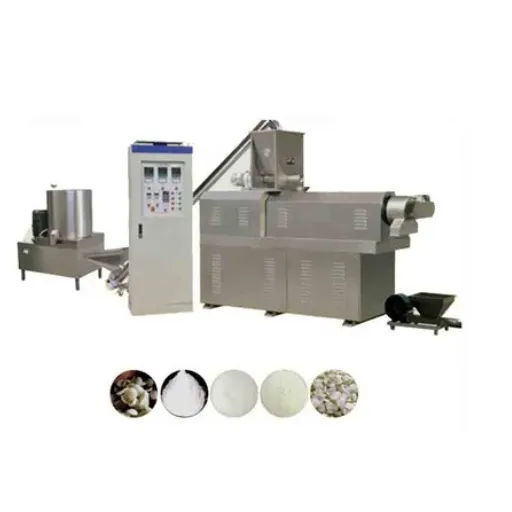
Shandong Loyal Industrial offers the PGS series pre-gel starch production lines. These turnkey systems cover a wide capacity range and can be configured for food, pharmaceutical, cosmetic, and industrial applications.
| Model | Capacity | Installed Power | Suitable For |
|---|---|---|---|
| PGS65 | 100–150 kg/h | ~72–110 kW | Pilot / small commercial |
| PGS70 | 200–250 kg/h | ~90–120 kW | Small commercial line |
| PGS75-2 | 300–500 kg/h | ~110–150 kW | Medium commercial line |
| PGS95-2 | 500–800 kg/h | ~140–190 kW | Medium industrial line |
| PGS120-3 | 800–1,200 kg/h | ~180–250 kW | Large industrial line |
| PGS140-3 | 1,200–2,500 kg/h | ~220–300+ kW | Heavy industrial line |
All PGS lines use food-grade SUS 304 contact surfaces and can be configured for CE, ISO 9001, SGS, and BV certification. Screw and die configurations are customizable for corn, cassava, potato, wheat, rice, and tapioca starches.You can view the full product specifications on our
Raw Materials for Pregelatinized Starch Production
Your choice of raw material affects equipment settings, product quality, and market positioning.
Corn Starch
Corn starch is the most widely used source globally. A pregelatinized corn starch production line is cost-effective and produces a neutral-flavor powder suitable for food, construction, and industrial applications.
Cassava / Tapioca Starch
Cassava and tapioca starches produce powders with high clarity and a clean taste. A cassava pregelatinized starch production line is popular in Southeast Asia, Africa, and South America. Tapioca pregelatinized starch is one of the fastest-growing segments, with a projected CAGR of around 7.7%.
Potato, Wheat, and Rice Starch
Potato starch has large granules and high swelling power, making it ideal for premium food and pharmaceutical applications. Wheat starch is a gluten-production byproduct used in specific food and industrial products. Rice starch is valued in pharmaceuticals and cosmetics for its small particle size and gentle properties.
Preprocessing Requirements
Most pregelatinized starch equipment requires native starch flour as input, not fresh roots or grains. If you want to start from fresh cassava or potatoes, you need a separate starch extraction line before the pregelatinization line.
For buyers in cassava-rich regions, our cassava modified starch production line guide covers raw material handling and equipment configuration.
Applications of Pregelatinized Starch by Industry
The global pregelatinized starch market was valued at approximately USD 2.0–3.35 billion in 2024–2025 and is projected to grow at 4.2–5.2% CAGR through 2030, according to Market Research Future. Demand comes from several industries.
Food and Beverage
Pregelatinized starch thickens instant soups, sauces, gravies, puddings, and pie fillings without cooking. It improves texture, moisture retention, and shelf life in bakery and dairy products. Clean-label formulations favor it because it avoids chemical modification.
Pharmaceuticals
In tablets and capsules, it acts as a binder, disintegrant, and diluent. Pharmaceutical grades require high purity, consistent particle size, and pharmacopeial compliance.
Oil and Gas Drilling
Pregelatinized starch controls fluid loss and builds filter cake in water-based drilling muds. It must hydrate quickly in saline or high-pH conditions and maintain viscosity under downhole temperature and pressure.
Construction and Adhesives
In putty powders, tile adhesives, gypsum boards, and briquettes, it acts as a binder and workability agent. Construction grades prioritize cost, binding strength, and water retention.
Paper, Textiles, Cosmetics, and Feed
Paper mills use it for surface sizing and coating binders. Textile producers use it for warp sizing. Cosmetic formulators use it as a thickener and texture agent. Animal feed producers use it as a binder and digestibility enhancer, especially in aquaculture and pet food.
Mini-Story: Anil’s Oil-Drilling Starch Line
Anil Sharma supplies drilling fluids to operators in the Middle East. In 2023, his customers began requesting locally produced pregelatinized starch to reduce import costs and lead times. Anil installed a 500 kg/h extrusion-based pregelatinized starch production line configured for high-shear oil-drilling starch.
The key test was filtration control in 10% NaCl brine at 120°C. After three screw-profile adjustments, the starch met API fluid-loss specifications. Within 18 months, Anil’s line replaced 60% of his imported starch volume and improved margins by 25%.
Quality Control and Key Parameters
Consistent quality separates commodity producers from reliable suppliers. Quality control measures should be established in a pregelatinized starch production line at different steps.
- Gelatinization degree: Indicates how completely starch granules have been disrupted. Higher gelatinization improves cold-water solubility.
- Cold-water solubility: Often expressed as Water Solubility Index (WSI) and Water Absorption Index (WAI).
- Viscosity: Measured with a Brookfield or Brabender viscometer under standardized conditions.
- Moisture content: Typically targeted below 14–16% for storage stability.
- Particle size: Common target is 60–120 mesh, depending on application.
- Color and odor: Visual and sensory checks detect overheating or contamination.
- Microbial limits: Critical for food and pharmaceutical grades.
Certifications and Safety
For foods and pharmaceuticals, ensure that the contact surfaces are food-grade SUS 304 or 316L stainless steel and the machine is designed to allow HACCP cleaning. A food grade pregelatinized starch production line should also meet local food safety regulations and support traceability through PLC data logging. For export markets, ask about CE, ISO 9001, SGS, and BV certifications.
Starch dust is combustible. Grinding, conveying, and packaging areas need dust collection, grounding, and explosion protection.
Troubleshooting, Maintenance, and Efficiency
Even a well-built pregelatinized starch production line needs regular attention to maintain output and quality.
Common Issues and Fixes
| Symptom | Likely Cause | Solution |
|---|---|---|
| Low cold-water solubility | Under-gelatinization in extruder | Increase barrel temperature or residence time |
| Inconsistent viscosity | Variable feed moisture or screw wear | Calibrate mixer; inspect screw and barrel |
| High fines or dust | Excessive grinder speed or worn screen | Adjust pulverizer; replace screener mesh |
| Moisture above target | Insufficient drying or cooling | Raise dryer temperature or extend drying time |
| Product discoloration | Overheating or burned residue | Clean barrel and die; reduce peak temperature |
Planned Maintenance
- Inspect screws, barrels, and dies for wear every 500–1,000 operating hours.
- Check dryer belts, bearings, and heating elements quarterly.
- Verify moisture analyzers, thermocouples, and load cells annually.
- Budget 3–5% of equipment cost per year for wear parts and maintenance.
Energy and Sustainability
Twin-screw extrusion uses mechanical energy for most of the cooking work, which reduces external heating demand compared with drum or spray drying. Heat recovery from the dryer exhaust, dust collection for airborne starch, and water recycling in slurry-based systems can further reduce environmental impact and operating cost.
Choosing the Right Pregelatinized Starch Production Line
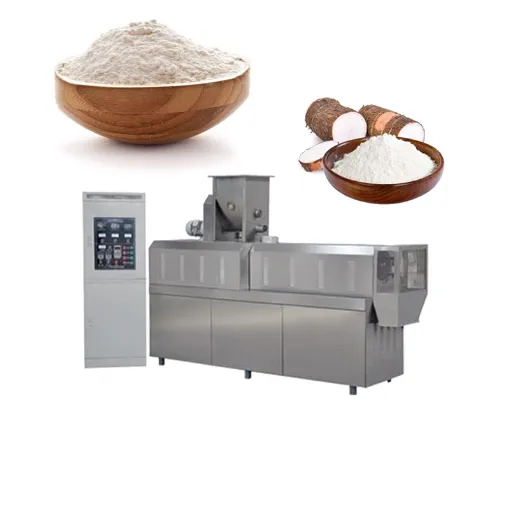
Selecting a pregelatinized starch production line requires balancing technical, commercial, and supplier factors.
Define Your Product First
Before comparing quotes, answer these questions:
- What application will you serve? (food, pharma, oil drilling, construction, etc.)
- What viscosity, solubility, and particle size does your customer require?
- Which raw material will you use? (corn, cassava, potato, wheat, tapioca)
- What capacity do you need now, and how might it grow in three to five years?
- What certifications does your market require?
Capacity and Scaling
Buying too small will limit growth potential. Too large will increase capital costs and energy use until the demand warrants such size. Modular lines allow you to scale by adding extruder capacity or dryer length.
Automation Level
Semi-automatic systems will require 4-6 operators per shift, while fully automatic PLC controlled lines would require 2-3 operators. Saving labor costs usually make up for higher initial costs within five years.
Supplier Evaluation Checklist
- How many years of experience does the supplier have in starch extrusion?
- Can they provide references or case studies in your application?
- Do they offer recipe development and trial production before purchase?
- What is included in installation, commissioning, and training?
- How quickly can they supply spare parts and technical support?
- Is the line customizable for voltage, raw material, and capacity?
If you need help matching a line to your goals, read our guide on how to choose a modified starch production line or request a customized pregelatinized starch production line proposal from our engineering team.
Investment and Operating Costs
Understanding total cost of ownership helps you compare pregelatinized starch production line price quotes accurately.
Equipment Investment Ranges
These figures are estimates for extrusion-based pregelatinized starch production lines. Actual prices depend on configuration, automation, materials, and supplier.
| Capacity Range | Estimated Investment (USD) | Typical Use Case |
|---|---|---|
| 100–150 kg/h | 15,000–15,000–35,000 | Pilot or small commercial line |
| 200–400 kg/h | 30,000–30,000–60,000 | Small to medium producer |
| 500–800 kg/h | 50,000–50,000–100,000 | Medium industrial line |
| 1,000–1,500 kg/h | 80,000–80,000–150,000+ | Large industrial line |
Operating Cost Factors
- Power: Extrusion lines consume 60–180 kW of real power depending on capacity.
- Labor: Automation level determines staffing needs.
- Raw materials: Native starch usually represents the largest single cost.
- Maintenance: Wear parts include screws, barrels, dies, and dryer belts. Budget 3–5% of equipment cost annually.
- Packaging: Bags, labels, and sealing materials add to per-unit cost.
For a well-run extrusion-based line, payback typically ranges from 18 to 36 months, depending on product margin, local energy cost, and capacity utilization. See our detailed modified starch production line price and cost analysis for a full breakdown of investment ranges and operating expenses.
Why Choose Shandong Loyal’s Pregelatinized Starch Production Line
Shandong Loyal Industrial Co., Ltd. has spent more than a decade designing, manufacturing, and exporting food processing machinery and extrusion systems to clients in over 50 countries. Our PGS series pre-gel starch production lines are built on the same twin-screw extrusion platform that powers our snack food machinery and pasta macaroni production line portfolios.
What Sets Our Lines Apart
- Turnkey design: Complete lines from mixing to packaging, including installation, commissioning, and training.
- Customization: Screw profiles, barrel configurations, die designs, and control systems tailored to your starch and end product.
- Proven PGS platform: Operating in food, pharmaceutical, cosmetic, and industrial applications worldwide.
- Quality materials: Food-grade SUS 304 contact surfaces and wear-resistant alloy steel extruder components.
- Global compliance: Lines configured for CE, ISO, SGS, and BV requirements.
- After-sales support: Spare parts, technical consultation, and remote troubleshooting.
Whether you produce pregelatinized starch for instant foods, oil drilling, construction adhesives, or pharmaceutical excipients, we can configure a line around your recipe, capacity, and budget.
Frequently Asked Questions
What is pregelatinized starch used for?
Pregelatinized starch is used as a thickener, binder, disintegrant, and texture agent in food, pharmaceuticals, oil drilling, construction, paper, textiles, cosmetics, and animal feed. Its main advantage is that it works in cold or warm water without cooking.
How is pregelatinized starch made?
Pregelatinized starch is made by cooking native starch and drying it. Industrial methods include drum drying, spray drying, and twin-screw extrusion. Extrusion is the most used process in medium to large scale production lines.
What is the difference between pregelatinized starch and modified starch?
Pregelatinized starch is an example of physically modified starch. Modified starch is a wider term that encompasses all types of modified starch including chemically and enzymatically modified starches. All pregelatinized starches are modified, but not all modified starches are pregelatinized. Read our full comparison: pregelatinized starch vs modified starch.
What equipment is needed for a pregelatinized starch production line?
A typical extrusion-based line includes a mixer, screw conveyor, twin-screw extruder, dryer, cooling conveyor, grinder, vibrating screener, packaging machine, PLC control system, and dust collection.
What raw materials can be used in a pregelatinized starch production line?
Common raw materials include corn starch, cassava starch, tapioca starch, potato starch, wheat starch, and rice starch. Fresh roots or grains must be processed into starch before entering the line.
What capacity options are available?
Pilot lines start around 100 kg/h. Commercial extrusion lines commonly range from 200 kg/h to 2,500 kg/h.
How much does a pregelatinized starch production line cost?
Extrusion-based lines typically range from 15,000forsmall100–150kg/hsystemsto15,000forsmall100–150kg/hsystemsto150,000+ for large 1,000+ kg/h industrial lines. Final cost depends on capacity, automation, materials, and customization.
What certifications should a pregelatinized starch production line have?
For export and food use, look for CE, ISO 9001, SGS, BV, and food-grade SUS 304 construction. Pharmaceutical applications may require additional pharmacopeial compliance.
Conclusion
A pregelatinized starch production line turns low-cost native starch into a high-value functional ingredient. The right line gives you control over gelatinization, solubility, viscosity, and particle size so you can serve food, pharmaceutical, oil-drilling, construction, and industrial markets.
The key decisions are:
- Choose the production method that matches your product’s viscosity and solubility requirements.
- Size capacity based on current demand with room to scale.
- Select raw materials based on availability, cost, and end-use specifications.
- Prioritize twin-screw extruder quality, process control, and after-sales support.
- Confirm certifications and material standards before purchasing.
- Calculate total cost of ownership, not just the equipment price.
If you are ready to explore a pregelatinized starch production line or learn more about the broader modified starch production line ecosystem for your business, contact Shandong Loyal Industrial Co., Ltd. for a customized quote, process review, or trial production plan. Our engineering team will help you configure the right line for your product, capacity, and market.