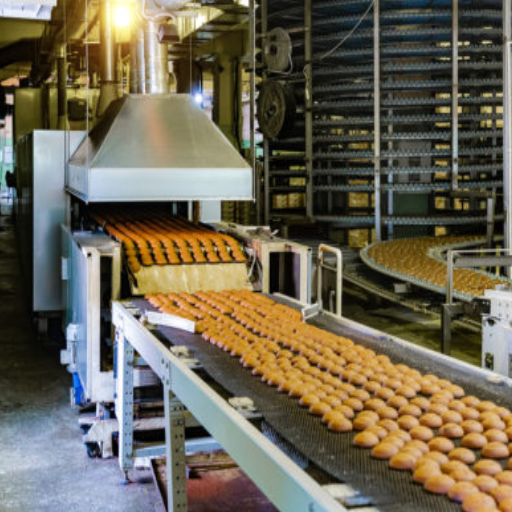
A complete pet food manufacturing line is a chain of machines: raw material handling, grinding, mixing, pre-conditioning, extrusion, cutting, drying, coating, cooling, screening, and packaging. The right pet food manufacturing equipment depends on your product, capacity, and recipe, and one wrong choice at any stage quietly caps your quality and margin for years.
Most guides stop at listing equipment types. They leave you guessing at wet versus dry food equipment, sanitary standards, utility loads, and total cost of ownership. This guide closes those gaps. You’ll learn how to choose each machine against your product goals, what the equipment actually costs to buy and run, and where the real risks hide. By the end you’ll have a selection checklist you can use on any supplier proposal.
Key Takeaways
- Twin-screw extruders are non-negotiable for meat-heavy or high-protein recipes; single-screw only suits economy grain-based kibble on a tight budget.
- Drying eats 60 to 70% of a line’s energy, so dryer choice drives your operating cost more than the extruder does.
- A vacuum coater beats a drum coater for premium and export products, delivering 20 to 30% better fat retention and longer shelf life.
- Wet and canned food needs a completely different equipment set: retorts, fillers, and seamers, not just an extruder.
- Chinese CE-certified lines cost 40 to 60% of European equivalents for comparable quality, but compare total cost of ownership, not purchase price.
What Is Pet Food Manufacturing Equipment?

Pet food manufacturing equipment is the set of machines that turn raw ingredients into finished kibble, wet food, treats, or chews. A complete dry production line follows an eleven-stage chain: receiving, grinding, mixing, pre-conditioning, extrusion, cutting, drying, coating, cooling, screening, and packaging.
Each stage is a separate equipment decision. The grinder sets particle size. The mixer sets uniformity. The extruder cooks and shapes. The dryer removes moisture. The coater adds fats and palatants. The packaging line weighs, seals, and inspects. Skipping or under-specifying any stage creates a bottleneck that the rest of the line cannot fix.
Think of the line as a system, not a shopping list. When Marcus, a founder in Texas, bought his first kibble line in 2024, he focused entirely on the extruder and spec’d a capable single-screw unit. Six months in, his high-meat beef recipe began jamming the barrel on hot afternoons. The extruder was fine. The problem was upstream: he had no pre-conditioner, so the mash hit the barrel dry and dense. A 9,000pre−conditionersolvedwhata9,000pre−conditionersolvedwhata60,000 extruder swap would have cost him. The lesson: choose each machine against the recipe, not in isolation.
Core Dry-Kibble Equipment and How to Choose Each
Most pet food production starts with dry extruded kibble. Here is how to choose each piece of equipment in that chain.
Raw Material Receiving and Pre-Processing
Before extrusion, ingredients are received, cleaned, and reduced. A hammer mill grinds grains and meat meal to a consistent particle size, typically 60 to 100 mesh for pet food. A magnetic separator upstream protects the mill and extruder from metal contamination.
Mixing follows. A ribbon blender or paddle mixer blends dry ingredients before liquids are added. Uniformity matters because every kibble should carry the same nutritional profile. Target a coefficient of variation below 5%. Twin-shaft paddle mixers reach over 95% uniformity in 5 to 10 minutes and are the workhorse for most lines.
Storage and conveying complete this stage. Ingredient silos and pneumatic conveying move material without manual handling. This stage is where most startups under-invest, and where many cost overruns later appear.
Pre-Conditioners
A pre-conditioner sits above the extruder and hydrates and pre-heats the mash with steam and water before it enters the barrel. It’s cheap and easy to overlook, which is exactly why it gets skipped. That’s a mistake.
Skipping the pre-conditioner slows the extruder by roughly 15% and raises motor power consumption, because the extruder now has to do hydration and cooking work it was not designed for. For dense or high-meat recipes, a pre-conditioner is effectively mandatory. Treat it as part of the extruder purchase, not an optional extra.
Extruders: Single-Screw vs Twin-Screw
The extruder is the heart of dry pet food production. It cooks, sterilizes, and shapes the dough under heat and pressure, typically 110 to 180°C and 3 to 15 MPa. Your first and most important decision is single-screw or twin-screw.
Twin-screw extruders are growing faster than single-screw models, at a 5.97% CAGR versus 5.51%, as premium and functional foods push the market toward more flexible equipment, according to Fortune Business Insights. Here is how the two compare:
| Criterion | Single-Screw | Twin-Screw |
|---|---|---|
| Best for | Grain-based economy kibble | Meat-heavy, high-protein, grain-free |
| Meat inclusion | Limited, slips and jams at high levels | Handles high-meat and high-fat formulas |
| Cost | Lower | Higher |
| Mixing and feeding | Simpler | Stronger and steadier |
| Recipe flexibility | Narrow | Wide |
When you compare proposals, look past the price at four specifications. The L/D ratio, length to diameter, sets residence time and cooking intensity: 15:1 to 20:1 is typical for pet food, up to 25:1 for high-protein lines. Barrel heating zones give finer temperature control. Die configuration determines kibble shape, size, and expansion, so confirm the die sets match your target products. Torque rating determines whether the machine handles denser, higher-meat formulas without stalling.
For high-protein recipes with meat meal above 40%, specify wear-resistant alloy steel screws, which last three to five times longer than standard alloy steel. Low-temperature twin-screw extruders, puffing at 85 to 90°C, preserve heat-sensitive actives like taurine and probiotics. For a deeper engineering comparison, see our guide to the pet food manufacturing process.
Want to see how this works for your recipe? Tell us your target product and capacity, and we will recommend the right extruder configuration for your line. Explore our pet food production line options →
Dryers and Coolers
Freshly extruded kibble holds 18 to 30% moisture. Drying brings it down to 8 to 12% for shelf stability. Here is the part most buyers miss: drying consumes 60 to 70% of a line’s total energy. Your dryer choice, not your extruder choice, drives your operating cost.
- Belt dryers are the most common. Multi-pass designs circulate heated air at 80 to 130°C for 15 to 25 minutes, using 180 to 250 kWh per ton of water evaporated. Look for three or more independently controlled zones, uniform airflow, and easy belt cleaning.
- Rotary dryers suit high-volume operations with uniform particle size. They use 10 to 15% more energy per ton than belt dryers.
- Fluidized bed dryers handle treats and small formats gently, with superior moisture uniformity, but cost more up front.
Cooling matters as much as drying. A counter-flow cooler brings kibble to near-ambient temperature before coating. If kibble enters the coater above 30°C, surface fats melt and distribute unevenly. Counter-flow coolers are also best for fat-coated products, where cross-flow cooling can cause fat migration.
Coaters: Drum vs Vacuum
Coating applies the fats, oils, palatants, and heat-sensitive nutrients, vitamins A, D, E, probiotics, and enzymes, that cannot survive extrusion temperatures.
- Drum coaters are basic and lower-cost. Fats sit on the kibble surface, which raises oxidation risk and shortens shelf life.
- Vacuum coaters pull a negative pressure of -0.06 to -0.09 MPa that drives fats and palatants deep into the kibble. Premium brands report 20 to 30% better fat retention and measurably less oxidation.
Elena ran a premium single-protein kibble brand in Brazil. Her first line used a drum coater, and her salmon recipe kept going rancid a few weeks early, triggering retailer returns. She switched to a vacuum coater on her second line. The fat retention jumped, oxidation dropped, and she extended shelf life by two months, which made her export to Chile viable. If you are chasing premium or export grade, a vacuum coater is the choice. For full detail on both dryers and coaters, see our pet food dryer and coating system guide.
Packaging and Quality Assurance
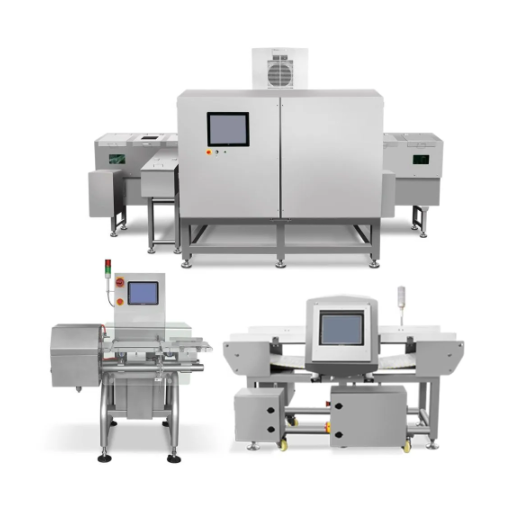
The final stage protects everything you built. A multi-head weigher hits plus or minus 1 to 2% target weight. A form-fill-seal machine creates bags from roll film, fills, and seals continuously, with nitrogen flush specified for a 12 to 18 month shelf life. Metal detection and X-ray are critical control points; typical sensitivity is ferrous at 1.5 mm, non-ferrous at 2.0 mm, and stainless at 2.5 mm. Cooling before packaging is essential, because sealing warm product creates condensation, mold, and shelf-life failure.
Wet and Canned Pet Food Equipment

Wet pet food is the biggest blind spot in most equipment guides. It’s also one of the fastest-growing segments of the pet food processing equipment market, according to Research and Markets. It needs a completely different equipment set from dry extrusion.
Instead of an extruder-and-dryer flow, wet food moves through mixing, cooking, filling, and sterilization. The critical machines are a filler that deposits product into cans, pouches, or trays at high accuracy, a seamer that seals cans, and a retort that sterilizes the sealed product under heat and pressure to a defined F₀ value. The retort, not the extruder, is the heart of this line, and it drives both shelf life and safety.
Choosing wet versus dry equipment comes down to product. Higher-meat cat food and premium pouch formats lean wet. Shelf-stable dry kibble leans extrusion. Many growing brands run both, which is why understanding the full equipment landscape matters before you commit. Priya, a cat-food brand founder, learned this the expensive way when she tried to run a high-meat wet recipe through a dry extrusion line. The texture was wrong and the shelf life collapsed. She added a dedicated retort and pouch line and recovered the product.
Sanitary Design, Hygiene, and Compliance
Sanitation isn’t an afterthought. It’s an equipment-selection criterion, and it decides whether your plant passes audit.
Hygienic zoning separates raw material areas from finished product areas, with a one-way flow so clean product never crosses back into dirty zones. On product-contact surfaces, 304 stainless steel is standard and 316L is preferred where chlorides or salt are present. Clean-in-place, or CIP, design means the machine can be cleaned without full disassembly, which cuts downtime and cross-contamination risk.
Compliance shapes the equipment you buy. Extrusion acts as a critical control point under HACCP. FSMA preventive controls apply in the US market. ISO 22000 and CE marking, under the Machinery Directive, are the export baseline for Europe. AAFCO and FEDIAF set nutritional and labeling expectations. If you plan to export, specify CE and hygienic design at purchase, not retrofit later.
Utilities, Space, and Sizing
Equipment does not run in a vacuum. It runs on steam, air, water, and power, and those loads determine whether your factory can even support the line.
Before you buy, map the utilities. Steam demand, measured in kilograms per hour, feeds the pre-conditioner and some dryers. Compressed air drives pneumatics and conveying. Water and wastewater load depends on cleaning and cooking. Air handling and odor control are easy to forget and expensive to add later, and they matter most for wet and meat-heavy production.
Space and capacity go together. As a rough guide, a pilot line at 100 to 200 kg/h fits in 200 to 300 m², while an industrial line at 4,000 kg/h or more needs 3,000 m² plus. Size each machine to your real throughput with a 10 to 20% buffer, and match the dryer to the extruder’s sustained output, not its peak rate. Oversized machines waste capital; undersized machines create bottlenecks. The full footprint and utility detail lives in our pet food production line guide.
Cost, Total Cost of Ownership, and ROI
Purchase price is the wrong number to compare. Total cost of ownership is the right one.
As a benchmark, equipment-only turnkey investment breaks down roughly like this: a pilot or lab line at 100 to 200 kg/h runs 22,000to22,000to50,000. A small commercial line at 300 to 500 kg/h runs 60,000to60,000to120,000. A medium line at 500 to 1,200 kg/h runs 120,000to120,000to300,000. A large line at 1,500 to 3,500 kg/h runs 300,000to300,000to800,000 or more. A multi-line industrial facility starts at $1 million.
But the sticker price is only part of the story. Operating cost splits into raw materials at 50 to 65%, energy at 15 to 25%, labor at 10 to 20%, and maintenance at 3 to 5%. Energy is the lever you control through dryer choice. Raw materials dominate, so recipe efficiency matters as much as machine efficiency.
On the buy-versus-build question, Chinese manufacturers typically offer CE-certified equipment at 40 to 60% of European pricing, a gap of 50 to 67% on twin-screw extruders, with comparable quality for most applications. A 5,000 kg/h twin-screw line with a multi-stage dryer and coating drum can cost around 129,000fromaChinesemanufacturerversuscloserto129,000fromaChinesemanufacturerversuscloserto400,000 from a top-tier European brand. That gap funds the rest of your startup.
Ready to see real numbers for your capacity? Request a detailed line configuration and quote, and we will show you the equipment, utilities, and total cost of ownership for your exact output. Get a custom equipment quote →
Maintenance and Spare Parts Planning
The cheapest machine to buy is rarely the cheapest to own. Maintenance and downtime decide the real cost over a decade.
Each machine has its own wear profile. Extruder screws and barrels wear with abrasive or high-meat formulas; wear-resistant alloys extend life three to five times. Dryer belts need tension and cleaning schedules. Coater nozzles clog without inline filtration. Form-fill-seal film paths need alignment checks. Build a preventive-maintenance schedule per machine before startup, and stock two tiers of spares: critical items that stop the line, like dies, screws, and seals, and consumables, like filters and belts.
Downtime is the hidden cost. A line stopped for a missing 200sealcanidle200sealcanidle2,000 an hour of labor and overhead. Ask suppliers what spare parts they stock, what the lead time is, and whether they offer remote diagnostics. These questions separate a supplier from a partner.
Shandong Loyal’s Pet Food Equipment Range
Shandong Loyal Industrial Co., Ltd. engineers complete, CE-certified pet food manufacturing equipment for dry kibble, wet food, treats, and chews, from single machines to turnkey lines. Our LY model range spans pilot to industrial capacity, and every line is configured to your recipe, capacity, and target market.
Our systems cover the full chain: pre-processing, single- and twin-screw extrusion, belt and rotary drying, drum and vacuum coating, cooling, and packaging integration. With over 10 years of engineering expertise and clients in more than 50 countries, we deliver CE and ISO compliant machinery with the customization and after-sales support that scale-up brands need. For high-protein and premium formulas, see our high-protein pet food manufacturing guide.

Print this checklist and use it on every proposal you review.
Pre-purchase checklist:
- Material certificates for all product-contact surfaces, 304 or 316L stainless
- Pilot or trial run on your actual recipe before full payment
- Spare parts list with pricing and lead times
- CE marking and relevant compliance documentation
- Customer references in your product category and region
- Warranty terms and after-sales support commitment
Supplier red flags:
- Pricing that is dramatically below market without a clear reason
- Vague answers on what the quotation includes or excludes
- No trial run or recipe validation offered
- Thin or missing compliance documentation
- No spare parts program or remote support
Confirm what is included. Similar prices often hide different configurations. Confirm whether conveying, drying, coating, cooling, packing, controls, factory layout, installation, and training are in the quote. A line without installation and training is not turnkey, no matter what it is called.
Frequently Asked Questions
How much does pet food manufacturing equipment cost?
A pilot line at 100 to 200 kg/h costs 22,000to22,000to50,000, a small commercial line 60,000to60,000to120,000, a large line 300,000to300,000to800,000 or more, and a multi-line industrial facility starts at $1 million.
What is the difference between single-screw and twin-screw extruders?
Single-screw extruders are simpler and cheaper, suited to grain-based economy kibble. Twin-screw extruders handle meat-heavy, high-protein, and grain-free formulas with better mixing and flexibility, and they are standard for premium food.
Do I need a vacuum coater or is a drum coater enough?
A drum coater is fine for basic products. A vacuum coater is worth it for premium or export products, where 20 to 30% better fat retention and reduced oxidation extend shelf life and protect margins.
What equipment is different for wet pet food?
Wet food replaces the extruder-and-dryer flow with mixers, fillers, seamers, and a retort for sterilization. The retort, not the extruder, drives shelf life and safety.
How do I size a dryer for my line?
Match the dryer to the extruder’s sustained output, not its peak rate, with a 10 to 20% buffer, and account for drying being 60 to 70% of your total energy use.
Conclusion
Choosing pet food manufacturing equipment is a system decision, not a shopping list. Pick the extruder against your recipe, not in isolation. Choose the dryer for energy, because it drives 60 to 70% of your operating cost. Upgrade to a vacuum coater when you chase premium or export grade. And if you are entering wet or canned food, budget for retorts, fillers, and seamers, not just an extruder.
The buyers who get this right compare total cost of ownership, not purchase price, and they buy from a supplier who validates the recipe, documents the compliance, and stocks the spares. That is the difference between a line that runs for a decade and one that idles on a missing seal.
Start your line with a free consultation → Tell us your product and capacity, and our engineers will design a complete pet food manufacturing equipment line for your exact goals.