A pet food extruder machine cooks and shapes raw ingredients into kibble under heat and pressure, and the choice that matters most is between a single-screw extruder (right for conventional, grain-based kibble at small to medium scale) and a twin-screw extruder (right for high-meat, premium, and flexible recipes). Get this decision wrong and you cap your protein content, your product shapes, and your margin for a decade.
Here’s the hard truth most buyers learn too late: the extruder is not a commodity. It’s the machine that decides whether you can launch a grain-free line with 30% fresh meat, or whether you’re stuck selling the same corn-and-chicken kibble as everyone else. Yet most people shop for it the way they shop for a generator, by price and capacity alone.
The problem is that “pet food extruder machine” search results are a wall of vendor spec sheets and thin single-vs-twin listicles. None of them show you how to actually specify a screw, a die, or a motor against your recipe, and none of them are honest about what it should cost. This guide closes that gap.
Key Takeaways
- Single-screw extruders handle conventional grain-based kibble (50–200 kg/h) at the lowest cost, but need more than 35% starch and choke on fat, fiber, and fresh meat.
- Twin-screw extruders run 20–40% fresh-meat inclusion, high fiber, and premium formulas at 500–2,000+ kg/h, for roughly double the price.
- The screw profile, L/D ratio, and torque matter as much as the screw count, and wear-resistant screws extend life 2–5x on high-protein recipes.
- A twin-screw pet food extruder machine costs about 5,500–5,500–11,000 at pilot scale up to 110,000–110,000–200,000+ at industrial scale; Chinese machines run 50–67% below European equivalents.
- Budget for total cost of ownership, not purchase price: the extruder burns 65%+ of your line’s electricity and needs 10–15% of its price in annual maintenance.
What Is a Pet Food Extruder Machine?

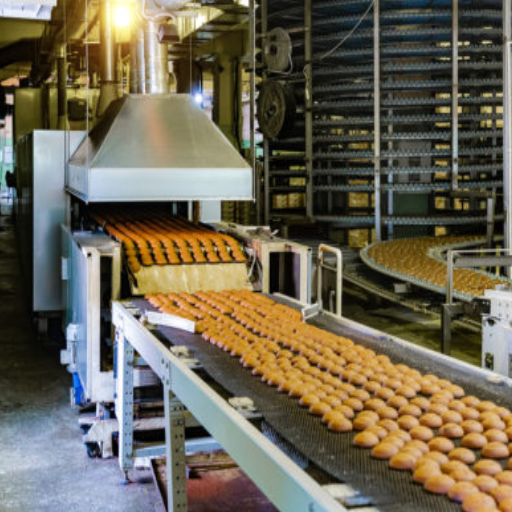
A pet food extruder machine is the centerpiece of a pet food production line. It takes pre-conditioned, moistened ingredients, forces them through a heated barrel with one or two rotating screws, and pushes the cooked dough through a shaped die to form kibble. It is, in one machine, the cooker, the shaper, and the food-safety kill step.
Inside the barrel, temperature typically reaches 110–180°C under 3–15 MPa of pressure, cooking starch and denaturing protein in under a minute. That’s also why extrusion is the HACCP “kill step” that eliminates pathogens like Salmonella. The full science of how extrusion cooks the dough is covered in our pet food extrusion process guide; this article is about choosing the machine itself.
Single-Screw vs. Twin-Screw Extruders: The Decision That Shapes Your Line
The mechanical difference is simple. A single-screw extruder drives one screw through the barrel. A twin-screw extruder runs two intermeshing, co-rotating screws that actively pump and mix the material. That one difference ripples through everything: what you can feed it, what it can make, and what it costs.
Here’s the honest comparison:
| Factor | Single-Screw Extruder | Twin-Screw Extruder |
|---|---|---|
| Typical capacity | 50–200 kg/h | 500–2,000+ kg/h |
| Starch requirement | Needs 35%+ starch, 12–14% moisture | Flexible on starch |
| Fat / fiber tolerance | Struggles above ~5% | Handles 10–15% fiber, 14–18% moisture |
| Fresh-meat inclusion | Limited | 20–40% |
| Mixing quality | Drag-flow only, uneven dwell time | Strong intermeshing macro/micro mixing |
| Relative price | Base (roughly 1,500–1,500–55,000) | ~2x a single-screw of equal output |
| Maintenance | Simple, low cost | More complex, higher cost |
| Best for | Fixed, grain-based recipes at low volume | Premium, high-meat, or multi-format lines |
The decision logic is straightforward. Choose a single-screw extruder when you’re making conventional dry kibble with a fixed, starch-heavy recipe at small to medium volume, and you need to keep capital and maintenance low. Choose a twin-screw extruder when you want premium, grain-free, high-protein, or fresh-meat formulas, when you need to switch shapes and recipes quickly, or when you’re producing cat food and functional diets.
Consider Priya, who launched a small kibble brand in 2024. She bought a single-screw extruder to keep her initial investment low, which was the right call for her corn-and-rice recipe at 150 kg/h. Eighteen months later, a retailer asked for a grain-free, high-protein line. Her single-screw couldn’t hold the fresh-meat paste without clogging, so she had to buy a twin-screw anyway and run two machines. “I didn’t save money,” she told us. “I just deferred the cost and paid for two extruders.”
That’s the recurring pattern: the extruder you buy is a bet on where your product line will go, not just where it is today.
How to Specify the Screw: Profile, L/D Ratio, and Torque
Buyers fixate on “single vs. twin” and skip the part that actually determines output quality: the screw itself. Three numbers define it.
Screw profile is the arrangement of screw elements along the shaft. Segmented screws mix conveying, kneading, and mixing elements, and a high-meat formula needs a different profile than a starch-heavy one. A well-designed profile controls how much shear and heat the dough absorbs, which is what turns raw starch into digestible, cohesive kibble.
L/D ratio is the screw’s length divided by its diameter. A longer L/D (say 20:1 or more) gives the dough more residence time and more controlled cooking, which is exactly what high-moisture and high-meat recipes demand. It’s why you can’t just “add meat” to a short-barrel machine and expect it to work.
Torque is the motor’s twisting force, and it’s the spec most under-bought. High-viscosity, high-protein dough resists the screw. An under-torqued extruder stalls or runs hot on that recipe, producing inconsistent density and texture. Match the motor to the hardest formula you plan to run, not your easiest one.
On abrasive, high-protein or mineral-heavy recipes, wear-resistant screws and barrels are the single biggest total-cost lever. Standard nitrided screws may need replacement every 3–6 months under heavy use; bimetallic or hardfaced screws made from alloys like 38CrMoAl last 2–5x longer. They cost more up front and pay for themselves in downtime and parts within the first year.
Die Design and Product Shape
The die is where the machine becomes a product developer. A die plate with interchangeable inserts, plus a cut-off knife that trims the extruded strands, sets your kibble size, density, and shape.
Die hole diameter controls kibble size, while the screw speed and cut-off knife determine length. Expansion ratio, how much the dough puffs as it exits the die, sets texture and density. And quick-change shape inserts let you run bone, star, heart, round, or filled-pillow shapes on the same machine, often with a 15-minute changeover.
That’s a bigger deal than it sounds. One manufacturer we work with runs dog kibble, cat kibble, and a line of treats on a single twin-screw extruder purely by swapping dies and adjusting the cut-off knife. He didn’t buy three machines; he bought three sets of die inserts. When a customer asks you to add a shape, that flexibility is what makes you say yes instead of buying new equipment.
Matching the Extruder to Your Recipe (High-Meat Inclusion)
The recipe decides the machine, not the other way around. The hard limits are starch, fat, fiber, and moisture.
A single-screw extruder depends on starch to push material forward. It needs 35% or more starch and roughly 12–14% moisture, and it struggles when fat or fiber climbs past 5%. That’s why conventional grain-based kibble works fine on single-screw, and grain-free or fresh-meat formulas don’t.
A twin-screw extruder pumps material positively, so it doesn’t need starch to move the dough. It handles 10–15% fiber, 14–18% moisture, and 20–40% fresh-meat inclusion, the range that defines today’s premium and cat-food segments. Twin-screw extruders are also growing faster than single-screw, 5.97% versus 5.51% CAGR, driven by exactly this premiumization.
Pairing the extruder with a steam pre-conditioner adds a 10–15% throughput boost and pre-cooks the starch for better gelatinization. On high-meat formulas, the pre-conditioner and a wear-resistant twin-screw work together: the conditioner steams the meat into a pumpable paste, and the twin-screw holds and cooks it evenly. This is the machine configuration behind most high-protein pet food manufacturing.
Pet Food Extruder Machine Price and Total Cost of Ownership

Here’s the transparency the vendor sites won’t give you. Twin-screw extruder prices in 2026 land in these bands:
| Capacity | Approximate Price (USD) |
|---|---|
| 100–200 kg/h (pilot) | 5,500–5,500–11,000 |
| 300–500 kg/h (small commercial) | 25,000–25,000–86,000 |
| 1,000+ kg/h (industrial) | 110,000–110,000–200,000+ |
Single-screw extruders run roughly 2–3x cheaper than an equivalent twin-screw, generally 1,500–1,500–55,000. And the origin matters more than most buyers realize: Chinese extruders cost about one-third to one-half of imported European machines from manufacturers like Bühler or Kobo, a 50–67% gap for equal capacity.
But purchase price is the smallest part of the real cost. The extruder draws 65% or more of a line’s total electricity, and twin-screw machines typically need 10–15% of their purchase price in annual maintenance. Standard screws need replacing every 3–6 months; bimetallic screws stretch that to 2–3x. Add the supporting equipment, crusher, mixer, dryer, and cooler, which adds another 30–50% to the investment.
Marcus, a plant manager we spoke with, learned this the hard way. He chose the cheapest extruder that met his throughput spec and never asked about energy or screw life. Eight months in, his power bill and monthly screw replacements had wiped out the savings, and his line was down two days a month for maintenance. A machine that cost 15% less up front ended up costing more in the first year than the better-specified alternative.
The math most buyers should run: most twin-screw projects recover their cost within 8–14 months when the machine is matched to the recipe and the plant runs steadily. That’s the number to plan around, not the sticker price.
How to Choose a Pet Food Extruder Machine
Put the pieces together and the selection process is a short checklist, not a gamble.
- Match the screw type to the recipe, not the price. Grain-based and fixed? Single-screw may be enough. High-meat, grain-free, cat food, or changing SKUs? Twin-screw.
- Size with a buffer. Buy for 20–30% above your target throughput, and match the dryer to the extruder’s output, not its peak rate.
- Spec the screw, not just the screw count. Confirm L/D ratio, torque, and screw profile against your hardest formula.
- Decide on automation. PLC and HMI control with temperature zones, screw-speed adjustment, and recipe storage cuts labor and variability; a VFD motor saves energy on part-load operation.
- Spec the die and shape inserts up front. It’s cheaper to buy the flexibility now than to retrofit it later.
- Demand wear-resistant screws for any protein-heavy recipe.
- Verify compliance. Ask for CE marking, food-grade 304/316L contact surfaces, and EHEDG or 3-A sanitary design where relevant.
When you’re talking to pet food extruder manufacturers, ask for proof of meat-inclusion capability at your target moisture, energy draw figures, a maintenance schedule, and trial runs on your actual recipe. A manufacturer that can’t give you those numbers is selling you a machine, not a solution.
Shandong Loyal’s Pet Food Extruder Machine Range
We build pet food extruder machines to the recipe, not from a stock spec sheet. Our LY-series twin-screw extruders cover the capacity and meat-inclusion spectrum:
| Model | Capacity | Fresh-Meat Inclusion |
|---|---|---|
| LY-70 | 200–260 kg/h | 15–20% |
| LY-85 | 400–500 kg/h | 20–25% |
| LY-95 | 800–1,000 kg/h | 30–35% |
| LY-120 | 1,500–3,000 kg/h | Up to 40% |
| KING135 | 1,500–2,000 kg/h | High-volume turnkey |
Every system is CE-certified and built from food-grade stainless contact parts, with wear-resistant screws available for high-protein lines. We supply the complete line, not just the extruder, with the same twin-screw technology we apply across pasta and macaroni production and our broader industrial food production lines.
If you tell us your recipe and production goals, we’ll specify the extruder to match, and we’ll show you the energy, wear, and maintenance numbers before you buy, not after.
Frequently Asked Questions
What is the difference between a single-screw and twin-screw pet food extruder?
A single-screw extruder uses one screw and works best for conventional, starch-heavy kibble at small scale, while a twin-screw extruder uses two intermeshing screws that mix better and handle high-meat, high-fiber, and premium formulas at higher capacity.
How much does a pet food extruder machine cost?
A twin-screw pet food extruder machine runs about 5,500–5,500–11,000 at pilot scale, 25,000–25,000–86,000 at small commercial scale, and 110,000–110,000–200,000+ at industrial scale. Single-screw machines cost 2–3x less.
Do I need a twin-screw extruder for high-meat pet food?
Generally yes. Fresh-meat inclusion above roughly 15–20% needs the positive pumping and mixing of a twin-screw extruder; single-screw machines clog on meat-heavy, low-starch formulas.
What size pet food extruder do I need?
Size it 20–30% above your target throughput. Match the screw type to your recipe, and match the dryer to the extruder’s output rather than its peak rate.
How does a twin-screw extruder work?
Two intermeshing screws convey and knead the pre-conditioned dough through a heated barrel, cooking it under heat and pressure before forcing it through a shaped die. See our pet food extrusion process guide for the full mechanics.
Can one extruder make both dog and cat food?
Yes. A twin-screw extruder with quick-change die inserts can switch between dog kibble, smaller cat kibble, and treat shapes, though you’ll adjust drying targets and die sizes per species.
Get the Extruder Right the First Time

Your extruder sets the ceiling on what your brand can sell: the protein content, the shapes, the throughput, and the margin. Single-screw is the right economic call for simple, fixed, grain-based kibble. Twin-screw is the machine that unlocks high-meat premiumization and multi-format flexibility.
Specify the screw profile, L/D ratio, and torque against your hardest recipe, not your easiest one. Buy wear-resistant screws for anything high-protein. And budget for energy and screw wear, because the extruder’s real cost is in operation, not on the invoice.
If you’re planning a new line or upgrading an existing one, tell us your recipe and production goals, and we’ll design a pet food extruder machine that fits, with the numbers to prove it before you spend a dollar.