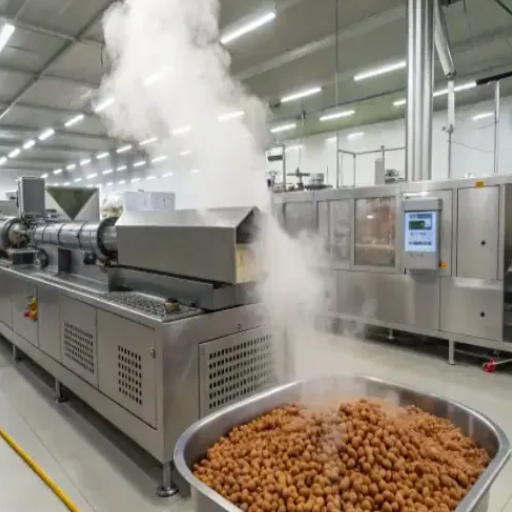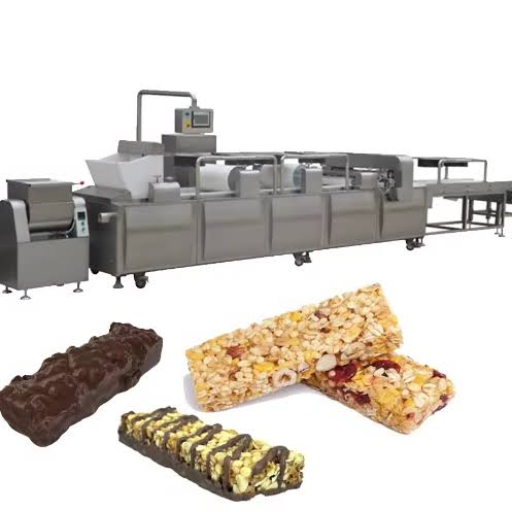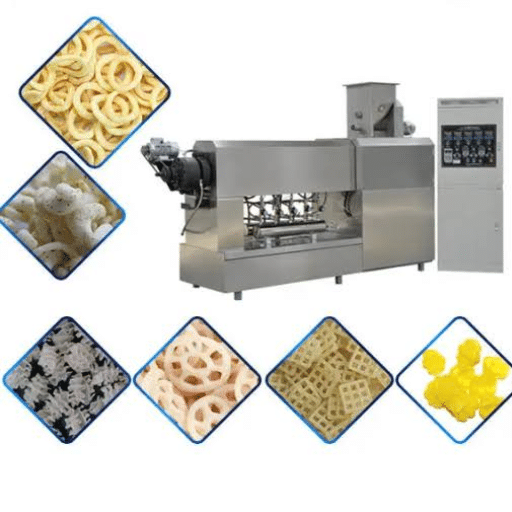
Extrusion cooking is a high-temperature, short-time (HTST) process that mixes, cooks, kneads, and shapes raw ingredients into a finished product in one continuous step. A moistened blend of starch, protein, or fiber is pushed through a heated barrel and forced out through a shaped die, where it expands, texturizes, or forms. It is the technology behind most puffed snacks, breakfast cereals, pasta, and plant-based proteins on supermarket shelves.
Here’s the problem most people run into. Type “extrusion cooking” into a search engine and you land on research papers, paywalled journals, and textbook chapters written for food scientists. If you are a plant manager trying to decide whether to invest in an extruder, that wall of technical detail is not much help.
Agree: You already suspect extrusion cooking matters for your product line. You’re right, it’s one of the most efficient ways to turn low-cost raw ingredients into high-value finished food.
Promise: This guide explains the process in plain English, walks through the two big decisions you’ll face, and gives you a practical checklist for choosing equipment.
Preview: We will cover what extrusion cooking is, how it works, hot versus cold extrusion, single versus twin screw extruders, the parameters that control quality, and the products you can make. We will also connect each idea back to real production decisions, so you leave with a buying roadmap, not just a definition.
Key Takeaways
- Extrusion cooking combines mixing, cooking, kneading, and shaping into one continuous, energy-efficient step.
- Hot extrusion runs above 70°C and cooks the product; cold extrusion stays below 70°C and is used for pasta and dough forming.
- Twin screw extruders cost roughly 1.5 to 2.5 times more than single screw units but handle far more ingredient variety and throughput.
- Single screw food extruders consume only about 0.1 to 0.2 kWh per kilogram, making extrusion highly cost competitive.
- Extrusion is the backbone of snacks, breakfast cereals, pasta, and the fast-growing plant-based protein category.
What Is Extrusion Cooking? A Simple Definition
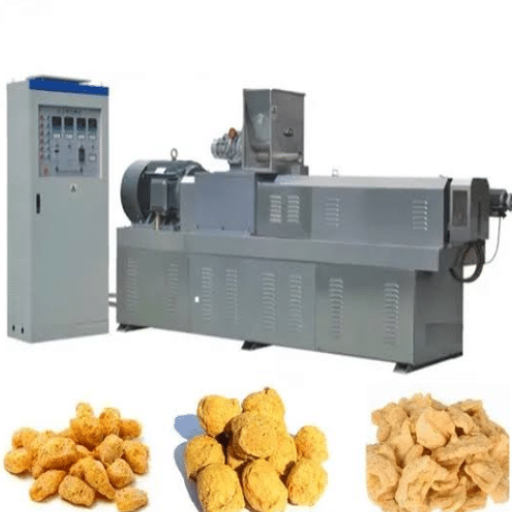
Extrusion cooking is a continuous thermal and mechanical process in which moistened, starchy or protein-rich material is cooked, plasticized, and formed under heat, pressure, and shear. The entire process happens inside a single machine called an extruder.
Think of it as a high-temperature, short-time reactor. Raw material enters one end as a coarse mix. A rotating screw conveys it forward while heat and friction cook it. By the time the material reaches the die at the far end, it is a hot, plastic mass. When it exits the die, the sudden drop in pressure makes water flash into steam, which puffs and texturizes the product.
Two chemical changes are at the heart of extrusion cooking. Starch gelatinizes, which means the starch granules absorb water and swell. Proteins denature and realign, which is what creates the fibrous texture in meat analogues. These changes happen in seconds, which is why extrusion can replace entire batch cooking lines with a single, compact machine.
How Does the Extrusion Cooking Process Work?
The process follows four stages. Each one affects the final texture, density, and shelf life of your product.
1. Raw Material Feeding and Conditioning
The process starts at the hopper. Dry ingredients like flour, starch, protein concentrate, and fiber are measured and mixed before entering the barrel. Water or steam is added to reach a target moisture level.
Moisture matters more than most people realize. Too little water and the material will overheat and scorch. Too much and it won’t expand properly at the die. Getting this stage right is what separates consistent output from constant troubleshooting.
2. Cooking, Shearing, and Pressurization in the Barrel
Inside the barrel, the screw does the heavy lifting. As it rotates, it conveys the material forward while generating friction and pressure. External heaters add controlled heat along the barrel.
This is where cooking actually happens. Starch gelatinizes and proteins denature under the combined effect of heat and shear. The material turns from a loose, granular mix into a viscous, molten dough. Screw speed, barrel temperature, and residence time all interact here to determine how thoroughly the product cooks.
3. Shaping at the Die
The cooked material reaches the die, a shaped plate at the end of the barrel. The die determines the product’s cross section: rings, tubes, stars, curls, or flat sheets.
For direct-expanded snacks, this is where the magic happens. The hot, pressurized material exits the die into open air. The sudden pressure drop flashes moisture into steam, expanding the product several times its original size. A dense, moist dough becomes a light, crispy puff in a fraction of a second.
4. Drying, Cooling, and Finishing
Freshly extruded product is hot and still contains moisture. It moves to a dryer to reach the final target moisture, then to a cooling stage. After that, it can be flavored, coated, fried, or packed.
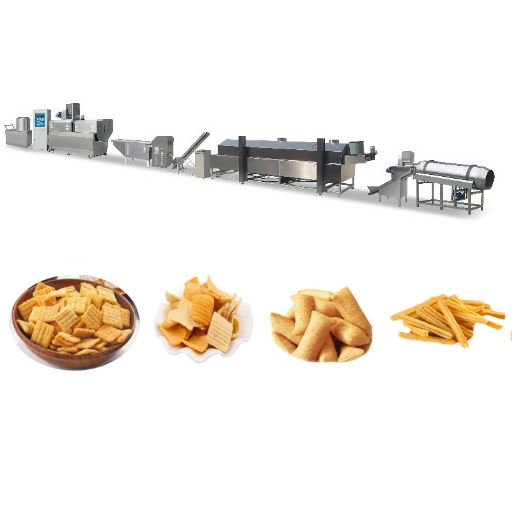
This stage is where a production line extends beyond the extruder itself. A complete line includes mixing, extrusion, drying, flavoring, and packaging. That’s why many manufacturers prefer a turnkey food production line so every stage is matched and tested together.
Want to see how a full extrusion line fits together in practice? Explore our snack food machinery to understand how extrusion connects to drying, frying, and packaging in a complete system.
Hot vs. Cold Extrusion: What’s the Difference?
Extrusion cooking splits into two broad categories based on temperature. The dividing line is around 70°C.
| Factor | Hot Extrusion | Cold Extrusion |
|---|---|---|
| Temperature | Above 70°C | Below 70°C |
| Cooking | Cooks the product | Does not cook; only forms and shapes |
| Energy | Higher | Lower |
| Typical products | Puffed snacks, breakfast cereals, TVP | Pasta, some doughs, 3D-printed foods |
| Key benefit | Expands and texturizes | Preserves heat-sensitive nutrients |
Hot extrusion is what most people picture when they hear the term. High temperatures cook and expand the product, creating the light, crispy texture of puffed snacks and cereals. It also inactivates enzymes and reduces microbial load, which extends shelf life.
Cold extrusion stays below 70°C. It shapes dough without cooking it, which is why it suits products like pasta that are dried or cooked later. Cold methods also protect vitamins and other heat-sensitive compounds, which is one reason they are being explored for functional foods and personalized nutrition.
Single Screw vs. Twin Screw Extruders
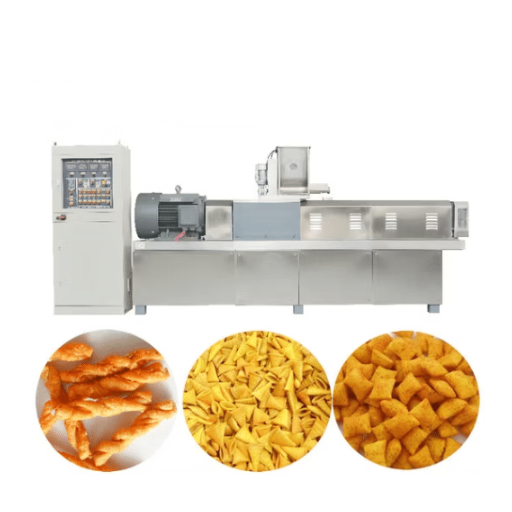
This is the single most important equipment decision you’ll make. The two designs look similar but behave very differently.
| Factor | Single Screw Extruder | Twin Screw Extruder |
|---|---|---|
| Relative cost | 1.0× baseline | 1.5 to 2.5× |
| Typical output | 100 to 500 kg/h | 100 to 1,500+ kg/h |
| Moisture range | 12 to 35% | 6 to 50% |
| Ingredient flexibility | Limited | Wide (high fiber, protein, fat) |
| Process control | Basic | Precise |
| Self-cleaning | No | Yes |
| Best for | Simple, fixed recipes | Diverse, high-value products |
A single screw extruder is the economical workhorse. It handles granular, free-flowing materials well and suits simple direct-expanded snacks like corn puffs and curls. If your recipe is fixed and your volumes are moderate, it’s often the right call.
A twin screw extruder is the flexible platform. Its two intermeshing, co-rotating screws mix, knead, and convey far more effectively. That means you can run fine flours, high-fiber blends, protein-rich doughs, and even chunky inclusions without blocking. It also self-wipes, which cuts changeover and cleaning time.
Consider a real scenario. Maria runs a mid-size snack company in Colombia. For years she produced a single corn curl on a single screw line, and it worked fine.
Then her retail partners asked for a high-protein, lentil-based puff. Her single screw couldn’t handle the sticky, high-protein dough, and it kept blocking. She upgraded to a twin screw extruder, and the same line now runs her original corn curl and the new lentil puff, switching between them with a die change.
For a deeper comparison, see our complete guide to the single screw vs twin screw extruder.
Key Process Parameters That Determine Product Quality
Once you have the right extruder, the quality of your product comes down to how you run it. Four parameters matter most.
Moisture Content
Moisture is the first lever. It controls expansion, texture, and density. Lower moisture generally gives more expansion and a lighter product. Higher moisture gives a denser, harder product. Most snack and cereal recipes run between 12% and 20% moisture.
Barrel Temperature and Screw Speed
Temperature and screw speed set how much cooking happens and how fast the material moves. Higher screw speed means more shear and shorter residence time. Higher barrel temperature means more cooking. These two need to balance: too much shear at low moisture can scorch, while too little cooking leaves an underdeveloped texture.
Screw Geometry and Die Design
The screw profile and die shape are where customization lives. Screw elements can be configured for gentle conveying or intense kneading. The die determines the final shape and how much the product expands. This is why two plants can run the same raw material and produce completely different products.
Small changes here cascade. Ahmed, a production supervisor in Egypt, spent two weeks chasing inconsistent cereal texture. The root cause was a worn die that had slowly widened, changing expansion and density.
Replacing the die and rebalancing moisture brought every batch back to spec. The lesson: parameters aren’t set-and-forget; they drift, and quality control means monitoring them.
The Advantages of Extrusion Cooking
Why do so many manufacturers run on extrusion instead of batch cooking? The advantages stack up quickly.
- Energy efficiency. Single screw food extruders consume roughly 0.1 to 0.2 kWh per kilogram, which is highly competitive with conventional thermal processing.
- Continuous, high-capacity output. Unlike batch processes, extrusion runs nonstop, which means more product per hour and per operator.
- Versatility. One machine can produce snacks, cereals, pasta, and textured protein by changing dies and parameters.
- Nutrition retention. The HTST process cooks quickly, preserving more heat-sensitive nutrients than long, slow cooking.
- No effluent. Extrusion generates no process wastewater, unlike washing-heavy or boiling operations.
- Longer shelf life. Cooking inactivates enzymes and microbes and reduces water activity, which keeps products stable on the shelf.
- Cost efficiency. Extrusion converts inexpensive commodity ingredients into high-value finished foods with minimal labor and floor space.
These benefits are why extrusion has largely replaced batch cooking for snack production in Western markets, according to food engineering literature.
Ready to put these advantages to work in your plant? Talk to our engineers about a custom extrusion line, and we will configure the process around your recipe and volume targets.
Applications: What Can You Make with Extrusion Cooking?
Extrusion cooking is remarkably versatile. The same core technology produces a wide range of products across several categories.
Snacks and Breakfast Cereals
This is the classic application. Corn puffs, curls, chips, and snack pellets all come from extrusion. Direct-expanded snacks expand right at the die, while pellet snacks are extruded, dried, and then expanded later in a fryer. Our corn puff snack production line and snack pellet process line are built around these two paths.
Pasta and Noodles
Pasta is typically produced by cold extrusion, which shapes the dough before drying. This preserves the structure needed for consistent cooking later. A dedicated pasta production line handles the shaping, drying, and packaging stages.
Plant-Based Proteins and Meat Analogues
This is where extrusion cooking is growing fastest. High-moisture extrusion transforms plant protein into fibrous, meat-like textures for burgers, sausages, and shreds. Around 30% to 40% of new extruded products are now plant-based, reflecting strong consumer demand.
Consider Priya, who founded a plant-based brand in Mumbai. Her first attempt used low-moisture extrusion, and the texture came out dry and crumbly. By moving to a high-moisture twin screw process, she achieved the chewy, fibrous bite consumers expect from a meat analogue. That texture shift doubled her retail orders within a quarter.
Pet Food and Baby Food
Extrusion also cooks and shapes dry pet food, a market segment that has run on extrusion since the 1950s. Baby and weaning foods benefit from the same HTST cooking, which improves digestibility and reduces anti-nutrients like phytates.
Choosing the Right Extrusion Equipment for Your Production Line
By now the path to a sound decision is clearer. Here is a practical checklist to work through before you buy.
- Define your products. Will you run one fixed recipe or many? Fixed, simple recipes favor single screw; varied, high-value products favor twin screw.
- Set your throughput target. Match the extruder’s output range to your projected volume, and leave room to grow.
- Assess your ingredients. High fiber, protein, or fat content points to twin screw. Free-flowing starch blends work on single screw.
- Plan for changeover. If you switch products often, a self-wiping twin screw will save hours of cleaning time.
- Confirm certification. Make sure the equipment can meet the standards your market requires, such as CE.
- Think beyond the extruder. Drying, flavoring, and packaging must keep pace with the extruder, or it becomes a bottleneck.
This last point matters more than people expect. The extruder is fast. If your downstream dryer is undersized, the whole line slows to match it. That is why a complete, matched line often outperforms a mix of separately purchased machines.
Ready to configure your line? Our team has over a decade of experience building custom extrusion systems for food manufacturers in more than 50 countries. Reach out, and we will design a solution around your specific production goals.
Frequently Asked Questions About Extrusion Cooking
What is extrusion cooking in food processing?
Extrusion cooking is a high-temperature, short-time process that mixes, cooks, kneads, and shapes food ingredients into a finished product in one continuous step inside an extruder.
What is the difference between hot and cold extrusion?
Hot extrusion runs above 70°C and cooks the product as it forms it. Cold extrusion stays below 70°C and only shapes the dough, which is why it is used for products like pasta.
What is the difference between a single screw and a twin screw extruder?
A single screw extruder is simpler and cheaper but handles fewer ingredients. A twin screw extruder costs more yet offers better mixing, wider ingredient flexibility, and higher throughput.
What products are made by extrusion cooking?
Extrusion cooking produces puffed snacks, breakfast cereals, pasta, textured vegetable protein and meat analogues, pet food, and baby food.
Is extrusion cooking energy efficient?
Yes. Single screw food extruders consume around 0.1 to 0.2 kWh per kilogram, which is competitive with other thermal processing methods.
Conclusion
Extrusion cooking is one of the most efficient ways to turn low-cost ingredients into high-value finished food. It combines mixing, cooking, kneading, and shaping into a single continuous process that runs on less energy, less labor, and less floor space than batch cooking.
The key decisions are straightforward. Choose hot or cold extrusion based on whether you need to cook the product. Choose single or twin screw based on your ingredient variety and throughput needs. Then control moisture, temperature, screw speed, and die design to lock in consistent quality.
The technology is not standing still. Plant-based proteins, personalized nutrition, and precision process control are pushing extrusion cooking into new territory. The fundamentals, though, remain the same: the right equipment, run with the right parameters, produces reliable, high-quality food.
If you are evaluating extrusion equipment for your production line, we can help. Contact Shandong Loyal Industrial for a custom extrusion line quote →