Clean in place (CIP) is a method of cleaning the inside of food processing equipment without taking it apart. Water and cleaning chemicals are circulated through tanks, pipes, pumps, extruders, and dryers in a closed loop, removing residue and bacteria between production runs.
That sounds simple. In practice, most plant managers spend years doing it the hard way. Take Marco, who runs a corn snack line in Guadalajara. Every Friday his crew disassembles the seasoning drum, pulls the fryer belts, and scrubs by hand for nearly four hours. It costs him a shift of production, and the results still depend on who’s holding the brush.
You already know sanitation matters. What you may not know is that clean in place food processing can turn that Friday teardown into an automated, repeatable, and verifiable cycle. This guide explains exactly how, from the seven step cycle and the four parameters that control it, to how you spec machinery that is actually cleanable from day one.
Key Takeaways
- Clean in place (CIP) cleans equipment interiors with circulated water and chemicals in a closed loop, no disassembly required.
- The standard CIP cycle has seven steps, alternating alkaline and acid washes with rinses, ending in an air purge.
- Four parameters, Time, Action, Concentration, and Temperature (TACT), determine whether a cycle actually works.
- CIP is not a cure all. Some parts, like dies and cutting heads, still need clean out of place (COP) manual washing.
- The real win is hygiene by design. Spec food grade stainless steel, sloped surfaces, and no dead legs, and CIP becomes reliable.
What Is Clean in Place (CIP) in Food Processing?
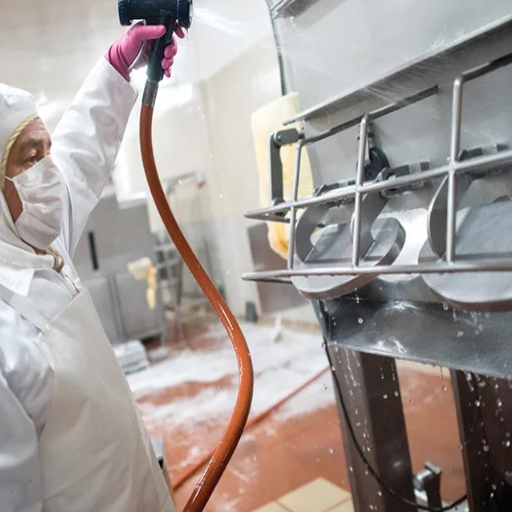
Clean in place food processing means cleaning equipment where it stands. Instead of opening a tank or pulling a pump apart, you pump cleaning solution through the same pipes and vessels that carried your product.
The method began in the dairy industry in 1950, credited to engineer Dale A. Seiberling. Dairy plants had a problem: piping and tanks that were too awkward to dismantle every day, and a hygiene standard that would not tolerate shortcuts. CIP solved both by circulating heated cleaning chemicals through the closed system.
CIP typically handles the enclosed parts of a line: tanks, pipes, heat exchangers, pumps, valves, and certain enclosed machines. A related process called sterilization in place (SIP) goes one step further and uses steam to inactivate microorganisms, usually where a sterile or aseptic product is involved.
The distinction matters for equipment buyers. A machine is only as cleanable as its design allows. We cover that in the “How to Spec CIP Ready Machinery” section below, because it is where most purchasing mistakes happen.
Why Clean in Place Matters for Food Processing
The case for CIP comes down to three things: safety, efficiency, and compliance.
Safety comes first. Effective CIP removes the biofilm and product residue where bacteria grow and where allergens hide. For a line that runs both milk based and dairy free products, a validated CIP cycle is often the only practical way to prevent cross contact between batches.
Efficiency is the quieter win. Manual teardown and scrub is slow and inconsistent. An optimized CIP system uses roughly 30% less water, 25% fewer chemicals, and 20% less cleaning time than a poorly controlled setup, according to Food Processing. That recovered time is production time.
Compliance closes the loop. Food safety programs like HACCP, and standards like 3-A and EHEDG, all assume you can document how equipment was cleaned. CIP does that automatically. It runs a repeatable recipe and logs the results, which is what an auditor wants to see.
Here’s the honest tradeoff, and it matters. CIP requires upfront design and capital. A machine that was never designed for cleanability will fight you every shift, no matter how good your chemicals are. That’s why hygiene is a purchasing decision, not a maintenance afterthought.
Want to see how CIP ready machinery works in a real line? Explore our food production lines, designed for cleanability from the first weld to the final washdown.
How a CIP System Works: The 7-Step Cleaning Cycle
The heart of clean in place food processing is the cleaning cycle. Most CIP programs follow a standard seven step sequence. The exact times and temperatures vary by product and soil, but the order is consistent.
- Pre-rinse. Flush loose product residue with recovered or ambient water. This step usually runs for five to ten minutes and sends the heaviest soil to drain.
- Alkaline wash. Circulate roughly 2% caustic (sodium hydroxide) at 70 to 90°C for five to thirty minutes. The alkali breaks down fats, proteins, and organic soil.
- Inter-rinse. Rinse away the alkaline solution with process water.
- Acid wash. Circulate roughly 1% phosphoric or nitric acid at 50 to 70°C for three to fifteen minutes. The acid removes mineral scale and the milkstone that forms on heated surfaces.
- Inter-rinse. Rinse again to remove the acid.
- Final rinse. Flush with purified or quality water to leave no chemical residue.
- Air purge. Blow sterile air through the system to dry it, which prevents standing water from becoming a bacteria incubator.
The logic behind the sequence is simple. Alkaline chemicals dissolve organic matter like fat and protein. Acid dissolves inorganic deposits like mineral scale. Neither does the other’s job well, so they alternate, with rinses in between so the chemicals never mix.
The 4 Factors That Make CIP Work: TACT
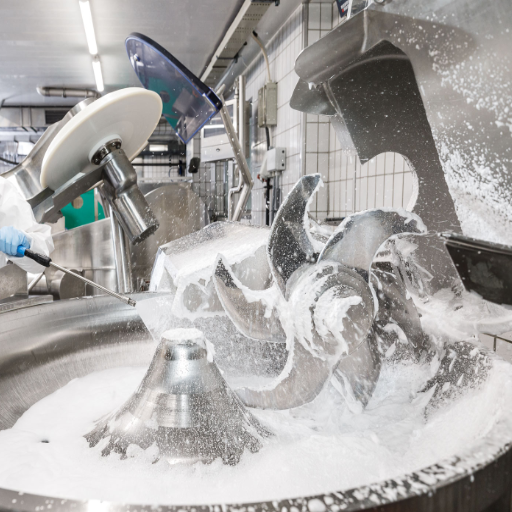
A CIP cycle is only as good as its weakest parameter. Sanitation engineers compress the science into four letters: TACT.
- Time. Cleaning chemicals need contact time to work. Too short, and residue survives. Too long, and you waste a cycle.
- Action. This is turbulence. Cleaning solution must flow fast enough to physically scrub the surface, generally at least 1.5 meters per second. Turbulent flow, not soaking, is what removes the residue.
- Concentration. There is a critical detergent concentration, typically around 1% to 2%. Below it, cleaning stalls no matter how long you wait.
- Temperature. Around 70°C is the sweet spot. A 10°C increase can roughly double cleaning speed, but going much hotter can denature proteins and bake them onto surfaces, which makes cleaning worse.
Here’s the connection most buyers miss. All four of these only work if the machine lets them work. A dead leg, a crevice where product can sit, or a pipe that doesn’t fully drain creates a spot where the turbulent flow never reaches and the chemicals never rinse clean. That’s a hygiene defect you can’t clean your way out of.
Types of CIP Systems
Not every plant needs the same CIP setup. The four common configurations trade off water use, chemical cost, cross contamination risk, and capital.
| System Type | How It Works | Water/Chemical Use | Cross-Contamination Risk | Best For |
|---|---|---|---|---|
| Boil-out (fill/flood) | Fill the vessel and hold heated solution | High | Low | Awkward geometries |
| Total loss (single-use) | Fresh chemicals every cycle, then drain | Highest | Lowest | Allergen-segregated or high-risk lines |
| Single-use recirculation | Recirculate one batch, then drain | Medium | Medium | Mid-scale, flexible lines |
| Multi-tank re-use | Store and reuse solution across cycles | Lowest | Highest | High-throughput, same-product lines |
The choice usually comes down to risk versus cost. A multi-tank re-use system is cheapest to run at scale, but it carries more cross contamination risk. A total loss system is the safest for allergen control, but the chemical and water cost adds up fast.
This is where product mix drives the decision. A plant running a single snack SKU all week can safely reuse solution. A plant that switches between an allergen containing product and an allergen free one should consider single use, or dedicated CIP circuits.
CIP vs COP (Clean Out of Place): Which Do You Need?
CIP handles the enclosed parts of a line. It does not handle everything, and pretending otherwise is a costly mistake.
Clean out of place (COP) means removing parts and washing them separately, usually in a wash sink or parts washer. Dies, cutting heads, and some conveyor components still need COP because they simply cannot be cleaned properly in place.
Here’s the honest rule: CIP is not always sufficient. Nilfisk makes this point well, CIP cleans enclosed circuits, but facility level food safety still needs manual cleaning of open surfaces, floors, and equipment that CIP never reaches.
| Question | CIP | COP |
|---|---|---|
| Equipment disassembled? | No | Yes |
| Cleaning method | Circulated chemicals in a closed loop | Manual or machine wash of removed parts |
| Best for | Tanks, pipes, enclosed machines | Dies, small parts, irregular shapes |
| Automation | Fully automated and logged | Manual, operator dependent |
| Verifiability | High, repeatable recipe | Lower, depends on the operator |
Think of them as complements, not rivals. A well designed line automates CIP for the enclosed 90% and keeps COP manual wash simple and fast for the last 10%. When Marco’s crew finally stopped hand scrubbing the seasoning drum and let CIP handle it, they still pulled the seasoning paddles for a quick COP wash. Total sanitation time dropped from four hours to ninety minutes, and it became repeatable.
If you’re weighing how cleanability affects your equipment choice, start with food grade machinery materials, where we cover the stainless steel grades that make CIP work.
How to Spec CIP-Ready Food Processing Machinery
This is the section competitors skip, and it’s the one that actually decides whether your CIP system works. Hygiene is designed into a machine, not added after the fact.
Here’s what to look for in clean in place food processing equipment:
- Food grade stainless steel. 304 is standard; 316L adds better corrosion resistance for acidic products and aggressive cleaning chemicals.
- Sloped, self-draining surfaces. Liquid should never pool. Standing water is standing bacteria.
- No dead legs or crevices. Every surface must be reachable by turbulent flow. Radiused corners beat sharp 90 degree angles every time.
- Washdown ratings where needed. IP69K means the machine survives high pressure, high temperature washdown, which matters for open sections like fryers and conveyors.
- CIP return connections and spray ball access. The machine should be plumbed to accept a CIP supply and return, with spray balls that reach the internal surfaces.
- PLC or SCADA recipes. Automated, documented cycles are what make cleaning repeatable and audit ready.
- EHEDG or 3-A certified components. These standards certify hygienic design, so you’re not trusting a sales claim.
Priya learned this the hard way. She ordered a pasta production line for a new plant and focused on output and price. Eight months in, her sanitation team was fighting a hard to reach section near the die head that held product after every run. The next line she bought, she walked the vendor through exactly this checklist. Cleaning time dropped, and her audit findings disappeared. You can shortcut the same lesson by asking these questions before you sign.
The machine types each have their own cleanability story. An extruder needs a die and barrel you can access and clean. A fryer needs oil filtration plus CIP on the heat exchanger and washdown on the open belt section. A seasoning drum needs spray ball coverage and self draining walls. When all of these are designed for cleanability up front, the whole snack food machinery line runs cleaner with less labor.
Clean in Place Standards and Compliance
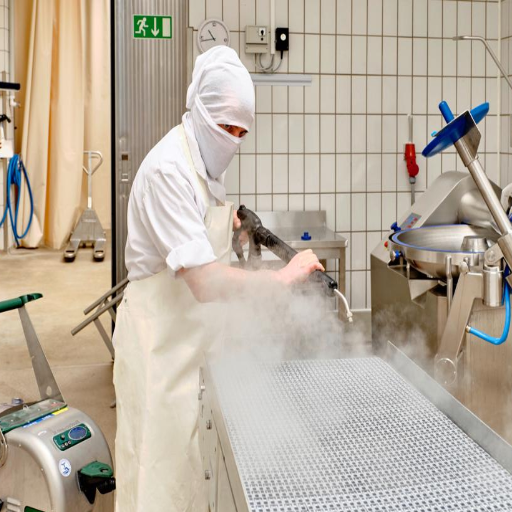
If you sell food into regulated markets, you will hear these names. Here’s what each one actually governs.
- 3-A Sanitary Standards. Focused on hygienic equipment design for dairy and food. 3-A certified components are built to be cleaned and inspected.
- EHEDG. The European equivalent, the European Hygienic Engineering and Design Group, certifies equipment and components for hygienic design.
- FDA and cGMP. Current Good Manufacturing Practice rules in the United States require equipment to be cleanable and cleaning to be documented.
- HACCP. Hazard Analysis and Critical Control Points is a system that identifies where hazards are controlled, and sanitation is almost always a control point.
- CE certification. For equipment sold into the European Union, CE confirms the machinery meets EU health, safety, and hygiene requirements.
For a food manufacturer, the practical question is simple: can the supplier show you the documentation? A CE certificate, a 3-A symbol, or an EHEDG certificate on the components is evidence. A vague “food grade” claim is not. That’s exactly why our protein bar production line and other lines ship with CE certification and food grade materials documented, not assumed.
Frequently Asked Questions
What is clean in place in food processing?
Clean in place is a method of cleaning the interior of food processing equipment by circulating water and cleaning chemicals through it in a closed loop, without disassembling the equipment.
How does a CIP system work?
A CIP system pumps a sequence of solutions through the equipment: a pre-rinse, an alkaline wash, an acid wash, rinses between each, a final rinse, and an air purge to dry.
What are the 4 factors that affect CIP cleaning?
Time, Action (turbulence), Concentration, and Temperature, known together as TACT. Turbulent flow, adequate detergent concentration, correct temperature, and sufficient contact time all have to be right at once.
What is the difference between CIP and COP?
CIP cleans equipment in place with circulated chemicals. COP cleans by removing parts and washing them separately. Most lines need both.
What temperature and chemical concentration does CIP use?
Alkaline wash runs around 2% caustic at 70 to 90°C. Acid wash runs around 1% phosphoric or nitric acid at 50 to 70°C.
How do I know if my food production line is CIP-compatible?
Check for food grade stainless steel, sloped self-draining surfaces, no dead legs, washdown ratings, CIP return connections, and 3-A or EHEDG certified components.
Conclusion
Clean in place food processing turns a messy, inconsistent chore into a repeatable, verifiable process. The seven step cycle alternates alkaline and acid washes to remove both organic soil and mineral scale. The TACT parameters, Time, Action, Concentration, and Temperature, decide whether that cycle actually works. And the choice of system type, from total loss to multi-tank re-use, is a risk versus cost decision driven by your product mix.
The deeper point is the one competitors skip: cleanability is a design decision. Spec food grade stainless steel, sloped surfaces, and no dead legs, and CIP becomes reliable. Skip them, and no amount of chemicals will save you.
That’s how we approach every food production line we build, cleanable by design, CE certified, and documented for the audit you will eventually face.
Tell us your product, capacity, and hygiene requirements, and we’ll design the production line and its cleanability together. Contact us for a quote, and let’s make your next sanitation shift a short one.