Dry cleaning food processing equipment means removing residues with suitable physical methods without adding water.
You need to reach the soil and collect it. You also need a clear release decision before the line restarts. A clean-looking cover answers none of those questions.
If you’re buying a snack or cereal line, cleaning access can be hard to judge from a catalogue. This guide turns that concern into questions for drawings, demonstrations and equipment handover. It covers scope, hidden surfaces, collection methods and release records.
Key Takeaways
- Physical residue removal and sanitization answer different questions.
- Check both tool access and the sight line needed to inspect hidden surfaces.
- Collect removed material; don’t treat moving dust elsewhere as completion.
- Keep mechanical readiness and food-safety release as separate recorded decisions.
Planning a line? Contact Loyal with your product and cleaning brief, including the recipe, proposed layout and intended cleaning method. Ask for a model-specific discussion before setting acceptance requirements.
Dry cleaning food processing equipment: scope and limits
Classify the task first
What changed? Is this a routine clean, a recipe change, repair work or a suspected contamination event? Each task needs its own proof.
A brush may remove loose flour. That alone does not answer a pathogen finding or a change to a recipe with different allergens.
Dry cleaning food processing equipment sits within a broader sanitation program. When discussing dry cleaning food processing equipment, name the removal method. The term alone does not prove that a surface is sanitized. Manitoba’s dry-processing cleaning guidance makes that distinction and identifies dedicated tools as a way to control cross-contamination.
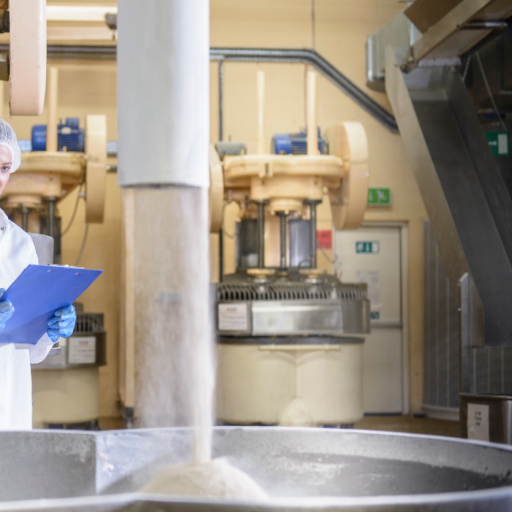
Define the actual process boundary
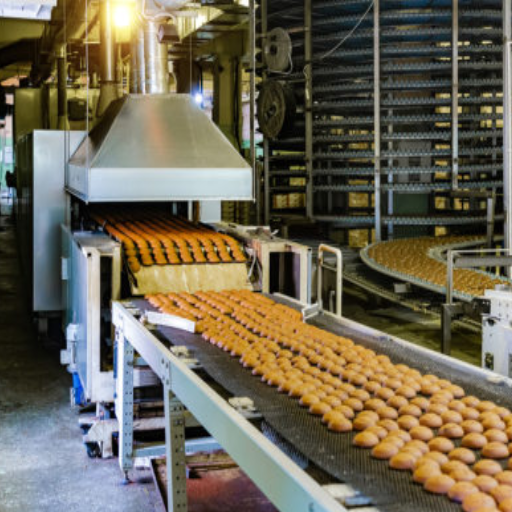
A finished cereal may be dry while its production line includes wet mixing, cooking or oily coating. For dry cleaning food processing equipment, map the method by module and zone. For cereal manufacturing equipment, ask which parts contact wet product, dry product or seasoning before choosing a method for the entire installation.
A useful scope names the machine, soil and task. For example: “Routine removal of loose cereal fines from the specified transfer, under the approved procedure.” It should also say what that task does not establish. Avoid the broader claim “the line is safe because it was dry cleaned.”
Keep guidance, instructions and release separate
The FDA’s January 2025 low-moisture ready-to-eat food document remains a US draft, not for implementation, containing nonbinding recommendations. It discusses sanitation programs and what to do after contamination. Treat it as context, not a rule for how to run every plant. Check local rules, the food business’s program and the model instructions as well.
For buyers, dry cleaning food processing equipment starts with clear roles. The supplier explains the design and which methods it permits. The food business sets its sanitation program and release rules. Neither a brochure nor a general article can establish those criteria for an unknown recipe and plant.
Check access before dry cleaning food processing equipment
Ask to reach and see the same surface
Before dry cleaning food processing equipment, check what each removable cover exposes. Can the operator reach that point with the approved tool? Can they remove the soil and see the result?
Reach and visibility are separate questions. A brush may fit through an opening while the inspection view remains blocked.
For dry cleaning food processing equipment, mark each relevant point on the proposed layout. Use the matrix below as a discussion aid, selecting only modules present in your line. These are inspection prompts, rather than findings about a particular Loyal machine.
| Representative location | Possible residue | Question to resolve | Evidence to request | Reviewer |
|---|---|---|---|---|
| Hopper lip and underside | Powder or fines | Can both sides be reached and inspected? | Drawing plus access demonstration | Engineering and sanitation |
| Transfer interface | Trapped fragments | What must be opened to expose the joint? | Dismantling sequence and inspection view | Engineering |
| Conveyor return or belt interface | Carryback | Where does removed material collect? | Demonstration of access and collection route | Sanitation |
| Dryer or cooler outlet | Retained fines | Which enclosed points need inspection? | Location list and approved access method | Engineering and sanitation |
| Seasoning contact area | Adhered oily soil | Does the proposed method cover this soil? | Model-specific method and limitations | Sanitation and food safety |
Give each open question an owner. Record the place, missing proof and what will close the item. “Easy to clean” is too broad to close an item about an unseen underside or a trapped interface.
Review parts removal and safe access
Before dry cleaning food processing equipment, ask how it is safely isolated for access. Don’t accept a cleaning demonstration that depends on reaching into operating machinery. The plant’s safe-work arrangements and the manufacturer’s instructions must govern the actual task.
Then follow the parts. Where do they go? How do staff keep clean parts apart from dirty ones? Check what stops soil being carried back when parts are refitted.
Ask how loose parts, fasteners and tools will be counted back in where the task requires this. If a special tool is necessary, include it in the handover discussion.
Dry cleaning food processing equipment also requires clarity about limits. Ask which surfaces remain inaccessible under routine cleaning and when deeper dismantling is needed. An outside photo cannot settle this. Ask to see the actual design offered.
Illustrative scenario: A buyer sees a transfer cover being removed. The top is visible. But the underside is still hidden behind a fixed joint, so the buyer records an open item and asks to see the approved way to inspect it. No cleaning result has been shown yet.
Put that demonstration into the factory acceptance test checklist. Ask the supplier to agree which access points, parts and documents they will show. A FAT can show access under agreed conditions. It doesn’t prove every sanitation control will work in the future plant.
Remove residues without redistributing them
Match the tool to the soil and collection route
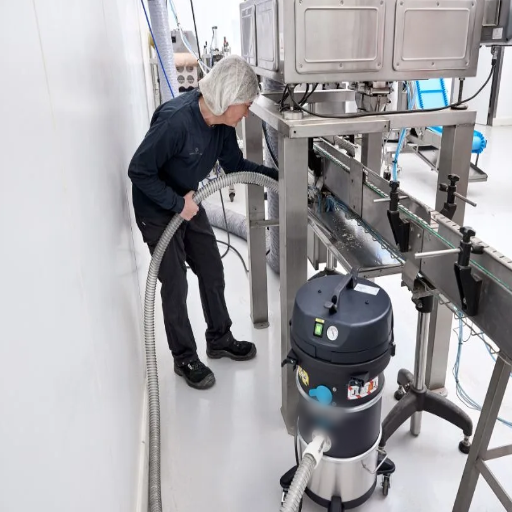
Moving dust out of sight isn’t the same as removing it. When planning dry cleaning food processing equipment, trace where dislodged material will go. A brush loosens soil; a collection step takes that soil out of the work area. The procedure should connect those actions.
Compare the methods with the actual soil. Check which tools the model permits.
| Proposed action | Question before use | Check afterward |
|---|---|---|
| Scrape or brush | Could the tool damage the surface or shed parts? | Inspect the tool and target surface. |
| Wipe | Does the method address this soil and surface? | Check for film or soil left behind. |
| Vacuum | Does the unit suit the material and dust risks? | Check the collection path and container. |
Take worn tools out of service under the site procedure. The aim is a result you can inspect, rather than a preferred tool brand.
A vacuum specification needs more than suction. Ask if the vacuum suits the material and any dust hazards. Check how it collects waste, how it is emptied and where it is stored. A household vacuum is not a complete procurement specification for a food-production task.
Keep zones and tools distinct
Food-contact tools should not become floor tools. Record each tool’s intended area, identity and clean storage location. A colour system can support that record, but the colours mean little unless staff understand the assignments and tools stay within them.
For dry cleaning food processing equipment on a corn puff snack production line, map the relevant transfers and seasoning areas rather than assuming one method fits every module. Plan the work so removed soil does not reach a clean area. The right order depends on access and the layout.
Waste handling is part of dry cleaning food processing equipment. Who closes the collection container, moves it out of the zone and checks the route afterward? Include the collector and its tools in the task boundary so they don’t become an unrecorded source of carryover.
Treat air and product purges as separate decisions
When dry cleaning food processing equipment, air can spread soil and contaminants. Manitoba’s guidance warns about redistribution, so don’t make air the default answer to a hidden surface. First resolve whether the design allows access and capture. Review any proposed air use against the site’s procedure and safety risks.
Dry cleaning food processing equipment must also be distinguished from running material through a process as a purge. Moving visible product out does not prove that contamination has been dealt with. The FDA draft discusses the limits of cleaning-only approaches in pathogen remediation; keep any purge within its justified purpose.
What would close the task? The reviewer needs to know what was removed, where it was collected and which surfaces were checked. If the only answer is “the dust disappeared,” the collection path still needs work.
When dry removal is insufficient
Hold the decision when the residue changes
A plan for dry cleaning food processing equipment may cover loose fines but not an oily film. If the method falls short, record the soil left behind. Follow the site’s process for raising the issue. Don’t silently replace brushing with a chemical, steam or wet wash because the schedule is tight.
Dry cleaning food processing equipment has limits that should appear in the method description. Ask what residue or event triggers a hold, who reviews an alternative and which model-specific instructions apply. A method change needs a defined decision before it becomes routine practice.
Illustrative scenario: During a seasoning change, the team finds a film that the approved task doesn’t cover. They record the place and hold release. They ask for an approved method to deal with the film; the example does not assume an untested method works.
Review moisture as part of any alternative
Wet cleaning isn’t automatically forbidden on every dry-food line. If it is needed, check that the method suits the machine. Review drying and release controls too. Calling a process “dry steam” also doesn’t establish that it introduces no moisture.
A primary study published online on April 24, 2026, Moisture matters, reinforces attention to humidity after wet sanitation. The study tested surfaces soiled with powdered infant formula. It does not set a cereal-line humidity limit or a drying time for every plant.
For dry cleaning food processing equipment, ask what changed when moisture was added. Don’t turn the study’s test conditions into plant rules.
The IAFNS June 16, 2026 webinar below introduces low-moisture cleaning research and a novel agent. Use it as educational context. It doesn’t prove that the agent is approved for your use, suits your machine or will work in your plant.
Before changing methods, ask for the instructions and proof that apply to your plant. Check that the method suits the materials and meets the relevant rules. A promising study is a starting point. It is not permission to use a method on your line.
Verify results and control return to production
Inspect residue removal
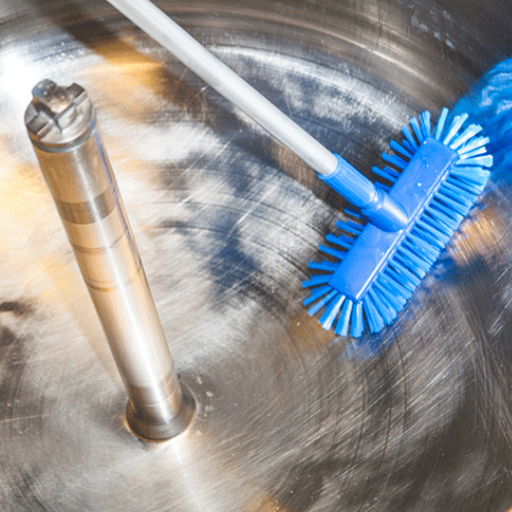
When checking dry cleaning food processing equipment, start with the places named in the scope. Record what you found, what soil remains and what was done to correct it. If a surface cannot be seen, resolve the inspection method rather than treating “not visible” as “clean.”
Verification after dry cleaning food processing equipment should relate to the task performed. A routine removal record should identify the actual surfaces checked. A recipe change or contamination response may need more proof under the site’s program. One checklist won’t settle all three tasks.
Review the evidence for the relevant hazard
Visual inspection, residue checks and hazard-specific tests answer different questions. Ask what each check can establish before using it to release the line. Validation asks whether a method can achieve its stated purpose. Routine verification checks that staff used the approved method and met its requirements.
The FDA low-moisture sanitation draft explicitly discusses the limits of relying solely on product testing after pathogen contamination. One negative product sample can’t replace the wider checks and release decision.
For dry cleaning food processing equipment, agree in advance which results must be available before release. The food-safety lead should state what the results mean and when to hold the line. This article supplies no universal swab count, pass limit or waiting time.
Confirm reassembly and mechanical readiness
Count back the parts and tools. Check that the machine has been put back together correctly and that the required checks are complete. Refer to the controlling manuals rather than relying on memory. Use the equipment documentation handover checklist to request the applicable cleaning and reassembly information.
Illustrative scenario: Maintenance signs that the transfer is back together. But the sanitation reviewer still has an open inspection item, so the food-safety hold stays in place. One signature doesn’t close both tasks.
Record authorization and unresolved holds
A handback record for dry cleaning food processing equipment should show how the decision was made. The following fields are a buyer’s discussion template, not a universal legal form:
- Line, zone, equipment identity, product and preceding recipe.
- Procedure version, isolation arrangement and access scope.
- Residues found, corrective work and any method or moisture change.
- Required verification, results reviewed and remaining exceptions.
- Parts and tool reconciliation, reassembly and mechanical checks.
- Named reviewers, release authority, disposition and unresolved holds.
Write down whether the line is released or held. A completed task is not permission to restart. Give each open item an owner and a way to close it. Production timing should follow that decision, rather than becoming the evidence for it.
Supplier questions to resolve before equipment acceptance
Turn dry cleaning food processing equipment from a general preference into a defined purchase discussion. Send your planned recipes, expected soils and cleaning zones with the layout. For dry cleaning food processing equipment, ask which documents and checks apply to the offered design.
Group the questions by the decision they support:
- Scope: Which soils and transitions does the proposed method address, and what is excluded?
- Access: Which surfaces require dismantling, and which remain hard to inspect?
- Collection: How can removed material leave the equipment without crossing cleaned areas?
- Compatibility: Which tools and methods are covered by the model instructions?
- Handover: What drawings, parts information and reassembly instructions will be supplied?
- Release: Which equipment checks can the supplier demonstrate, and which food-safety decisions remain with the food business?
Keep a list of open items beside the quotation. Name the place or document, the open question, who owns it and what proof will close it. “Discuss after delivery” leaves the purchase condition open; an agreed demonstration or document gives the buyer something reviewable.
The three examples point to different records: proof of access, an approved method for an unexpected soil, and a release record that names each role. A general claim that a machine is easy to clean can’t replace them. You can assess dry cleaning food processing equipment when those records name the actual line and task.
Before accepting the line, compare what was promised with what was shown. Keep the FAT separate from site validation and checks after installation. No single demonstration should be stretched into proof for every product, hazard and operating condition.
Send Loyal your product, residue and cleaning-access questions for a model-specific equipment discussion. Resolve access, method limits and handover documents before you accept the line.
Questions about dry equipment cleaning
Does dry cleaning food processing equipment sanitize it?
No: physical dry cleaning removes residues but does not, by itself, establish a sanitized surface. Define the purpose of the task and the evidence needed for the relevant hazard. A routine clean is not approval for every allergen change or pathogen response. Ask the site food-safety lead which evidence applies to this task.
Can compressed air replace vacuum collection?
Not as a default: air can move soil into nearby or hidden areas, so review capture, contamination and worker safety before use. Start with access and the removal route. Specify suitable collection equipment and follow the site’s approved method. A pressure limit alone won’t tell you where the dust went.
Is wet cleaning always unsuitable for cereal equipment?
No: a cereal line can contain different soils and processing zones, so cleaning methods need to follow the actual equipment and task. If wet cleaning is required, review compatibility, moisture control, drying and release. A dry finished product does not establish one cleaning regime for the whole line, so mark each zone and its method on the layout.
What evidence is needed before restarting the line?
Use the site’s approved release requirements for the specific task. They should address residue inspection, any required hazard-specific evidence, reassembly and mechanical readiness, plus responsible authorization. Record remaining exceptions and holds, with an owner for each. Keep the release record with the task: a mechanically complete line or one negative test does not settle the food-safety decision.
What should buyers request at factory acceptance?
For dry cleaning food processing equipment, request a check of cleaning and inspection access at agreed points. Ask for dismantling and reassembly instructions, plus a clear list of exclusions. Record unresolved items with an owner and closure evidence. Physical access demonstrated at FAT supports purchasing decisions; it does not validate every sanitation control in the future plant.