Last updated:
EHEDG hygienic design standards help buyers frame questions about equipment design, cleaning and certification. Start with the food, process and cleaning method. Then select relevant guidelines and match any certificate to the equipment you plan to order. A logo on a quotation cannot answer those questions by itself.
Key takeaways
- Select design guidance that fits the food and cleaning method.
- Check the certificate against the model, seals and conditions in the quote.
- Keep component scope separate from the complete line.
- Define evidence for cleaning in your own process.
Keep each task visible in the purchase brief. Use the matrix below to choose documents. Then work through the certificate checks and evidence register with your supplier.
You don’t need to turn the purchase brief into a library of document numbers. You need enough detail to ask: which part is covered, under what conditions, and what remains to be checked? That approach also helps separate a documented answer from a broad statement such as “hygienic construction.”
What EHEDG hygienic design standards establish
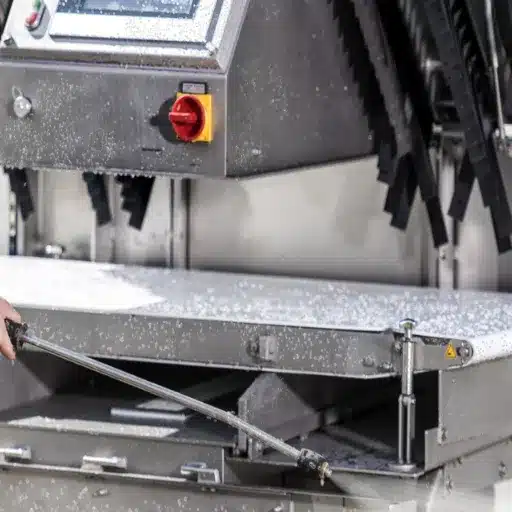
EHEDG is the European Hygienic Engineering & Design Group. Its guidelines address hygienic equipment and how to design it.
Its scheme checks equipment against set criteria. Tests form part of the work where they apply. Design guidance, a certificate and your own cleaning checks answer different questions.
| Evidence | What it helps establish | What to request next |
|---|---|---|
| Guideline reference | The design topic and agreed technical basis | Document name, edition and scope |
| Equipment certificate | The assessed product and stated coverage | Certificate, listed configuration and conditions |
| Process-specific cleaning evidence | Whether the selected cleaning regime works for the intended process | Agreed method, acceptance basis and records |
The public summary of GL 8, Hygienic Design Principles, identifies its fourth edition as December 2025. It explains how to use risk to guide design, build and layout choices. Start with that scope. Then obtain the full documents for the design work.
EHEDG guidance is voluntary. Your contract may require a guideline. A claim that equipment is certified needs its own evidence.
Neither phrase proves that all laws in the target market have been met. For the broader distinctions, see our FDA, CE and EHEDG comparison.
Before applying EHEDG hygienic design standards, describe the food and where it contacts the equipment. State whether cleaning uses liquids, dry methods, dismantling or a combination. Describe planned changeovers and access constraints. Ask how the design addresses those conditions, rather than asking only for a stainless-steel grade.
For a complete project, our turnkey food production line pages provide a starting point for equipment discussions. Put required documentation in the enquiry so each claim can be checked against the quoted setup.
Select EHEDG hygienic design standards for your equipment
Select EHEDG hygienic design standards by equipment type and cleaning method. The official guideline catalogue is the reference for document identity and scope. Use the matrix to choose documents. It gives no detailed clauses or design limits for every machine.
| Buying question | Guideline starting point | Evidence to discuss |
|---|---|---|
| What principles apply across the design? | GL 8, hygienic design principles | Intended use and a design review tied to it |
| Is this closed equipment for liquid foods? | GL 10 | Equipment scope and cleaning approach |
| How will wet-cleaned open equipment be accessed? | GL 13 | Open-process layout and cleaning access |
| Does the process handle dry particulates? | GL 22 | Dry-material handling and cleaning needs |
| What applies to a belt conveyor? | GL 43 | Belt, frame, interfaces and cleaning access |
| How are construction materials selected? | GL 32 | Material identity and application conditions |
| How are elastomeric seals addressed? | GL 48 | Seal identity, joint design and cleaning conditions |
| Which cleanability test may be relevant? | GL 2 or GL 57 | Applicability to closed or open equipment |
| How will cleaning be validated in the process? | GL 45 | A process-specific validation plan |
One correction matters when reading older specifications: GL 43 concerns belt conveyors; GL 44 concerns food factories. A factory-design reference cannot stand in for the conveyor guideline. Check the number and title together whenever a quotation cites EHEDG hygienic design standards.
A wet-cleaned conveyor and a dry-cleaned powder unit need different questions. For the conveyor, ask how cleaning reaches the belt and frame. For powder handling, define the intended dry-cleaning method and the parts that need access. The fact that the finished food is dry does not, on its own, establish the cleaning method.
On 18 May 2026, EHEDG announced the fourth edition of GL 23 Part 1, addressing H1/HT1-registered lubricants. Add that reference where lubrication is relevant to the hygiene review. Our food-grade lubricant guide covers that separate purchasing topic; a lubricant registration does not certify the whole machine.
Record the document edition agreed with the supplier. If a quotation cites an older edition, ask which requirements were used and whether the proposed design needs further review. An old reference may still need review. A new edition alone does not prove that the offered equipment meets it.
Keep test references separate from design references. EHEDG’s test-method overview lists GL 2 for in-place cleanability of small and moderately sized closed equipment, and GL 57 for open process equipment. A guideline reference helps define the scope. It does not show that a test took place.
Apply EHEDG hygienic design standards in supplier questions
A polished surface is easy to see. A hidden joint, seal recess or blocked cleaning route takes a closer review. Translate EHEDG hygienic design standards into questions the supplier can answer with drawings, instructions and records for the quoted equipment.
Cleaning access and dismantling
Ask which surfaces contact the food and which nearby areas can receive splashes or residues. How does the proposed cleaning method reach each area? Which covers, guards or parts must be removed? Request a sequence that operators can follow, including how parts are inspected and put back.
Illustrative scenario: A buyer sees a polished hopper in a proposal. The drawing does not show access behind a junction near the outlet. The buyer asks for a section view and the proposed cleaning steps for that junction. The open question goes into the design review; the shiny exterior is not treated as proof of cleanability.
Joints, drainage and technical zones
Ask how joints, welds, fasteners and hollow sections are designed to avoid residue traps. For wet cleaning, discuss drainage in the planned layout. Check where cables, drives and other technical parts sit relative to food and cleaning routes. Request drawings of the installed layout as well as the unit on its own.
Avoid a universal shopping list of slopes, corner radii or enclosure ratings. Those values need a basis in the actual process.
Ask which requirement applies and where it comes from. How will the supplier check it? An electrical enclosure rating alone does not prove that the whole assembly has a hygienic design.
| Design concern | Ask for | Decision supported |
|---|---|---|
| Surface finish | Defined surfaces, measurement method and records | Whether the specified finish has been checked |
| Materials | Part identity and suitability evidence for intended use | Whether the proposed material fits the application |
| Seals | Material designation, joint drawing and service conditions | Whether the quoted seal matches the design and certificate |
| Cleaning access | Dismantling instructions and access drawings | Whether the planned cleaning steps can be carried out |
| Drainage and interfaces | Installed layout and proposed observations | Which checks remain for the site |
Materials and surface evidence
Specify the surfaces and conditions that matter before choosing acceptance values. A steel grade does not describe the welds, joints or access around it. Likewise, a roughness value cannot answer whether a recess retains food.
Use our surface-finish specification guide to frame measurement questions. Agree pass criteria for your application.
Send us your product, planned cleaning method and documentation needs to start a model-specific discussion. Identify which items are required before order placement and which need review during installation.
Choose the relevant EHEDG certification type and class
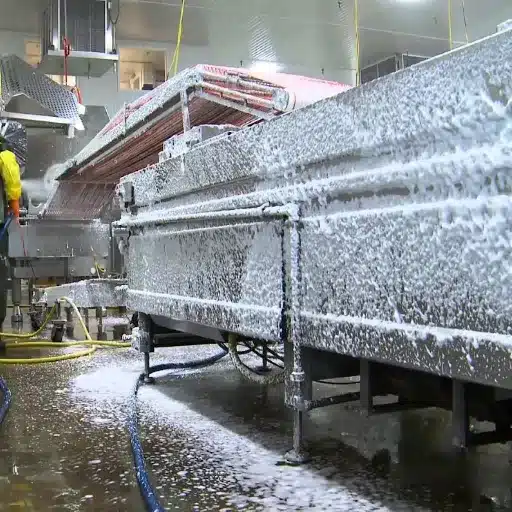
The official certification-class table distinguishes equipment cleaned with liquids, Type EL, from equipment cleaned only by dry methods, Type ED. The class also depends on whether parts must be taken apart for cleaning. Aseptic use has further conditions.
When you apply EHEDG hygienic design standards, use these names to describe scope. They do not rank equipment from low to high quality.
| Type and class | Cleaning and equipment scope |
|---|---|
| EL Class I | Open or closed equipment, wet cleaning in place without dismantling |
| EL Class II | Open or closed equipment, dismantled for wet cleaning |
| EL Aseptic Class I | Closed equipment, wet cleaning in place without dismantling; steam sterilisation and resistance to bacterial entry |
| EL Aseptic Class II | Closed equipment, dismantled for wet cleaning; steam sterilisation and resistance to bacterial entry after reassembly |
| ED Class I | Closed equipment, dry cleaning only without dismantling |
| ED Class II | Open or closed equipment, dismantled for dry cleaning only |
Ask the supplier to use the exact class shown on the certificate. A phrase such as “aseptic grade” gives no class or scope. Ask for the stated conditions too. Check that the cleaning instructions match the class before you rely on the certificate.
Cleaning in place means cleaning without taking parts apart as described for Class II. Don’t assume it means every part of a complete line is covered by one cleaning circuit. Establish the boundary of the assessed equipment and list any connected items separately.
The EHEDG FAQ states that issuance of AUX certificates was discontinued from December 2024. Treat an AUX reference as a reason to check the underlying record and current status. Do not present it as a current class to request for a new application, or assume that every historic certificate is automatically invalid.
Seal identity belongs in this check. Our seal and elastomer guide helps frame material questions, but the relevant certificate controls which materials it covers. Ask about cleaning conditions as well as the seal’s trade name.
Verify the certificate against the quoted setup
Does the quote claim to follow EHEDG hygienic design standards, or does it offer certified equipment? Ask for the evidence that supports the claim. If certification is offered, match the quoted equipment to the actual documentation.
Check identity first. Next check the scope. Then resolve any open conditions.
1. Find the listing and underlying certificate
Start with the official certified-equipment list. Search for the manufacturer and equipment identity. Request the certificate from the supplier and compare it with the listing. Save the document revision and reference used for the purchase decision.
Can’t find a clear result? Keep the question open. Ask for the certificate reference and clarification rather than treating a brochure logo as confirmation. Our supplier audit checklist provides a wider framework for recording missing evidence.
2. Match the equipment and listed conditions
| Field to compare | Check against the quotation |
|---|---|
| Manufacturer and equipment identity | Same product identity, with any name change explained |
| Model, size or covered range | Quoted variant falls within the listed coverage |
| Seal materials | Exact proposed materials appear within the scope |
| Type and class | Agrees with intended cleaning and dismantling |
| Conditions and appendices | Installation and use follow stated limits |
| Issue date, revision and status | Documents form a consistent current record |
EHEDG’s FAQ explains that a certificate can cover a range of equipment. Don’t assume a different size is always excluded, or that a related model is always included.
Read the actual range and conditions. Read any supplied appendices too. Ask for a clear answer if the quoted variant is not clearly covered.
Illustrative scenario: A quotation names a different elastomer from the certificate provided. The buyer records both names. They ask for a covered version or a written answer about the scope. Until that question is answered, the buyer does not rely on the supplied certificate for the proposed seal.
3. Review renewal and status
The FAQ states that certificates are valid for five years. It describes a renewal process to check the equipment against current requirements.
Check the actual record; do not reduce this to a one-year lifetime. A “Renewal Pending” flag needs clarification: it is not proof that the required reassessment has passed. Request the current position before relying on certification.
For the wider process, read the general certification information. Use the specific class, FAQ and test-method pages for their respective scope questions. Fees are not needed to establish whether the offered equipment is covered.
4. Keep component and line scope separate
A certified component does not certify the complete production line around it. List the covered component and separately review connections, supports, access and other interfaces.
Does the planned mounting differ from the stated conditions? Ask what that means for coverage. Don’t assume one rule applies to every mounting direction.
Further reading: HygienicValve’s certification explainer. Use the official records above for the purchasing check.
Agree evidence for specification and acceptance

Applying EHEDG hygienic design standards in a purchase needs a record of requirements, evidence and open actions. Agree who checks each item, at what phase, and what record closes it.
Keep this checklist with the purchase brief. A general hygiene claim cannot close an open item. Decide whether to accept the evidence or ask for more.
Build an evidence register
Give each row in the register these fields:
- Requirement: what must be shown or checked?
- Quoted setup: which part, model or assembly does it concern?
- Source and revision: which document supports it?
- Check method: review a drawing, inspect a part or observe a task?
- Phase and owner: who checks it, and when?
- Acceptance basis: what result is needed to close it?
- Record or open action: where is the answer, and what remains?
For a scope check, enter the certificate and covered variant. For cleaning access, enter the drawing and agreed observation. Each question now has an owner and a record of the answer.
Keep the wording testable. “Show the dismantling steps for the outlet joint” is more useful than “ensure easy cleaning.” If an acceptance value is required, agree its source and measurement method. Record who can approve a change from the agreed plan. Leave open items visible until they are closed.
Separate screening from process validation
EHEDG’s test-method overview explains what the tests assess: hygienic or aseptic suitability. They do not show performance in your specific process. The food manufacturer still needs a suitable cleaning regime for the process. A standard test and your site’s cleaning checks therefore answer different questions.
For the planned process, identify the food residues, cleaning method and relevant conditions. Agree how cleaning results will be assessed and recorded.
Don’t copy a generic cleaning recipe into the purchase brief. Base temperature, chemical strength and cleaning time on the actual process. The aim is a justified method for the actual process, not a recipe inferred from a logo.
Carry site-dependent checks into handover
Illustrative scenario: A supplier provides a certificate for a closed component. At the buyer’s site, connecting pipework and access differ from the standalone arrangement.
The buyer checks the certificate first. A named team member then takes charge of the open questions about the site connections. No site cleaning result is assumed.
Use the factory acceptance test checklist to agree observations and records before shipment. Put checks that depend on the final site into the installation and commissioning plan. These steps need clear boundaries: a factory observation cannot close an item that depends on final site connections.
At documentation handover, keep the records for the equipment you bought. Include cleaning instructions, certificates, agreed changes and open actions. If a seal or part later changes, those records give the team a basis to review the effect. Keep records that match the equipment in use.
Buyer questions and production-line enquiries
Does one certified part certify a complete line?
No. EHEDG’s FAQ distinguishes component certification from an entire process. Record the assessed part and its conditions.
Then list the evidence needed for the rest of the line. A broad claim about EHEDG hygienic design standards cannot extend a certificate’s scope.
Can open equipment be tested?
Yes. The current test-method overview lists GL 57 for open process equipment, and the class table includes open equipment in relevant classes. Ask which assessment and test route applies to the proposed equipment. Avoid the blanket claim that open equipment cannot be tested.
What if a seal, size or installation changes?
Compare the change with the certificate’s listed range, materials and conditions. Ask for a clear answer when the scope is unclear. Don’t assume that a change is covered because the equipment looks similar; don’t assume exclusion where the certificate expressly covers a range.
What should I send with an enquiry?
Send a brief with these details:
- Food and process: what will the equipment handle?
- Output basis: what do you need it to produce?
- Cleaning: which method do you plan to use?
- Market and layout: where will it run, and what space is available?
- Evidence: which documents does your team need?
State whether equipment certification is required. Name the part or assembly concerned. List the open questions so the proposal can address them.
For project navigation, see our pasta and macaroni production line, protein bar production line and bread crumbs production line pages. Use these pages to start an enquiry. Request evidence for the actual equipment offered.
When comparing a pasta line, protein bar line or bread crumbs line, bring the same document, scope and cleaning questions to the discussion. Contact Shandong Loyal for a customised quote and specify the hygiene evidence your team needs to review before placing an order.